The Financial Impact of Truck Drivetrain CV Axle Failures
The modern independent front suspension (IFS) setup found in nearly all half-ton and three-quarter-ton pickups relies heavily on constant velocity (CV) axles to transfer torque from the differential to the wheels. When a component within this critical truck drivetrain ecosystem fails, it compromises not only your vehicle's mobility but also your wallet. As we navigate the 2026 automotive repair landscape, inflation, supply chain shifts in aftermarket manufacturing, and the increasing complexity of electronic stability systems have fundamentally altered the cost of CV axle and joint replacements.
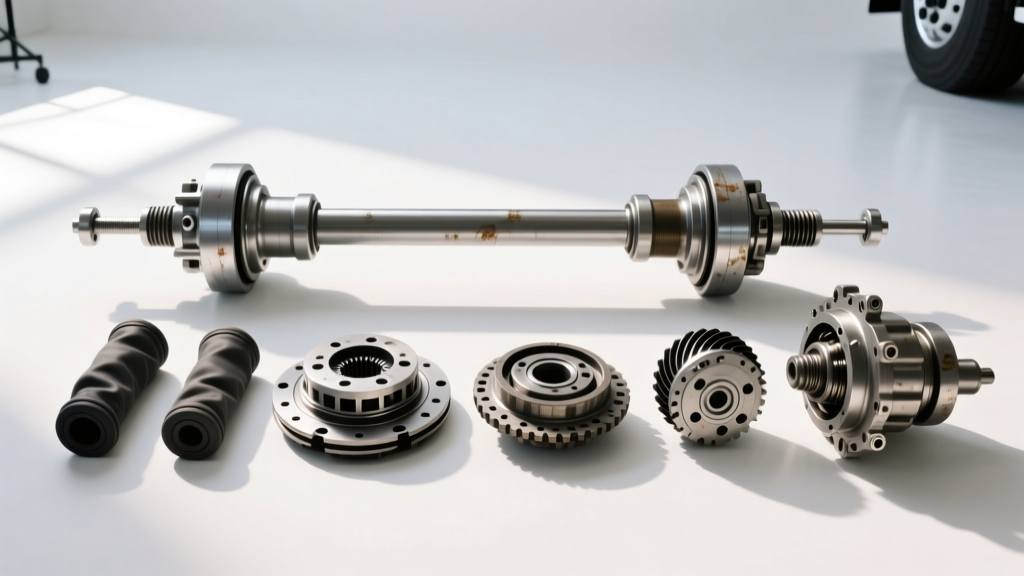
Unlike older solid-front-axle configurations that utilized simple U-joints, modern IFS truck drivetrains employ complex Rzeppa (outboard) and tripod or double-offset (inboard) CV joints. These joints must accommodate extreme plunge depths and steering angles, especially when owners install leveling kits or larger off-road tires. Understanding the precise cost breakdown of diagnosing, sourcing, and replacing these components is essential for any truck owner facing the dreaded 'clicking on turns' or high-speed driveline vibrations.
2026 Parts Cost Breakdown: OEM vs. Aftermarket vs. Remanufactured
The single largest variable in your repair bill will be the source of the replacement axle assembly. While it is technically possible to replace just the CV joint or the torn rubber boot, the labor overlap is so significant that 95% of professional shops and experienced DIYers opt for a complete half-shaft assembly. Below is a comprehensive look at the pricing tiers for popular truck platforms like the Ford F-150, Chevrolet Silverado 1500, and Ram 1500.
| Component Tier | Estimated Price Range (2026) | Warranty Coverage | Best Application Scenario |
|---|---|---|---|
| OEM (Motorcraft, ACDelco, Mopar) | $450 - $850 | 2 Years / Unlimited Miles | Heavy towing, lifted trucks, daily drivers seeking factory NVH levels |
| Premium Aftermarket (GKN, ACDelco Professional) | $220 - $380 | 1 to 2 Years / Limited Miles | Stock height trucks, standard commuting, moderate payloads |
| Economy / Remanufactured (Duralast, SurTrack) | $90 - $160 | Limited Lifetime (Often prorated) | High-mileage work trucks, selling the vehicle, strict budget constraints |
| Heavy-Duty Off-Road (RCV Performance, Adams) | $1,200 - $2,500+ | Lifetime / Breakage Guarantees | Dedicated rock crawlers, extreme suspension articulation, 35+ inch tires |
According to current catalog data from RockAuto, premium aftermarket brands like GKN Driveline (the original equipment manufacturer for many European and domestic axles) offer the best balance of metallurgy and cost. Economy axles frequently suffer from premature inboard tripod joint wear and outboard cage snapping under the high torque loads generated by modern turbocharged V6 and V8 truck engines.
Diagnostic Profiles: Identifying the Exact Point of Failure
Before authorizing a repair, it is crucial to identify which specific joint within the truck drivetrain is failing. Misdiagnosis can lead to unnecessary parts swapping and inflated labor bills.
Outboard Rzeppa Joint Failure
The outboard joint connects the axle to the wheel hub and must handle extreme steering angles. Symptoms: A rhythmic clicking or popping noise during tight, low-speed turns (like pulling into a driveway). Root Cause: The thermoplastic or rubber CV boot tears, expelling the specialized molybdenum disulfide grease and allowing water and silica to enter the bearing cage. Once the six steel balls and the inner race are pitted, the joint cannot be salvaged.
Inboard Tripod or Double-Offset Joint Failure
The inboard joint plugs into the front differential and handles the 'plunge' (in-and-out movement) as the suspension cycles. Symptoms: A shudder, clunk, or lateral vibration felt through the floorboards during hard acceleration from a stop. Root Cause: Wear on the tripod rollers or the housing tracks. This is heavily exacerbated by aftermarket lift kits that force the inboard joint to operate at the extreme limits of its plunge depth, causing the rollers to bind and snap.
ABS Tone Ring (Reluctor Ring) Damage
Modern CV axles feature a precision-machined magnetic or stamped steel tone ring for the wheel speed sensor. If corrosion builds up under the tone ring, it can expand and crack the ring. This triggers ABS and 4WD fault codes (such as Ford's C0035 or GM's C0040), tricking the truck's computer into thinking a wheel is slipping. Replacing the sensor won't fix this; the entire axle must be replaced.
Labor Rates and Book Time Estimates
Labor costs for truck drivetrain repairs vary wildly depending on whether you visit a mainline dealership or an independent 4x4 shop. Based on 2026 industry averages compiled by RepairPal, dealership labor rates now hover between $165 and $225 per hour, while independent shops range from $120 to $160 per hour.
Here are the standard factory book times for front CV axle replacement on popular platforms:
- 2015-2024 Ford F-150 (4WD): 1.2 hours per side. (The aluminum control arms and specific strut clevis designs make knuckle removal relatively straightforward).
- 2019-2024 Chevrolet Silverado 1500 (4WD): 1.4 hours per side. (Requires careful manipulation of the lower ball joint and sway bar end link to achieve enough droop for axle extraction).
- 2019-2024 Ram 1500 (4WD): 1.5 hours per side. (The AAM 9.25 IFS differential side seals are notoriously tight, often requiring specialized slide hammers to extract the axle stub without damaging the differential housing).
Expect to pay between $200 and $350 in labor per side at an independent shop, bringing the total out-the-door cost for an OEM axle replacement to roughly $750 to $1,100 per corner.
The DIY Route: Tooling, Torque Specs, and Hidden Risks
Replacing a CV axle on a modern truck is a highly viable DIY project, provided you possess the correct heavy-duty tooling. The most common mistake amateurs make is underestimating the breakaway torque of the factory axle nut. These nuts are often staked or coated with high-strength threadlocker from the factory.
Critical Torque Specifications & Tooling
To safely remove and reinstall the axle, you will need a heavy-duty 1/2-inch or 3/4-inch drive torque wrench, a massive breaker bar, and the correct impact socket. Below are the exact 2026 factory torque specifications for the front axle hub nuts:
- Ford F-150 (2015+): Requires a 36mm 12-point socket. Torque spec is a massive 295 lb-ft (400 Nm). You will need a specialized axle nut socket and a torque wrench capable of handling heavy-duty truck drivetrain specs.
- Chevy Silverado 1500 (2019+): Requires a 32mm or 34mm socket (depending on build date). Torque spec is 184 lb-ft (250 Nm).
- Ram 1500 (2019+): Requires a 36mm socket. Torque spec is 258 lb-ft (350 Nm).
Expert Warning: Never reuse a staked or deformed factory axle nut. Always purchase a new OEM nut (usually $5-$12) to ensure the wheel bearing maintains proper preload. A loose axle nut will destroy the $300 wheel hub assembly in less than 500 miles.
Hidden Costs in the Truck Drivetrain Ecosystem
When budgeting for a CV axle replacement, the part and the labor are only the baseline. Several peripheral issues frequently arise during the teardown process that will inflate your final invoice.
1. Differential Seal and Fluid Contamination ($80 - $150)
The inner CV joint slips into the front differential via a splined stub shaft sealed by a rubber lip seal. If this seal was leaking prior to the repair, or if it is damaged during the extraction of the old axle, it must be replaced. Furthermore, if water or dirt bypassed a failed inner CV boot and entered the differential, the entire front axle must be drained and refilled with fresh 75W-90 or 75W-140 synthetic gear oil, adding $60 to $100 in materials.
2. Lower Ball Joint and Tie Rod Wear ($250 - $600)
To extract the CV axle, the steering knuckle must be separated from the suspension. On high-mileage trucks, the lower ball joint or outer tie rod end may be seized or worn. If the ball joint boot tears during disassembly, or if the joint shows axial play, it must be replaced. On many modern trucks, the lower ball joint is pressed or rivoted into the aluminum control arm, necessitating a complete control arm replacement.
3. Mandatory Front-End Alignment ($120 - $180)
Any time the steering knuckle is dropped or suspension components are unbolted to facilitate axle removal, the camber and caster geometry is altered. Driving a truck with a misaligned front end will cause rapid, irreversible wear to your expensive off-road or all-terrain tires. A precision laser alignment is a non-negotiable final step in the CV axle replacement process.
Final Verdict: Protecting Your Drivetrain Investment
The CV axle remains one of the most stressed, high-wear components in any independent front suspension truck drivetrain. While the temptation to save money with a $100 remanufactured axle from a big-box auto parts store is high, the metallurgical compromises in the cage and tripod bearings make them a false economy for anyone who tows, hauls, or ventures off-road. For the 2026 model year and beyond, investing in OEM or premium GKN-engineered axles, adhering strictly to factory torque specs, and addressing differential seals proactively will ensure your truck remains reliable, safe, and free of catastrophic driveline failures.
For more technical deep-dives into drivetrain engineering and maintenance intervals, consult the OEM service manuals or authoritative engineering resources like GKN Drivetrain to understand the exact tolerances of your specific 4WD system.