How to Fix Rond Carre Clutch Drag and Release Issues
Clutch drag—characterized by gear crunching, difficult reverse engagement, and vehicle creep at stoplights—is one of the most frustrating drivetrain faults. When dealing with specialty European manual transmissions or restomod adapters utilizing a rond carre clutch assembly, standard diagnostic approaches often fall short. The unique 'round-square' torsional damper design and specific spline profiles demand precise tolerances to achieve full disengagement.
In this comprehensive 2026 guide, we break down the exact step-by-step procedure to diagnose, measure, and resolve clutch drag and release problems specific to rond carre clutch setups, commonly found in classic Peugeot, Citroen, and Renault applications, as well as modern vintage-EV conversion adapters.
Understanding the Rond Carre Clutch Architecture
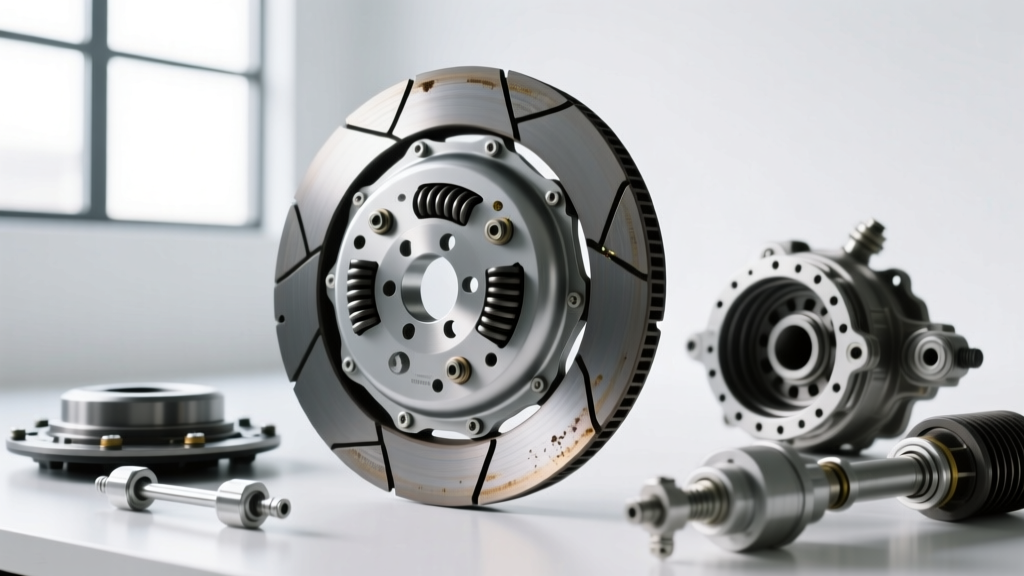
Unlike standard round-wire torsional springs, a rond carre clutch disc utilizes square-section wire wound into a helical spring (hence 'round-square'). This design provides a highly progressive damping rate, excellent for absorbing the low-frequency torsional spikes inherent in vintage inline-four and diesel engines. However, if the square-section springs bind within the hub windows, or if the disc cannot float axially along the transmission input shaft due to spline galling, the disc will remain partially engaged against the flywheel even when the pedal is fully depressed.
According to technical literature from Schaeffler/LUK, improper axial float is the leading cause of premature release bearing failure and incomplete clutch disengagement in specialty damper setups.
Step 1: Verify Hydraulic Pushrod Free-Play (The 0.5mm Rule)
Before dropping the transmission, you must rule out hydraulic pre-load. If the master cylinder pushrod is adjusted too tightly, the release bearing will constantly ride the diaphragm fingers of the pressure plate. This causes the fingers to wear, effectively reducing the clamping force and the mechanical leverage needed to pull the pressure plate away from the disc.
- Locate the Master Cylinder Pushrod: Find the adjustable clevis or pushrod connecting the clutch pedal to the master cylinder piston.
- Measure Free-Play: Using a feeler gauge, verify there is exactly 0.5mm to 1.0mm of clearance between the pushrod and the piston recess before resistance is felt.
- Check Pedal Travel: Total pedal free-play at the pad should measure between 15mm and 20mm. If it is less than 15mm, adjust the pushrod clevis until the correct slack is achieved.
Expert Tip: Never use the pedal position switch as a gauge for mechanical free-play. Switches only indicate electrical engagement, not hydraulic resting states.
Step 2: Measure Release Bearing Travel and Quill Depth
If the hydraulics are correct but the clutch still drags, the release bearing may not be traveling far enough to fully actuate the pressure plate. This is incredibly common when mating a rond carre clutch to a non-OEM bellhousing or using an aftermarket spacer plate.
- Set Up the Dial Indicator: Mount a magnetic dial indicator to the bellhousing, with the plunger resting on the release bearing collar or the clutch fork pivot ball.
- Actuate the Fork: Have an assistant fully depress the clutch pedal. Measure the total linear travel of the release bearing.
- Compare to Specifications: Most vintage European diaphragm pressure plates require between 8.5mm and 10.5mm of effective bearing travel to fully disengage. If travel is under 8.0mm, the clutch will drag.
| Measurement Point | Target Specification | Failure Symptom if Out of Spec |
|---|---|---|
| Master Cyl. Pushrod Clearance | 0.5mm - 1.0mm | Premature finger wear, bearing overheating |
| Pedal Free-Play (at pad) | 15mm - 20mm | Incomplete disengagement, gear crunch |
| Release Bearing Linear Travel | 8.5mm - 10.5mm | Clutch drag, inability to engage reverse |
| Flywheel Axial Runout | < 0.05mm (0.002 in) | Cyclic grabbing, chatter, uneven release |
| Diaphragm Finger Variation | < 0.30mm (0.012 in) | Pulsating pedal, partial disc release |
Step 3: Extract and Inspect the Disc Hub and Springs
Once the transmission is removed, visually inspect the rond carre clutch disc. The square-section springs are highly susceptible to corner-fatigue and binding if subjected to high-frequency NVH (Noise, Vibration, and Harshness) without proper damping fluid in the hub, or if the hub windows are deformed.
- Check for Spring Bind: Hold the friction material and attempt to rotate the hub by hand. It should exhibit smooth, progressive resistance. If it feels notchy or locks up abruptly, the square springs are binding in the retainer windows.
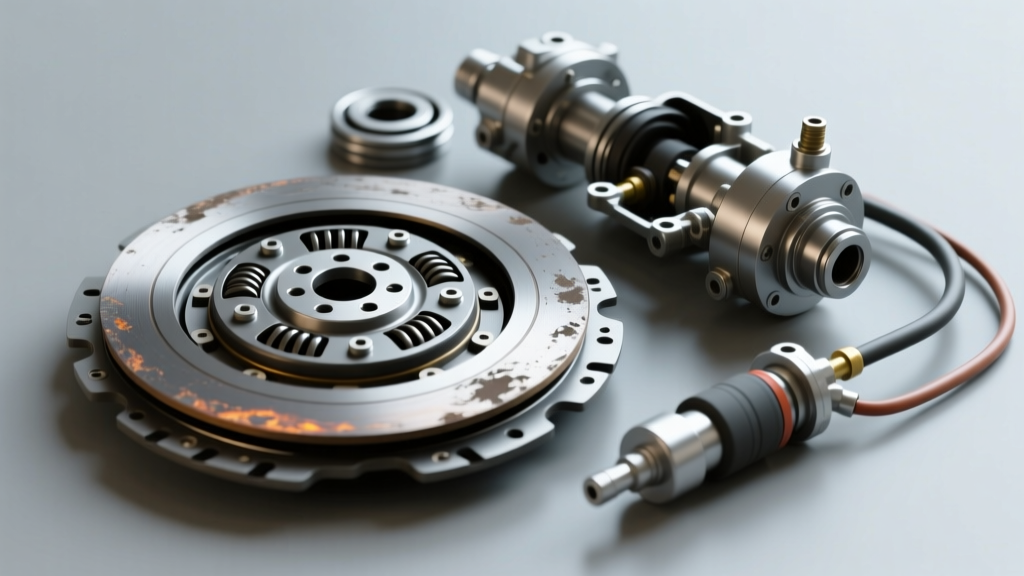
- Inspect the Spline Hub: Look for 'galling' or metallic transfer on the internal splines. If the disc cannot slide freely back and forth along the input shaft, centrifugal force and hydraulic pressure will keep it pinned against the flywheel, causing massive drag.
As noted in various drivetrain engineering studies hosted by SAE International, spline friction coefficients can increase by up to 300% if improper lubricants are used or if microscopic debris becomes embedded in the hub splines.
Step 4: Verify Flywheel Runout and Pressure Plate Fingers
A warped flywheel or uneven pressure plate fingers will cause the clutch to drag on one side of the disc while releasing on the other. This creates a 'coning' effect that prevents full separation.
- Flywheel Runout: Mount a dial indicator to the engine block and sweep the friction surface of the flywheel. Maximum allowable runout is 0.05mm (0.002 in). If it exceeds this, the flywheel must be resurfaced or replaced.
- Diaphragm Finger Variation: With the pressure plate bolted to the flywheel (use old bolts and torque to 25 Nm for this test), sweep the tips of the diaphragm fingers. All fingers must be within 0.30mm (0.012 in) of each other. If the release bearing hits the high fingers before the low fingers, the pressure plate will tilt, trapping the clutch disc.
Step 5: Proper Spline Lubrication and Reassembly Torque
Reassembly is where most rond carre clutch drag issues are inadvertently created. The goal is to provide enough lubrication to allow axial float, but not so much that it flings onto the friction material.
- Clean the Input Shaft: Use a brass wire brush and brake cleaner to remove all old grease and rust from the transmission input shaft splines. Dry completely.
- Apply High-Melt Moly Grease: Use a Molybdenum Disulfide (MoS2) based grease (e.g., Honda Moly 60 or equivalent). Apply a microscopic film to the input shaft splines using your finger. Wipe away any excess. You should still see the metal grain through the grease layer.
- Cycle the Disc: Slide the clutch disc onto the input shaft and slide it back and forth to distribute the grease evenly. Remove the disc and wipe the outer edges of the splines to prevent fling-off.
Critical Torque Specifications
Improper torque sequencing can warp the pressure plate housing, leading to immediate release problems.
- Flywheel to Crankshaft: 65 Nm (48 lb-ft) + 90-degree angle turn (yield bolts must be replaced; never reuse OEM TTY flywheel bolts).
- Pressure Plate to Flywheel: 25 Nm (18 lb-ft). Tighten in a strict crisscross/star pattern, pulling the pressure plate down evenly to avoid bending the housing.
- Bellhousing to Engine Block: 45 Nm (33 lb-ft). Ensure alignment dowels are seated perfectly to prevent input shaft misalignment, which causes spline binding.
Common Mistakes and Cost Implications
When sourcing replacement parts for a rond carre setup, avoid the temptation to use generic universal discs. A proper OEM-style replacement kit (such as those from Valeo or LUK) typically ranges from $220 to $450 depending on the specific vintage application. Attempting to save money by reusing a fatigued release bearing (which costs roughly $45 to $90) or skipping the flywheel resurfacing ($80 to $150 at a machine shop) will almost guarantee a return of the clutch drag symptoms within 500 miles.
Furthermore, as highlighted in classic automotive restoration technical guides like those at Hagerty Media, ignoring the specific hydraulic fluid requirements (often mineral-based LHM fluid for vintage Citroen/Peugeot setups rather than standard DOT 3/4 glycol) can cause the master cylinder seals to swell, internally bypassing fluid and mimicking the symptoms of severe mechanical clutch drag.
Conclusion
Fixing a rond carre clutch drag issue requires moving beyond simple pedal adjustments and understanding the precise mechanical tolerances of the square-section damper hub, the release bearing travel geometry, and the critical nature of spline lubrication. By methodically verifying hydraulic free-play, measuring bearing travel with a dial indicator, and adhering to strict MoS2 lubrication and torque protocols, you can restore crisp, effortless gear changes and protect your drivetrain from catastrophic spline failure.