The Axle Dilemma: Simple Leak or Major Overhaul?
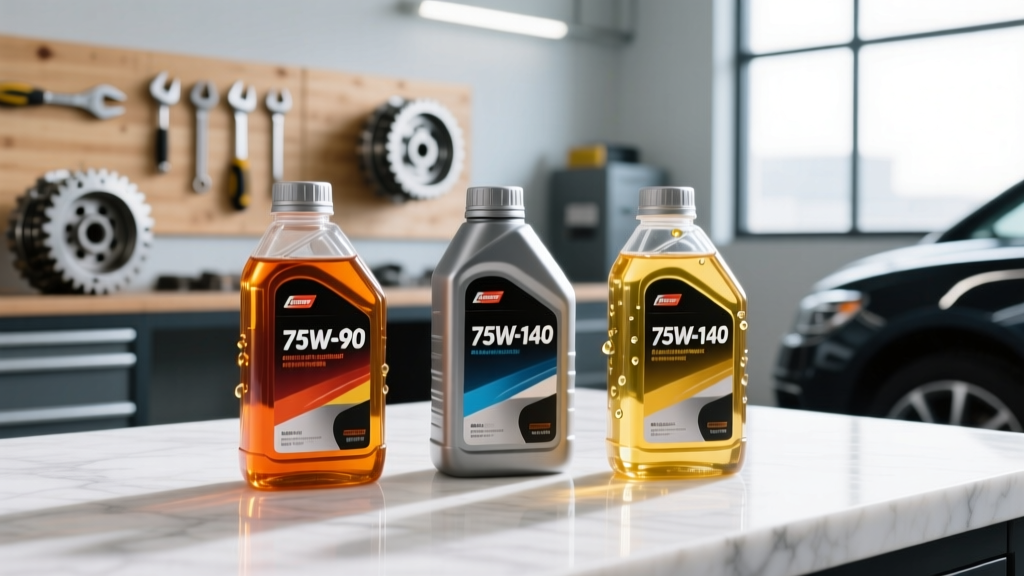
You pull into your driveway and notice a dark, pungent puddle of 75W-140 gear oil near the center of your truck's rear axle. Your mind immediately jumps to the worst-case scenario, but a quick internet search suggests it might just be a leaking pinion seal. However, when you consult a driveline specialist, they might mention that due to the age of the bearings or your desire to run larger 35-inch tires, you should consider a full ring and pinion gear setup instead of a simple reseal.
For beginners, the inside of a differential housing looks like an intimidating puzzle of shims, crush sleeves, and heavy iron gears. In this 2026 beginner-friendly explainer, we are going to demystify the axle. We will break down the standard cost to replace a differential seal, explain exactly what a ring and pinion gear setup entails, and help you understand which service your vehicle actually needs.
The Baseline: Cost to Replace a Differential Seal
Before diving into complex gear geometry, let us establish the baseline. A differential typically has three main seals: the pinion seal (where the driveshaft connects) and two axle shaft seals (where the axles slide into the housing). The pinion seal is the most common culprit for leaks because it is constantly subjected to high-speed rotation and heat.
As of 2026, specialized drivetrain shops charge between $160 and $225 per hour in labor. Replacing a pinion seal requires draining the gear oil, removing the driveshaft, pulling the pinion nut, extracting the old seal, and installing a new one (such as a National Seal #710928 for a common Ford 8.8-inch axle).
- Parts Cost: $15 to $45 (Seal and new pinion nut)
- Labor Time: 1.5 to 2.5 hours
- Total Cost to Replace Differential Seal: $280 to $600
If the leak is minor and your gears are quiet, this is a straightforward, budget-friendly repair. But there is a hidden trap: if the pinion bearing is worn and has grooved the seal surface, or if the mechanic over-torques the pinion nut and crushes the crush sleeve too far, you will be forced into a much larger repair.
What is a Ring and Pinion Gear Setup?
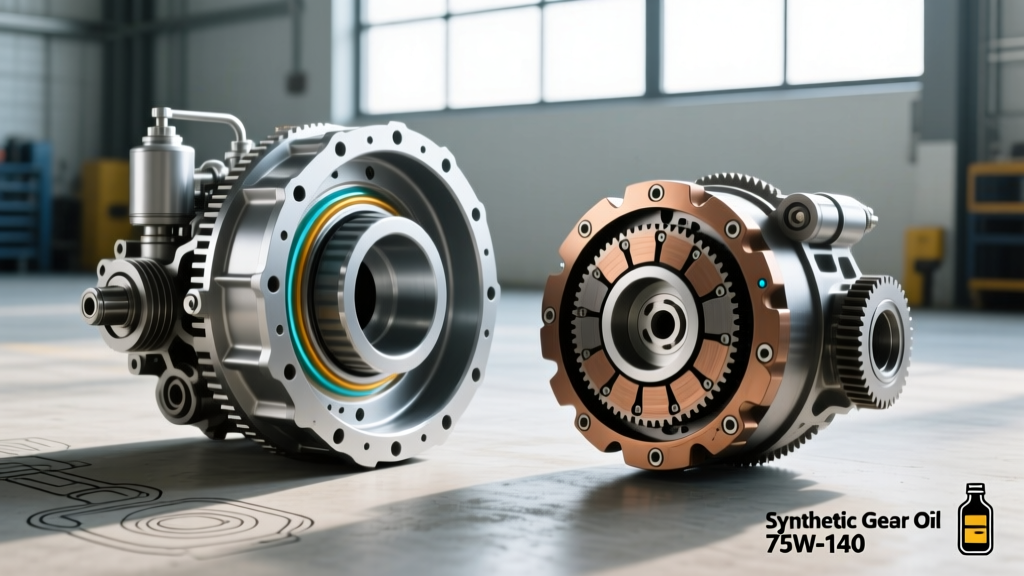
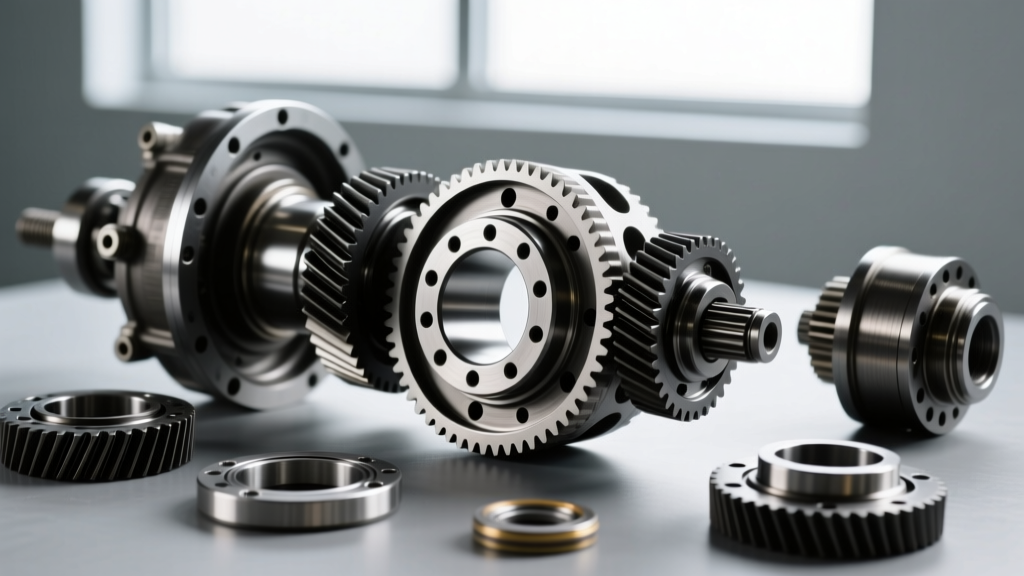
If a seal replacement is a band-aid, a ring and pinion gear setup is open-heart surgery for your axle. The ring and pinion are the hypoid gears responsible for taking the rotational power from your driveshaft (the pinion gear) and turning it 90 degrees to spin your wheels (the ring gear).
Unlike standard spur gears that roll against each other, hypoid gears feature an offset centerline. This means the teeth slide against one another under immense pressure, requiring specialized extreme-pressure (EP) gear oils and precise machining. A 'setup' refers to the meticulous process of adjusting the physical position of these gears so they mesh perfectly. If they are off by even a few thousandths of an inch, the gears will whine, overheat, and eventually shatter under load.
The Four Pillars of a Perfect Gear Setup
To understand why a gear setup costs significantly more than a seal job, you need to understand the four variables a technician must measure and adjust:
- Pinion Depth: How far the pinion gear sits into the ring gear. This is adjusted using microscopic shims placed behind the pinion bearing.
- Backlash: The side-to-side 'slop' or play between the ring and pinion teeth. Typically, this must be set between 0.006 and 0.010 inches using side adjusters or carrier shims.
- Bearing Preload: The rotational tension placed on the pinion and carrier bearings to prevent them from wobbles under heavy torque.
- Gear Pattern: The visual footprint left by the gears when coated in marking compound, proving the contact patch is centered on the tooth face.
Cost & Complexity Comparison Chart
To help you weigh your options, here is a direct comparison between a simple reseal and a full gear setup in today's market.
| Feature | Differential Seal Replacement | Full Ring & Pinion Gear Setup |
|---|---|---|
| Primary Goal | Stop fluid leaks | Change gear ratios or replace worn gears |
| Average 2026 Cost | $280 - $600 | $1,500 - $3,200+ |
| Specialty Tools Required | Standard sockets, torque wrench | Dial indicator, inch-pound torque wrench, bearing press |
| Labor Time | 1.5 - 2.5 hours | 6 - 10 hours |
| DIY Difficulty | Beginner / Intermediate | Expert / Professional Only |
Why a Seal Job Might Turn Into a Gear Setup
You might wonder why a mechanic would suggest a $2,000 gear setup when you only asked for a $400 seal job. According to the master technicians at Yukon Gear & Axle, the internal condition of the axle often dictates the repair path.
If you have a high-mileage vehicle (over 120,000 miles) and the pinion seal is leaking, it is highly likely that the pinion bearing is also worn. When a bearing wears out, it allows the pinion gear to deflect under load, ruining the gear pattern. Simply putting a new seal on a worn bearing will result in a catastrophic gear failure within a few thousand miles. Furthermore, if you are driving a modern off-road platform like a 6th Gen Bronco or JL Wrangler and plan to upgrade to 37-inch tires, regearing your axles (a full setup) is mandatory to save your transmission from excessive heat and wear.
Decoding the Gear Pattern: A Beginner's Guide
The ultimate test of a ring and pinion gear setup is the gear pattern. Technicians paint the teeth of the ring gear with a yellow marking compound (like Permatex 80085) and rotate the assembly to see where the pinion wipes the paint away.
- Perfect Pattern: The contact patch is centered vertically on the tooth face and slightly biased toward the 'heel' (the inner edge of the ring gear).
- Too Deep (Pinion Depth): The pattern moves to the root of the tooth. The technician must add shims to pull the pinion out.
- Too Shallow (Pinion Depth): The pattern rides the top edge of the tooth. The technician must remove shims to push the pinion in.
- Backlash Too Tight: The pattern is pushed heavily toward the toe (outer edge) on the drive side.
Reading these patterns is an art form that separates a true driveline expert from a general mechanic. As noted in the engineering documentation from Dana Spicer, hypoid gears require this specific heel-to-toe bias to account for the extreme deflection that occurs when torque is applied under heavy acceleration.
Essential Torque Specs and Part Numbers
For the DIY enthusiasts and those who want to verify their mechanic's work, here are real-world specifications for two of the most common axles on the road: the Ford 8.8-inch and the Dana 44.
Ford 8.8-Inch Axle (Common in F-150s, Mustangs, Rangers)
- Pinion Bearing Preload: 16-29 inch-pounds (rotational torque with new bearings)
- Ring Gear Bolt Torque: 85 ft-lbs (Must use Loctite 242 threadlocker)
- Pinion Nut Torque: 200-250 ft-lbs (Used to crush the crush sleeve; never reuse an old crush sleeve)
- Recommended Seal: Timken #710928
Dana 44 Axle (Common in Jeeps, Older Trucks)
- Pinion Bearing Preload: 15-25 inch-pounds
- Ring Gear Bolt Torque: 60 ft-lbs
- Backlash Specification: 0.006 - 0.010 inches
- Carrier Bearing Cap Torque: 60 ft-lbs
Expert Tip: Never use an impact wrench to tighten a pinion nut when setting bearing preload. The crush sleeve requires a slow, massive application of force using a long breaker bar and a high-capacity torque wrench. If you over-crush the sleeve, you must tear the entire assembly down and install a new sleeve and pinion nut.
Making the Right Choice for Your Drivetrain
Understanding the difference between the cost to replace a differential seal and a full ring and pinion gear setup empowers you to make informed decisions at the repair shop. If your differential is relatively new, quiet, and just happens to have a weeping seal, stick to the simple reseal. Ensure the shop uses a new pinion nut and respects the crush sleeve limits.
However, if your axle is whining, you have metal flakes on your drain plug magnet, or you are preparing your rig for heavy overlanding and oversized tires, it is time to invest in a professional ring and pinion gear setup. By focusing on precise backlash, correct pinion depth, and reading the gear pattern, a proper setup will ensure your differential survives the harshest trails and highways for the next 150,000 miles. For further reading on axle identification and gear ratios, consult the application guides available through major suppliers like Summit Racing before ordering your next gear set.