The Science of Hypoid Gear Lubrication
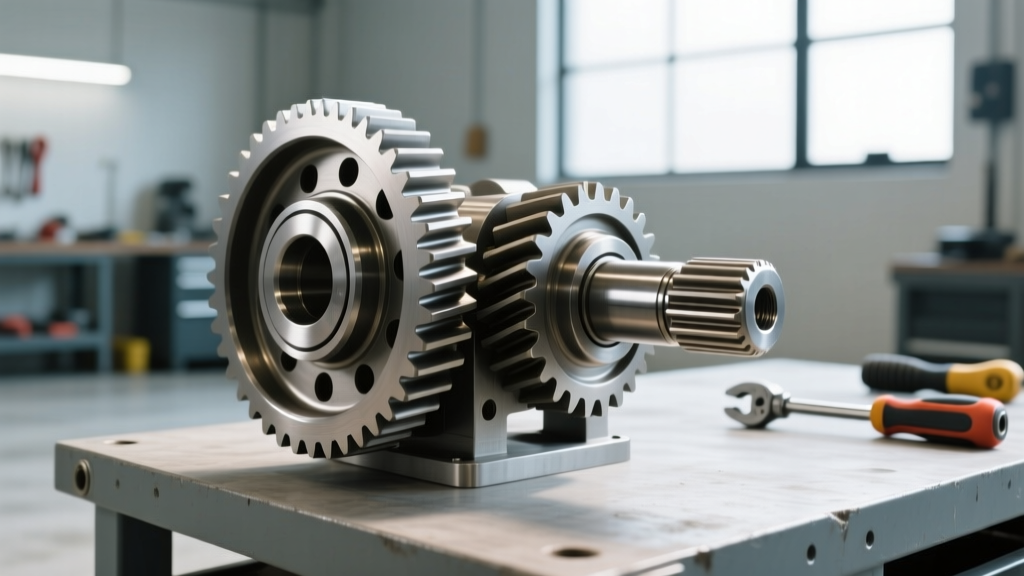
The modern automotive drivetrain relies on hypoid gear sets within the differential to transfer power at a 90-degree angle. Unlike standard spur gears that roll, hypoid ring and pinion gears feature a significant sliding action. This sliding friction generates immense localized heat and shear forces, demanding a lubricant with extreme pressure (EP) additives and high kinematic viscosity. When selecting gear oil for car differentials, understanding the SAE J306 viscosity standard and API service classifications is non-negotiable for preventing catastrophic ring and pinion scoring.
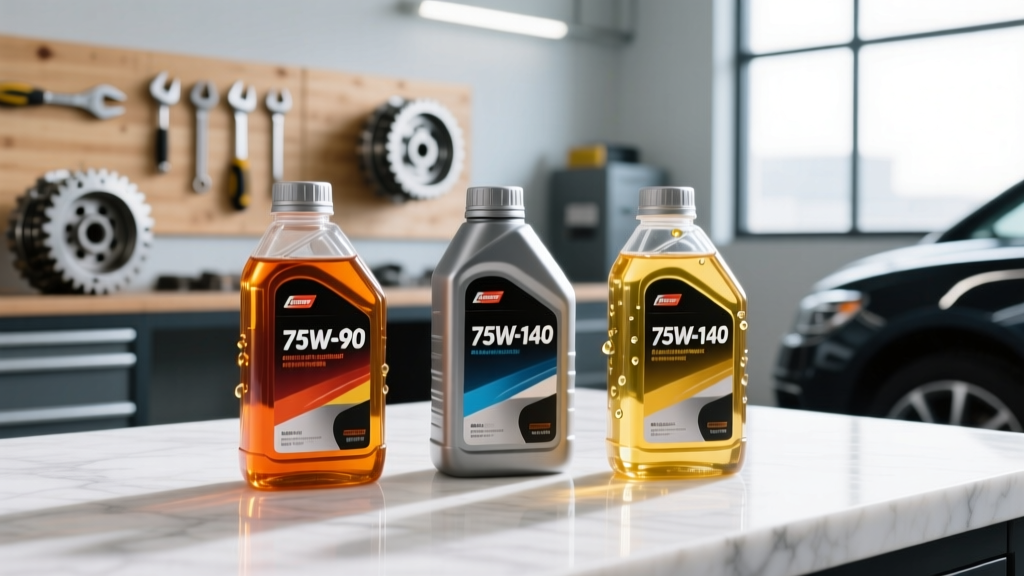
According to the SAE J306 standard, gear oil viscosity is measured differently than engine oil (SAE J300). A 75W-90 gear oil does not have the same thickness as a 75W-90 engine oil; in fact, a 75W-90 gear oil shares a similar high-temperature kinematic viscosity (13.5 to 18.5 cSt at 100°C) as a 40-weight or 50-weight engine oil. The '75W' denotes its low-temperature flow characteristics, ensuring the fluid reaches the pinion bearings and carrier assemblies during cold starts before metal-to-metal contact can occur.
API GL-4 vs. GL-5: The Yellow Metal Dilemma
The American Petroleum Institute (API) classifies gear oils primarily into GL-4 and GL-5 categories. GL-5 fluids contain high concentrations of sulfur-phosphorus EP additives designed to sacrificially coat gear teeth under extreme shock loads. However, these active sulfur compounds can corrode 'yellow metals' like bronze, brass, and copper synchronizers. If your vehicle features a transaxle where the transmission and differential share a common fluid sump (common in many front-wheel-drive platforms and older Subaru manual transmissions), using a standard GL-5 fluid will destroy the synchronizers. For shared-sump transaxles, a dedicated GL-4 fluid or a GL-5 explicitly certified as yellow-metal safe is mandatory. For standalone rear or front differentials, GL-5 is the required specification.
Limited-Slip Differentials and Friction Modifiers
For vehicles equipped with clutch-type Limited-Slip Differentials (LSD), the base gear oil is only half the equation. Clutch-pack LSDs (such as the Ford 8.8 Track-Lok or Auburn Gear units) rely on specific friction coefficients to lock the axles together under load. Standard GL-5 gear oils are too 'slippery' for these clutches, leading to aggressive binding, low-speed chatter during tight parking maneuvers, and premature clutch pack glazing.
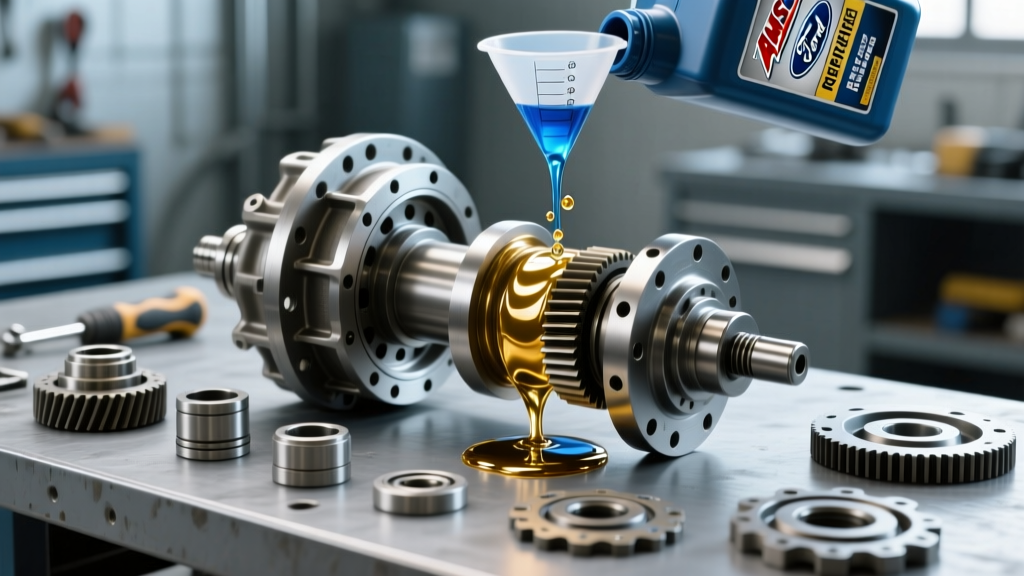
To resolve this, manufacturers add Friction Modifiers (FM). When servicing an LSD, you have two choices: purchase a pre-blended 'LS' (Limited Slip) gear oil, or buy a standard GL-5 synthetic and add a standalone FM bottle (e.g., Ford XL-3 or Red Line Limited Slip Friction Modifier). Red Line Oil specifically produces 'NS' (No Slip) variants of their gear oils, allowing enthusiasts and technicians to dial in the exact amount of friction modifier required for their specific clutch pack breakaway torque, eliminating the guesswork of factory pre-blends.
2026 Premium Gear Oil Comparison Matrix
Below is a technical comparison of the top synthetic gear oils on the market for 2026, evaluated on shear stability, base stock chemistry, and LSD compatibility.
| Brand & Product | Part Number | Viscosity | Base Stock | Est. Price (Qt) | LSD Additive | Best Application |
|---|---|---|---|---|---|---|
| Amsoil Severe Gear | SVGPK | 75W-90 | PAO Synthetic | $18.50 | Pre-Blended | Heavy towing, daily driving, mild track |
| Red Line 75W90 NS | 50304 | 75W-90 | Ester/PAO Blend | $22.95 | None (Add separately) | Track cars, custom LSD tuning, HPDE |
| Motul Gear 300 | 105783 | 75W-90 | 100% Ester | $28.00 | Pre-Blended | High-heat endurance racing, WRC rally |
| Mobil 1 Synthetic LS | 104361 | 75W-90 | Group III/PAO | $14.25 | Pre-Blended | OEM replacement, budget-conscious LSD |
| Royal Purple Max Gear | 01315 | 75W-140 | Synthetic w/ Synerlec | $24.50 | Pre-Blended | High-horsepower drag/off-road axles |
Expert Note on Ester Base Stocks: Motul Gear 300 utilizes a high-ester base stock. Esters possess a natural polarity that causes them to cling to gear teeth, providing superior boundary lubrication during the initial startup before hydrodynamic pressure builds. However, esters are hygroscopic (they absorb moisture). If your differential breathes heavily in humid or submerged environments, ester-based fluids should be changed more frequently to prevent emulsification and acid formation.
OEM Service Intervals, Capacities, and Torque Specifications
A critical failure point in differential maintenance is the improper torquing of drain and fill plugs, leading to fluid loss and subsequent bearing seizure. Always replace aluminum or copper crush washers during service. Below are exact specifications for three popular modern platforms:
- Ford Mustang S650 (8.8 IRS Rear Differential):
- Capacity: 1.5 Quarts (1.4 Liters)
- Specification: Motorcraft SAE 75W-85 Premium (Motorcraft XL-12 for LSD additive)
- Drain/Fill Plug Torque: 33 lb-ft (45 Nm)
- Note: The 8.8 IRS uses a low-viscosity 75W-85 for CAFE fuel economy. Upgrading to a 75W-90 synthetic will slightly increase parasitic drag but vastly improve thermal stability for track use.
- BMW G80 M3 / G82 M4 (M Sport Rear Differential):
- Capacity: 1.2 Liters
- Specification: BMW SAF-XJ 75W-140 (Part # 83222446673)
- Drain/Fill Plug Torque: 45 lb-ft (60 Nm)
- Note: BMW's active M differential generates extreme heat. Do not downgrade to 75W-90; the 75W-140 shear stability is required to protect the internal hydraulic pump and clutch packs.
- Subaru WRX / BRZ (R180 / Torsen Rear Differential):
- Capacity: 0.8 Liters
- Specification: API GL-5 75W-90
- Drain/Fill Plug Torque: 33 lb-ft (44 Nm)
- Crush Washer Part #: 803926090 (Always replace)
Diagnostic Clues: What Your Differential Fluid Tells You
When draining your differential, the condition of the fluid and the magnetic drain plug offer a window into the health of your ring and pinion set. Normal wear will present as a fine, silvery paste on the magnet. This is the result of the EP additives doing their job, creating a sacrificial iron-sulfide layer on the gears that wears away microscopically.
However, if you find chunky metallic shards, needle bearing fragments, or a burnt, acrid smell, the fluid has suffered thermal breakdown. According to ASTM D5704 testing standards, gear oils subjected to temperatures exceeding 300°F (149°C) without adequate thermal oxidation stability will form carbonaceous sludge and varnish. This varnish coats the clutch packs in LSDs, causing them to slip under load and overheat, creating a cascading failure loop. If the fluid resembles glitter in suspension, the pinion bearing is likely disintegrating, and a full teardown with a dial indicator to check gear backlash and contact pattern is required.
Final Verdict: Matching the Fluid to the Application
For 90% of daily-driven cars and light trucks, Amsoil Severe Gear 75W-90 offers the best balance of shear stability, OEM-compliant friction modifiers, and long-drain capability. For dedicated track cars, time-attack builds, or vehicles where the LSD clutch pack breakaway torque needs precise tuning, Red Line 75W90 NS paired with a custom dose of friction modifier remains the undisputed champion of drivetrain control. Always verify your fill level at the bottom of the fill hole threads while the vehicle is perfectly level, and allow the fluid to settle for 10 minutes before sealing the plug to prevent under-filling.