The Engineering Behind Clutch-Type Limited Slip Differentials
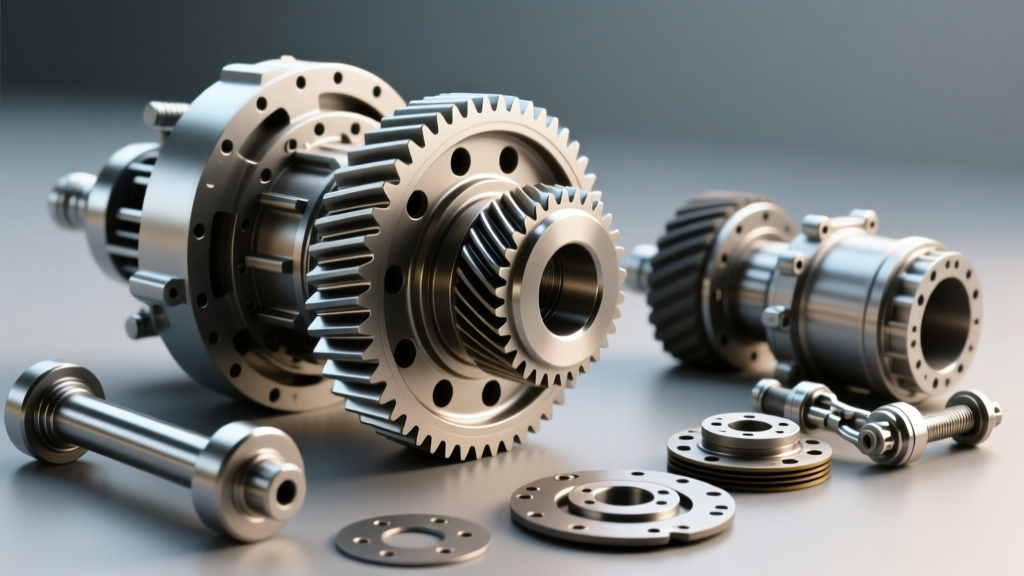
Unlike open differentials that rely solely on spider and side gears to allow wheels to rotate at different speeds, clutch-type limited slip differentials (LSDs) introduce intentional friction to bias torque. Popular variants like the Ford 8.8 Traction-Lok, GM 8.625-inch Auburn/Eaton Posi, and Dana 44 Trac-Lok utilize alternating packs of steel reaction plates and sintered iron or carbon-fiber friction discs. These clutch packs are preloaded by heavy coil springs or an S-shaped spring (in the Ford 8.8) to provide a baseline locking torque.
When you need to replace differential oil in these specific axles, you are not merely lubricating the hypoid ring and pinion gears; you are actively managing the friction coefficient of the clutch packs. As of 2026, modern synthetic gear oils and advanced friction modifiers have drastically extended service intervals, but the fundamental physics of the clutch pack remains highly sensitive to fluid degradation. Understanding this interaction is critical for any drivetrain technician or advanced DIYer.
Fluid Chemistry and the 'Stick-Slip' Chatter Phenomenon
API GL-5 gear oils are heavily fortified with sulfur-phosphorus extreme pressure (EP) additives designed to protect the sliding contact surfaces of hypoid gears. However, these EP additives inherently alter the friction characteristics of the LSD clutch materials. Over time, the friction modifiers—long-chain polymers designed to allow the clutches to slip smoothly during cornering—shear down and deplete due to thermal cycling and mechanical stress.
When the modifier depletes, the static friction coefficient of the clutch pack exceeds the kinetic friction coefficient. This results in the infamous 'stick-slip' phenomenon: the clutches bind, store rotational energy, and then violently release it. Drivers experience this as a shuddering chatter or hopping sensation from the rear axle during low-speed, tight-radius turns. If you ignore the signs and delay the interval to replace differential oil, the violent slipping will glaze the friction discs, permanently ruining the clutch pack and necessitating a full differential rebuild.
Diagnosing Axle Noise: Clutch Chatter vs. Gear Whine
Before tearing into the differential cover, it is vital to accurately diagnose the noise. Fluid maintenance will only resolve clutch-related issues, not gear mesh problems.
- Clutch Chatter: Occurs exclusively during low-speed turns (e.g., pulling into a parking space). It feels like a rhythmic binding or hopping. Solution: Replace differential oil and replenish friction modifier.
- Deceleration Whine: A high-pitched howl when lifting off the throttle at highway speeds. This indicates improper ring and pinion backlash or worn pinion bearings. Solution: Gear setup adjustment or bearing replacement.
- Acceleration Howl: Noise that peaks under load. Usually points to a worn ring gear heel or toe, often caused by running the axle low on fluid, leading to inadequate gear tooth lubrication.
Procedural Deep-Dive: How to Replace Differential Oil in an LSD
Servicing an LSD requires meticulous attention to sealing surfaces and fluid chemistry. Here is the professional-grade procedure for a clutch-type LSD.
Step 1: The 'Fill-Plug First' Rule
Before draining a single drop of old fluid, locate and break loose the differential fill plug. On older axles, particularly the Dana 44 and early Ford 8.8s, fill plugs can become severely corroded or stripped. If you drain the axle first and then discover the fill plug is seized, you have just immobilized the vehicle. Always ensure the fill plug can be removed before proceeding.
Step 2: Drain and Magnetic Inspection
Remove the fill plug, followed by the drain plug (if equipped) or the 10mm/12mm differential cover bolts. Leave the top two bolts threaded in loosely to act as a hinge, allowing the fluid to drain into a catch pan without dropping the heavy cast-iron or stamped-steel cover entirely. Inspect the drain plug magnet. A fine, silvery paste is normal wear from the hypoid gears and clutch steels. However, if you find chunky metallic shards or brass-colored flakes, the pinion bearing cage or side gear thrust washers are failing, and a simple fluid change will not save the axle.
Step 3: Surface Preparation and RTV Application
Scrape the differential cover and axle housing mating surfaces using a plastic gasket scraper to avoid gouging the aluminum or steel. Clean both surfaces with brake cleaner. If your axle uses RTV silicone instead of a pre-cut gasket, apply a continuous 3/16-inch bead of a high-torque, oil-resistant silicone like Permatex Ultra Black (Part #85194). Allow the RTV to skin over for 10 minutes before mating the cover to the housing to prevent silicone extrusion into the oil sump, which can clog the axle tube oil galleries.
Step 4: Friction Modifier Protocol
This is the most critical step for LSD operation. Many modern synthetic 75W-90 GL-5 oils claim to be 'Limited Slip Compatible,' but real-world testing shows that dedicated aftermarket friction modifiers are often still required to prevent chatter in high-preload OEM clutch packs. Add the friction modifier before filling with gear oil to ensure proper mixing.
Step 5: The Break-In Procedure
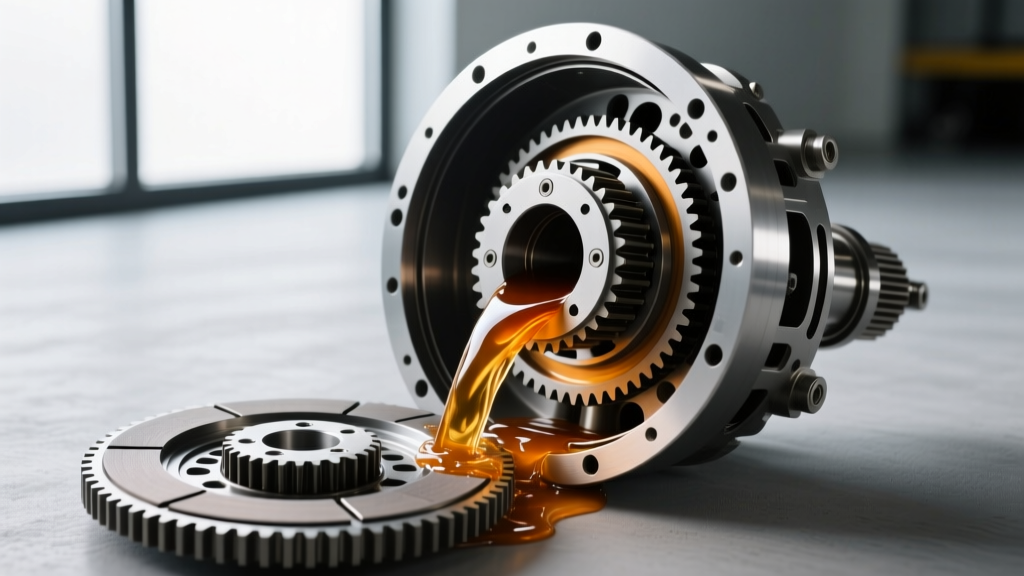
Once filled to the bottom of the fill hole, reinstall the plug. Immediately take the vehicle to an empty, paved lot. Perform 10 to 15 tight, continuous figure-eight maneuvers. This forces the clutch packs to slip and engage repeatedly, burnishing the new friction modifier into the pores of the sintered iron or carbon discs and eliminating initial cornering chatter.
OEM Torque Specifications and Fluid Capacities
Over-torquing differential covers, especially on aluminum housings or stamped steel Ford 8.8 covers, will warp the mating surface and guarantee a leak. Use a calibrated inch-pound or low-range foot-pound torque wrench. The table below outlines specifications for the most common light-truck and performance car LSD axles.
| Axle Model | Cover Bolt Torque | Fill Plug Torque | Fluid Capacity | Recommended Viscosity |
|---|---|---|---|---|
| Ford 8.8-inch (Super 8.8) | 25 - 30 lb-ft | 15 - 20 lb-ft | 2.5 - 3.0 Quarts | 75W-140 Synthetic |
| GM 8.625-inch (10-Bolt) | 22 lb-ft | 15 - 20 lb-ft | 2.0 - 2.4 Quarts | 75W-90 Synthetic |
| Dana 44 (Standard) | 30 - 35 lb-ft | 25 lb-ft | 2.0 - 2.5 Quarts | 80W-90 or 75W-90 |
| Chrysler 8.75-inch | 30 lb-ft | 25 lb-ft | 2.25 Quarts | 75W-90 Synthetic |
Friction Modifiers: OEM vs. Aftermarket Chemistry
According to Eaton's Vehicle Group documentation, the specific friction coefficient required for their Posi units is tightly controlled. Using the wrong modifier can cause the clutches to slip continuously under load, leading to rapid thermal degradation. If you are servicing a specific OEM axle, sourcing the exact factory additive is highly recommended:
- Ford / Motorcraft: XL-3 Friction Modifier Additive (Part #C8AZ-19B546-A).
- GM / ACDelco: EOS (Limited Slip Axle Lubricant) Additive (Part #1052358 or 88900333).
- Mopar / Chrysler: Limited Slip Additive (Part #4318060AD).
If OEM fluids are unavailable, high-quality universal modifiers like Red Line Limited Slip Friction Modifier or **Lubegard Limited Slip Supplement** provide excellent shear stability. As noted in Red Line Synthetic Oil's technical data sheets, their 75W90 gear oil already contains a baseline friction modifier, but they explicitly advise adding up to 1 bottle of their dedicated modifier for high-preload OEM differentials like the Ford 8.8 to completely eliminate chatter.
Cost Analysis and Service Intervals
For a standard daily-driven vehicle, the interval to replace differential oil in an LSD is typically every 30,000 to 50,000 miles. However, if the vehicle is used for towing, track days, or off-roading, the fluid should be swapped every 15,000 miles due to the extreme thermal loads that rapidly break down the friction modifiers.
Dealership / Specialty Shop Cost: Expect to pay between $150 and $250 for a rear differential service. This includes 3 quarts of premium synthetic 75W-90 or 75W-140 gear oil, the OEM friction modifier, RTV/gasket, and labor. Shops that perform a 'flush' using a pump through the fill hole without removing the cover are cutting corners; they cannot inspect the magnet or clean out the clutch pack debris.
DIY Cost: A complete DIY service will cost between $60 and $90. Premium synthetic gear oils like Motul Gear 300 or AMSOIL Severe Gear run about $18-$22 per quart, and the OEM friction modifier typically costs $10-$15. Taking the time to drop the cover, clean the housing, and properly measure the fluid level ensures the longevity of your limited slip differential's clutch packs and hypoid gears for the next 50,000 miles.