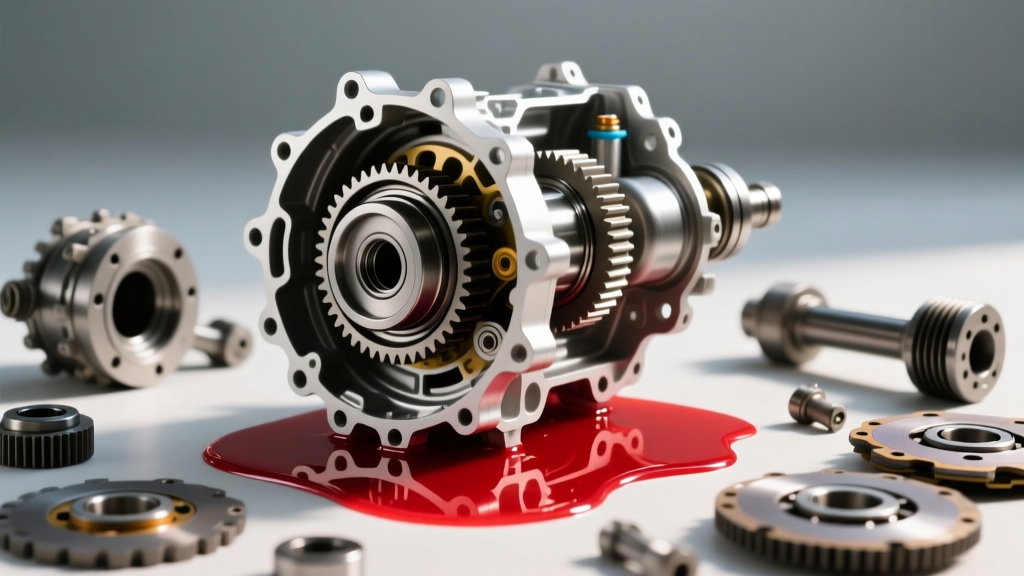
The Anatomy of Rear Gear Differential Noise
The rear axle is the final multiplication point in your vehicle's drivetrain, subjected to immense rotational mass and torque. When a gear differential begins to fail, it rarely does so silently. In 2026, with the rise of high-torque turbocharged trucks and instant-torque electric vehicles (EVs) like the Rivian R1T and Tesla Cybertruck, rear axle components are under more stress than ever before. Diagnosing rear differential noise requires isolating the sound based on load, deceleration, and cornering.
Before tearing into the housing, you must perform a dynamic road test to categorize the acoustic signature. A failing pinion bearing sounds vastly different from degraded limited-slip clutch packs.
Diagnostic Matrix: Sound vs. Failure Point
| Symptom / Noise Type | Driving Condition | Probable Culprit | Severity & Action |
|---|---|---|---|
| High-pitched whine | Acceleration (under load) | Pinion bearing preload loss or incorrect pinion depth | High: Requires teardown and shim adjustment |
| Low howl or rumble | Deceleration (coasting) | Coast-side ring gear wear or worn carrier bearings | Medium: Monitor fluid, plan for rebuild |
| Chatter or binding | Low-speed turning | Limited-slip clutch pack degradation / missing friction modifier | Low: Fluid and additive service usually resolves |
| Heavy clunk | Shifting from Reverse to Drive | Excessive backlash, worn spider gears, or slip-yoke play | High: Check backlash specs and U-joints |
| Continuous grinding | All speeds, load-independent | Catastrophic bearing cage failure, gear tooth shearing | Critical: Stop driving immediately to avoid housing punch-out |
Fluid Analysis: What Your Gear Oil is Telling You
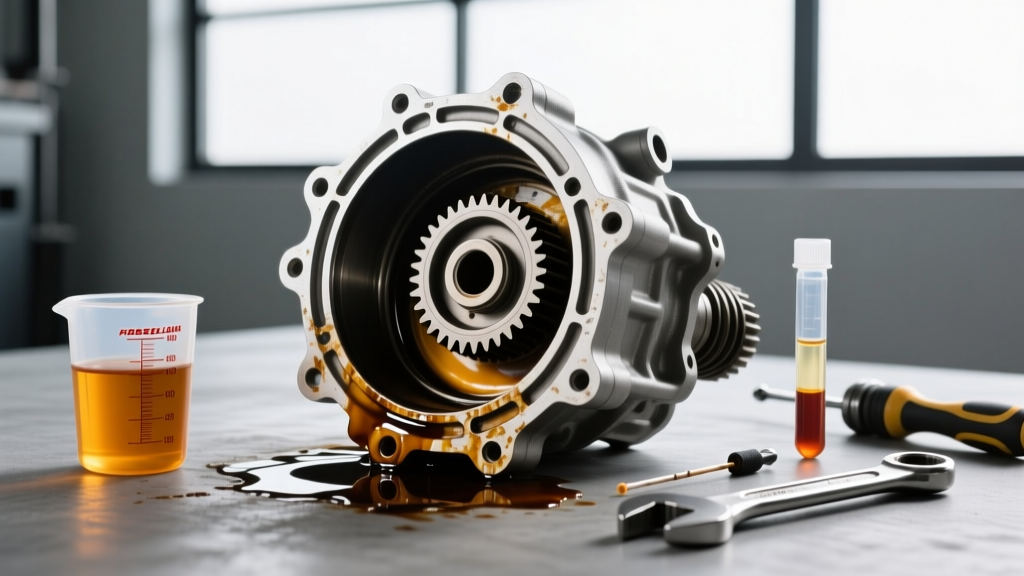
The condition of the drained gear oil is the most accurate window into the internal health of your gear differential. Modern synthetic 75W-90 and 75W-140 fluids are designed to handle extreme pressure (EP), but they cannot prevent mechanical fatigue.
- Micro-Glitter (Paste-like): A slight metallic sheen on the magnetic drain plug is normal for the first 50,000 miles. This is the result of the ring and pinion gears lapping together during the initial break-in phase.
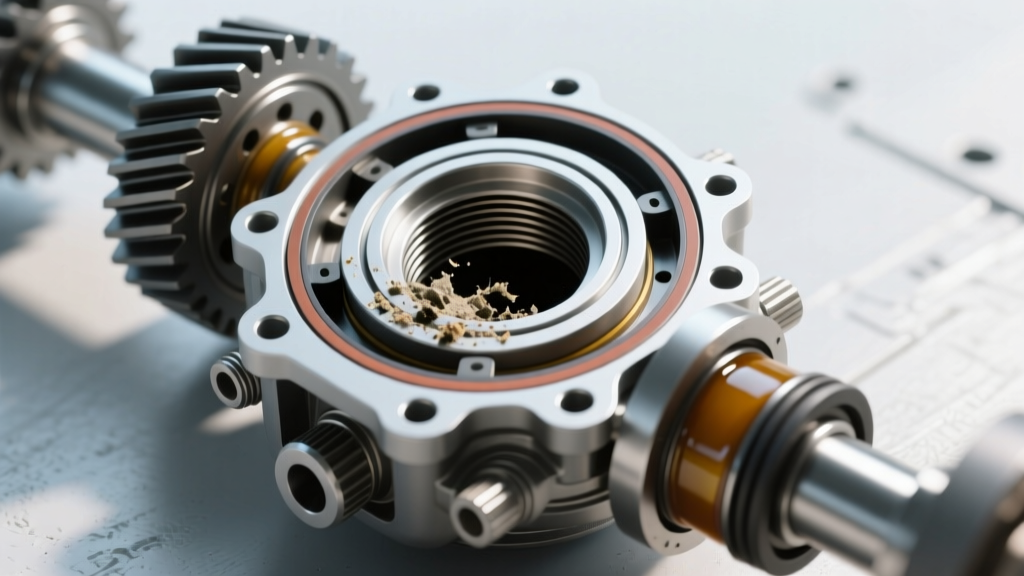
- Fine Metallic Flakes: If the fluid looks like metallic paint and the magnet is heavily coated, your carrier or pinion bearings are shedding material. A fluid change will only buy you a few thousand miles before noise begins.
- Chunks and Needles: Finding actual shards of metal or roller needle bearings on the plug indicates catastrophic cage failure. No fluid service will save this differential; a complete bearing and gear overhaul is mandatory.
- Burnt Smell / Black Sludge: Indicates severe overheating, often caused by towing beyond the Gross Combined Weight Rating (GCWR) without an aftermarket differential cover featuring cooling fins.
2026 EV Differential Note: Electric vehicle rear drive units (e.g., Tesla Model Y rear motor) often share fluid with the electric motor stator cooling system or use highly specific low-viscosity fluids like Pentosin ATF 1 or Dexron ULV. Never put standard 75W-90 EP gear oil into an EV integrated drive unit, as the sulfur-phosphorus EP additives will corrode the copper windings and destroy the motor.
Step-by-Step Rear Differential Service & Maintenance
Routine maintenance is the only way to extend the life of a hypoid gear set. Below is the professional protocol for servicing a standard solid-rear-axle differential, such as the ubiquitous Ford 8.8-inch, GM 10-bolt (8.5-inch), or Dana 44.
1. Drain, Clean, and Inspect
Jack the rear axle safely using jack stands placed on the axle tubes (never on the differential cover or control arm mounts). Place a high-capacity drain pan underneath. Remove the differential cover bolts using a crisscross pattern to prevent warping the cover.
Critical Torque Specifications (Reassembly):
- Ford 8.8-inch: Cover bolts to 28-38 lb-ft. Fill plug to 15-30 lb-ft.
- Dana 44 / Dana 35: Cover bolts to 25-35 lb-ft. (Use a 1/2-inch Allen for the fill plug, torqued to 25-40 lb-ft).
- GM 8.5-inch 10-Bolt: Cover bolts to 25 lb-ft.
Scrape the mating surface of the axle housing and the cover using a plastic gasket scraper to avoid gouging the cast iron or aluminum. Clean the inside of the housing with brake cleaner and lint-free shop towels. Inspect the ring gear teeth for pitting or spalling on the drive side.
2. Gasket Selection vs. RTV Silicone
While many DIYers rely solely on RTV silicone, pre-cut gaskets offer superior reliability and faster service times. For the Ford 8.8, the Fel-Pro RDS 55018 or the reusable Lube Locker LL-F88 are industry standards. If you must use RTV, use a sensor-safe, high-torque black silicone like Permatex Ultra Black (Part #81160). Apply a continuous 1/8-inch bead, wait 10 minutes for it to skin over, and then torque the bolts. Allow 2 hours of cure time before filling with fluid.
3. Gear Oil Selection & Friction Modifiers
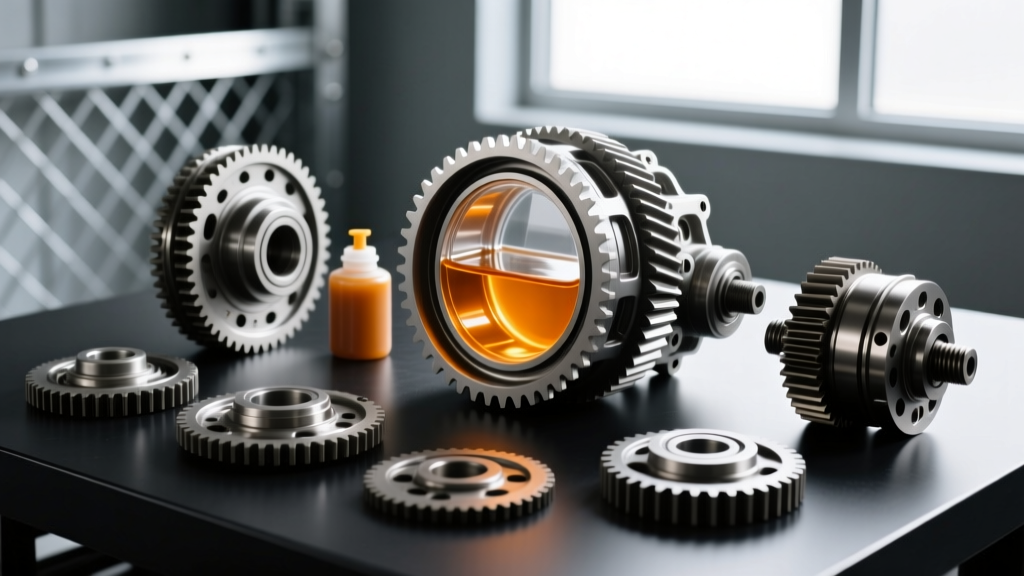
Filling the gear differential requires attention to the limited-slip mechanism. If your axle is equipped with a clutch-type Limited Slip Differential (LSD) like the Ford Traction-Lok or Auburn Gear Pro-Series, you must add a friction modifier.
Without the modifier, the clutch plates will bind during low-speed turns, resulting in severe chatter that can permanently warp the steel plates. Add the modifier (e.g., Motorcraft XL-3 or Red Line Limited Slip Friction Modifier) before pumping in the gear oil. Most standard LSDs require 2 to 4 ounces of modifier.
For standard towing applications and off-road trucks, upgrade from the factory 80W-90 to a full synthetic 75W-90 (such as AMSOIL Severe Gear or Royal Purple Max Gear). Synthetic fluids maintain their shear stability at the extreme pressures generated by the hypoid gear sliding action, resisting the thermal breakdown that leads to micro-pitting.
Advanced Troubleshooting: Checking Backlash
If your gear differential is clunking upon engagement but the fluid is clean, you may have excessive backlash. Backlash is the amount of free play between the ring gear and the pinion gear. Factory specifications typically demand between 0.006" and 0.010" of backlash.
To check this without a full teardown, mount a magnetic dial indicator to the axle housing and position the probe perpendicular to a ring gear tooth. Hold the pinion yoke completely stationary and rock the ring gear back and forth. If the dial reads over 0.015", the side bearings have likely collapsed, allowing the carrier to shift outward. Correcting this requires pulling the carrier, measuring the original shim thickness, and pressing in new Timken or SKF carrier bearings with updated shims.
Cost Breakdown: DIY vs. Professional Rear Axle Service (2026)
Understanding the financial landscape of differential maintenance helps you decide when to turn wrenches and when to hand the keys to a drivetrain specialist.
| Service Type | Estimated Cost (2026) | Includes |
|---|---|---|
| DIY Fluid & Gasket Service | $65 - $120 | 3 Quarts Synthetic 75W-90, Gasket/Locker, Friction Modifier, Brake Cleaner |
| Independent Shop Basic Service | $180 - $275 | Labor (1 hr), Bulk Synthetic Gear Oil, Pre-cut Gasket, Visual Inspection |
| Dealer Network Axle Service | $350 - $550+ | OEM Branded Fluids, High Hourly Labor Rate, Multi-Point Driveline Inspection |
| Full Bearing & Gear Rebuild | $1,200 - $2,800 | Master Bearing Kit, Ring & Pinion Set, Specialized Machining & Setup Labor |
Final Thoughts on Drivetrain Longevity
A properly maintained gear differential can easily outlast the engine and transmission of your vehicle. By paying close attention to acoustic symptoms, analyzing the drained fluid for metallic signatures, and adhering to strict torque and fluid specifications, you can prevent a minor bearing whine from turning into a catastrophic housing failure. For deep-dive technical specifications and setup manuals, always refer to authoritative manufacturer resources like Dana Spicer or consult technical bulletins from AMSOIL regarding extreme-pressure additive longevity. If you are sourcing replacement components or setting up custom gear ratios, Ring & Pinion Service remains a premier technical authority for install tolerances.