The 2014 Chevrolet Silverado 1500 marked the debut of GM’s highly successful K2XX platform. As of 2026, a vast majority of these trucks are crossing the 120,000 to 150,000-mile threshold, making preventive drivetrain maintenance more critical than ever. While engine oil changes are universally prioritized, the rear axle is frequently ignored until a catastrophic ring and pinion failure occurs. Understanding the nuances of your axle's lubrication is the difference between a truck that quietly reaches 300,000 miles and one that requires a $2,500 differential rebuild.
In this preventive maintenance guide, we will break down the exact specifications, visual diagnostic techniques for gear oil degradation, and the mechanical realities of servicing the K2XX rear axle.
Decoding the 2014 Silverado Rear Differential Fluid Capacity
When owners search for the 2014 silverado rear differential fluid capacity, they are often met with conflicting forum advice. The discrepancy arises because GM utilized two primary rear axle configurations for the 2014 Silverado 1500, depending on the trim level, cab configuration, and towing package. To determine your exact capacity, you must identify your RPO (Regular Production Option) codes, typically found in the glovebox.
| RPO Code | Axle Type / Ring Gear | Fluid Capacity | Cover Bolt Pattern |
|---|---|---|---|
| GU5 / GU6 / GT4 | 8.6-inch Semi-Float (10-Bolt) | 2.1 - 2.2 Quarts (2.0L) | 10-Bolt Cover |
| GT4 + G80 | 8.6-inch Semi-Float w/ Locker | 2.1 - 2.2 Quarts (2.0L) | 10-Bolt Cover |
| GU6 / GT4 (Max Trailering) | 9.5-inch Semi-Float (14-Bolt) | 2.75 - 3.0 Quarts (2.6L) | 14-Bolt Cover |
Note: Always purchase at least 3 quarts of 75W-90 Synthetic Gear Oil to account for spillage and the priming of the suction pump.
Visual Diagnostics: Differential Fluid Color and Condition
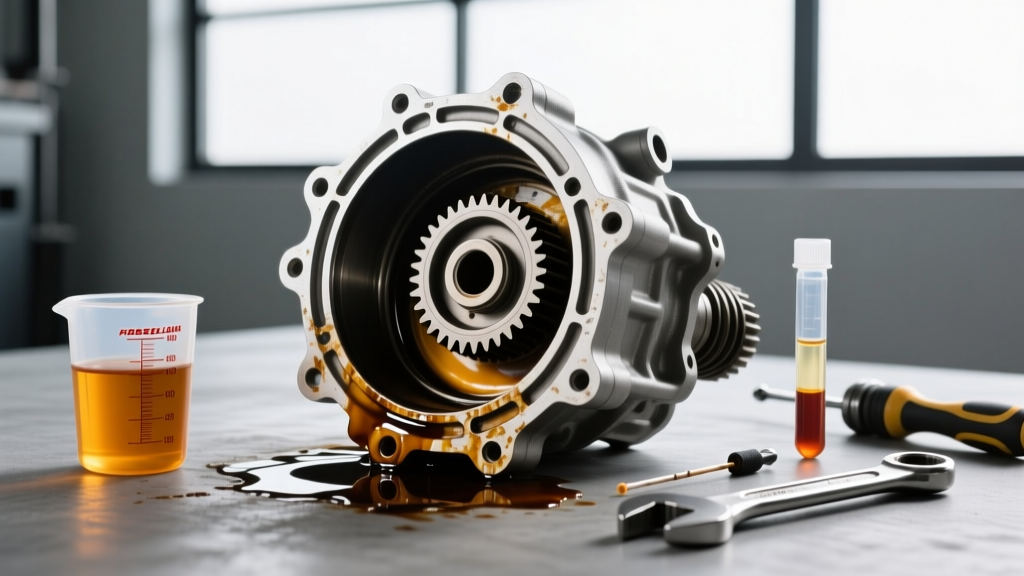
Draining or extracting your differential fluid provides a direct window into the health of your ring, pinion, and carrier bearings. Because the rear differential lacks a filtration system like your engine or transmission, the gear oil must suspend all microscopic wear metals and clutch pack debris. Evaluating the fluid's color, texture, and smell is a core pillar of axle preventive maintenance.
The Color Spectrum: What Your Gear Oil is Telling You
- Translucent Honey / Amber: This is the color of fresh, unused 75W-90 synthetic gear oil. If your fluid looks like this, your axle is in excellent health, and no immediate service is required.
- Opaque Dark Brown: Normal operational wear. The extreme pressure (EP) additives and friction modifiers darken over time due to thermal cycling and shear. This is expected at 30,000 to 50,000-mile intervals.
- Jet Black and Sludgy: Indicates severe thermal breakdown. The oil has lost its shear stability and film strength. If you tow heavy trailers without the Max Trailering package's external axle cooler, this is a common failure mode.
- Milky or Chocolate Milk Appearance: Critical Warning. This signifies water intrusion. On the 2014 K2XX platform, the axle vent tube is routed high on the chassis, but the O-ring seal at the axle housing can degrade, or the axle shaft seals can fail during water crossings. Water destroys the boundary lubrication layer, leading to rapid bearing scoring.
- Sparkling / Metallic Flake: Visible metallic glitter indicates active wear on the carrier bearings or the G80 locker clutch packs. Large metal chunks on the differential cover magnet mean immediate teardown is required.
Olfactory and Tactile Clues
Gear oil naturally contains sulfur-based EP additives, giving it a pungent, rotten-egg odor. However, if the fluid smells distinctly burnt or acrid, the differential has experienced extreme overheating, likely from aggressive towing or a dragging parking brake shoe inside the rear hat rotor. Tactilely, rub a drop of fluid between your fingers; if you feel gritty, sand-like particles, your pinion bearing cage is likely deteriorating.
The 10-Bolt Service Reality: Cover Removal vs. Suction
A major point of confusion for DIY mechanics is the service procedure for the 8.6-inch 10-bolt axle. Unlike older solid axles or modern heavy-duty setups, the GM 10-bolt differential cover does not feature a drain plug. It only has a fill plug on the front or side of the housing.
You have two options for fluid extraction:
- The Suction Method: Use a fluid transfer pump to extract the old oil through the fill hole. This is faster but leaves behind roughly 15% of the contaminated fluid and sludge resting at the bottom of the housing.
- The Cover Removal Method (Recommended): Unbolt the 10-bolt cover to completely drain the housing, clean the internal magnet, and inspect the ring gear teeth for abnormal wear patterns. According to industry differential experts, inspecting the magnet on the differential cover is a mandatory step for high-mileage preventive maintenance.
Torque Specifications: When reinstalling the 10-bolt cover, use a high-quality RTV silicone (like Permatex Ultra Black) or a premium gasket (like Fel-Pro RDS55042). Torque the M8 cover bolts to 22 lb-ft (30 Nm) in a crisscross star pattern to prevent housing distortion. The fill plug should be torqued to 24 lb-ft (33 Nm).
The G80 Eaton Locker Myth: Friction Modifiers
If your 2014 Silverado is equipped with the RPO G80 automatic locking rear differential, you must pay special attention to fluid chemistry. The aftermarket is saturated with limited-slip friction modifiers designed for Ford Trac-Lok or Chrysler 8.25 axles.
Expert Warning: Do NOT add limited-slip friction modifier to a GM G80 Eaton Locker. The G80 utilizes a mechanical flyweight and governor mechanism, not traditional clutch packs. Adding friction modifier can cause the locker to engage sluggishly or slip under heavy load. Standard 75W-90 Synthetic Gear Oil is all that is required.
For optimal protection, we recommend consulting the AMSOIL Lookup Guide for their Severe Gear 75W-90, or sticking to the OEM ACDelco 75W-90 Synthetic (Part # 10-9394). These formulations provide the exact shear stability required for the hypoid gear cut used in GM's 8.6 and 9.5-inch axles.
Establishing a Preventive Maintenance Interval
GM's original maintenance schedule labeled the rear differential fluid as 'lifetime' under normal driving conditions. From a 2026 mechanical engineering perspective, 'lifetime' simply means the warranty period. For a truck that sees highway towing, off-road use, or extreme temperature fluctuations, a drain, cover inspection, and refill every 50,000 miles is the gold standard for ensuring your ring and pinion survive the lifespan of the truck.