The OBD2 Scanner Confusion: Exhaust vs. Drivetrain
When DIYers and fleet technicians hook up advanced OBD2 bidirectional scanners to modern diesel trucks (such as the Duramax L5P or Ford Powerstroke 6.7L), a frequent point of confusion arises. You might find yourself asking: what is normal DPF differential pressure PSI? It is critical to understand that 'DPF differential pressure' refers to the Diesel Particulate Filter's exhaust delta-P sensor, which measures soot load across the exhaust filter—not the mechanical rear differential on your axle. Normal DPF differential pressure typically sits between 0.2 and 1.5 PSI at idle, climbing to 4.0–8.0 PSI under heavy load before triggering a regeneration cycle.
However, the rear axle does experience two distinct types of pressure that are vital to symptom diagnosis and rear differential service and maintenance: pneumatic internal pressure (regulated by breathers) and hydraulic clutch pressure (in active limited-slip and torque-vectoring systems). Misdiagnosing pressure-related failures in the rear differential can lead to catastrophic gear scoring, bearing failure, and thousands of dollars in rebuild costs. In this 2026 diagnostic guide, we bridge the gap between scanner data and physical drivetrain troubleshooting.
Rear Differential 'Pressure': What You Actually Need to Diagnose
1. Pneumatic Pressure (Thermal Expansion & Breathers)
Standard open differentials and mechanical locking differentials (like the Eaton G80 or Detroit Locker) do not operate on hydraulic PSI. Instead, they deal with pneumatic pressure caused by thermal expansion. As 75W-90 or 75W-140 gear oil heats up to normal operating temperatures of 180°F–220°F (and up to 275°F under heavy towing), the air inside the axle housing expands.
A properly functioning axle tube breather valve vents this expansion, keeping internal pressure at roughly 0 to 2 PSI above atmospheric. If the breather becomes clogged with mud, ice, or road grime, internal pressure can spike past 8–10 PSI. Because the axle housing is sealed, this pressure seeks the path of least resistance, inevitably blowing out the pinion seal or axle shaft seals, resulting in gear oil slung across your undercarriage and brake backing plates.
2. Hydraulic Pressure (Active E-LSD & Torque Vectoring)
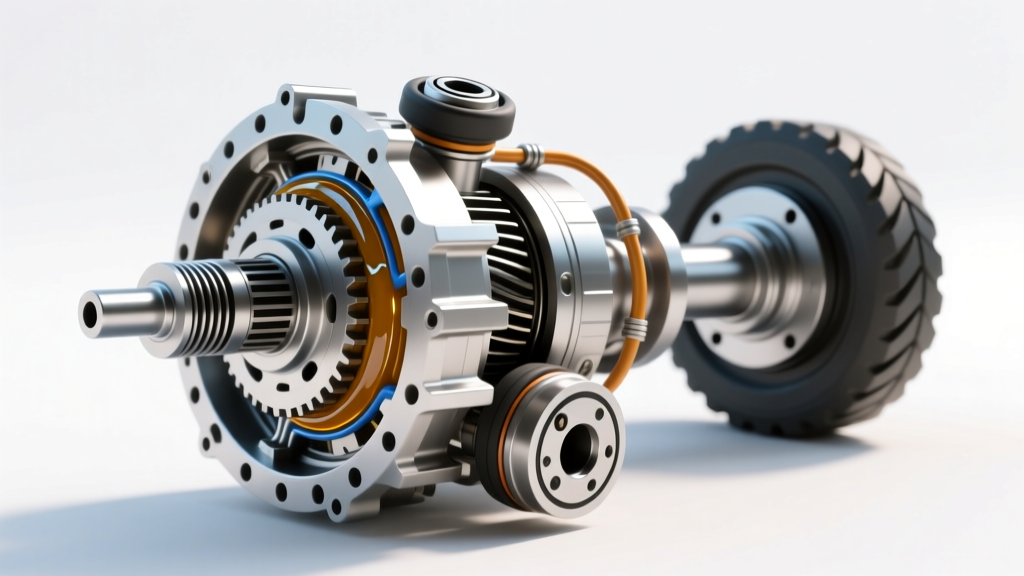
Modern performance and off-road vehicles utilize active Electronic Limited-Slip Differentials (E-LSD) or torque-vectoring rear axles (such as the ZF rear axle modules or GM's Alpha platform E-LSD). These units contain internal hydraulic pumps and clutch packs. Normal operating hydraulic pressure for these clutch packs ranges from 0 PSI (open) to 400+ PSI (fully locked) depending on steering angle, throttle position, and yaw rate. Low fluid levels or degraded friction modifiers in these specific units will cause clutch pack shudder, erratic torque distribution, and premature wear.
Symptom Diagnosis: Troubleshooting Rear Axle Pressure Failures
Before tearing into the differential cover, use this diagnostic framework to isolate pressure-related symptoms:
- Symptom: Pinion seal leak immediately after highway towing.
Diagnosis: Clogged axle housing breather. The thermal expansion of the gear oil created excessive pneumatic pressure.
Fix: Replace the breather valve (often a $5 part) and clean the axle tube vent line. Do not just replace the seal, or it will blow again. - Symptom: Shudder or binding during tight, low-speed turns.
Diagnosis: In clutch-type LSDs, the friction modifier has broken down, or the hydraulic actuation pressure is erratic due to contaminated fluid.
Fix: Perform a complete rear differential service, flushing old fluid and adding the exact OEM friction modifier (e.g., GM 12377916 or Ford XL-3). - Symptom: High-pitched whine on deceleration.
Diagnosis: While not strictly a 'pressure' issue, this indicates pinion bearing preload failure or gear tooth wear (heel/toe contact pattern shift). Fluid breakdown has led to metal-on-metal scoring.
2026 Rear Differential Service Protocol & Specifications
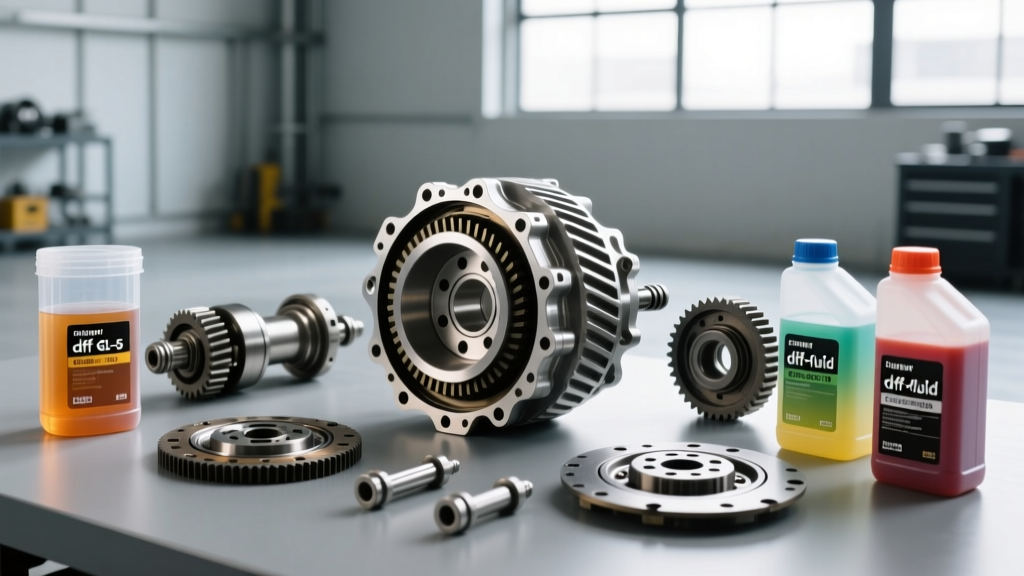
Proper rear differential service and maintenance requires adherence to exact torque specifications and fluid chemistries. Using standard GL-5 fluid in an active torque-vectoring differential without the correct additive package will destroy the clutch packs in under 5,000 miles. Below is a reference chart for common heavy-duty and performance rear axles.
| Axle Model | Fluid Capacity | OEM Fluid Spec | Cover Bolt Torque | Friction Modifier |
|---|---|---|---|---|
| GM AAM 11.5" (Duramax) | 3.3 Pints | 75W-90 Synthetic GL-5 | 33 lb-ft (45 Nm) | GM 12377916 (if LSD) |
| Ford Sterling 10.5" (Super Duty) | 3.5 Pints | 75W-140 Synthetic GL-5 | 35 lb-ft (47 Nm) | Ford XL-3 |
| Dana 80 (HD Trucks) | 7.4 Pints | 80W-90 or 75W-140 GL-5 | 35 lb-ft (47 Nm) | Dana Specific Additive |
| GM Alpha E-LSD (Camaro/CTS-V) | 2.1 Pints | DEXRON ULV / Specific E-LSD Fluid | N/A (Sealed Housing) | Integrated in Fluid |
Note: Always consult your specific 2026 owner's manual, as API GL-6 and MT-1 specifications are increasingly replacing older GL-5 standards in high-shear applications. For deep-dive fluid shear stability data, industry resources like Bob Is The Oil Guy gear oil forums provide excellent independent viscometry testing.
Step-by-Step Troubleshooting & Maintenance Procedure
When performing a rear differential service to resolve noise or seal issues, follow these expert steps to ensure longevity:
Step 1: The Pre-Drain Magnetic Analysis
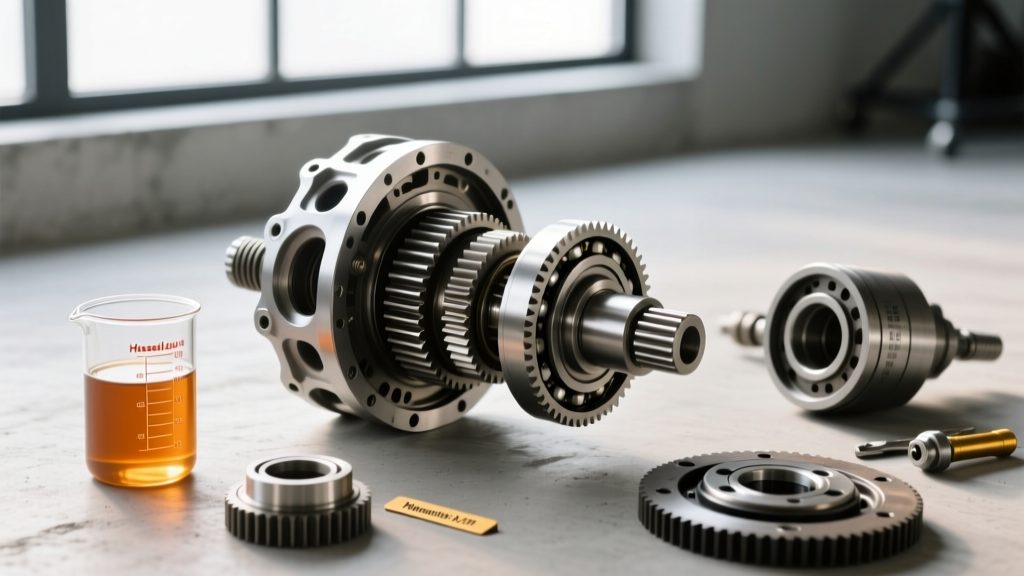
Before removing the cover or drain plug, wipe the fill plug area clean. When you remove the plug, inspect the fluid immediately. A milky appearance indicates water intrusion (often from a submerged axle breather). Fine metallic glitter is normal for a break-in period, but chunky ferrous metal shards indicate catastrophic bearing or ring-and-pion failure requiring a full rebuild.
Step 2: RTV vs. Gasket Sealing
Many modern axles (like the AAM 11.5") do not use a pre-cut gasket. They rely on RTV silicone. You must use a high-temp, oil-resistant RTV (such as Permatex Ultra Black or The Right Stuff). Apply a continuous 3mm bead, ensuring you circle the bolt holes completely to prevent vacuum leaks that can draw water into the housing during cold-water crossings.
Step 3: The Friction Modifier 'Figure-8' Test
If your axle is equipped with a clutch-type Limited Slip Differential, the friction modifier is non-negotiable. According to Dana Spicer technical service bulletins, failing to use the correct additive causes the clutches to grab and release rapidly (stick-slip phenomenon). After refilling with high-quality synthetic gear oil (like AMSOIL Severe Gear or Mobil 1 Synthetic), add the modifier. Drive the vehicle in a parking lot, performing tight 'figure-8' turns. If you hear a chirping or binding noise from the rear axle, add friction modifier in 1-ounce increments until the chatter disappears. Do not overfill, as excessive modifier reduces the overall coefficient of friction, leading to clutch slip under heavy throttle.
Final Thoughts on Drivetrain Diagnostics
Understanding the difference between exhaust sensor data and mechanical axle dynamics is the hallmark of a true drivetrain expert. While knowing what is normal DPF differential pressure PSI is crucial for diesel engine tuning and emissions compliance, mastering the pneumatic and hydraulic pressures of your rear differential ensures your torque actually makes it to the pavement. Regular maintenance, strict adherence to torque specs, and using the correct synthetic gear oils will keep your axle running silently and efficiently for hundreds of thousands of miles.