The Anatomy of Differential Noise: A Diagnostic Framework
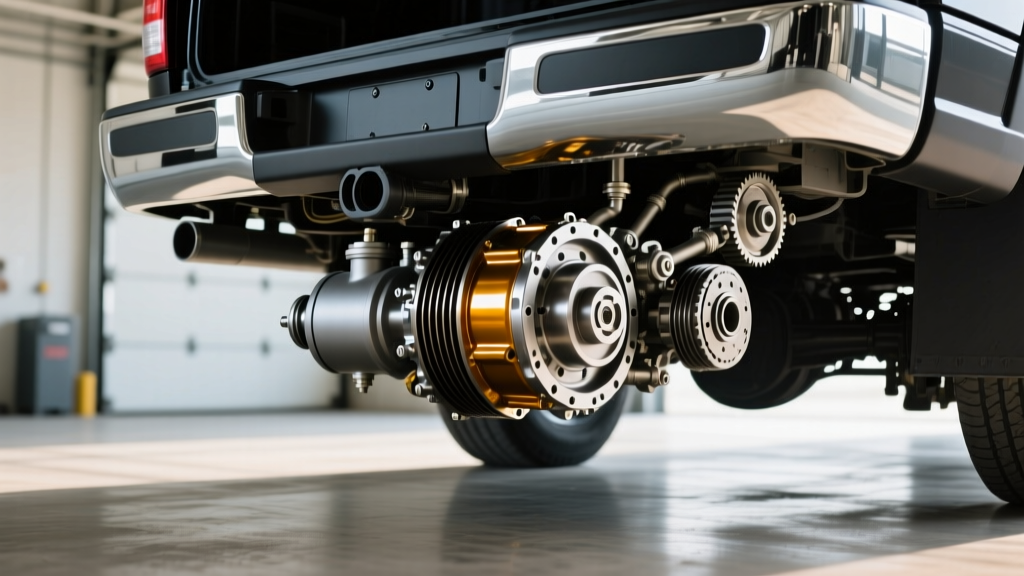
Diagnosing drivetrain NVH (Noise, Vibration, and Harshness) is one of the most critical skills for a modern chassis technician. A misdiagnosed wheel bearing or worn U-joint can lead to unnecessary teardowns, while ignoring a subtle pinion whine can result in catastrophic gear failure. When evaluating differential health, acoustic signatures combined with fluid analysis provide the most accurate roadmap for determining when to replace automotive differential parts.
Before unbolting the differential cover, a technician must categorize the noise based on load, speed, and throttle position. The gear mesh between the ring and pinion generates specific frequencies depending on which side of the tooth profile is under load.
Drive vs. Coast Whine: Pinion Bearing and Gear Mesh
A whine that occurs only under acceleration (drive side) typically points to a tight gear mesh, worn drive-side gear teeth, or a failing rear pinion bearing. Conversely, a whine that appears when lifting off the throttle (coast side) usually indicates a loose pinion bearing preload or wear on the coast side of the ring and pinion teeth. Pinion bearings, such as the ubiquitous Timken SET 10 used in Ford 8.8-inch and GM 10-bolt axles, are highly sensitive to preload loss. If the crush sleeve has relaxed over 100,000 miles, the pinion gear will micro-migrate under load, creating a high-pitched howl between 45 and 60 mph.
The "Clunk": Backlash and Spider Gear Wear
A metallic clunk when shifting from reverse to drive, or during abrupt throttle tip-in, is the hallmark of excessive backlash. While some backlash is necessary to prevent gear binding and allow for thermal expansion, specifications are tight. For a Ford 8.8-inch rear end, acceptable backlash is between 0.008 and 0.012 inches. For a Dana 44, it is 0.006 to 0.010 inches. If your dial indicator reads beyond 0.015 inches, the ring gear bolts may have stretched, the carrier bearings may be collapsed, or the spider gear thrust washers have disintegrated.
Fluid Forensics: Reading the Drain Plug
Because this diagnostic process heavily relies on the condition of the gear oil, fluid forensics is non-negotiable. The differential cover and drain plug magnet tell a story that acoustic tests cannot. When servicing the axle, document the following fluid degradation signs:
- Fine Metallic Paste (Silver/Grey): Normal wear for high-mileage differentials. Indicates microscopic shaving from the ring and pinion mating surfaces.
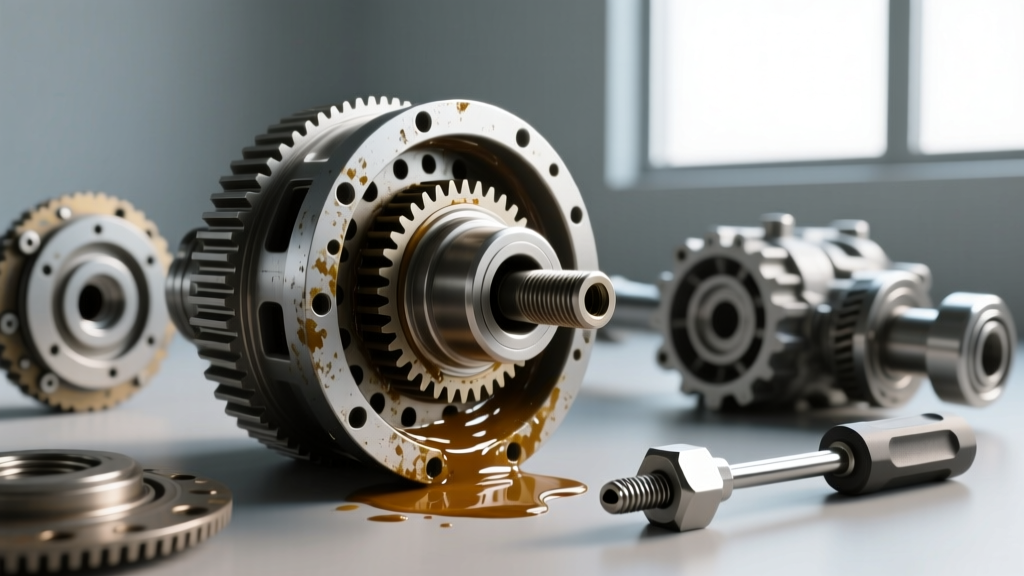
- Brass/Gold Flakes: Immediate red flag. This indicates the bronze thrust washers behind the spider gears are disintegrating, common in high-stress limited-slip differentials (LSDs) lacking proper friction modifiers.
- Chunky Ferrous Debris: Points to catastrophic bearing cage failure or chipped gear teeth. Requires a complete teardown and housing flush.
- Burnt Smell / Dark Black Oil: Indicates severe overheating. The extreme pressure (EP) additives in GL-5 gear oil have broken down, leading to boundary lubrication failure and micro-welding on the gear teeth.
Diagnostic Matrix: Noise to Component Mapping
Use the following matrix to cross-reference customer complaints with probable failed automotive differential parts.
| Acoustic Signature | Condition / Trigger | Probable Failed Component | Diagnostic Verification |
|---|---|---|---|
| High-Pitch Whine | Steady state, 45-60 mph | Rear Pinion Bearing / Low Preload | Check rotational preload (inch-lbs) |
| Low-Frequency Howl | Heavy load / Towing | Ring & Pinion Gear Wear / Fluid Starvation | Gear pattern analysis with marking compound |
| Metallic Clunk | Throttle tip-in / Direction change | Excessive Backlash / Worn Slip Yoke | Dial indicator on ring gear back-face |
| Chatter / Binding | Low-speed tight turns | LSD Clutch Pack / Missing Friction Modifier | Figure-8 test in parking lot |
| Rhythmic Knock | Speed-dependent, load-independent | Chipped Ring Gear Tooth / Axle Shaft Runout | Stethoscope on axle tube near bearing |
Step-by-Step Teardown and Measurement Protocol
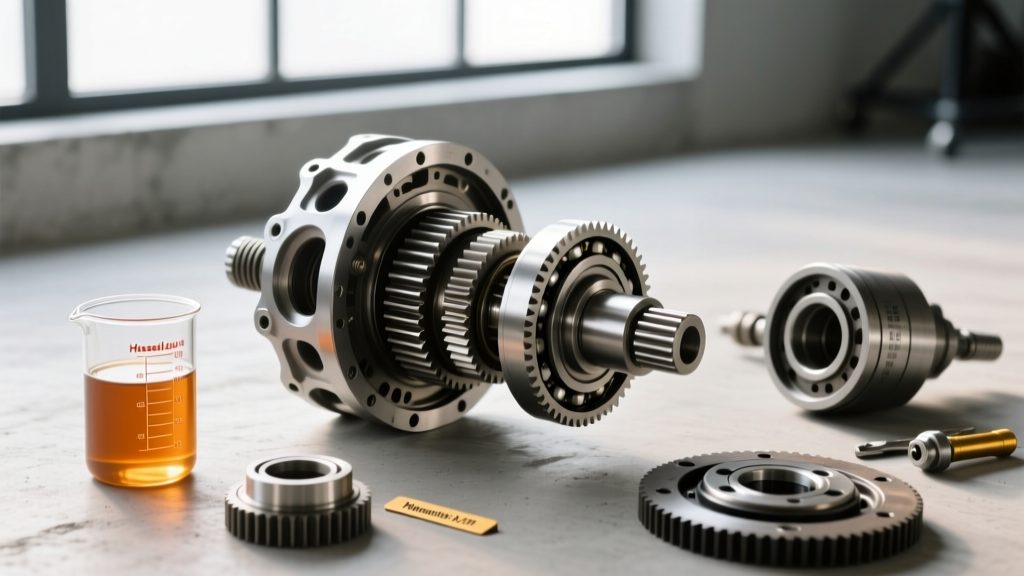
Once noise and fluid analysis confirm internal failure, precision teardown is required. According to the Dana Spicer resource library, improper teardown sequences can damage carrier housings, rendering them scrap.
- Measure Before Disassembly: Mount a magnetic dial indicator on the housing and measure ring gear runout. Runout exceeding 0.003 inches indicates a warped ring gear or a damaged carrier mating surface.
- Read the Pattern: Before removing the pinion, apply Permatex 80037 Yellow Gear Marking Compound to the ring gear teeth. Rotate the pinion under light braking load. A pattern shifted toward the toe (inner edge) requires moving the pinion deeper into the housing via pinion depth shims.
- Extract with Care: Use a hydraulic press and bearing splitter to remove carrier bearings. Never pry on the bearing cages, as this will score the carrier journals.
Sourcing and Specifying Automotive Differential Parts
When replacing components, the choice between OEM and aftermarket dictates longevity. For standard replacements, OEM gear sets are reliable, but for off-road or high-torque applications, aftermarket forgings are superior. Brands like Yukon Gear & Axle and Motive Gear offer 8620 carbon steel and 9310 chromoly options. 9310 chromoly is essential for drag racing or heavy rock-crawling due to its superior core toughness, though it requires precise setup as it is softer on the surface than 8620 steel.
Pro-Tip: Eliminate the Crush Sleeve
One of the most frustrating aspects of rebuilding a Ford 8.8 or GM 12-bolt is setting pinion bearing preload using a crush sleeve. Over-torquing the pinion nut by a fraction of an inch means replacing the sleeve and starting over. Expert builders utilize Crush Sleeve Eliminator Kits (e.g., Yukon SK SS8.8). These kits replace the deformable sleeve with a solid machined spacer and a stack of precision shims. This allows for infinite preload adjustments, ensures long-term reliability under heavy towing, and simplifies future pinion seal replacements.
Reassembly: Torque Specs and Fluid Selection
Reassembly requires strict adherence to torque specifications and fluid chemistry. Always consult the Timken bearing technical guides for exact preload metrics based on your specific bearing part numbers.
Crucial Torque Specifications (Ford 8.8 Reference)
- Ring Gear Bolts: 70-85 ft-lbs (Apply Red Loctite 271; these are left-hand thread on some older OEM setups, verify before turning).
- Bearing Cap Bolts: 70-85 ft-lbs (Mark with paint pen after torquing to verify no movement during heat cycles).
- Pinion Nut (with Crush Sleeve): 200-250 ft-lbs (Incrementally tighten while checking rotational preload).
- Pinion Bearing Preload (Used Bearings): 15-25 inch-pounds of rotational drag.
- Pinion Bearing Preload (New Bearings): 25-35 inch-pounds of rotational drag.
Fluid Chemistry: GL-5 and Friction Modifiers
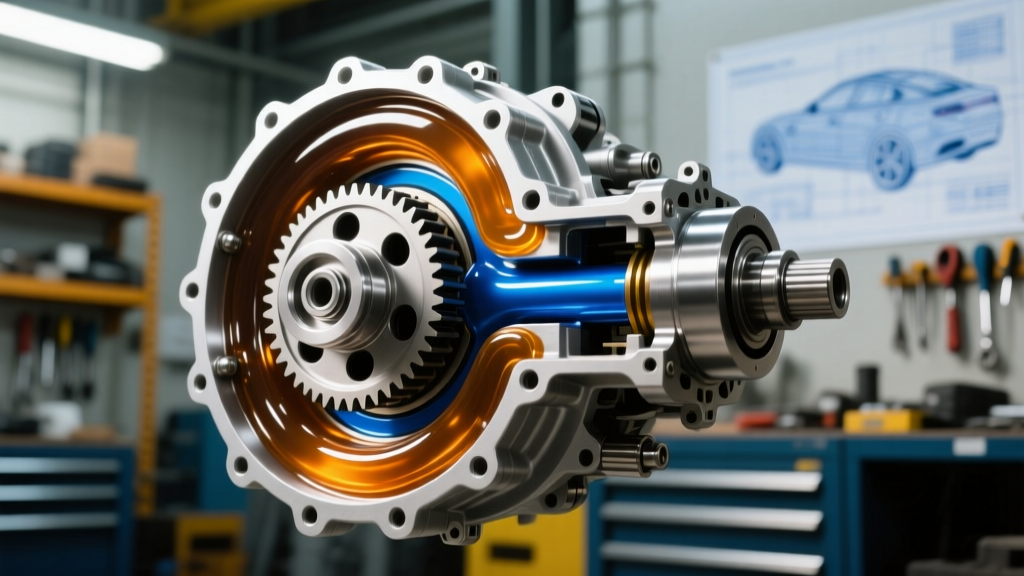
The final step in curing differential noise and ensuring longevity is fluid selection. Standard open differentials require a high-quality 75W-90 GL-5 Synthetic Gear Oil (e.g., Amsoil Severe Gear). The GL-5 designation is mandatory, as it contains sulfur-phosphorus extreme pressure (EP) additives that create a sacrificial film on the hypoid gear teeth, preventing metal-to-metal contact during the sliding action of the gear mesh.
If the axle is equipped with a clutch-type Limited Slip Differential (LSD) like the Ford Trac-Loc or Eaton Posi, you must add a specialized Friction Modifier (e.g., Motorcraft XL-3). Without this modifier, the clutch packs will grab and release abruptly during low-speed cornering, causing a severe chattering noise that customers often mistake for a broken axle. Note: Gear-driven LSDs like the Eaton Truetrac or Torsen do not use clutch packs and therefore do not require friction modifiers; adding them can actually reduce the bias ratio and performance of helical gear differentials.
By combining acoustic diagnostics, fluid forensics, and precision measurement, technicians can accurately isolate drivetrain faults. Investing the time to properly measure backlash, read gear patterns, and select the correct synthetic lubricants ensures that replaced automotive differential parts deliver quiet, reliable service for another 150,000 miles. For further setup diagrams and tolerance charts, refer to the Yukon Gear Tech Guides before finalizing your rebuild.