The Myth of the "Flush": Understanding Differential Service
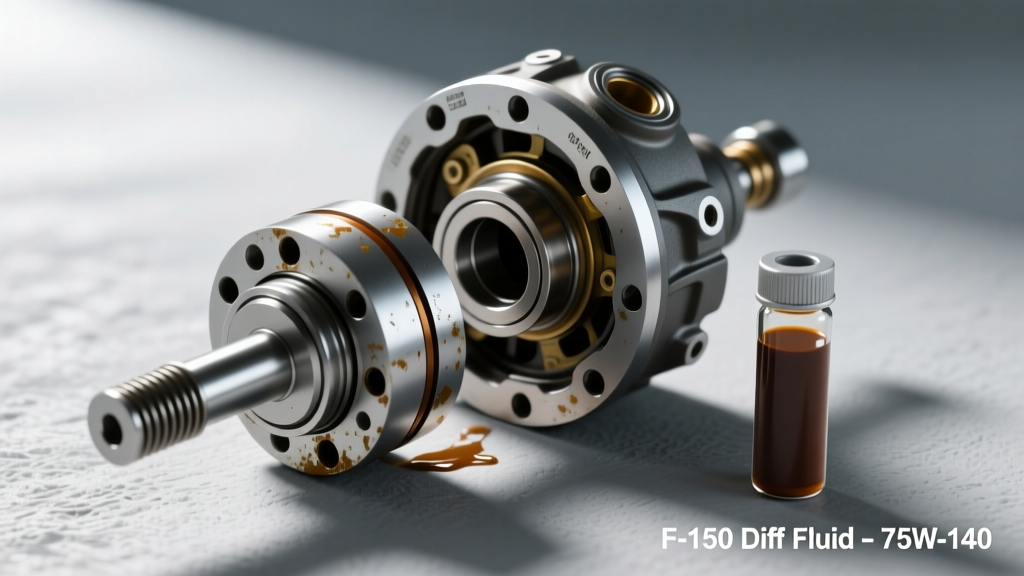
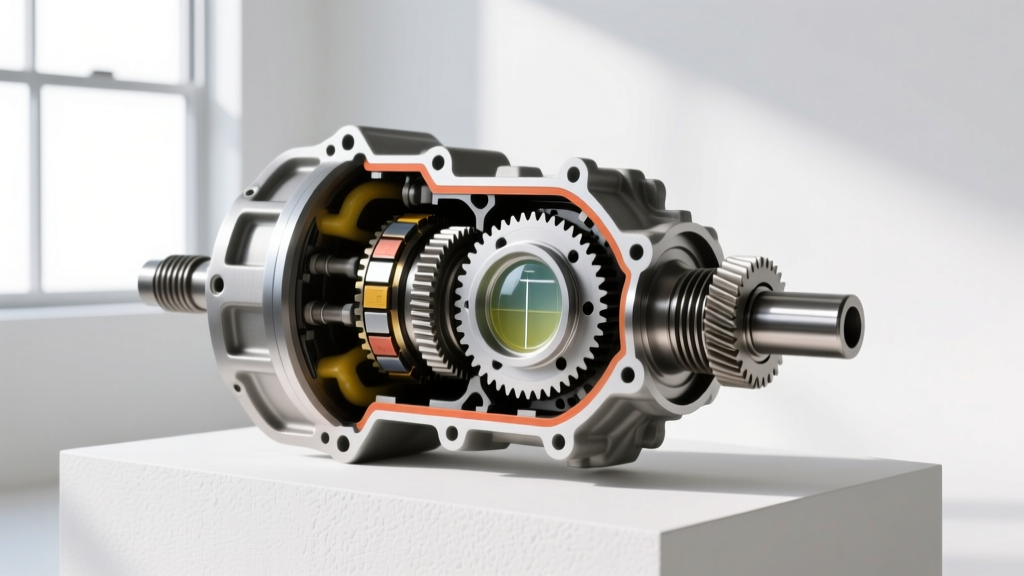
When drivers search for the differential flush cost, they are often applying automatic transmission logic to a completely different mechanical system. Unlike a ZF 8HP or GM 6L80 transmission, which utilizes pressurized hydraulic circuits, valve bodies, and remote coolers requiring a machine-assisted flush, a differential is a splash-lubricated gearcase. There are no filters to bypass and no cooling lines to flush. What the automotive industry often markets as a "differential flush" is, in reality, a meticulous drain, clean, and fill procedure. Understanding this distinction is the first step in avoiding overpriced dealership service menus and ensuring your ring and pinion gears receive the exact chemical protection they require.
In this 2026 buyer’s guide, we will break down the real costs of differential servicing, decode the complex world of API gear oil specifications, and provide the exact hardware and torque data you need to make an informed decision for your car, truck, or SUV.
Breaking Down the Differential Flush Cost: Dealership vs. DIY
The pricing for differential service varies wildly depending on who is turning the wrench and what fluids they are pumping in. Here is a realistic look at the market rates for a standard rear-axle service in 2026.
1. The Dealership "Flush" ($250 - $450 per axle)
Many franchised dealerships bundle differential service into 30,000-mile or 60,000-mile "drivetrain flush" packages. You are paying for high shop labor rates (often $150–$220/hour) and OEM-branded fluids. While the OEM fluid is guaranteed to meet minimum factory specifications, dealerships rarely use premium synthetic boutique oils, and they frequently overcharge for the friction modifier additives required for limited-slip differentials.
2. Independent Drivetrain Shop ($130 - $220 per axle)
A specialized 4x4 or drivetrain shop will typically pull the differential cover, scrape the mating surface, clean out metallic sludge from the magnetic drain plug, and refill with a high-quality name-brand synthetic like Mobil 1 or Valvoline. This is the sweet spot for owners who lack the tools or space to do it themselves but want to avoid dealership markups.
3. The DIY Enthusiast ($45 - $95 per axle)
Doing it yourself yields the highest return on investment. For under $100, you can purchase top-tier full synthetic gear oil, a dedicated limited-slip friction modifier, and a premium reusable gasket. The only investment required is your time, a 3/8-inch square drive socket, and a torque wrench.
Decoding Gear Oil Chemistry: API GL-4 vs. GL-5
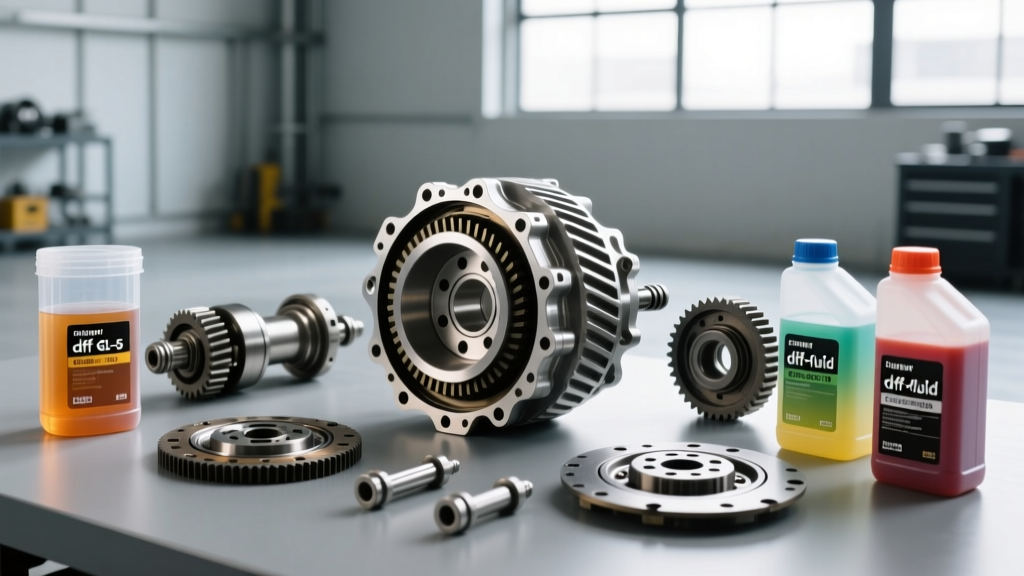
Not all gear oils are created equal. The American Petroleum Institute (API) classifies gear lubricants based on their Extreme Pressure (EP) additive packages. Choosing the wrong spec can lead to catastrophic wear or chemical corrosion.
- API GL-4: Contains moderate levels of EP additives (typically sulfur-phosphorus). This is primarily used in manual transmissions and transaxles where yellow metals (brass, bronze, copper) are present in synchronizers. High levels of sulfur can corrode these soft metals over time.
- API GL-5: Contains roughly twice the EP additives of GL-4. This is the mandatory specification for hypoid ring and pinion gears found in virtually all automotive differentials. The hypoid gear design creates immense sliding friction under heavy loads; the sulfur-phosphorus compounds in GL-5 oil react with the metal surfaces under high heat to form a sacrificial solid film, preventing metal-on-metal welding and pitting.
Expert Warning: Never use API GL-5 in a manual transaxle that specifically calls for GL-4, as the active sulfur will eat away at your brass synchronizers. Conversely, never use GL-4 in a hypoid differential, or you will rapidly destroy the ring and pinion gears under load. For deep technical specifications on axle lubrication requirements, refer to the engineering guidelines provided by Dana Spicer.
Viscosity Showdown: Choosing the Right Weight
Viscosity dictates how well the fluid maintains its protective film under varying temperatures and loads. While 75W-90 is the modern factory standard for most light-duty SUVs and trucks, severe-duty applications require a different approach.
| Viscosity Grade | Base Oil Type | Best Application | Operating Temp Profile |
|---|---|---|---|
| 75W-85 | Synthetic Blend | Modern OEM fuel-economy axles (e.g., GM 8.6") | Standard commuting, light loads |
| 75W-90 | Full Synthetic | Daily driving, mild towing, winter climates | Broad temperature range, excellent cold flow |
| 80W-90 | Conventional | Budget services, older solid-axle farm/ranch trucks | Warm climates, shorter drain intervals |
| 75W-140 | Full Synthetic | Heavy towing, off-road rock crawling, track use | High sustained heat, heavy shock loading |
If you regularly tow a trailer exceeding 5,000 lbs or subject your rig to low-speed, high-torque rock crawling, stepping up to a 75W-140 synthetic (such as those meeting MIL-PRF-2105E specifications) is highly recommended to prevent the fluid from shearing and losing film strength. For comprehensive tribology data on synthetic gear lubricants, enthusiasts and builders frequently consult the technical data sheets available from Amsoil's Severe Gear line.
The Limited-Slip Differential (LSD) Additive Dilemma
This is where the majority of differential services go wrong. If your vehicle is equipped with a clutch-type Limited-Slip Differential (such as the Ford 8.8 Traction-Lok, Auburn LSD, or Eaton Positraction), the internal clutch packs will chatter, bind, and destroy themselves during low-speed turns without a specialized Friction Modifier (FM).
When to Add Friction Modifier:
- Clutch-Type LSDs: Require 2 to 4 ounces of FM additive. Popular, proven part numbers include Motorcraft XL-3 and Red Line 70104.
- OEM Synthetic Oils: Many modern "LS" branded synthetic gear oils (e.g., Valvoline High Performance Gear Oil LS) already contain a baseline dose of friction modifier. However, heavy-duty clutch packs often require an additional top-off dose to eliminate chatter completely.
When to AVOID Friction Modifier:
- Helical Gear LSDs: Torsen differentials (common in Audi Quattro and GM G80 applications) and Detroit TrueTrac units operate on gear-binding mechanics, not clutch packs. Adding a friction modifier to these units reduces the coefficient of friction on the gears, effectively ruining their torque-biasing capability.
- Open Differentials: Standard open diffs require no modifier.
- Locking Differentials: Automatic mechanical lockers (like the Detroit Locker) or electronic lockers do not use friction clutches and do not require FM additives.
Hardware, Sealing, and Torque Specifications
A proper differential service is only as good as the seal keeping the fluid inside. The debate between RTV silicone and pre-cut gaskets is a staple of drivetrain forums. While Permatex Ultra Black is an excellent RTV for stamped steel covers, it requires meticulous cleaning and cure time. For the modern DIYer, reusable elastomer gaskets like the LubeLocker series (e.g., part number LLRD44 for a Dana 44, or LLF88 for a Ford 8.8) are vastly superior. They seal instantly, require no RTV, and can be reused indefinitely.
Critical Torque Specs (Always verify with your specific factory service manual):
- 3/8" Square Drain/Fill Plugs: 25 - 30 lb-ft. (Over-torquing these will crack the cast housing or strip the soft threads).
- GM 8.6" / 9.5" / 10-Bolt Cover Bolts: 25 lb-ft.
- Ford 8.8" Cover Bolts: 28 - 33 lb-ft.
- Dana 44 / Dana 60 Cover Bolts: 30 - 35 lb-ft.
Pro-Tip: Always remove the fill plug before you remove the drain plug or drop the cover. If the fill plug is seized or stripped, you do not want to be left with an empty differential and no way to refill it.
Final Verdict: Maximizing Drivetrain ROI
When evaluating the true differential flush cost, the smartest financial move is usually the DIY route or utilizing a trusted independent 4x4 shop. Dealerships charge a premium for a service that is fundamentally simple, often using baseline conventional fluids that fall short of what heavy-duty or modified vehicles require. By understanding the critical differences between API GL-4 and GL-5, selecting the correct viscosity for your towing and climate needs, and respecting the strict requirements of clutch-type LSD additives, you can extend the life of your ring and pinion gears well past the 150,000-mile mark. Invest in high-quality synthetic lubricants, precise torque settings, and reusable gaskets, and your drivetrain will reward you with quiet, reliable operation for years to come.