The Critical Role of Fluid in Rear Differential Gears Health
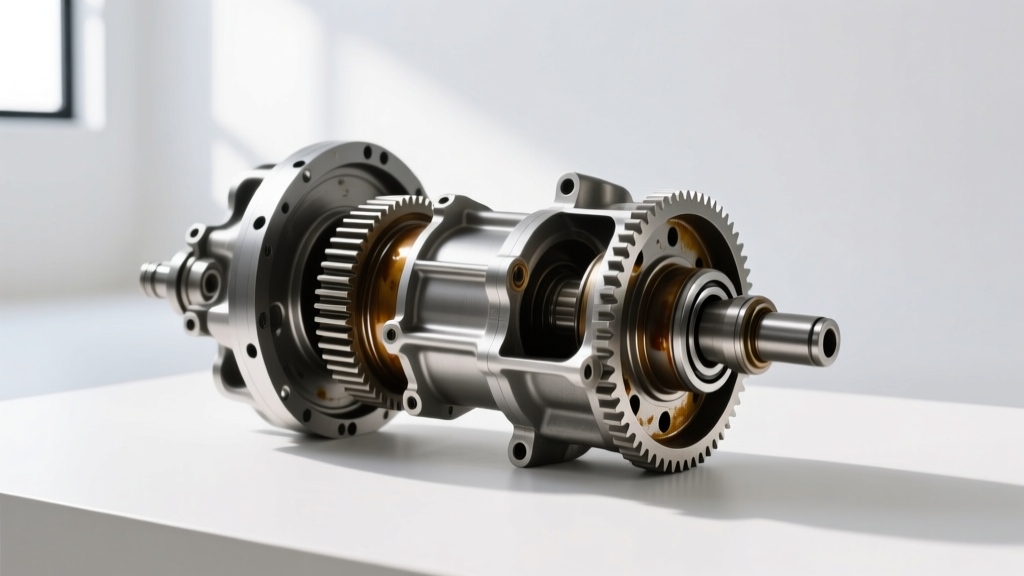
The rear axle assembly is one of the most abused drivetrain components in any vehicle. Whether you are driving a daily commuter, a heavy-duty tow rig, or a dedicated off-road build, your rear differential gears operate under immense sliding and rolling friction. The hypoid ring and pinion set, along with the internal spider and side gears, rely entirely on a microscopic hydrodynamic film of GL-5 gear oil to prevent metal-on-metal contact. In 2026, with modern synthetic lubricants pushing service intervals further than ever before, many owners mistakenly adopt an 'out of sight, out of mind' approach to axle maintenance.
However, preventive maintenance is not just about swapping fluid on a schedule; it is about reading the fluid to understand the internal mechanical state of the axle. The gear oil acts as a liquid historian, capturing the byproducts of wear, thermal stress, and environmental intrusion. By learning to decode differential fluid color and condition, you can diagnose the health of your rear differential gears long before catastrophic spalling, tooth shearing, or bearing seizure occurs.
The Baseline: What Healthy Differential Fluid Looks Like
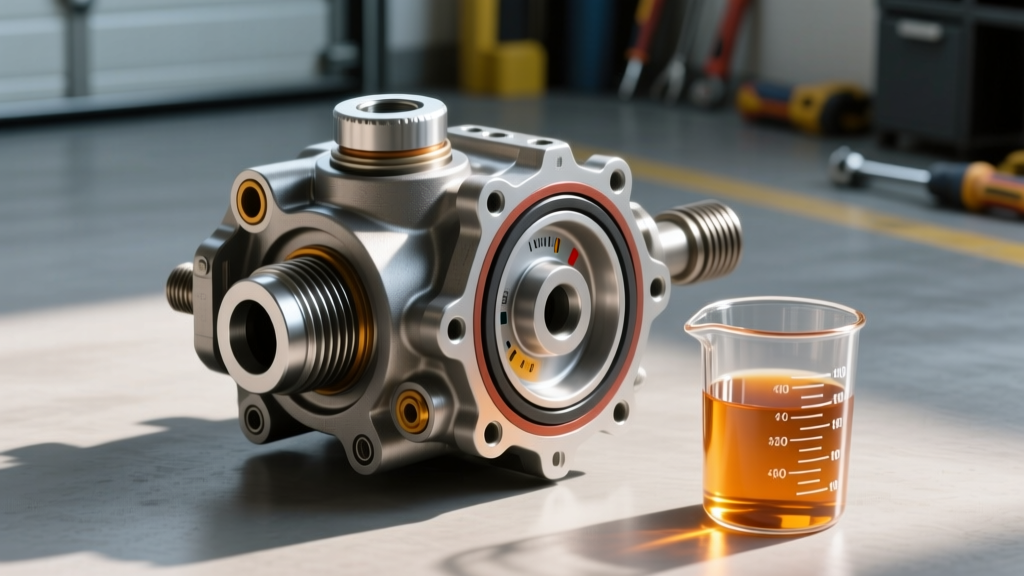
Before diagnosing a problem, you must understand the baseline. Fresh, healthy gear oil—whether it is a conventional 80W-90 or a full synthetic 75W-140—typically exhibits a clear, translucent amber or honey-like hue. It should flow smoothly at room temperature and possess a distinct, pungent sulfur odor. This smell is not a defect; it is the result of extreme pressure (EP) additives, specifically zinc dialkyldithiophosphate (ZDDP) and sulfur-phosphorus compounds, which are chemically required to protect the sliding contact patches of hypoid rear differential gears.
If your fluid matches this description, your axle seals are intact, the breather valve is functioning, and the internal metallurgy is stable.
The Color Spectrum: Decoding Rear Differential Gears Wear
When fluid deviates from its amber baseline, it is communicating a specific mechanical or environmental failure. Here is how to interpret the color spectrum during a preventive maintenance drain.
Milky, Frothy, or Chocolate-Milk Appearance
A milky emulsion indicates water intrusion. Water and oil do not mix naturally, but the churning action of the ring gear whips them into a frothy emulsion. This is highly destructive. Water compromises the boundary lubrication layer, leading to hydrogen-induced cracking and rust pitting on the precision-machined teeth of the rear differential gears.
- Primary Causes: A submerged axle crossing a water hazard, a degraded axle shaft seal, or a clogged axle breather tube that sucks in condensation during the cooling cycle after a hot run.
- Action Required: Immediate fluid flush. Inspect and clear the axle breather valve (usually located on the upper axle tube). If the fluid is heavily emulsified, inspect the wheel bearings and ABS tone rings for rust damage.
Dark Brown to Opaque Black
While a slight darkening is normal over 30,000 miles, an opaque, sludgy black fluid indicates severe thermal breakdown and oxidation. When gear oil exceeds its thermal stability threshold (typically around 300°F to 350°F for conventional oils), the base stocks polymerize and the EP additives deplete.
- Primary Causes: Chronic heavy towing, undersized differential fluid capacity, or failure to upgrade to a high-viscosity synthetic like 75W-140. Black sludge also accumulates when clutch-type Limited Slip Differentials (LSD) chatter due to missing friction modifiers, shedding clutch material into the sump.
- Action Required: Drain, flush with a lightweight carrier oil if sludge is heavy, and refill with a premium synthetic GL-5. If the vehicle has an LSD, ensure the correct dose of friction modifier (e.g., Motorcraft XL-3 or equivalent) is added.
Silver Glitter, Gray Paste, or Metallic Chunks
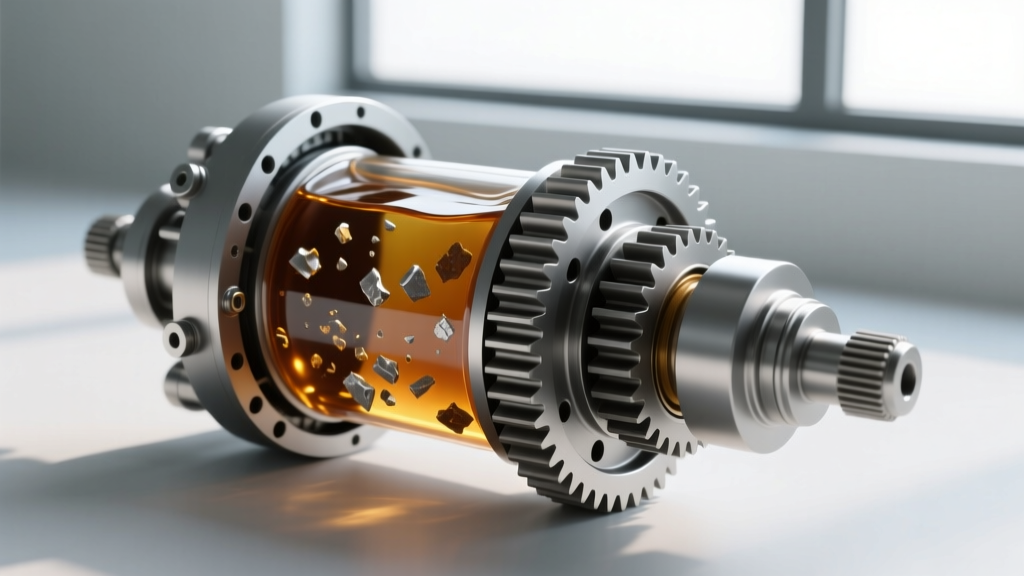
This is the most alarming visual indicator. A sparkling 'glitter' effect means active wear is occurring. The rear differential gears are typically forged from 8620 or 9310 alloy steel and carburized to a surface hardness of 58-62 HRC. When the hard outer case wears through, the softer core is exposed, accelerating wear exponentially.
- Fine Glitter: Normal break-in wear if the axle has under 5,000 miles. On a high-mileage axle, it indicates micropitting or early bearing cage degradation.
- Gray Paste: Often composed of pulverized bronze from the spider gear thrust washers or the pinion gear support bearings.
- Visible Chunks/Flakes: Macropitting, gear tooth spalling, or bearing shatter. The axle requires immediate teardown and a full rebuild kit.
Tactile and Olfactory Diagnostics
Visual inspection must be paired with tactile and olfactory checks to complete the diagnostic picture.
The Rub Test: Rub a drop of the drained fluid between your thumb and index finger. It should feel slick and oily. If you feel grit, abrasives, or microscopic metallic shards, your rear differential gears are suffering from abrasive wear. If the fluid feels unusually thin or watery, the viscosity index improvers have sheared, and the oil can no longer maintain a protective film under load.
The Smell Test: As mentioned, sulfur is normal. However, a sharp, acrid, 'burnt toast' odor indicates that the fluid has been subjected to extreme localized overheating. This often happens when the pinion bearing preload is set too tight during a previous gear setup, generating massive friction at the pinion head bearing.
Fluid Analysis Matrix: Condition vs. Action Plan
Use this diagnostic table to determine your next preventive maintenance steps based on the drained fluid's condition.
| Fluid Appearance | Tactile Feel | Odor | Probable Root Cause | Required Action Plan |
|---|---|---|---|---|
| Translucent Amber | Smooth, slick | Pungent sulfur | Normal operation | Standard refill to OEM spec |
| Milky / Frothy | Watery, thin | Musty, faint sulfur | Water intrusion via seal or breather | Flush, clear breather, check seals |
| Opaque Black Sludge | Thick, sticky | Burnt, acrid | Thermal breakdown, LSD clutch wear | Flush, upgrade to 75W-140 synthetic |
| Gray Metallic Paste | Gritty, abrasive | Normal to slightly burnt | Bronze washer or bearing cage wear | Inspect side gears, plan rebuild |
| Amber with Glitter | Micro-grit present | Normal sulfur | Active gear spalling or bearing wear | Magnetic plug check, teardown required |
Step-by-Step Inspection Protocol
To accurately read the fluid, you must extract it correctly. Never rely solely on the fluid that drips from the fill plug.
- Warm the Axle: Drive the vehicle for 15-20 minutes to bring the gear oil up to operating temperature. This suspends wear particles in the fluid and reduces viscosity for a complete drain.
- Clean the Exterior: Pressure wash the differential cover and fill plug area. Introducing external dirt into the sump during inspection defeats the purpose of preventive maintenance.
- Extract and Catch: Remove the fill plug first (to ensure you can refill it later), then remove the drain plug or drop the cover. Drain the fluid into a clean, shallow, light-colored pan.
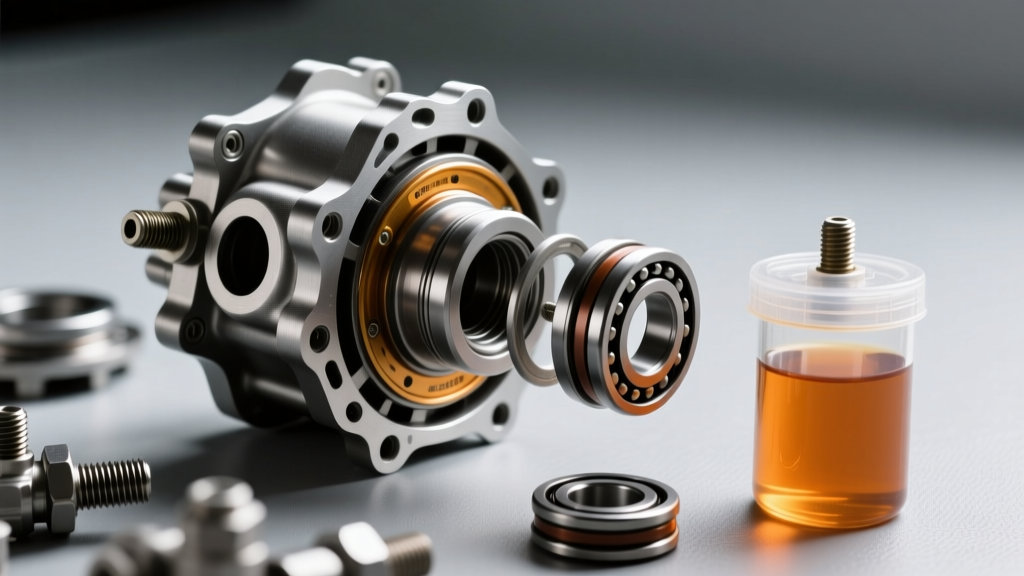
- Inspect the Magnetic Plug: Most modern drain plugs are magnetic. A fine, fuzzy coating of dark metallic powder is normal. Sharp, jagged flakes or chunks larger than a grain of rice indicate severe mechanical failure of the rear differential gears or bearings.
Common Axle Specifications and Torque Data
Proper preventive maintenance requires adhering to exact fluid capacities and torque specifications. Over-tightening differential covers, especially on aluminum housings, will warp the mating surface and guarantee leaks. Below are specifications for three of the most common axles on the road today, sourced from Dana Incorporated and OEM service manuals.
Ford 8.8-Inch (Super 8.8 / Traction-Lok)
- Fluid Spec: 75W-140 Synthetic GL-5 (Motorcraft or equivalent).
- Capacity: Approximately 3.7 to 4.0 pints (varies by cover design).
- Friction Modifier: 4 oz of XL-3 required for Traction-Lok LSD.
- Torque Specs: Fill plug 30 lb-ft; Cover bolts (if equipped) 25-30 lb-ft in a crisscross pattern.
Dana Spicer 44 / 44 HD
- Fluid Spec: 80W-90 or 75W-90 Synthetic GL-5.
- Capacity: Approximately 4.0 to 4.5 pints.
- Friction Modifier: Required only if equipped with an aftermarket or OEM clutch-type LSD (e.g., Truetrac is a helical gear design and does NOT require modifier).
- Torque Specs: Fill/Drain plugs 25-30 lb-ft; Cover bolts 30-35 lb-ft.
GM 8.6-Inch (10-Bolt) / 9.5-Inch (14-Bolt SF)
- Fluid Spec: 75W-90 Synthetic GL-5 (ACDelco Dexron Gear Oil).
- Capacity: 8.6-inch holds ~4.2 pints; 9.5-inch holds ~5.5 pints.
- Friction Modifier: Required for Gov-Lok or Eaton M-Locker differentials.
- Torque Specs: Fill plug 25 lb-ft; Cover bolts 22-25 lb-ft (use caution on thin stamped steel covers).
The Economics of Neglect
Ignoring the visual warnings present in your differential fluid is a costly gamble. A complete preventive maintenance fluid swap using top-tier AMSOIL or Mobil 1 synthetic gear oil, combined with a new RTV gasket and friction modifier, will cost between $60 and $120 in materials.
Conversely, allowing water-contaminated or thermally degraded fluid to destroy the rear differential gears will result in a full axle rebuild. A professional ring and pinion replacement, including a master bearing kit, seals, and machine shop setup labor, routinely ranges from $1,800 to $3,500 depending on the axle complexity and labor rates. By treating your differential fluid as a diagnostic window rather than just a consumable lubricant, you protect your drivetrain investment and ensure reliable power delivery to the pavement.
Expert Takeaway: Never ignore a change in axle noise. If your rear differential begins to howl on deceleration or whine under load, check the fluid condition immediately. The fluid will almost always tell you exactly which bearing or gear set is failing before the housing cracks.