The Critical Link Between Fluid Health and NVH
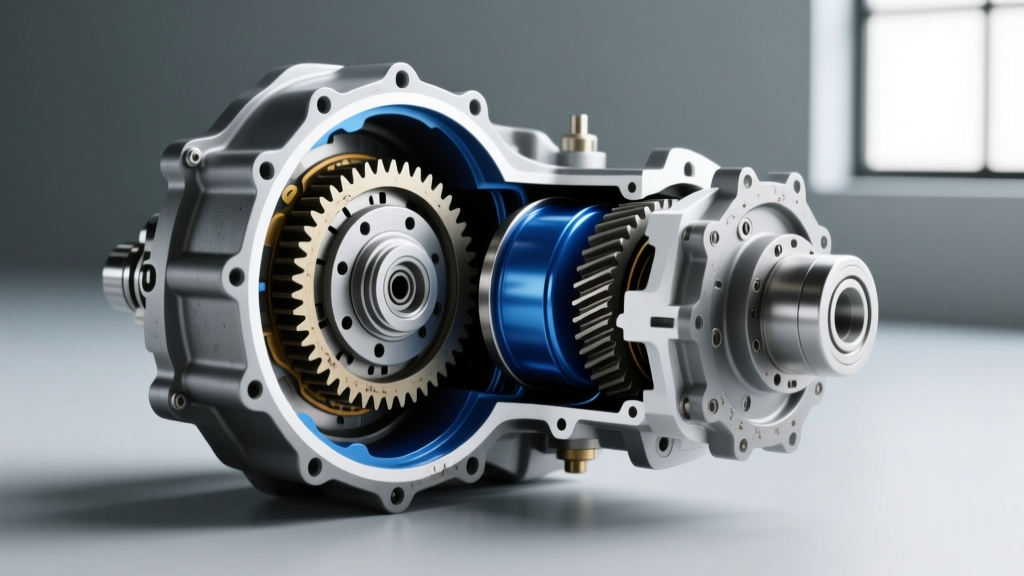
In modern all-wheel-drive (AWD) and four-wheel-drive (4WD) platforms, the front differential is subjected to immense thermal and mechanical stress. Whether you are dealing with a traditional Independent Front Suspension (IFS) pumpkin on a 2026 Toyota Tacoma or an integrated Power Transfer Unit (PTU) on a transverse Ford Explorer, fluid degradation is the leading precursor to catastrophic gear failure. Knowing exactly how to check front differential fluid is not just a routine maintenance task; it is the primary diagnostic baseline for troubleshooting Noise, Vibration, and Harshness (NVH) complaints.
When customers report a whining, howling, or clunking noise from the front axle, the fluid's condition tells a forensic story. Burnt fluid indicates chronic overheating and bearing preload loss, while suspended metallic glitter points to synchro, thrust washer, or needle bearing disintegration. Before tearing down a differential or ordering a remanufactured unit, a systematic fluid inspection and acoustic diagnosis are mandatory.
Expert Guide: How to Check Front Differential Fluid
The procedure for inspecting front differential fluid varies significantly depending on the drivetrain architecture. Here is the professional workflow for accurate inspection:
- Vehicle Leveling and Temperature: The vehicle must be on a perfectly level lift. For traditional IFS differentials, checking at ambient temperature is acceptable. However, for transverse AWD systems with integrated PTUs, manufacturers often require the fluid to be at operating temperature (140°F - 180°F) because the fluid expands and settles differently within the complex internal baffling.
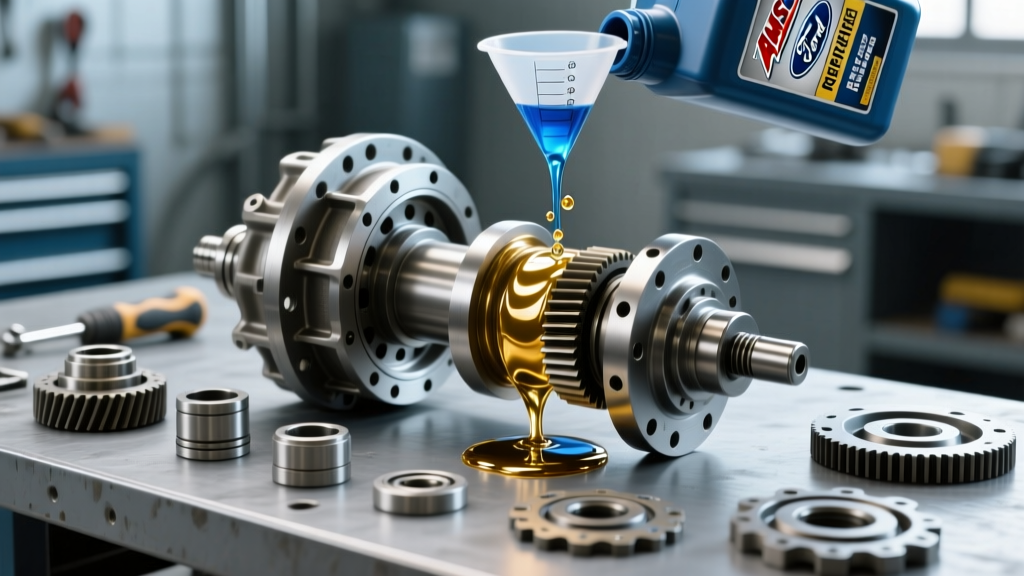
- Plug Removal Sequence: Always remove the fill plug before the drain plug. If the fill plug is seized or stripped, you do not want to be left with a drained differential and no way to refill it. Use a 6-point socket or the correct square drive (typically 3/8" or 1/2") to prevent rounding the soft aluminum or cast-iron plug heads.
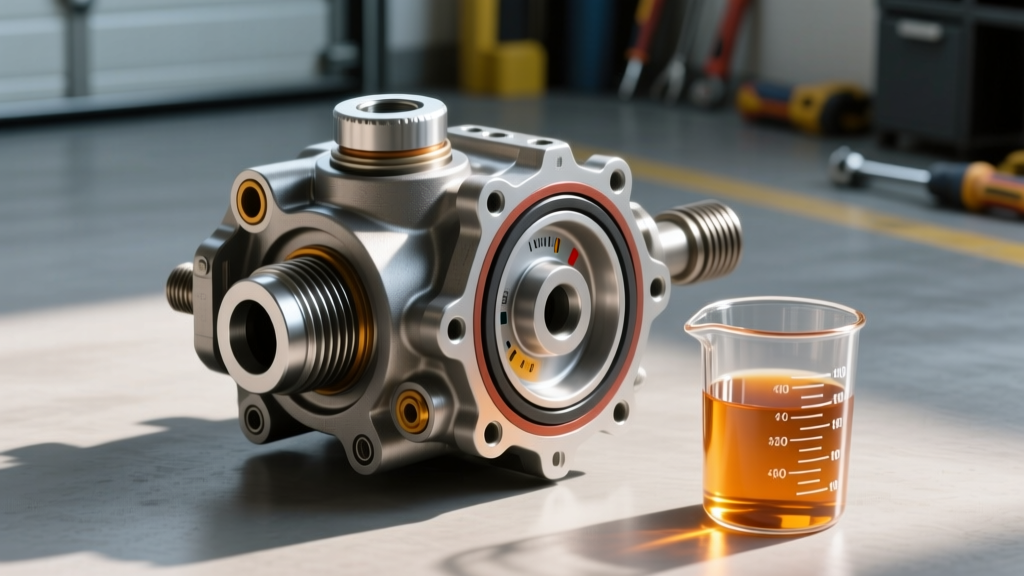
- Level Verification: Fluid should be exactly level with the bottom of the fill hole threads. If it is low, inspect the axle tube seals and the pinion seal for weeping.
- Forensic Fluid Analysis: Wipe the fluid from the dipstick or your finger onto a white paper towel. Look for the following indicators:
- Dark Black / Burnt Smell: Fluid has exceeded its thermal threshold (usually above 300°F). The extreme pressure (EP) additives have broken down, leading to ring and pinion scoring.
- Fine Metallic Glitter: Normal wear for the first 10,000 miles, but in high-mileage units, it indicates thrust bearing or spider gear wear.
- Chunky Metal / Teeth Fragments: Catastrophic gear tooth shearing or pinion bearing cage failure. A rebuild or replacement is immediately required.
Diagnostic Matrix: Decoding Front Differential Noises
Once the fluid level and condition are verified, the next step in differential noise diagnosis and troubleshooting is acoustic mapping. According to AA1Car's differential diagnostic guide, isolating the noise based on load and speed is the most reliable way to pinpoint the failing component without unnecessary teardowns.
| Noise Type | Driving Condition | Probable Component Failure | Expert Verification Method |
|---|---|---|---|
| Whining / Singing | Under Load (Acceleration) | Ring & Pinion gear wear (Drive side); Tight pinion bearing preload. | Check gear pattern with yellow marking compound; verify pinion bearing inch-pound preload. |
| Whining / Howling | Coasting (Foot off throttle) | Ring & Pinion gear wear (Coast side); Loose pinion bearing preload. | Inspect pinion nut torque and crush sleeve tension; measure ring gear runout. |
| Low-Pitch Howl | Specific Speed (e.g., 45-55 mph) | Pinion or Carrier bearing resonance; worn bearing races. | Use a chassis ear or stethoscope on the differential housing while on a lift with wheels spinning. |
| Clunk / Knock | Engaging Drive or Reverse | Excessive ring gear backlash; worn spider gears; CV axle spline wear. | Mount a dial indicator on the ring gear; measure rotational backlash (Spec: 0.006" - 0.010"). |
| Rhythmic Chatter | Tight Low-Speed Turns | Limited-Slip Differential (LSD) clutch pack degradation; wrong fluid friction modifier. | Verify fluid contains correct friction modifier (e.g., Ford XL-3 or GM EOS); perform figure-8 test. |
Drive vs. Coast Whine: Ring and Pinion Setup Errors
If the front differential whines only during acceleration but goes quiet when you lift off the throttle, the issue is isolated to the drive side of the gear teeth or an overly tight pinion bearing preload. Conversely, a coast-side whine indicates wear on the opposite face of the gear tooth or a loose pinion bearing. When rebuilding, setting the pinion depth using the correct shims (measured in thousandths of an inch) is critical. A pinion depth error of just 0.003" will shift the contact pattern to the toe or heel of the ring gear, guaranteeing a howling noise within 500 miles.
Speed-Sensitive Howling: Bearing Preload and Failure
A howl that peaks at a specific vehicle speed (regardless of engine RPM) is almost always a bearing issue. The pinion bearing is the most common culprit due to its high rotational speed. When rebuilding, technicians must use an inch-pound torque wrench to measure pinion bearing preload. For most IFS differentials, the target rotating torque with new bearings and seals is between 15 and 25 in-lbs. Relying on "feel" or reusing an old crush sleeve will result in improper preload, leading to rapid bearing failure and housing distortion.
OEM Front Differential Specifications & Torque Data
Using the correct fluid viscosity and friction modifiers is non-negotiable. As noted in Tire Review's AWD maintenance analysis, modern differentials feature tighter tolerances and advanced thermal management requirements. Below is a reference chart for common platforms:
| Platform / Application | OEM Fluid Specification | Capacity | Fill/Drain Plug Torque |
|---|---|---|---|
| Subaru Symmetrical AWD (Front Diff) | 75W-90 GL-5 (e.g., Motul Gear 300) | 1.4 Liters | 32.5 lb-ft (44 Nm) |
| Toyota Tacoma / 4Runner (IFS) | 75W-85 GL-5 (Toyota OEM) | 1.5 Liters | 29 lb-ft (39 Nm) |
| Ford F-150 (Front IFS Diff) | 75W-140 Synthetic GL-5 | 1.8 Liters | 35 lb-ft (47 Nm) |
| GM Transverse AWD (PTU Integrated) | ACDelco Dexron ULV / PTU Specific | 0.8 - 1.2 Liters | Check Plug: 18 lb-ft |
2026 Repair Economics: Rebuild vs. Remanufactured Exchange
When fluid analysis reveals chunky metal and acoustic diagnosis confirms severe gear spalling or bearing cage failure, technicians face a decision: rebuild or replace. In 2026, the economics heavily depend on labor rates and core availability.
- Complete Rebuild: Requires a master rebuild kit (Timken or SKF bearings, new crush sleeve, pinion nut, seals, and shims), costing between $150 and $250. Labor for a meticulous teardown, pattern setup, and backlash adjustment averages 4 to 6 hours. At a shop rate of $150/hr, total costs range from $750 to $1,150.
- Remanufactured Exchange: A dyno-tested remanufactured front differential (e.g., from Jasper or Eaton) typically costs between $1,200 and $1,800, plus a core charge. Installation labor is only 2 to 3 hours. For shops lacking specialized differential setup tools (like bearing pullers and dial indicator rigs), the drop-in reman unit is the most profitable and warranty-friendly route.
Expert Takeaway: Never ignore a subtle front-end whine. By the time a differential noise is audible over the radio and road noise, the ring and pinion gear metallurgy has already suffered irreversible spalling. Mastering how to check front differential fluid and reading the acoustic clues early can save thousands in secondary drivetrain damage.