The Z33 R200 Differential: Architecture and Common Failures
The Nissan 350Z (Z33 chassis) remains a benchmark in the affordable sports car segment, but its drivetrain is only as resilient as its maintenance schedule. At the heart of the rear axle lies the Nissan R200 differential. While the R200 is a robust cast-iron center section with a finned aluminum rear cover designed for heat dissipation, it is not immune to the ravages of high mileage, track abuse, or neglected fluid intervals. By the time a Z33 reaches 120,000 miles, the internal bearings and external seals are prime candidates for catastrophic failure.
As an automotive drivetrain specialist, I frequently see 350Z owners misdiagnose differential noise or ignore minor seal weeps until the gear oil starves the ring and pinion. Rebuilding or servicing the 350Z rear differential requires precision, specialized tooling, and a strict adherence to Nissan's factory service manual (FSM) tolerances. This guide details the expert-level best practices for diagnosing, tearing down, and reassembling the Z33 R200 differential, focusing specifically on bearing and seal replacement protocols.
Diagnosing the Leak or the Whine
Before unbolting the driveshaft and pulling the axles, you must accurately diagnose the failure mode. Differential noise and fluid leaks present differently depending on the failing component:
- Pinion Seal Failure: Characterized by gear oil slung forward onto the exhaust system. This is a severe fire hazard. If the fluid level drops below the pinion bearing centerline, the pinion bearing will starve, overheat, and seize.
- Axle Seal Failure: Fluid leaks outward past the axle shafts and contaminates the rear brake rotors. This causes severe brake fade and uneven pad wear.
- Pinion Bearing Whine: A high-pitched howl that changes pitch with vehicle speed and shifts tone between throttle load (drive side) and deceleration (coast side).
- Carrier Bearing Howl: A lower-frequency rumble or howl that remains relatively constant regardless of throttle position, often accompanied by a physical vibration felt through the chassis at highway speeds.
If you suspect internal bearing wear, drain the differential fluid into a clean catch pan. A magnetic drain plug is standard on the R200; if it is covered in a thick, glittering paste of ferrous metal rather than small, discrete chips, your bearing races have begun to spall and a full teardown is mandatory.
Essential Parts Matrix for the 350Z R200
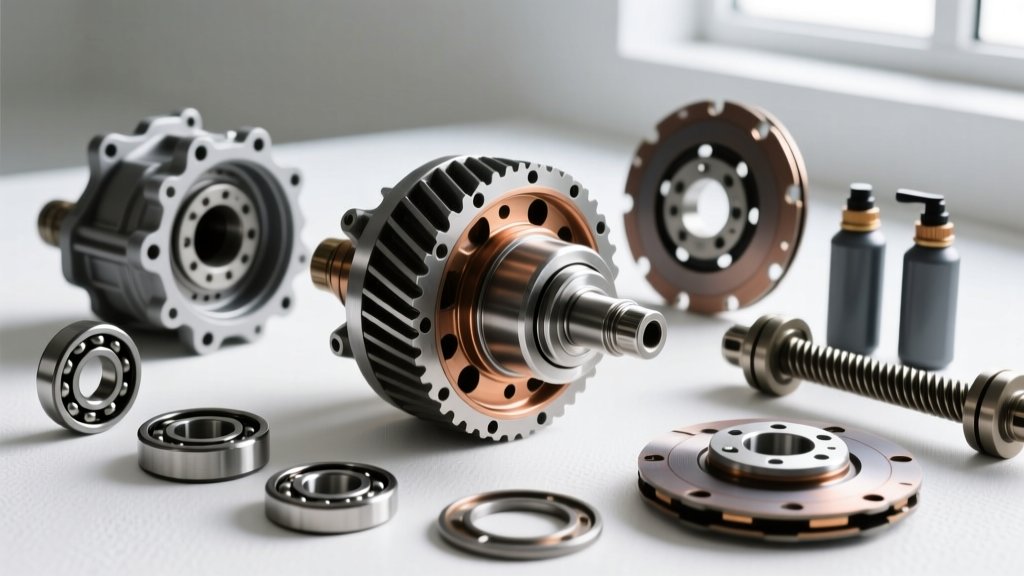
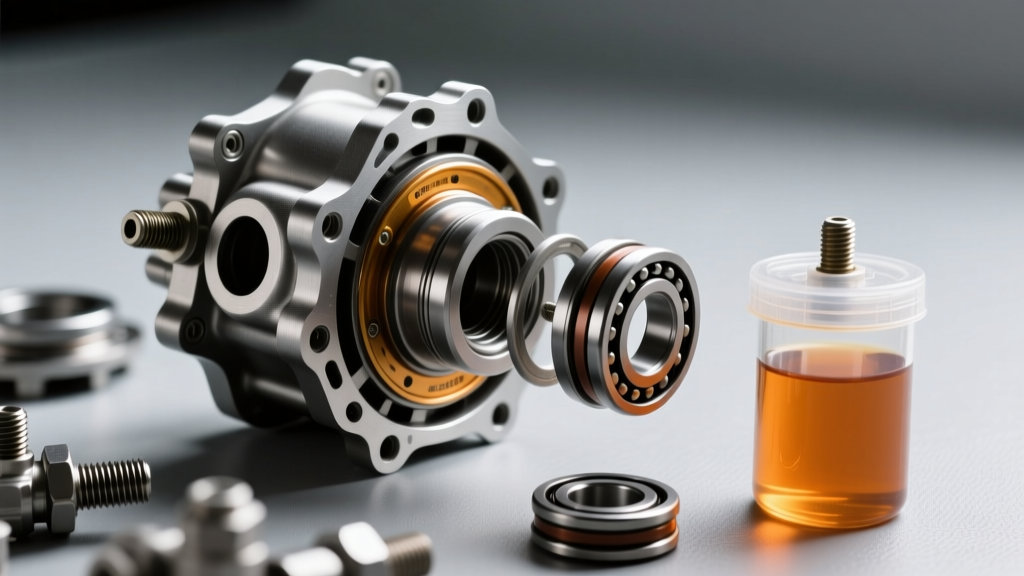
Sourcing high-quality components is non-negotiable. The aftermarket is flooded with low-tolerance bearings that will whine from day one. Always default to OEM Nissan or Tier-1 suppliers like Koyo and Timken. Below is the definitive parts matrix for a standard Z33 R200 bearing and seal refresh. You can verify OEM part numbers and current global pricing via catalogs like Amayama's Nissan OEM database.
| Component | OEM Part Number | Aftermarket / Tier-1 Equivalent | Est. Cost (USD) |
|---|---|---|---|
| Pinion Oil Seal | 38189-AD000 | Corteco 19033086B | $14 - $18 |
| Axle Shaft Oil Seal (x2) | 38189-18000 | SKF 14822 / National 710974 | $12 - $16 ea. |
| Inner Pinion Bearing | 38140-AD000 | Koyo 32210 / Timken SET1033 | $35 - $45 |
| Outer Pinion Bearing | 38120-AD000 | Koyo 32206 / Timken SET1034 | $25 - $35 |
| Crush Sleeve (Collapsible Spacer) | 38154-AD000 | OEM Nissan Only | $10 - $14 |
| Pinion Companion Flange Nut | 38165-AD000 | OEM Nissan Only | $8 - $12 |
Pinion Seal and Bearing Replacement Protocol
The pinion assembly is the most sensitive part of the 350Z rear differential. Removing the companion flange requires a specialized flange-holding tool or a heavy-duty strap wrench. Never use an impact wrench to remove the pinion nut without securing the flange. The shock loading can twist the spider gears, crack the cross-pin, or damage the internal viscous coupling.
Once the flange is removed, extract the old pinion seal using a dedicated seal puller to avoid scoring the aluminum housing bore. If the sealing surface on the companion flange has a deep groove worn into it by the old seal's lip, you must replace the flange or use a speed-sleeve repair kit; otherwise, the new seal will leak within 500 miles.
The Crush Sleeve and Preload Dilemma
If you are only replacing the pinion seal and the bearings are in perfect condition, you must meticulously measure the rotating torque of the pinion before disassembly. Use an inch-pound beam-style torque wrench. Record the baseline rotating torque (typically 12-18 in-lbs for used bearings). When reinstalling the flange with the old crush sleeve, tighten the new pinion nut until you achieve that exact baseline rotating torque plus 3-5 in-lbs to account for the drag of the new seal lip.
However, if you are replacing the pinion bearings, you must use a new crush sleeve. The crush sleeve is a one-time-use deformable spacer that sets the pinion bearing preload. The procedure requires a brute-force approach: tighten the pinion nut (often requiring up to 140-180 lb-ft of torque) while checking the rotating torque every quarter-turn. Your target for brand-new bearings is 22 to 28 in-lbs of rotating torque. If you overshoot the preload, you cannot simply back the nut off. You must discard the over-crushed sleeve, install a fresh one, and start over. Backing off the nut will result in a loss of clamping force and guaranteed bearing failure under load.
Carrier Bearing and Axle Seal Best Practices
Replacing the carrier bearings requires pulling the ring gear and carrier assembly from the R200 housing. This is where amateur rebuilders destroy perfectly good differentials. The bearing caps that secure the carrier to the housing are line-bored at the factory with the housing. They are not interchangeable. You must stamp or mark the left and right caps before removal. Mixing them up will distort the bearing bores, cause severe overheating, and alter the ring and pinion gear mesh pattern, leading to rapid tooth shear.
For the axle seals, removal of the rear axle shafts is required. On the 350Z, this involves unbolting the rear brake calipers, rotors, and the four 14mm nuts securing the axle flange to the differential housing. When pressing in the new axle seals, use a seal driver that matches the exact outer diameter of the seal. The seal must sit perfectly flush with the axle tube bore. Driving it in crooked will slice the seal lip upon axle insertion, resulting in an immediate leak.
Reassembly, Torque Specifications, and Fluid Dynamics
Proper reassembly of the 350Z rear differential hinges on exact torque specifications and the correct application of threadlocking compounds. Refer to the Z33 FSM archives available on communities like NicoClub or ZCar.com for visual torque sequences.
- Ring Gear to Carrier Bolts: 74 lb-ft (100 Nm). Apply medium-strength threadlocker (Blue Loctite 243) to the threads. Tighten in a crisscross pattern.
- Bearing Cap Bolts: 58 lb-ft (78 Nm). Ensure the alignment marks on the caps match the housing.
- Companion Flange Nut: Torqued to achieve the specified inch-pound preload, then the threads should be staked or secured with Red Loctite 271 to prevent backing off.
Gear Pattern Verification
Expert Insight: Before finalizing the carrier installation, always apply yellow gear-marking compound to three consecutive teeth on the ring gear. Rotate the pinion to check both the drive and coast side contact patterns. The pattern should be centered on the tooth face, slightly biased toward the toe under load. If the pattern is high, low, or biased heavily to the heel, your carrier shims are incorrect, and the differential will whine or fail prematurely.
Fluid Selection: Viscous vs. Mechanical LSD
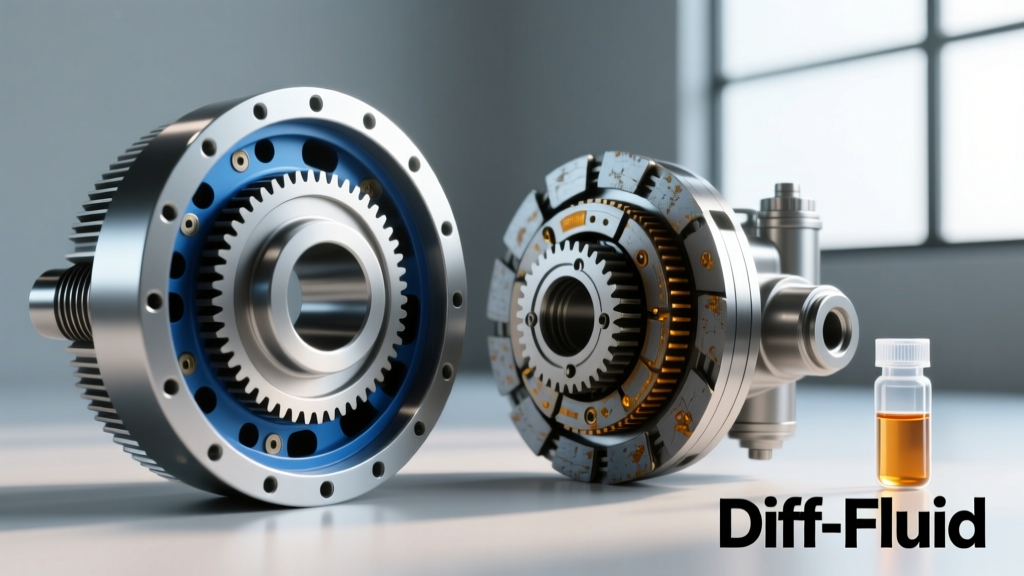
The final, and arguably most misunderstood, step in the 350Z rear differential service is the fluid fill. The R200 requires approximately 1.7 Liters (1.8 US Quarts) of 75W-90 GL-5 gear oil. However, you must match the fluid to your specific limited-slip differential (LSD) type:
- Viscous LSD (Standard 2003-2008 Models): The standard Z33 uses a viscous fluid coupling. This system does not require a friction modifier additive. Using a fluid packed with friction modifiers can cause the viscous fluid to slip and overheat. Use a high-quality synthetic like Motul Gear 300 75W-90 or Red Line 75W-90 without LSD additive.
- Mechanical LSD (Nismo / Track / Aftermarket OS Giken / Cusco): If your Z33 is equipped with a mechanical clutch-type LSD, you must use a gear oil with a dedicated friction modifier (e.g., Red Line ShockProof Heavy or Motul Gear 300 LSD) to prevent clutch chatter during low-speed cornering.
Fill the differential until the fluid level is exactly at the bottom of the fill plug threads. Reinstall the fill plug with a new crush washer and torque to 35 lb-ft. By adhering to these precise tolerances, part selections, and fluid dynamics, your 350Z rear differential will operate silently and reliably, whether you are commuting on the highway or hitting the apex at your next track day.