As we navigate the automotive maintenance landscape in 2026, preventive drivetrain care remains one of the most cost-effective ways to extend the life of your vehicle. Whether your truck is routing torque from a robust GM 6L80 transmission or a Ford 10R80, that power ultimately meets the pavement through the rear axle. A critical, yet frequently overlooked, component in this system is the rear differential cover gasket. This guide breaks down the exact differential fluid cost, service pricing, and the technical nuances of replacing the rear differential cover gasket to keep your ring and pinion gears operating flawlessly.
The True Cost of Differential Service in 2026
Inflation and evolving labor rates have altered the pricing structure for routine drivetrain maintenance. When evaluating differential fluid cost and service pricing, consumers generally face three avenues: dealership service centers, independent specialty shops, and the DIY route. The requirement to replace the rear differential cover gasket during a fluid change (on axles lacking a dedicated drain plug) inherently adds parts and labor time compared to a simple drain-and-fill procedure.
| Service Provider | Average Cost (Parts & Labor) | Typical Parts Used | Warranty Coverage |
|---|---|---|---|
| Dealership Service Center | $220 - $380 | OEM Fluid, OEM Gasket/RTV | 12 Months / 12,000 Miles |
| Independent Drivetrain Shop | $140 - $240 | Amsoil/Mobil 1, Fel-Pro Gasket | 6 Months / 6,000 Miles |
| DIY Home Mechanic | $45 - $75 | Choice of Synthetic, Aftermarket Gasket | None |
For the DIY mechanic, the bulk of the cost lies in the gear oil. High-quality full-synthetic 75W-90 API GL-5 fluid typically retails between $12 and $18 per quart in 2026. Since most light-duty truck and SUV rear axles require between 2.0 and 3.0 quarts, fluid costs alone will range from $24 to $54. A premium rear differential cover gasket from a reputable manufacturer like Fel-Pro will add $6 to $15 to your total bill.
Why the Rear Differential Cover Gasket Matters
Unlike modern transfer cases or automatic transmissions that utilize sealed pans and internal filters, traditional solid rear axles—such as the ubiquitous GM 8.5-inch 10-bolt, the Ford 8.8-inch, and the legendary Dana 44—rely on a stamped steel or cast aluminum cover. The rear differential cover gasket is the sole barrier preventing gear oil from leaking onto your driveway and road grime from entering the hypoid gear set.
Material Science: Cork, Rubber, and Silicone
Historically, cork gaskets were the standard. While they compress well to seal minor imperfections on warped steel covers, they are prone to drying out and cracking under high thermal loads. Today, preventive maintenance dictates using molded silicone rubber or PermaCorkPlus gaskets. These modern materials resist the extreme heat generated by hypoid gear friction and the chemical breakdown caused by extreme pressure (EP) additives in modern gear oils.
Expert Note: The 'RTV vs. Gasket' debate is common in off-road forums. While black or grey RTV silicone can seal a differential cover, over-application frequently leads to silicone beads breaking off inside the housing. These beads can clog the internal oil pickup tubes or bearing journals, leading to catastrophic pinion bearing failure. A pre-cut rear differential cover gasket remains the safest, most reliable choice for street and trail vehicles alike.
Fluid Specifications: Viscosity, GL-5, and LSD Additives
Selecting the correct fluid is just as critical as the physical installation of the rear differential cover gasket. Hypoid gears operate with a severe sliding action that requires the extreme pressure protection found only in API GL-5 rated gear oils. Using GL-4 fluid will result in rapid gear wear and pitting.
- Standard Open Differentials: Require a standard 75W-90 or 80W-90 synthetic GL-5 gear oil. Brands like AMSOIL Severe Gear or Mobil 1 Synthetic Gear Lube are industry benchmarks.
- Clutch-Type Limited Slip Differentials (LSD): If your axle features a clutch-pack LSD (common in Ford Performance 8.8 axles and GM G80 lockers), you must add a friction modifier. Without it, the clutch packs will chatter and bind during low-speed turns. Motorcraft XL-3 or Red Line Limited Slip Friction Modifier costs roughly $8 to $12 per bottle.
- Torsen / Helical LSDs: These torque-sensing differentials do not utilize clutch packs and generally do not require friction modifiers, though checking the manufacturer's 2026 updated spec sheet is always advised.
Preventive Maintenance: Step-by-Step & Torque Specs
Replacing the rear differential cover gasket is an opportunity to perform vital diagnostic checks on your drivetrain. When you remove the cover, the condition of the fluid tells a story. A metallic sheen is normal for the first 50,000 miles as gears wear in, but chunky metal shards or a burnt smell indicate severe internal failure.
The Cleaning and Sealing Process
The most common cause of a leaking rear differential cover gasket is improper surface preparation. You must completely remove the old gasket material. Use a plastic gasket scraper and aerosol brake cleaner. Never use a metal razor blade on an aluminum differential housing, as scoring the mating surface will create a permanent leak path that no gasket can seal.
Exact Torque Specifications
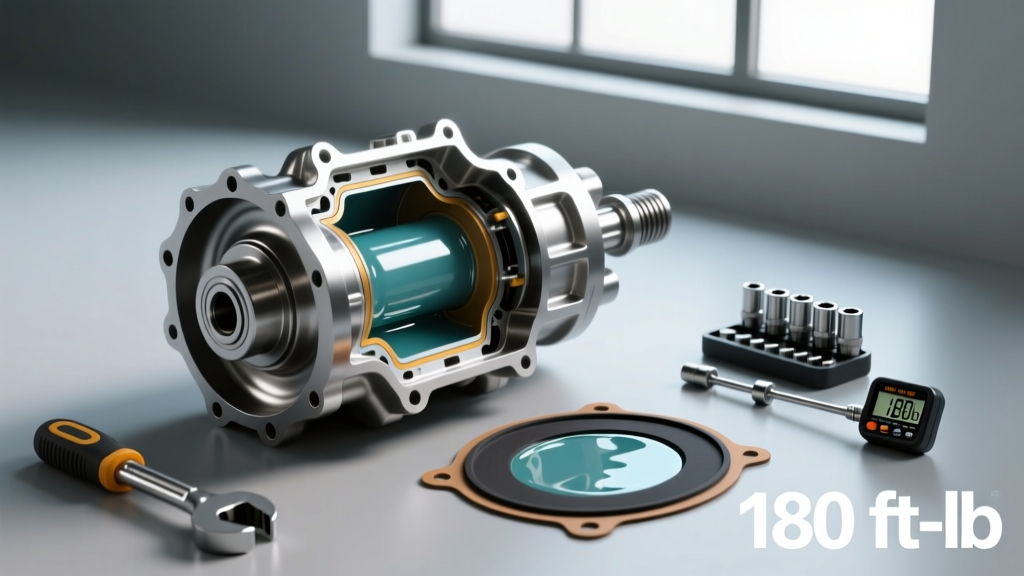
Overtightening cover bolts is a rookie mistake that warps stamped steel covers and crushes gaskets. Always tighten in a crisscross star pattern, working from the center outward. Use a calibrated inch-pound or low-range foot-pound torque wrench.
- GM 8.5-inch 10-Bolt: 25 lb-ft (Cover bolts are often 3/8-16 or M10. Do not exceed spec or you risk pulling threads from the cast iron housing).
- Ford 8.8-inch: 28 to 38 lb-ft (Typically 3/8-16 hex bolts).
- Dana 44 / Dana 60: 30 to 35 lb-ft (Often 3/8-24 fine thread bolts; be careful not to cross-thread).
- Chrysler 8.25-inch: 30 lb-ft.
Hidden Costs and Edge Cases in Drivetrain Service
When budgeting for your differential fluid cost and service pricing, be prepared for a few common edge cases that can inflate a simple maintenance task into a minor repair.
The Seized Fill Plug Dilemma
Many older differentials do not have a drain plug; the fluid must be pumped out through the fill hole after removing the cover. However, the fill plug itself is often seized due to years of heat cycling and corrosion. If a 3/8-inch drive breaker bar snaps the plug head, or if the threads strip out of the steel cover, you are suddenly in the market for a new differential cover. Sourcing a replacement stamped steel cover from a retailer like RockAuto can add $35 to $85 to your parts bill and delay your service by several days.
Stripped Housing Threads
If you overtighten the cover bolts into a cast-iron or aluminum housing, you may strip the threads. Repairing this requires drilling out the hole, tapping it, and installing a Helicoil or Time-Sert thread insert kit. While the kit itself only costs about $25, the labor and precision required can turn a 45-minute DIY job into a multi-hour ordeal. If paying a shop, expect to add $90 to $150 in labor for thread repair.
Conclusion: The Value of Proactive Axle Care
Ignoring the rear differential cover gasket until it leaves a puddle of 75W-90 on your garage floor is a recipe for a $3,000 axle rebuild. By allocating $50 and an hour of your weekend—or budgeting $180 for a trusted independent shop—you ensure that the ring and pinion gears remain bathed in clean, protective lubricant. In 2026, with the cost of replacement axle assemblies skyrocketing, preventive maintenance focused on proper sealing and fluid specification is the smartest investment you can make in your vehicle's drivetrain longevity.