The Core Confusion: Locking Rear Differential Meaning vs. LSD
When enthusiasts begin upgrading their drivetrains, a common point of confusion arises around the locking rear differential meaning and how it contrasts with a Limited Slip Differential (LSD). A true locking differential (often called a 'locker' or spool) mechanically forces both axles to spin at the exact same RPM, regardless of traction. While this is ideal for crawling over boulders in a Jeep Wrangler or launching a drag car, it is disastrous for daily street driving, causing severe axle hop, tire chirping, and driveline binding during cornering.
For the vast majority of street-driven trucks, sports cars, and SUVs, the correct solution is a clutch-type Limited Slip Differential. Rather than locking the axles together permanently, an LSD uses internal clutch packs to bias torque to the wheel with the most traction while still allowing for speed differentiation in corners. Understanding this distinction is critical, as the maintenance, fluid requirements, and operational characteristics of an LSD are vastly more complex than a standard open or locked differential.
Expert Insight: If your build spends 90% of its time on pavement and 10% on loose surfaces, an automatic locking differential will ruin your street manners. A clutch-type LSD, like the Eaton Posi-Trac or Ford Traction-Lok, provides the optimal compromise of mechanical grip and cornering compliance.
Operational Comparison: Locker vs. LSD
| Feature | Locking Differential (Locker) | Clutch-Type Limited Slip (LSD) |
|---|---|---|
| Torque Bias | 100% Locked (Equal RPM) | Variable (Based on Clutch Preload) |
| Street Manners | Poor (Hops/Binds on Turns) | Excellent (Seamless Power Transfer) |
| Maintenance | Low (Standard GL-5 Gear Oil) | High (Requires Friction Modifiers) |
| Primary Use Case | Hardcore Off-Road / Drag Racing | Street / Track / Autocross / Towing |
Inside the Housing: Clutch-Type LSD Operation
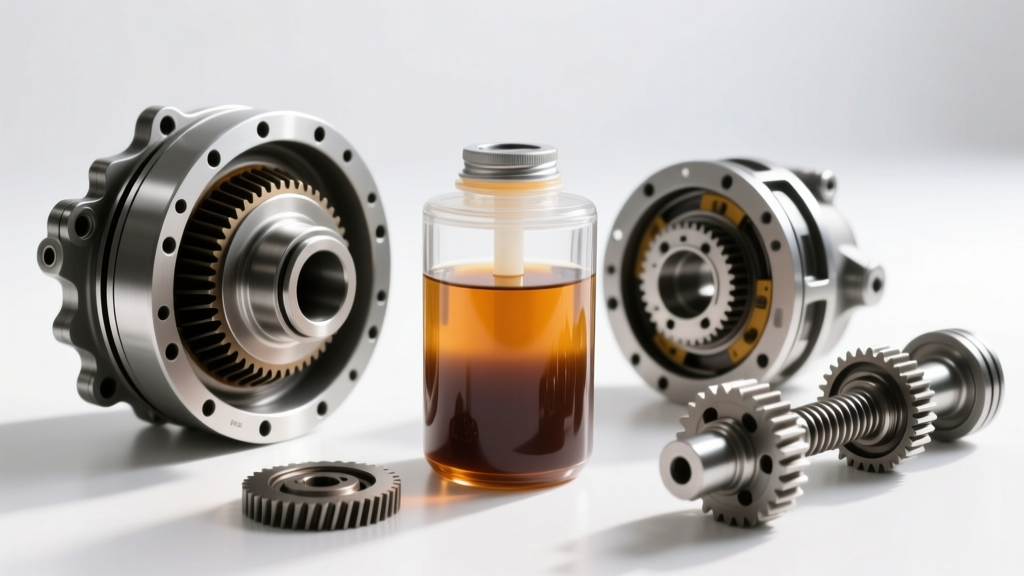
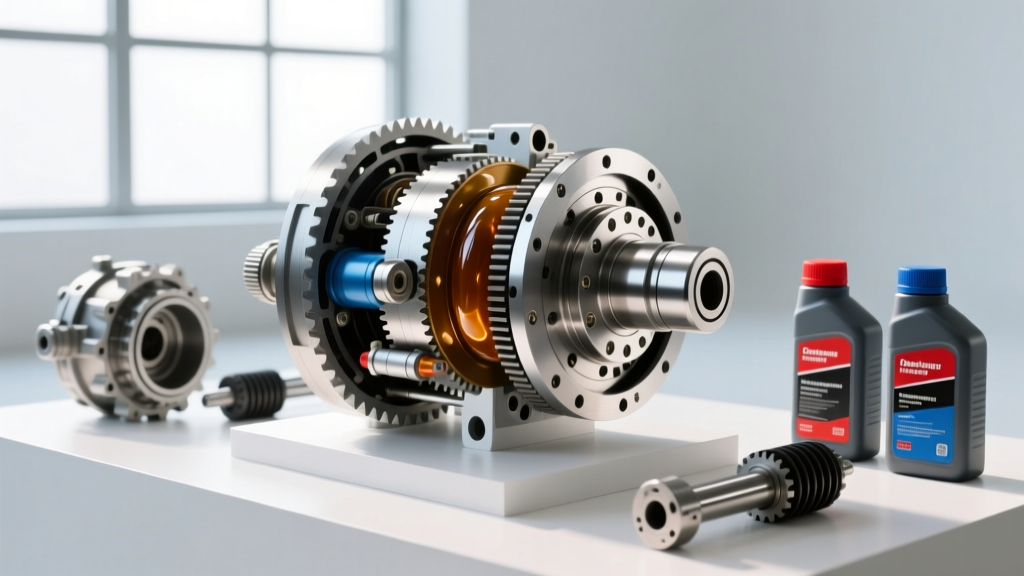
To properly maintain an LSD, you must understand the mechanical forces acting inside the differential carrier. In popular applications like the GM 8.625-inch 10-bolt or the Ford 8.8-inch rear end, the LSD relies on a series of alternating friction and steel clutch discs located behind the side gears.
The Role of the Clutch Pack and Preload Springs
When the vehicle is traveling in a straight line, both axles turn at the same speed, and the clutch packs rotate as a single unit. However, when entering a corner, the outside wheel must spin faster than the inside wheel. This speed differential forces the side gears to push outward against the clutch packs. An internal S-spring or coil preload spring applies constant pressure to these clutches, creating a 'breakaway torque' threshold. The wheel with traction will only slip when the torque applied exceeds the clamping force of the clutch pack. Over time, heat and mechanical shearing degrade the friction material, which is why specialized differential fluid maintenance is non-negotiable.
The Lifeblood: Gear Oil Viscosities and Friction Modifiers
The most frequent cause of premature LSD failure is incorrect fluid selection. Hypoid ring and pinion gears require API GL-5 rated gear oil to prevent the extreme-pressure (EP) shearing of the gear teeth. However, standard GL-5 oil is not enough for a limited-slip unit.
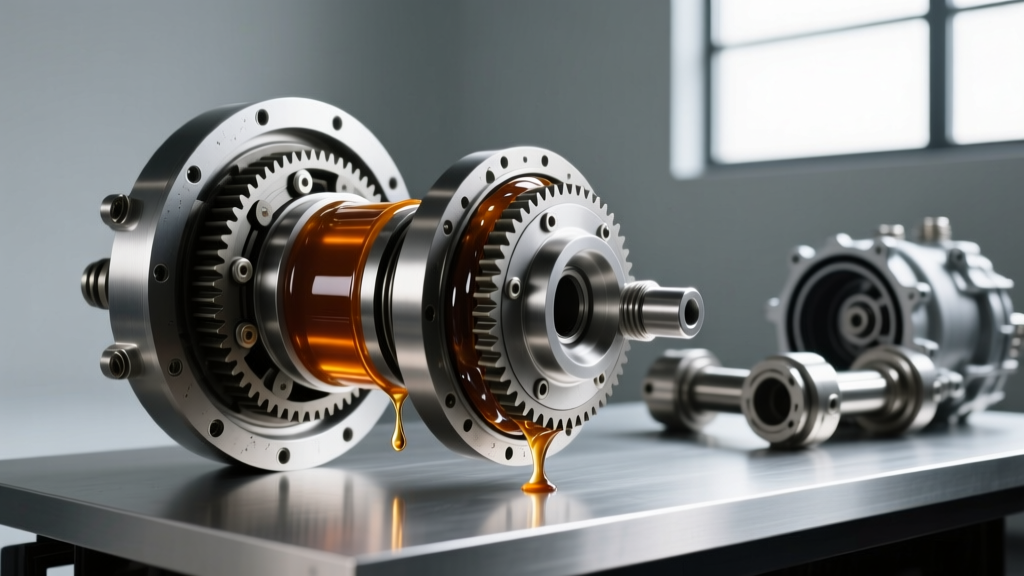
LSDs require a Friction Modifier (FM). These are long-chain polar polymers that bond to the microscopic pores of the clutch friction material. Without FM, the clutches will engage too aggressively, resulting in a phenomenon known as 'chatter'—a violent shuddering sensation accompanied by a groaning noise during low-speed turns. Conversely, too much FM will cause the clutches to slip continuously, resulting in a one-wheel peel and burnt friction material.
Recommended Fluid and Additive Specifications
| Component | Specification / Part Number | Application Notes |
|---|---|---|
| Base Gear Oil | 75W-90 or 80W-90 Synthetic GL-5 | Red Line 75W90, Amsoil Severe Gear, Motul Gear 300 |
| OEM Friction Modifier | Motorcraft XL-3 / GM ACDelco 10-4016 | Required if base oil lacks built-in LS additives |
| Aftermarket FM | Red Line Limited Slip Friction Modifier | Use 1 oz per quart of gear oil as a baseline |
| RTV Sealant | Permatex Ultra Black (85265) | For differential cover resealing (no gaskets) |
For a comprehensive look at synthetic gear oil shear stability, consult the technical data sheets provided by Red Line Oil, which detail the precise coefficient of friction required for carbon and Kevlar clutch materials.
Step-by-Step LSD Maintenance and Fluid Service
Routine differential fluid service should be performed every 30,000 to 50,000 miles for street vehicles, or immediately after the first 500 miles on a newly rebuilt unit. If the differential has been submerged in water (common in off-road trucks), an immediate drain and refill is mandatory to prevent emulsified oil from destroying the bearings and clutches.
Drain, Clean, and Torque Specifications
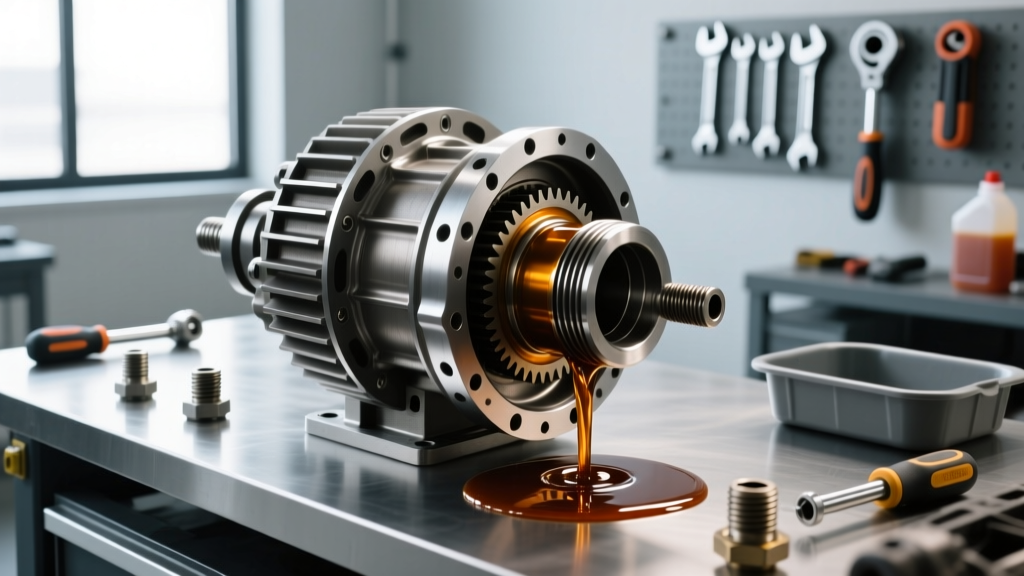
- Drain the Fluid: Remove the differential cover. (Note: Some modern axles, like the ZF rear drives on certain BMWs, utilize a drain and fill plug setup. Always check for a drain plug before breaking the RTV seal on the cover).
- Clean the Housing: Use brake cleaner and lint-free shop towels to remove all old RTV and metallic paste from the internal magnets. Inspect the magnet; a fine grey paste is normal, but chunky metal shards indicate bearing or gear failure.
- Reseal the Cover: Apply a continuous 3mm bead of Permatex Ultra Black RTV. Allow it to skin over for 10 minutes before installation.
- Torque the Bolts: Proper torque is critical to prevent warping the differential carrier. For a GM 10-bolt (3/8-inch bolts), torque to 25 lb-ft. For a Ford 8.8-inch (3/8-inch bolts), torque to 33 lb-ft. Always use a star-pattern sequence.
- Fill and Treat: Pump in the 75W-90 GL-5 synthetic oil until it reaches the bottom of the fill hole. Add the precise amount of Friction Modifier (typically 2 to 4 ounces depending on the differential's fluid capacity, which is usually between 2.0 and 2.5 quarts for standard half-ton truck axles).
The Critical Figure-8 Bedding Procedure
Simply filling the differential is not the final step. The friction modifier must be physically worked into the clutch discs. Drive the vehicle to a large, empty parking lot. Perform 10 to 15 tight, continuous 'Figure-8' turns at roughly 5 to 10 MPH. This forces the side gears to articulate, cycling the clutch packs and evenly distributing the friction modifier across the friction surfaces. Skipping this step is the number one cause of post-service LSD chatter.
Diagnosing LSD Chatter and Wear
Even with meticulous maintenance, clutch packs eventually wear out. A factory Eaton Posi-Trac or Ford Traction-Lok typically lasts between 80,000 and 120,000 miles before requiring a rebuild. If your differential continues to chatter violently after a fluid change and Figure-8 bedding procedure, the friction discs are likely glazed or the preload S-spring has fatigued.
Rebuilding a clutch-type LSD is a highly precise task. It requires measuring the clutch pack clearance with a dial indicator and selecting specific thickness shims to achieve the factory breakaway torque specification (usually between 40 and 80 lb-ft of torque applied to the axle flange to initiate slip). According to drivetrain specialists at Randy's Ring & Pinion, attempting to reuse warped steel plates or failing to measure pack clearance will result in immediate failure upon reassembly.
A professional LSD rebuild, including new carbon-friction clutches, steels, preload springs, and labor, typically ranges from $650 to $1,200 depending on the axle model. For those seeking upgraded durability, aftermarket options like the Eaton Truetrac (a helical gear-type LSD) eliminate the need for friction modifiers and clutch rebuilds entirely, though they operate on a completely different torque-biasing principle than the clutch-type units discussed here.
Ultimately, mastering the maintenance of a limited-slip differential requires moving past the basic 'locking rear differential meaning' and embracing the nuanced chemistry of friction modifiers, precise torque specs, and mechanical bedding procedures. Treat your LSD's fluid service with the same reverence as your engine's oil changes, and it will deliver seamless, hooking performance for years to come.