The Critical Role of the Center Differential in AWD Systems
All-wheel-drive (AWD) systems rely on a center differential to manage the front-to-rear torque split, allowing the front and rear axles to rotate at different speeds during cornering. Whether your vehicle utilizes a Torsen torque-biasing gearset, a viscous coupling, or an electronically controlled multi-clutch transfer case, proper lubrication is non-negotiable. As of 2026, with AWD systems pushing higher torque limits in performance crossovers and rally-bred hatchbacks, the humble differential fill plug has become a primary focal point for both routine maintenance and catastrophic failure diagnosis.
Neglecting the center differential fluid, or damaging the fill plug during service, can lead to rapid gear wear, binding, and total drivetrain lockup. This guide dives deep into symptom diagnosis, extraction tactics for seized plugs, and precise service specifications for modern AWD platforms.
Symptom Diagnosis: Is Your Center Differential Starved?
Before pulling the drain plug, it is vital to recognize the early warning signs of center differential fluid starvation or degradation. Unlike open rear differentials, a failing center diff will immediately affect vehicle dynamics and trigger drivetrain fault codes.
| Symptom | Probable Cause | Diagnostic Action |
|---|---|---|
| Binding or 'hopping' during tight, low-speed turns | Fluid breakdown causing viscous coupling lockup or Torsen gear binding | Check fluid level via fill plug; inspect for burnt smell or metal particulates |
| High-pitched whining under load (45-70 mph) | Low fluid level due to a leaking or stripped differential fill plug | Clean housing, verify fill plug torque, and inspect output shaft seals |
| AWD Warning Light / Torque Split Limp Mode | Overheating fluid triggering temperature sensors in electronic center diffs | Scan for OBD-II thermal codes; extract fluid sample to check for clutch material |
| Grinding noise from the center tunnel under heavy acceleration | Catastrophic planetary gear or crown gear failure due to total oil starvation | Remove magnetic fill plug to check for large metallic chunks; prepare for rebuild |
The Dreaded Stuck Differential Fill Plug: Extraction Tactics
The most common hurdle in AWD maintenance is a seized differential fill plug. This occurs due to galvanic corrosion (a steel plug seated in an aluminum transfer case or diff housing), extreme heat cycling, and factory-applied threadlockers. If you round off the internal hex or square drive, you are facing a costly case extraction or replacement.
Why 1/2" Drive Tools Are the Enemy
Many DIYers and inexperienced technicians reach for a 1/2" drive breaker bar with a hex bit. This is a critical error. The sheer torque generated by a 24-inch breaker bar will easily exceed the shear strength of the soft steel used in many OEM differential fill plugs, rounding the internal hex cavity.
- The 3/8" Drive Rule: Always use a high-quality, hardened 3/8" drive hex or square socket. The shorter lever arm of a 3/8" ratchet or short breaker bar limits maximum torque application, protecting the plug's internal geometry.
- Impact vs. Hand Tools: A low-torque 3/8" cordless impact wrench (set to its lowest setting) can often break the static friction of a corroded plug through rapid rotational hammering without applying continuous twisting force that rounds the edges.
Advanced Extraction: Induction Heating
If the plug refuses to budge, do not apply more mechanical leverage. Instead, use thermal shock. An induction heater (such as the Mini-Ductor Venom) is the professional standard for 2026. By wrapping the induction coil around the aluminum housing directly adjacent to the steel plug, you can heat the aluminum case to 250°F in seconds. The aluminum expands at a faster rate than the steel plug, breaking the galvanic corrosion bond and neutralizing factory Loctite, all without the fire hazard of an open-flame torch.
The Golden Rule of Drivetrain Service: NEVER remove the drain plug until you have successfully cracked open the differential fill plug. If the drain plug comes out but the fill plug is permanently seized, you will be left with an empty, un-fillable differential and a stranded vehicle.
2026 Fluid Specifications & Torque Data
Using the correct fluid is paramount. Modern AWD systems often require specific friction modifiers for limited-slip center diffs, or specialized Manual Transmission Fluids (MTF) when the center diff is integrated into the transaxle housing. According to Red Line Oil's technical documentation, using a standard GL-5 gear oil in a transmission-integrated center diff can destroy yellow metal synchronizers due to sulfur-phosphorus additives.
| Vehicle Platform | Center Diff Type | Fluid Specification | Capacity | Fill Plug Torque |
|---|---|---|---|---|
| Subaru WRX / STI (6MT) | Viscous Coupling LSD | API GL-5 75W-90 | 1.3 Liters | 35 lb-ft (47 Nm) |
| Toyota GR Yaris (GR-FOUR) | Torsen Helical Gear | API GL-5 75W-85 | 0.45 Liters | 29 lb-ft (39 Nm) |
| Audi B8/B9 S4 (Manual) | Integrated Torsen/Crown | OEM MTF (GL-4+ Equivalent) | Shared w/ Trans | 33 lb-ft (45 Nm) |
| Ford Focus RS (AWD) | Electronic Twin-Clutch (RDU) | Specific AWD Clutch Fluid | 0.7 Liters | 30 lb-ft (40 Nm) |
Step-by-Step Center Differential Service Procedure
- Vehicle Leveling: AWD center differentials and integrated transfer cases must be serviced on a perfectly level surface. An uneven lift can result in under-filling by up to 0.25 liters, leading to immediate gear starvation on inclines.
- Crack the Fill Plug: Using a 3/8" drive hex socket, break the torque on the fill plug first. Leave it threaded in place for now.
- Drain the Fluid: Remove the drain plug. Allow the fluid to drain for at least 20 minutes. Center diffs often feature complex internal oil galleries and viscous couplings that trap thick, degraded fluid.
- Inspect the Magnetic Plug: Most OEM differential fill and drain plugs feature a magnet. A fine, glitter-like metallic paste is normal wear. However, if you find distinct metallic chips, shards, or brass-colored flakes (indicating synchro or thrust washer wear), a teardown and rebuild are required. Expect center differential rebuild costs to range from $850 to $2,500 depending on parts availability and labor.
- Reinstall and Torque Drain Plug: Clean the magnet, apply a fresh crush washer (never reuse aluminum or copper crush washers), and torque to factory specification.
- Pump the Fluid: Because center differentials are often tucked high against the transmission tunnel, gravity filling is impossible. Use a high-quality pneumatic or manual fluid transfer pump. For tight clearances, professionals use a 'top-down' pump system that screws directly onto the quart bottle, pushing fluid up a hose and into the fill hole until it weeps out of the threads.
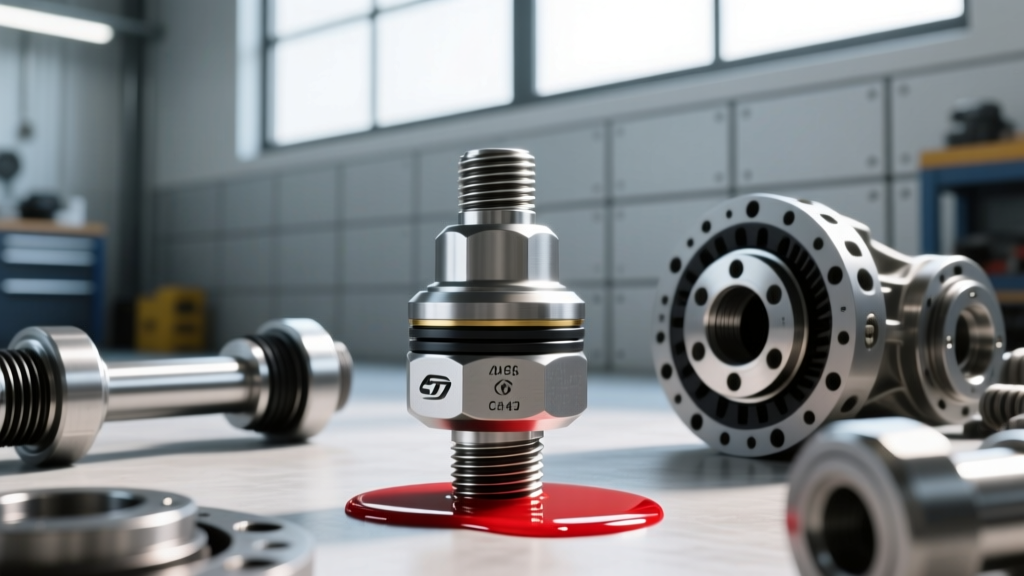
- Seal the Fill Plug: Install a new crush washer on the differential fill plug. Apply a small dab of anti-seize compound to the external threads (avoiding the first two threads to prevent contamination of the fluid) and torque to spec.
Beyond the Fill Plug: When to Seek Professional Rebuilds
If your diagnostic inspection reveals severe internal damage, simply replacing the fluid and reinstalling the differential fill plug will only mask the issue temporarily. As detailed in Torsen's engineering archives, helical gearsets rely on precise axial clearances to generate torque bias. Once the internal thrust washers wear past tolerance due to fluid starvation, the gearset loses its ability to bias torque, effectively turning your sophisticated AWD system into a single-axle open differential.
Furthermore, for vehicles utilizing viscous center differentials (like older Subarus), the fluid itself is often sealed inside the coupling unit and is not serviceable via a standard fill plug. In these cases, 'servicing' the center diff actually means replacing the entire viscous coupling assembly, a job that requires pulling the transmission and splitting the case.
For comprehensive fluid selection and compatibility charts, enthusiasts and professionals alike should consult the AMSOIL automotive technical database to ensure the chosen synthetic gear oil meets the exact friction-modifier requirements of their specific AWD architecture.
Final Thoughts on Preventative Maintenance
The differential fill plug is more than just a cap; it is the diagnostic window into the health of your AWD drivetrain. By adhering to strict torque specifications, utilizing proper extraction tools, and respecting the unique fluid requirements of Torsen, viscous, and electronic center differentials, you can ensure your vehicle maintains optimal traction and drivetrain longevity well past the 150,000-mile mark.