The Hidden Link Between Bushings and Gear Mesh
You just spent $600 on a premium ring and pinion gear setup. You followed the factory service manual, painted the teeth with yellow ochre marking compound, and achieved a perfect contact pattern on the bench. But the moment you hit the street and apply throttle, the differential howls like a banshee. What went wrong? For beginners and seasoned mechanics alike, the missing link in drivetrain diagnostics is often the physical foundation of the axle itself: the rear differential bushing.
In 2026, with modern vehicles producing over 400 lb-ft of torque from the factory, the physical mounting points of your differential are under more stress than ever. This beginner-friendly explainer will break down exactly how a worn or defective rear differential bushing can destroy a flawless ring and pinion gear setup, and how to diagnose the issue before your gears turn into expensive metal shavings.
The Anatomy of a Ring and Pinion Gear Setup
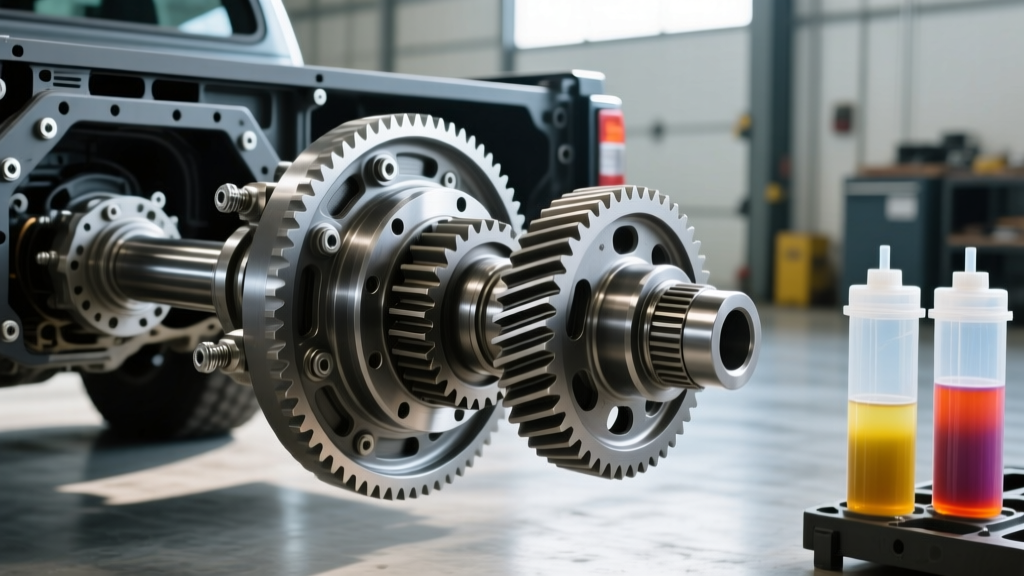
Before we discuss bushings, we need to understand the 'holy trinity' of a ring and pinion gear setup. According to Yukon Gear & Axle Technical Resources, a proper setup relies on three precise measurements:
- Pinion Depth: How far the pinion gear sits into the ring gear, measured in thousandths of an inch (e.g., +0.002 in. or -0.004 in. from nominal).
- Backlash: The rotational play between the ring and pinion teeth. Most street applications require a strict window between 0.008 in. and 0.012 in.
- Bearing Preload: The friction holding the pinion and carrier bearings tight. This is measured in inch-pounds (in-lbs) of rotating torque, typically 15-25 in-lbs for new bearings and 8-14 in-lbs for used ones.
Think of the ring and pinion like a firm handshake. If your feet are planted on solid concrete, the handshake is strong and consistent. But if you are standing on a soft, shifting mattress, that handshake will slip and misalign under pressure. In your drivetrain, the rear differential bushing is the concrete.
What Exactly is a Rear Differential Bushing?
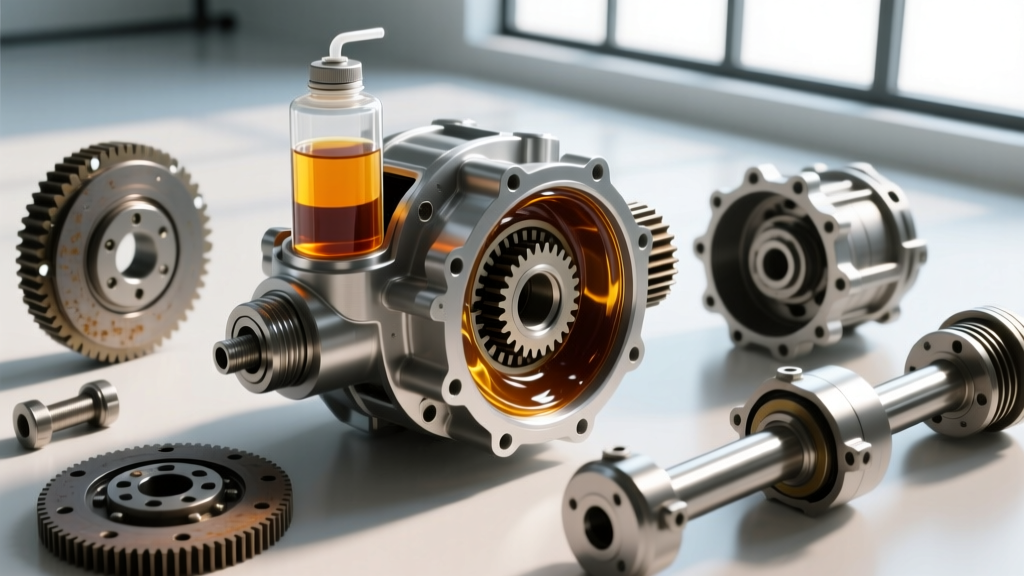
The term 'rear differential bushing' refers to the isolation mounts that secure the differential housing to the vehicle's chassis or subframe. The location and function depend heavily on your suspension type:
Independent Rear Suspension (IRS)
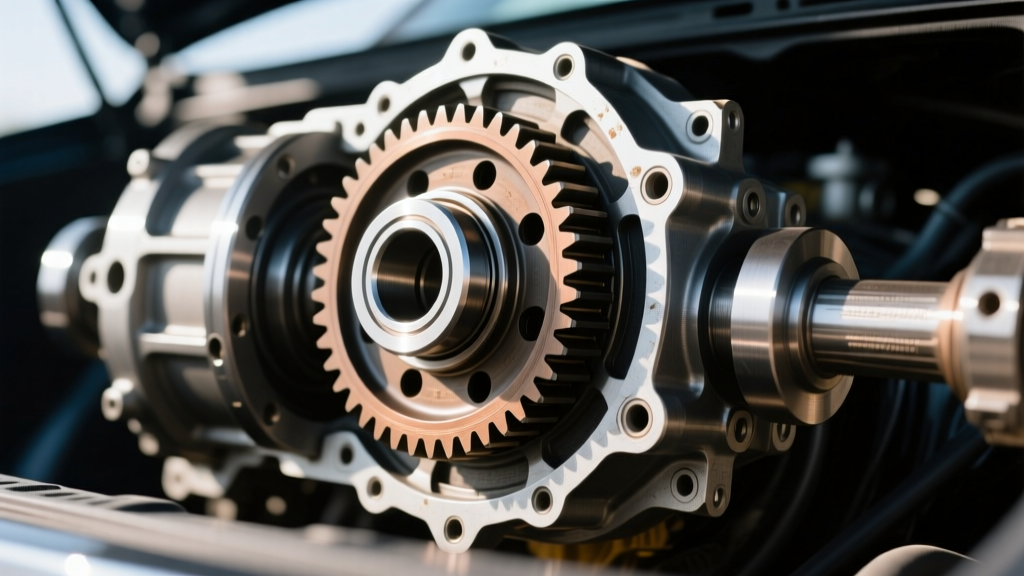
In modern IRS vehicles like the Ford Mustang (S550/S650) or the GM Alpha platform (Camaro/CTS), the differential is bolted directly to a rear subframe using large, pressed-in rubber or polyurethane bushings. These bushings absorb NVH (Noise, Vibration, and Harshness) but must also resist the rotational torque of the housing.
Solid Axle Applications
In traditional solid axles (like the Dana 44 or Ford 8.8), the differential housing is welded to the axle tubes. Here, the 'rear differential bushing' refers to the leaf spring eye bushings, shackle bushings, or trailing arm bushings. These dictate the pinion angle relative to the driveshaft, which indirectly affects how the pinion gear loads the ring gear under acceleration and braking.
The Silent Killer: Dynamic Deflection
When you set up a ring and pinion on a workbench, you are performing a static setup. The housing is rigid, and the gears mesh perfectly. However, a vehicle operates in a dynamic state.
When you apply heavy throttle, the driveshaft transfers massive rotational force into the pinion gear. Newton's third law dictates that the differential housing will attempt to rotate in the opposite direction. If your rear differential bushing is worn, cracked, or made of an overly soft aftermarket material, the entire differential housing will physically twist or shift under load.
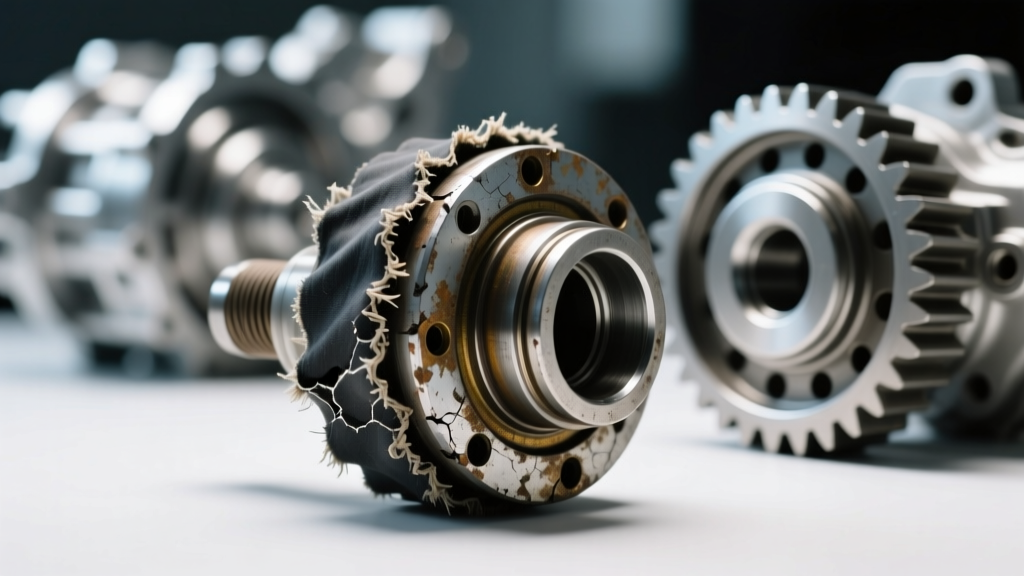
This phenomenon is called dynamic deflection. A housing shift of just 0.015 inches under torque will instantly push your ring gear out of the acceptable backlash window. The gears will experience edge-loading, where only the very tips of the teeth make contact. This leads to rapid wear, extreme heat, and catastrophic tooth shearing. As noted by drivetrain experts at Ring-Pinion.com, dynamic housing movement is one of the most misdiagnosed causes of premature gear failure in high-torque applications.
Diagnostic Matrix: Gear Setup vs. Bushing Failure
How do you know if your differential whine is caused by a bad gear setup or a failing rear differential bushing? Use this diagnostic matrix to narrow down the culprit.
| Symptom | Bad Gear Setup (Static) | Worn Rear Differential Bushing (Dynamic) |
|---|---|---|
| Coast-Down Whine | Consistent whine on deceleration (drive side of tooth). | Quiet or minimal noise on deceleration. |
| Acceleration Whine | Whines at all speeds and load levels. | Only whines under heavy throttle or hard launches. |
| Clunk on Engagement | Sharp metallic clunk when shifting into gear. | Dull, heavy thud from the rear subframe/axle housing. |
| Gear Marking Pattern | Pattern is visibly off-center or edge-loaded on the bench. | Pattern looks perfect on the bench, but gears still fail. |
Step-by-Step Verification and Torque Specs
If you suspect bushing deflection is ruining your ring and pinion gear setup, you must verify the housing stability before tearing down the differential again. Here is a professional workflow:
1. The Pry-Bar Deflection Test
With the vehicle safely on a lift and the rear wheels off the ground, place a large pry bar between the differential housing and the subframe (or axle tube and leaf spring). Apply moderate pressure while a helper watches the gap. Any visible movement greater than 1/16th of an inch indicates blown rubber or degraded polyurethane.
2. Verify Pinion Angle (Solid Axles)
Use a digital inclinometer. Measure the angle of the driveshaft and the angle of the pinion yoke. Under static weight, the pinion should typically point 1 to 3 degrees down relative to the driveshaft to account for axle wrap under acceleration. If your leaf spring or control arm bushings are shot, this angle will fluctuate wildly.
3. Re-Torque to OEM Specifications
Bolts can back out, mimicking bushing failure. Always use a calibrated torque wrench. For example, on the popular Ford Mustang S550 IRS, the differential front mount bushing bracket bolts require 85 lb-ft, while the rear upper mount bolts require a massive 129 lb-ft. On a GM 10-bolt solid axle, the leaf spring U-bolts should be torqued to 70-85 lb-ft.
Replacement Costs and Material Choices
If your rear differential bushing is the culprit, you have a decision to make regarding replacement materials. Pricing and performance vary significantly in 2026:
- OEM Rubber Bushings ($40 - $90): Best for daily drivers. They absorb vibration perfectly but will degrade over 80,000 miles.
- Polyurethane Upgrades ($100 - $180): Brands like Energy Suspension or BMR offer stiffer poly bushings. They eliminate housing deflection, saving your ring and pinion gear setup, but they will transmit more gear whine and road vibration into the cabin.
- Solid Aluminum Mounts ($150 - $250): Strictly for dedicated track cars. Zero deflection, maximum NVH.
Expert Pro-Tip: Never attempt to 'save' a gear setup by adjusting the backlash to compensate for a bad bushing. If you tighten the backlash to 0.004 in. to account for housing deflection, the gears will bind and overheat when the housing returns to its resting state. Always fix the foundation (the bushings) first, then set the gears to the manufacturer's exact static specification.
Final Thoughts on Drivetrain Harmony
A ring and pinion gear setup is only as good as the housing that supports it. By understanding the critical role of the rear differential bushing, you can save yourself hundreds of dollars in misdiagnosed parts and countless hours of frustrating wrenching. Whether you are rebuilding a classic Dana 44 or upgrading the IRS on a modern muscle car, always inspect your mounting points, verify your torque specs, and ensure your drivetrain foundation is rock solid before you ever touch a dial indicator.
For more deep-dive tutorials on differential fluid capacities, bearing preload tricks, and axle maintenance, continue exploring our comprehensive guides here at AutoGearNexus.