The Drivetrain Bottleneck: Why Rear Differential Spider Gears Matter
When evaluating the drivetrain of modern heavy-duty trucks and off-road SUVs, enthusiasts and fleet managers often focus on the transmission (like the robust Allison 1000 or Ford's 10R80) or the ring and pinion set. However, the true weak link in high-torque, high-shock-load applications is often hidden inside the carrier: the rear differential spider gears. These small, cross-mounted gears are responsible for transferring power from the carrier to the side gears, and ultimately to the axle shafts. In standard open differentials, they also allow for speed differentiation during cornering.
For trucks used in heavy towing (10,000+ lbs) or SUVs subjected to aggressive off-road articulation, OEM spider gears and their corresponding cross pins (spider shafts) are notoriously prone to catastrophic failure. Upgrading these components is not just a performance modification; it is a critical maintenance intervention for vehicle survival.
Anatomy of a Failure: How OEM Spider Gears Break
Before selecting an upgrade path, it is essential to understand the specific failure modes of factory differential components in trucks like the Chevy Silverado 2500 (GM 11.5-inch AAM) or the Ford F-250 (Ford 10.5-inch Sterling).
- Cross-Pin Spinning and Welding: The most common failure is not the gear teeth stripping, but the cross pin galling and welding itself to the spider gear bore due to extreme friction and inadequate lubrication. Once the pin seizes, the gear shatters under load.
- Thrust Washer Disintegration: OEM composite or soft-metal thrust washers wear rapidly under heavy towing loads. This introduces excessive axial play, causing the spider gears to bind against the carrier case.
- Shock-Load Shearing: When off-roading, lifting a wheel and dropping it (the 'diff drop') sends a massive kinetic shockwave through the axle shafts directly into the spider gears. Cast-iron or low-grade powdered metal OEM gears will instantly shear their teeth.
Upgrade Paths: Metallurgy and Design Enhancements
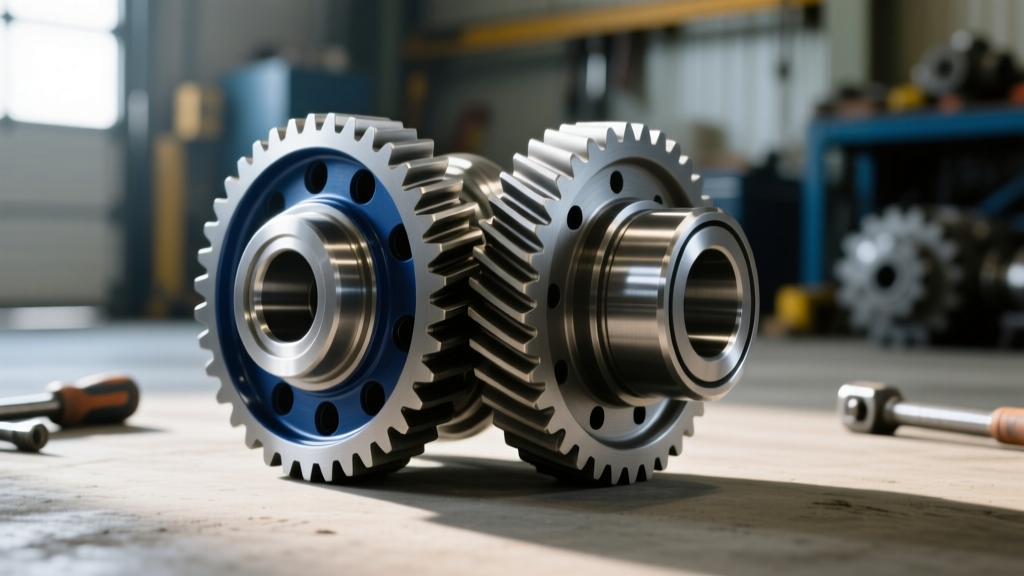
Upgrading your rear differential spider gears involves moving away from powdered metal or standard cast iron to forged alloy steels. Below is a comparison of common upgrade tiers available in the 2026 aftermarket landscape.
| Upgrade Tier | Material / Design | Best Application | Estimated Cost (Parts) |
|---|---|---|---|
| OEM Replacement | Powdered Metal / Standard Steel | Stock commuting, light towing | $80 - $150 |
| Heavy-Duty Forged (e.g., Yukon Hardcore) | Forged 4320/8620 Chromoly Steel | Heavy towing, moderate off-road | $200 - $350 |
| Full Locker (e.g., Eaton Detroit, Spartan) | Eliminates spider gears entirely | Hardcore rock crawling, dedicated trail rigs | $500 - $900 |
| Helical Torque-Biasing (e.g., Truetrac) | Helical gear design, no cross pins | High-HP street trucks, snow/ice, racing | $600 - $850 |
Expert Insight: If you are retaining an open or limited-slip carrier, upgrading the spider gears is only half the battle. You must simultaneously upgrade the cross pin to a hardened 4340 chromoly shaft and replace the thrust washers with high-tolerance bronze or Kevlar-lined variants to prevent bore galling.
Specific Part Recommendations
For the ubiquitous GM 8.5-inch and 8.6-inch 10-bolt axles found in countless half-ton trucks and SUVs, the Yukon Gear & Axle YSPSP-006 spider gear kit is a benchmark upgrade. It features forged steel gears and a hardened cross pin. For Ford's legendary 8.8-inch axle, upgrading to a 31-spline side gear and matching forged spider gear set from Ring & Pinion drastically increases the shear strength of the carrier assembly.
Installation Tolerances and Torque Specifications
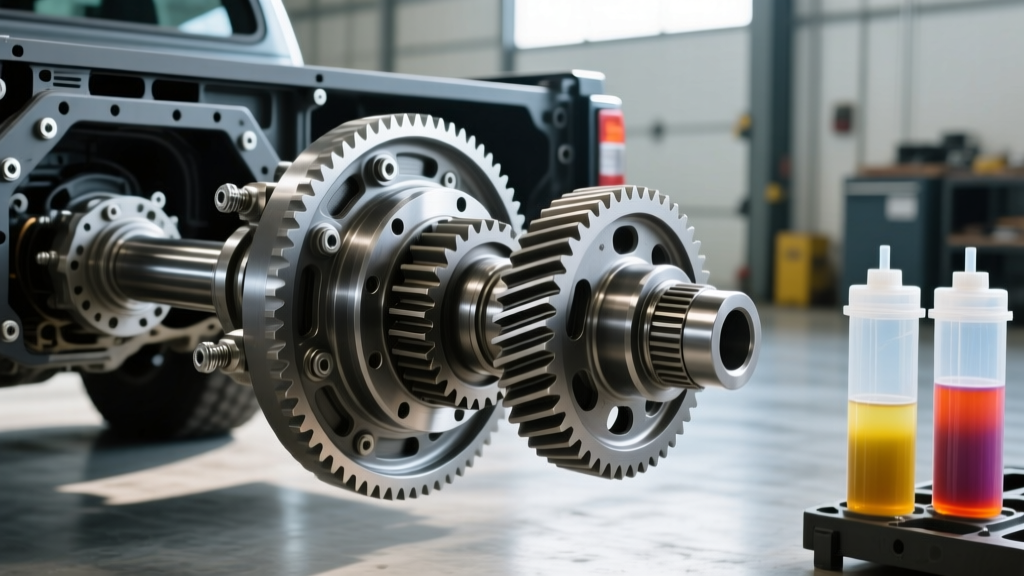
Installing upgraded rear differential spider gears requires precision. Unlike a simple fluid drain and fill, carrier work demands strict adherence to torque specs and backlash tolerances. If you are performing this maintenance in your own garage, invest in a high-quality inch-pound torque wrench and a dial indicator.
Critical Torque Specs by Axle Type
- GM 8.6' (10-Bolt) Carrier Bearing Cap Bolts: 60 lb-ft. (Always mark the caps for left/right orientation; they are line-bored from the factory and cannot be swapped).
- Ford 8.8' Carrier Bearing Cap Bolts: 70-85 lb-ft.
- Dana 60 Carrier Bearing Cap Bolts: 110-130 lb-ft.
- Cross Pin Retention Bolt: Typically 15-25 lb-ft, but MUST be secured with high-strength threadlocker (e.g., Loctite 272) and staked if the carrier design allows.
When fitting the new spider gears onto the upgraded cross pin, check the pin-to-gear bore clearance. OEM clearance can be as loose as 0.008 inches. High-performance forged sets aim for a tighter 0.003 to 0.005-inch clearance to reduce impact shock, but they require pristine lubrication to prevent binding when the differential reaches operating temperatures of 200°F+.
The Fluid Connection: Gear Oil Selection for Upgraded Carriers
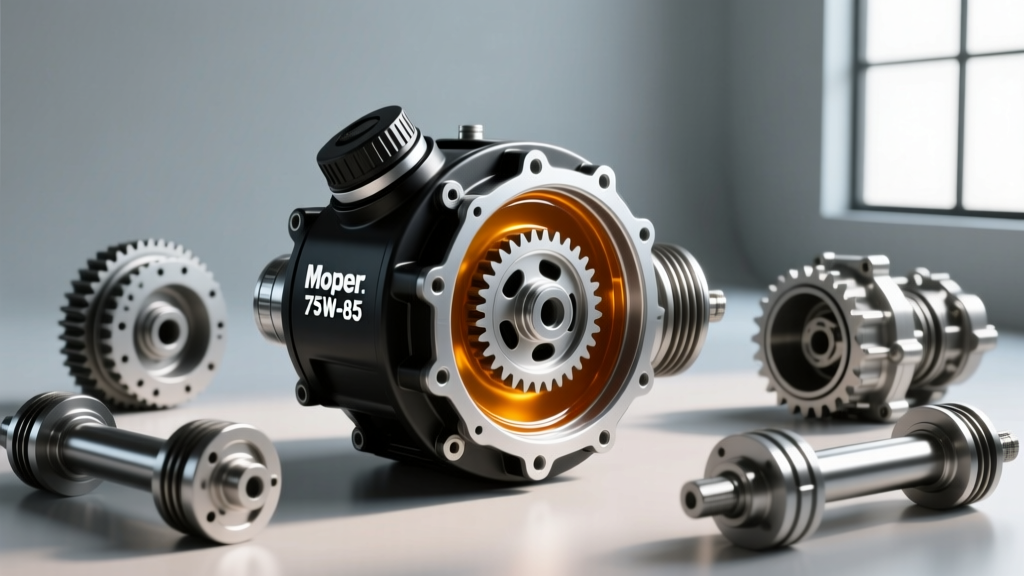
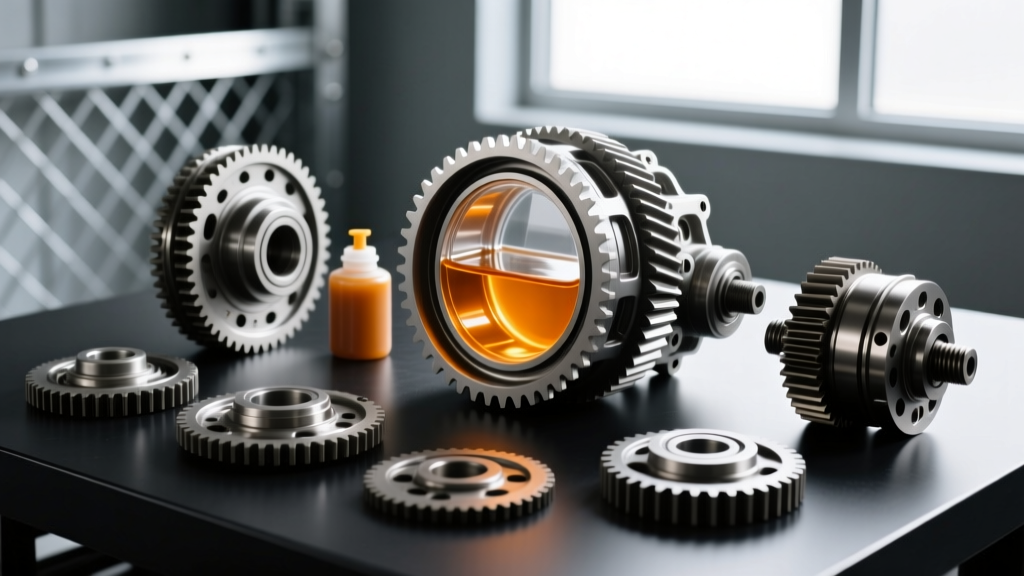
Because upgraded rear differential spider gears feature tighter tolerances and harder metallurgy, your differential fluid maintenance strategy must evolve. Standard 80W-90 mineral oils will shear down rapidly under the extreme pressure (EP) generated by forged chromoly gears during heavy towing.
Viscosity and Shear Stability
For trucks towing fifth-wheel trailers or SUVs running larger-than-stock tires (which multiply the torque load on the spider gears), stepping up to a 75W-140 full synthetic gear oil is highly recommended. The 75W-140 viscosity maintains a thicker hydrodynamic film between the spider gear bore and the cross pin at high temperatures, preventing the metal-on-metal contact that causes galling.
Products like AMSOIL Severe Gear 75W-140 or Red Line 75W140 offer superior shear stability. These fluids utilize complex ester base stocks that cling to the gear teeth and cross pins, ensuring that when the vehicle is parked on an incline and the gears drain dry, a protective boundary layer remains upon cold startup.
Friction Modifiers: LSD vs. Open/Locker
A critical maintenance error occurs when technicians use the wrong friction modifier package. If your truck utilizes a clutch-type Limited Slip Differential (LSD) like the Ford Trac-Lok or GM G80 (which relies on spider gears to actuate the locking mechanism), you must add the manufacturer-specified friction modifier (e.g., Motorcraft XL-3 or GM ACDelco 10-4016). Failure to do so will result in severe chatter, which micro-fractures the spider gear teeth over time.
Conversely, if you have upgraded to a full mechanical locker (like an Eaton Detroit Locker) or a spool, friction modifiers are entirely unnecessary and can actually reduce the oil's overall load-carrying capacity. Always match the fluid additive package to the specific carrier type.
Maintenance Intervals and Real-World ROI
Upgrading your rear differential spider gears and pairing them with premium synthetic fluid alters your maintenance schedule. While OEM differentials might call for fluid changes every 100,000 miles under 'normal' use, severe-duty trucks should adhere to a 30,000 to 50,000-mile interval.
Cost vs. Benefit Analysis: A complete upgrade kit (forged spider gears, 4340 cross pin, bronze thrust washers, and 3 quarts of 75W-140 synthetic fluid) will cost between $350 and $500 in parts. Professional installation adds roughly $400 to $600 in labor. Compared to the $3,500 to $5,000 cost of replacing a shattered carrier, broken axle shafts, and damaged ring-and-pinion sets resulting from a spider gear explosion on the highway, the ROI of this preventative upgrade is undeniable.
Final Inspection Checklist
During your next differential service, do not just drain the fluid and refill. Pull the differential cover, rotate the carrier, and inspect the spider gear cross pin for a 'grooved' wear pattern. If you can catch your fingernail on a wear ridge on the cross pin, the thrust washers have failed, and the spider gears are operating out of alignment. Address this immediately with forged upgrades and high-shear synthetic fluid before the carrier case itself is destroyed.