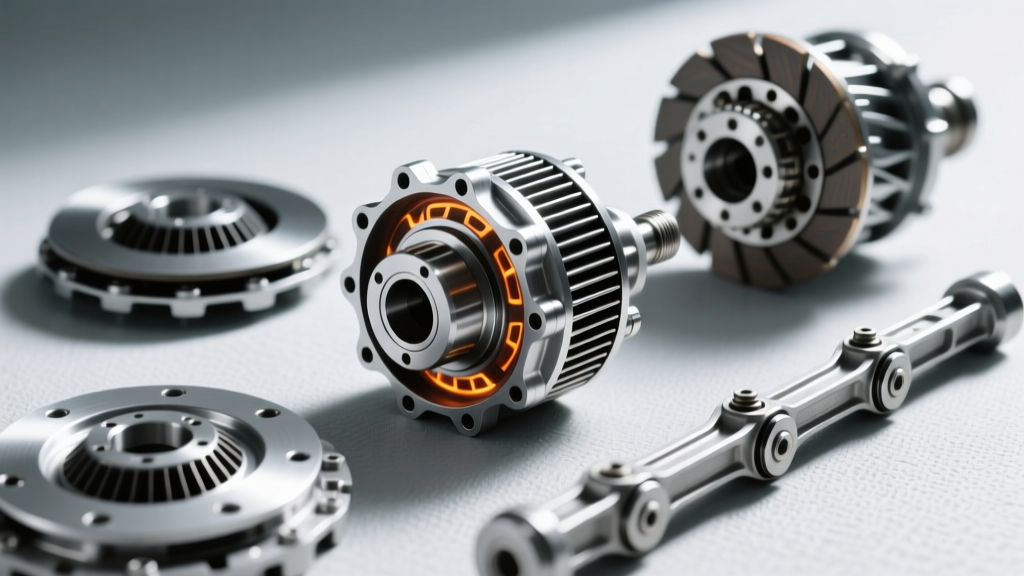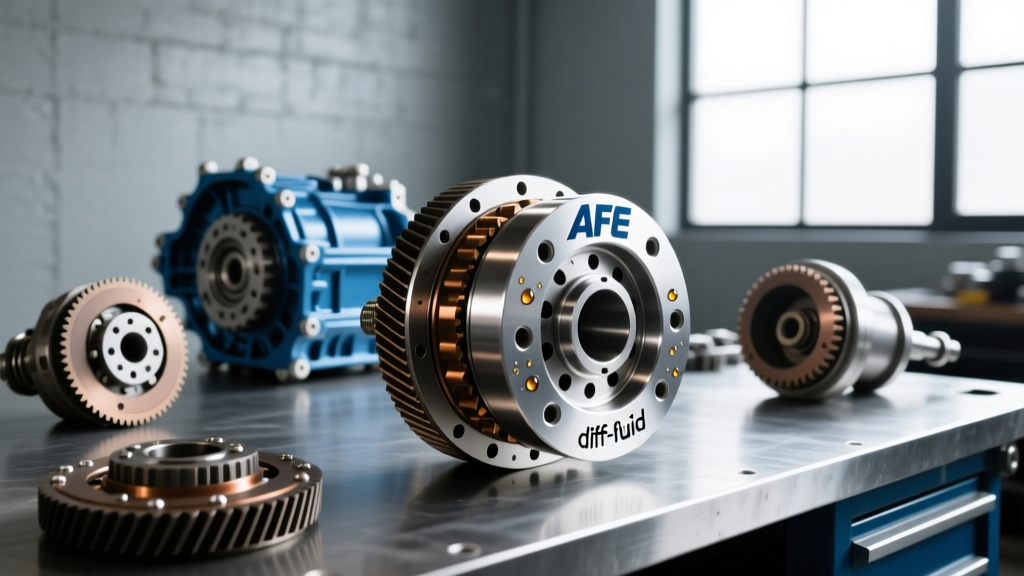
When diagnosing 4WD and AWD drivetrain noise, technicians frequently misattribute harmonic vibrations to the rear axle when the true culprit lies in the front axle assembly or transfer case. A comprehensive rear differential service is incomplete without cross-referencing a front differential parts list to rule out sympathetic noise transfer. In 2026, with tighter NVH (Noise, Vibration, and Harshness) tolerances in modern trucks like the GM Silverado, Ford F-150, and Ram 2500, acoustic isolation is the mandatory first step in drivetrain diagnosis.
Acoustic Isolation: The Illusion of Rear Axle Noise
Drivetrain harmonics travel through rigid mounting points and aluminum transfer case housings. A failing front pinion bearing or a worn front intermediate shaft (CV axle) can generate a 3rd-order or 4th-order harmonic frequency that perfectly mimics a failing rear ring and pinion set. Before ordering a rear master rebuild kit, you must perform a coast-down test and a load test. If the noise persists identically in 2WD and 4WD-Auto, the issue may be isolated to the rear. However, if the acoustic profile shifts when the front axle is mechanically locked or unlocked via the electronic disconnect actuator, you must immediately consult your front differential parts list to inspect the front carrier bearings and reverse-cut hypoid gears.
Fluid Forensics: Reading the Rear Differential Tea Leaves
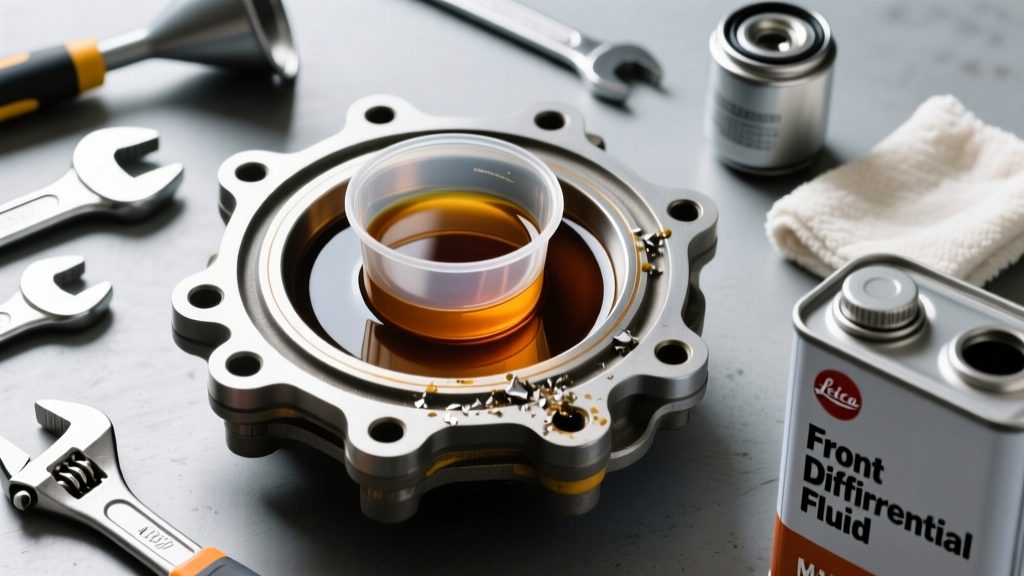
The first physical step in any rear differential service is the fluid drain and forensic inspection. Modern synthetic gear oils, such as AMSOIL Severe Gear 75W-90, are designed to hold microscopic wear metals in suspension. When you pull the rear differential cover (or drain plug on late-model Ford 9.75-inch axles), the condition of the fluid dictates your next diagnostic move.
- Fine Ferrous Glitter (Magnetic): Normal wear for the first 50,000 miles. If excessive, check pinion bearing preload.
- Chunky Metal Shards: Indicates catastrophic spalling on the ring gear teeth or carrier bearing cage failure. Requires immediate teardown.
- Brass/Gold Flakes: Points to the disintegration of side gear thrust washers or pinion gear shim washers. Common in high-mileage open differentials.
- Friction Material Dust: If equipped with a clutch-type Limited Slip Differential (LSD), dark, burnt-smelling fluid with black dust means the carbon-fiber or paper clutch packs are slipping and glazing.
Comparative Teardown: Rear vs. Front Differential Parts List
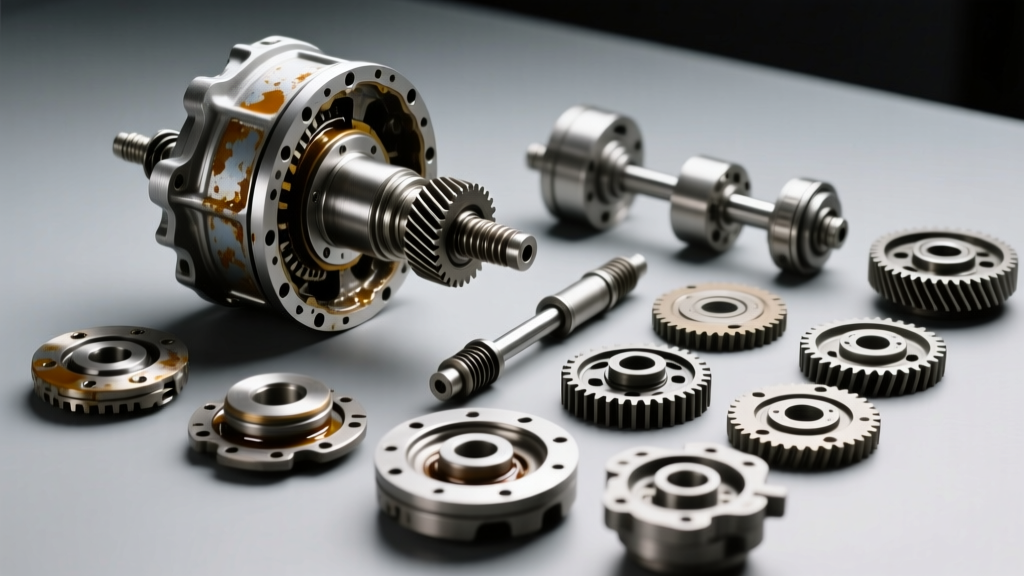
Understanding the mechanical divergence between the solid rear axle and the independent front suspension (IFS) front axle is critical for accurate part sourcing and diagnosis. The front differential integrates an electronic disconnect collar and reverse-rotation ring gears, which fundamentally changes the gear mesh pattern and bearing preload requirements compared to the rear.
| Component Category | Rear Differential (GM 8.6" 10-Bolt Solid Axle) | Front Differential (GM 9.25" IFS Disconnect) |
|---|---|---|
| Ring & Pinion Set | Yukon YG GM8.6-373 (Standard Rotation, 10-spline pinion) | Yukon YG GM9.25IFE-373 (Reverse Rotation, 27-spline pinion) |
| Master Bearing Kit | Yukon BK GM8.6-RL (Includes crush sleeve, pinion seal) | Yukon BK GM9.25-IFS (Includes disconnect collar bearings) |
| Axle Shaft Integration | Pressed-on bearings, ABS tone rings, C-clips (semi-float) | Internal CV joints, electronic actuator fork, splined stubs |
| Fluid Capacity & Spec | 2.1 Quarts (75W-90 Synthetic GL-5) | 1.8 Quarts (75W-90 Synthetic GL-5) |
| Average Rebuild Parts Cost | $350 - $450 (Ring/Pinion + Master Kit) | $550 - $750 (Includes actuator and intermediate shafts) |
As highlighted by Spicer Technical Support, attempting to use standard rotation ring gears in a reverse-rotation front housing will result in immediate tooth shearing under load. Always verify the rotation stamping on the ring gear face against your specific front differential parts list before installation.
The Front Axle Disconnect: A Hidden Source of Rear-End Illusions
Modern 4WD systems utilize a front axle disconnect mechanism to reduce parasitic drag and improve fuel economy when operating in 2WD. This actuator, often located on the passenger-side axle tube or directly on the front differential housing, engages a splined collar that locks the intermediate shaft to the differential side gears. When the internal shift fork wears or the collar splines round off, the front drivetrain can produce a cyclic clicking or low-frequency rumble that travels down the driveshaft and echoes through the transfer case output shaft. Technicians often mistake this for a failing rear pinion bearing. By consulting your front differential parts list, you can identify the specific actuator motor (e.g., ACDelco 15868184 for GM trucks) and the internal shift collar assembly. Replacing the $150 actuator motor and $85 internal collar takes less than two hours and can instantly cure a "rear end" noise that would have otherwise triggered an unnecessary $1,500 rear differential rebuild.
Precision Setup: Gear Pattern and Bearing Preload Specs
If your fluid forensics dictate a rear differential rebuild, precision is non-negotiable. The hypoid gear mesh requires exact pinion depth and backlash settings to prevent whining under deceleration or chipping under heavy towing loads. According to Yukon Gear Installation Guides, the target backlash for most light-duty truck differentials is between 0.006" and 0.010".
Critical Torque Specifications (GM 8.6" / 10-Bolt Rear)
- Pinion Nut (Crush Sleeve): 200-250 lb-ft. Stop crushing the sleeve when rotating torque reaches 15-25 in-lb (new bearings) or 10-15 in-lb (used bearings).
- Ring Gear Bolts: 75 lb-ft. Must be cleaned with brake cleaner and secured with Loctite 262 (Red). Torque in a star pattern.
- Carrier Bearing Cap Bolts: 65 lb-ft. These are directionally machined with the housing; never swap left and right caps.
- Differential Cover Bolts: 25 lb-ft. Use Permatex Ultra Black RTV (Part #81878) rather than a cheap cork gasket to prevent seepage and ensure structural rigidity.
Limited Slip Diagnostics: Clutch Packs and Friction Modifiers
A common symptom that brings a truck into the bay is a low-speed "chatter" or binding sensation when turning. Owners often fear the worst, but this is frequently a fluid chemistry issue rather than a mechanical failure. If the rear differential houses an Eaton Posi or Auburn clutch-type LSD, the friction modifier additive degrades over time and heat cycles.
Before tearing down the carrier, perform a fluid flush. Drain the old 75W-90, clean the housing, and refill with a high-quality synthetic GL-5 gear oil. Add exactly 4 ounces of LSD friction modifier (such as ACDelco Part #88962317 or Torco Type F) per quart of fluid. Drive the vehicle in a tight figure-eight pattern for 10 minutes to force the modifier into the porous clutch material. If the chatter persists, the clutch packs are glazed and require a carrier teardown to install a new clutch pack kit (typically $80-$120 for parts).
When to Upgrade to 75W-140
For trucks frequently towing over 8,000 lbs or operating in extreme ambient temperatures (above 100°F), stepping up to a 75W-140 synthetic gear oil is recommended. As noted in AMSOIL Technical Resources, the higher high-temperature high-shear (HTHS) viscosity maintains a thicker fluid film between the hypoid gears under extreme sliding pressure, preventing micro-welding and spalling. However, be aware that 75W-140 can increase parasitic drag, slightly reducing fuel economy during cold-weather commuting.
Final Verification: The Road Test Protocol
After completing the rear differential service and verifying the front differential parts list to ensure no sympathetic NVH issues remain, execute a structured road test. Drive on a smooth, crowned highway at 60 MPH. Roll up the windows and turn off the HVAC blower to eliminate cabin noise. Listen for the distinct "howl" of tight pinion depth (occurs on load) versus the "whine" of excessive backlash (occurs on coast-down). A properly set up differential should be acoustically invisible, blending seamlessly into the tire and wind noise of the modern cab.