The Traction Hierarchy: Selecting Your Locking Differential
Upgrading a solid axle assembly for severe off-road use or high-load towing requires addressing two fundamental weaknesses: open differential traction loss and inadequate thermal management. When you force a differential to lock, you eliminate the side gear slip necessary for cornering. This creates massive axle shaft wind-up and severe gear oil shear. Selecting the right locking differential is only half the battle; managing the resulting heat and fluid degradation is where the aFe differential cover becomes a mandatory companion upgrade.
Before selecting a housing cover, you must define your traction requirements. The aftermarket offers three primary locking differential architectures, each with distinct mechanical behaviors, pricing tiers, and installation complexities.
Automatic Mechanical Lockers
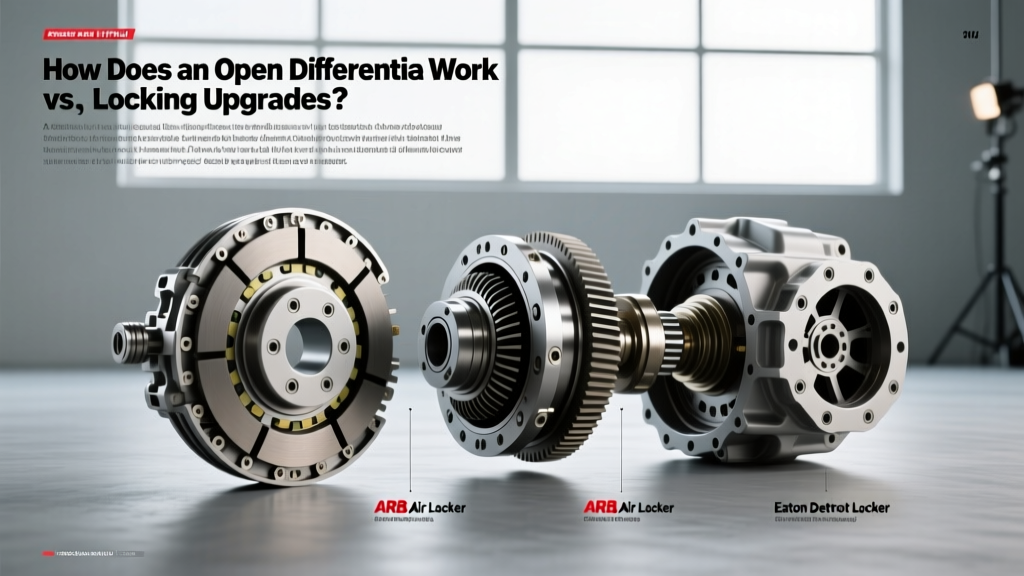
Automatic lockers, such as the legendary Eaton Detroit Locker (Part #187SL167 for Dana 44, 30-spline axles), utilize a ratcheting mechanism that locks both axle shafts together under load but allows them to unlock during turns via a spring-loaded dog clutch. Priced between $700 and $850, they are bulletproof for rock crawling and heavy mud bogging. However, the abrupt engagement and disengagement during low-speed turns place immense shock loads on the ring and pinion gears, accelerating fluid cavitation and gear wear.
Selectable Pneumatic and Cable Lockers
For drivers who split time between highway driving and technical trails, selectable lockers are the gold standard. The ARB Air Locker (e.g., Part #RD116 for Dana 44, 35-spline, 3.73+ ratios, retailing around $1,050) uses an internal pneumatic seal and actuator to lock a side gear to the carrier case. Because it functions as a standard open differential when disengaged, it generates zero parasitic heat or driveline bind on pavement. The trade-off is the requirement for an onboard air compressor, 1/8-inch polyurethane air lines routed through the axle housing, and precise bulkhead sealing.
Electronic Lockers (E-Lockers)
Factory-style electronic lockers, often retrofitted from late-model OEM applications or aftermarket electromagnetic designs, use a 12V solenoid to engage a locking collar. While convenient, the internal wiring harness is prone to chafing against the rotating carrier, and the electromagnetic coils can fail under extreme thermal saturation if the differential fluid overheats.
The Heat Penalty: Fluid Shear in Locked Axles
When a locking differential is engaged on high-traction surfaces, the outer wheel must travel further than the inner wheel. Since the locker prevents differential action, the tires must chirp or skip, or the axle shafts must physically twist (wind-up). This stored torsional energy is eventually released as shock loads through the spider gears and side gears.
This mechanical violence has a direct impact on your gear oil. Standard 75W-90 GL-5 gear oil relies on long-chain polymers to maintain its viscosity index. The extreme shearing forces inside a locked carrier literally tear these polymer chains apart, resulting in permanent viscosity loss. Furthermore, the friction modifiers required for clutch-based limited-slip differentials are often incompatible with the dog-clutch mechanisms of automatic lockers, leading to sluggish engagement and premature wear.
For locked axles, a high-quality 75W-140 full synthetic gear oil (such as Red Line 75W140 or Amsoil Severe Gear) is non-negotiable. The thicker base stock resists shear thinning, and the higher zinc/phosphorus (ZDDP) content protects the ring and pinion teeth under boundary lubrication conditions. However, thicker fluid runs hotter, which brings us to the critical need for enhanced thermal dissipation.
Maximizing Longevity: The aFe Differential Cover Advantage
Upgrading to an aftermarket aFe differential cover is not merely an aesthetic modification; it is a calculated thermal management intervention. The factory stamped-steel differential pans found on most Dana 44, Dana 60, and GM 14-bolt axles act as insulators, trapping heat inside the housing. During sustained crawling or heavy towing, differential fluid temperatures can easily exceed 220°F (104°C), accelerating oxidation and sludge formation.
Thermal Dissipation and Fluid Volume
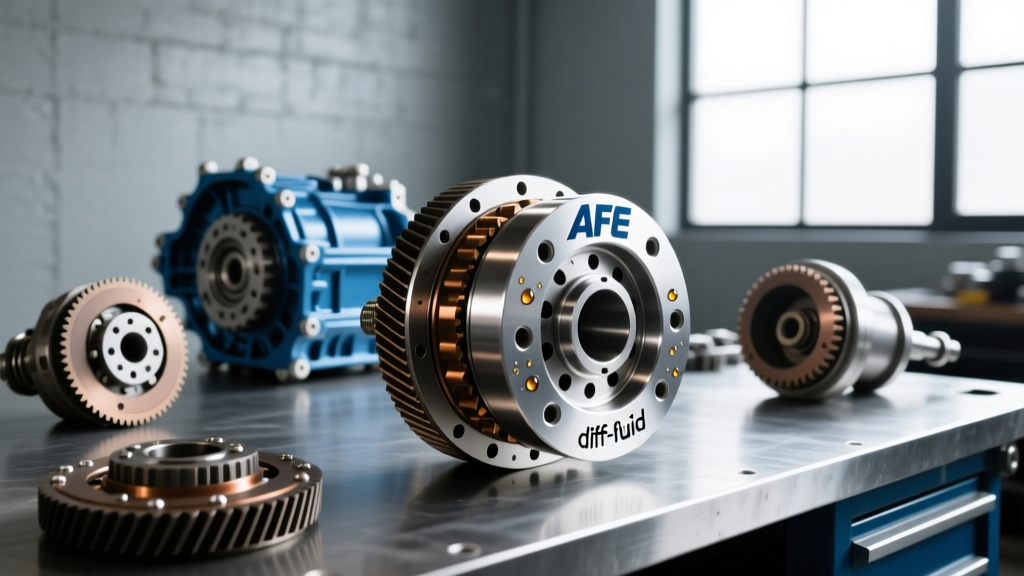
The aFe Power differential covers (such as Part #46-40032 for the JK/JL Wrangler Dana 44, priced around $260) are cast from A356-T6 aerospace-grade aluminum. This alloy offers superior thermal conductivity compared to stamped steel or cast iron. The exterior features aggressive, directionally aligned cooling fins designed to channel airflow from the vehicle's forward motion directly across the housing.
Internally, the aFe cover increases the total fluid capacity by up to 1.5 quarts, depending on the axle model. This additional volume increases the thermal mass of the system, allowing the fluid to absorb more BTUs before reaching critical operating temperatures. Additionally, the internal baffling of the aFe cover helps direct cooling fluid back toward the ring gear and pinion bearings, ensuring that the most heavily loaded components remain submerged and lubricated during steep off-camber climbs.
Magnetic Drain and Fill Plugs
A standout feature of the aFe differential cover is the inclusion of high-strength neodymium magnetic drain plugs. Locking differentials, particularly automatic lockers, shed microscopic metallic particulates as the dog clutches engage and disengage. The magnetic plug captures these ferrous shavings before they can embed themselves into the carrier bearings or score the pinion gear face, effectively extending the service interval of your 75W-140 synthetic fluid.
Drivetrain Upgrade Matrix: Locker & Cover Pairings
| Locker Type | Model / Part # | Fluid Recommendation | Cover Upgrade Priority | Est. Total Cost |
|---|---|---|---|---|
| Automatic | Eaton Detroit (187SL167) | 75W-140 Synthetic (No Friction Modifier) | Critical (High Shock/Heat) | $1,100 - $1,300 |
| Selectable Air | ARB Air Locker (RD116) | 75W-90 or 75W-140 Synthetic GL-5 | High (Protects Air Seals) | $1,350 - $1,550 |
| Selectable Cable | OX Locker (D44-35-373) | 75W-140 Synthetic GL-5 | Moderate (Mechanical) | $1,200 - $1,400 |
| Electronic | Eaton E-Locker (19818-010) | 75W-90 Synthetic GL-5 | High (Protects Coil/Wiring) | $1,000 - $1,250 |
Installation Protocol: Carrier Setup and Cover Torque Specs
Installing a locking differential requires resetting the carrier bearing preload and ring gear backlash. Failure to adhere to precise tolerances will result in catastrophic gear failure, regardless of how advanced your differential cover is.
Ring Gear and Carrier Bearing Specs
When mounting the ring gear to the new locking carrier, clean all mating surfaces with brake cleaner. Apply a medium-strength threadlocker (Loctite 243) to the ring gear bolts. For a standard Dana 44, torque the ring gear bolts to 70-85 lb-ft in a star pattern. Once the carrier is seated, use a dial indicator to set the backlash. For most aftermarket lockers and OEM replacement ring and pinion sets, a backlash specification of 0.006 to 0.010 inches is ideal. Carrier bearing preload should be set using adjusting collars or shims to achieve a rotational drag torque of 15-25 inch-pounds.
Sealing the aFe Cover
The mating surface of the axle housing must be scraped completely clean of old RTV silicone. While some applications utilize a pre-cut gasket, a high-tack RTV silicone (such as Permatex Ultra Black) is generally preferred for off-road applications where the housing may experience slight torsional flex. Apply a continuous 1/4-inch bead of RTV around the perimeter, ensuring you circle the inside of every bolt hole to prevent oil weeping.
Install the aFe differential cover and thread the 3/8-inch mounting bolts by hand to prevent cross-threading the aluminum or steel housing. Torque the cover bolts in a crisscross pattern to 25-30 lb-ft. Over-torquing these bolts can warp the flange of the aluminum cover, leading to immediate leaks and potential damage to the internal ring gear clearance. Finally, fill the housing through the upper port with your selected synthetic gear oil until it reaches the bottom of the fill hole thread, typically requiring 2.5 to 3.5 quarts depending on the added capacity of the aFe cover.