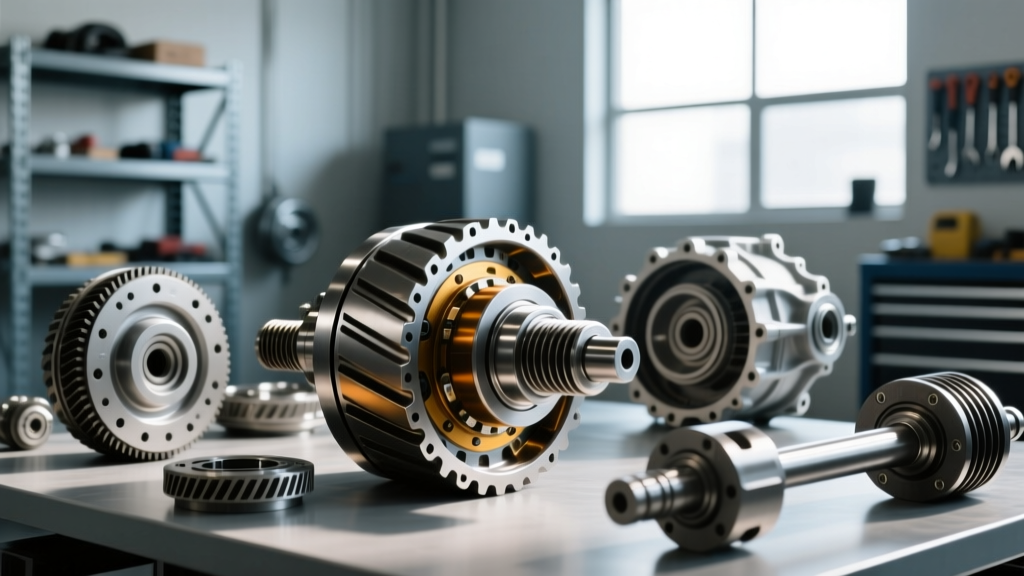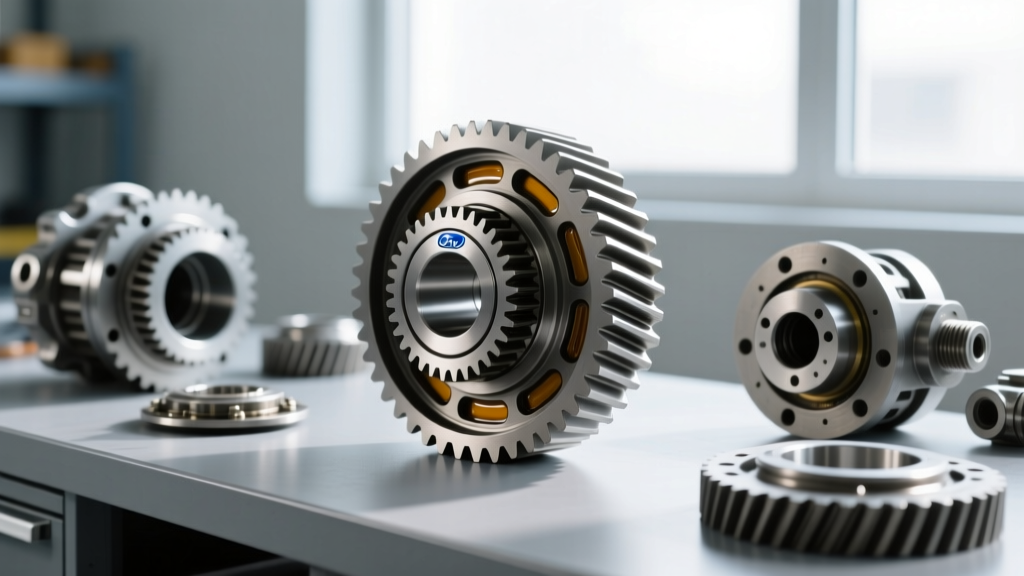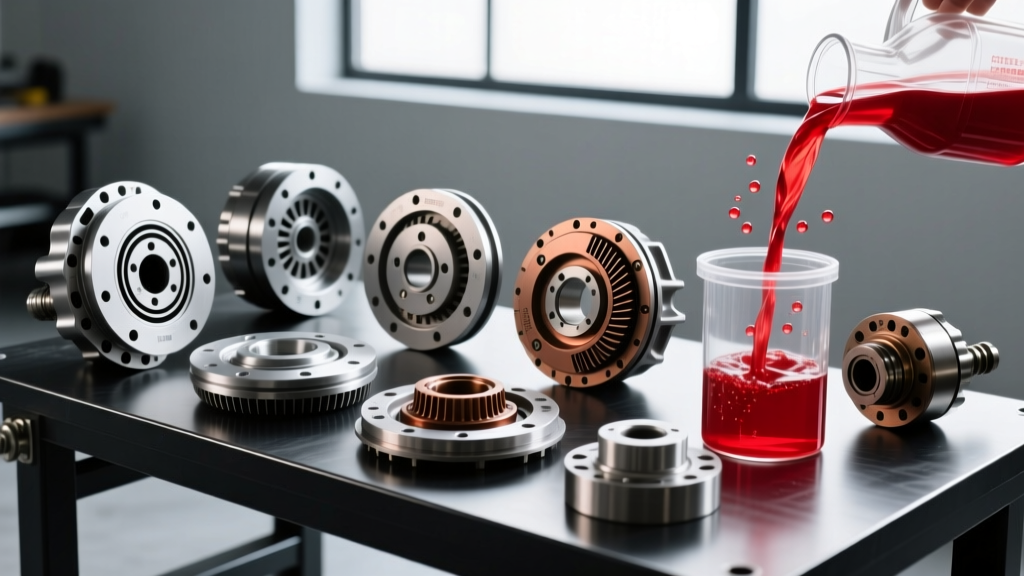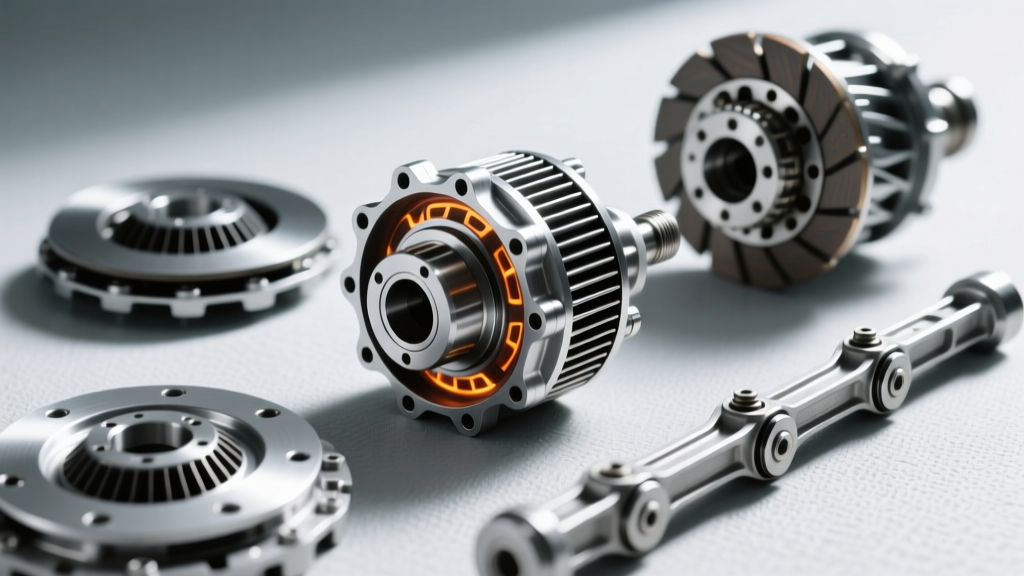
The Thermal Threshold: Why Differentials Overheat
When evaluating drivetrain longevity, engineers and fleet managers must accurately define differential cost not merely by the price of replacement gears, but by the investment required to manage thermal loads. The differential is a notoriously inefficient gear set. Hypoid gear designs, standard in nearly all solid-axle vehicles, rely on extreme sliding friction to transfer power from the driveshaft to the axle shafts. This sliding action generates immense heat.
Modern synthetic gear oils (such as 75W-90 and 75W-140 API GL-5 formulations) utilize Polyalphaolefin (PAO) and Ester base stocks combined with Sulfur-Phosphorus extreme pressure (EP) additives. However, thermal degradation remains the primary enemy. According to Machinery Lubrication's established guidelines on oil oxidation, the chemical breakdown of gear oil doubles for every 18°F (10°C) increase in temperature above the baseline 200°F threshold. Once fluid temperatures exceed 250°F, the EP additives rapidly deplete, leading to boundary lubrication failure, micropitting on the ring and pinion teeth, and catastrophic pinion bearing seizure.
How to Define Differential Cost: Upgrades vs. Rebuilds
To truly define differential cost, one must weigh the upfront expense of thermal management against the downstream cost of a complete axle rebuild. A standard stamped-steel differential cover offers zero thermal dissipation benefits and acts as an insulator. Upgrading to a high-capacity, finned cast-aluminum cover or an active cooling system fundamentally alters the operating envelope of the axle.
Cost-Benefit Analysis: Thermal Management vs. Axle Rebuild
| Component / Service | Average Cost (2026) | Fluid Capacity Increase | Expected Temp Drop | Primary Benefit |
|---|---|---|---|---|
| OEM Stamped Steel Cover | $15 - $35 | 0 Quarts | 0°F | Baseline OEM replacement |
| Cast Aluminum Finned Cover | $160 - $260 | +1.0 to +2.5 Quarts | 15°F - 25°F | Increased thermal mass & surface area |
| Active Pump-Driven Cooler | $450 - $850 | +2.0 to +3.0 Quarts | 40°F - 65°F | Forced convection for heavy towing |
| Complete Diff Rebuild (Parts/Labor) | $1,800 - $3,500+ | N/A | N/A | Restoring destroyed gear sets |
*Costs reflect average aftermarket pricing for heavy-duty applications (e.g., Dana 60, GM AAM 11.5", Ford Sterling 10.5").
Passive Cooling: The Engineering of Finned Covers
Passive cooling relies on two mechanisms: increased fluid volume (thermal mass) and increased surface area (convection and radiation). Aftermarket manufacturers like Mag-Hytec and PPE (Pacific Performance Engineering) utilize 356-T6 cast aluminum for their differential covers. Aluminum possesses a thermal conductivity roughly 1,500 times greater than the stainless steel used in OEM covers.
Internal Baffling and Fluid Dynamics
A common misconception is that external fins alone cool the fluid. In reality, external fins are useless unless the internal geometry of the cover forces the churning gear oil into contact with the aluminum mass. High-end covers feature internal directional baffles that scrape the oil off the rotating ring gear and channel it directly against the inner walls of the finned sections. Without this internal routing, the fluid simply pools at the bottom of the sump, rendering the top-mounted cooling fins entirely ineffective.
Expert Insight: When towing heavy 5th-wheel loads in ambient temperatures exceeding 95°F, a passive cast-aluminum cover will typically stabilize rear differential temperatures between 210°F and 225°F, keeping 75W-140 synthetic oil well within its safe operational viscosity index.
Active Cooling: When Passive Isn't Enough
For severe-duty applications—such as commercial towing, desert racing, or high-torque EV/hybrid truck conversions introduced in the mid-2020s—passive cooling may fall short. Active differential coolers utilize a pump to draw fluid from the differential sump, push it through a remote air-to-oil or liquid-to-oil heat exchanger, and return it to the axle.
System Architectures
- PTO-Driven Mechanical Pumps: Often integrated into the transfer case or a dedicated power take-off unit, these provide continuous flow proportional to vehicle speed. They are highly reliable but complex to plumb.
- Electric Pump Kits: Utilizing a 12V brushless pump, a thermostat switch, and a front-mounted finned cooler. These are easier to install on independent rear suspension (IRS) setups or solid axles where PTO access is unavailable. The thermostat ensures the pump only engages when fluid exceeds 190°F, preventing overcooling during winter operation.
Installation Protocol: Sealing and Torque Specifications
Improper installation of an upgraded differential cover is a leading cause of fluid loss and subsequent gear failure. The mating surface between the axle housing and the cover must be surgically clean. Use a non-chlorinated brake cleaner and a plastic scraper to remove old RTV silicone. Chlorinated cleaners can react with certain gear oils under high heat, forming corrosive hydrochloric acid.
Gasket vs. RTV Silicone
While OEM setups rely on a bead of RTV silicone, aftermarket reusable covers are best paired with elastomer-coated steel gaskets (such as Lube Locker). These gaskets feature a steel core with molded Viton or Nitrile rubber O-rings that compress into the bolt holes, providing a permanent, leak-free seal that does not require curing time. If RTV must be used, opt for a sensor-safe, high-torque formulation like Permatex Ultra Black, applying a continuous 3mm bead and torquing immediately before the silicone skins over.
Application-Specific Torque Specs
Over-torquing differential cover bolts will warp the mounting flange, guaranteeing a leak. Always use a calibrated inch-pound or low-range foot-pound torque wrench. Consult Dana Spicer's engineering bulletins or your specific OEM service manual, but standard heavy-duty specifications include:
- Dana 60 / 70 / 80 (3/8"-16 Bolts): 25 - 35 lb-ft
- GM AAM 11.5" (M10 x 1.5 Bolts): 33 lb-ft
- Ford Sterling 10.5" (M10 x 1.5 Bolts): 33 lb-ft
- Chrysler AAM 11.5" (M10 x 1.5 Bolts): 33 lb-ft
Note: Always tighten bolts in a crisscross, star-pattern sequence to ensure even clamping force across the gasket surface.
Fluid Fill and Verification
Upgrading to a deep-sump cover significantly increases fluid capacity. A standard Dana 60 holds roughly 3.0 to 3.5 pints; a deep-sump Mag-Hytec cover can increase this to over 5.5 pints. Always fill the differential until the fluid level reaches the bottom of the fill hole threads. However, if the aftermarket cover features a dedicated dipstick or side-fill port, follow the manufacturer's specific volume requirements. Allow the axle to sit for 15 minutes after the initial fill, as the new internal baffles and increased surface area will trap air pockets that must bleed out before topping off.
The ROI of Thermal Management
Ultimately, to define differential cost accurately, you must view the axle as a closed-loop thermal system. Investing $200 in a cast-aluminum cover and $40 in high-quality 75W-140 synthetic fluid extends the service interval of the gear set from 50,000 miles to well over 150,000 miles under heavy loads. By preventing the fluid from crossing the 250°F oxidation threshold, you protect the $2,500 ring and pinion set and the $400 carrier bearings inside. In the realm of heavy-duty drivetrains, thermal management is not an accessory; it is the most cost-effective insurance policy available.