The Short Answer: Is Differential Fluid the Same as Transmission Fluid?
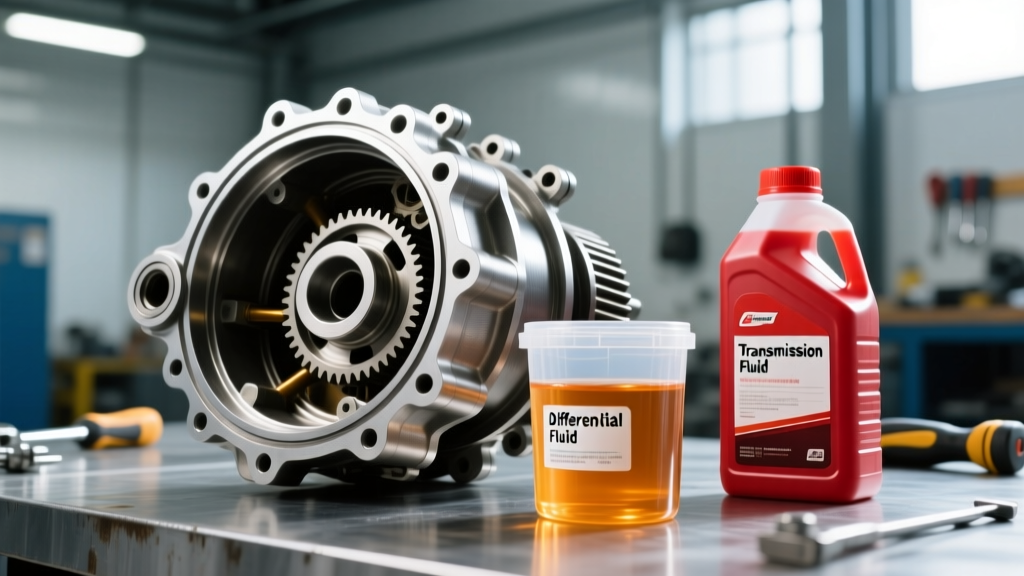
When diagnosing drivetrain noise or planning a weekend garage service, one of the most common questions enthusiasts ask is: is differential fluid the same as transmission fluid? The definitive answer is no. While both are lubricants designed to reduce friction and manage heat, their chemical compositions, viscosity profiles, and additive packages are engineered for entirely different mechanical environments. In 2026, with the proliferation of ultra-low viscosity automatic transmission fluids (ATF) and highly specialized synthetic gear oils, confusing the two can lead to catastrophic rear axle failure in under 5,000 miles.
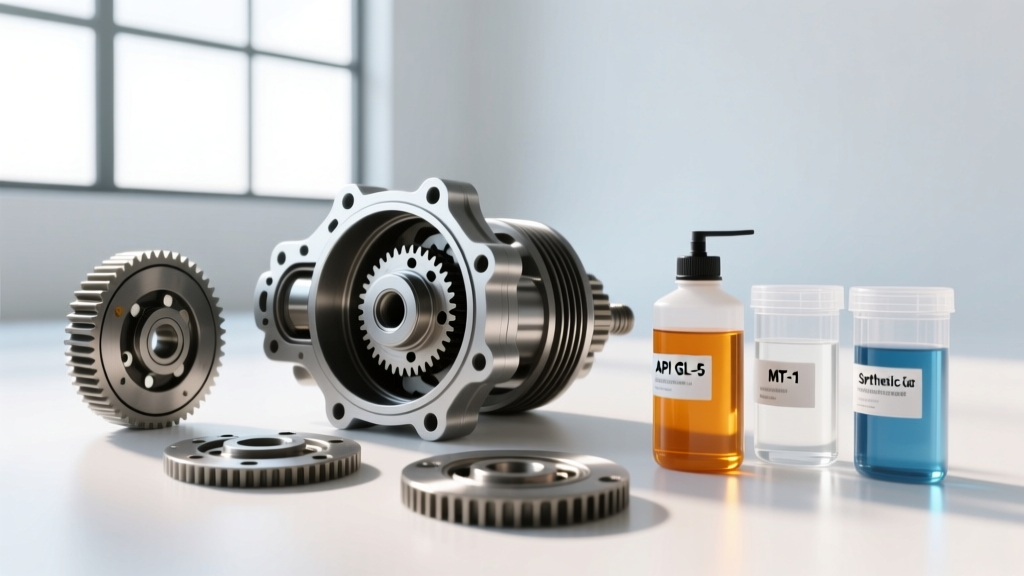
Automatic transmission fluids (like Dexron VI, Mercon LV, or modern CVTFs) are engineered for hydraulic valve bodies, wet clutches, and torque converters. They typically operate at a kinematic viscosity of roughly 6.0 to 7.5 cSt at 100°C. Rear differential fluid, conversely, is usually a 75W-90 or 75W-140 API GL-5 gear oil, operating at a much thicker 14.0 to 20.0+ cSt at 100°C. More importantly, GL-5 gear oils contain high levels of sulfur-phosphorus Extreme Pressure (EP) additives required to protect the sliding friction of hypoid gears—a protection mechanism entirely absent in transmission fluids.
Chemical and Viscosity Differences: Why Hypoid Gears Demand GL-5
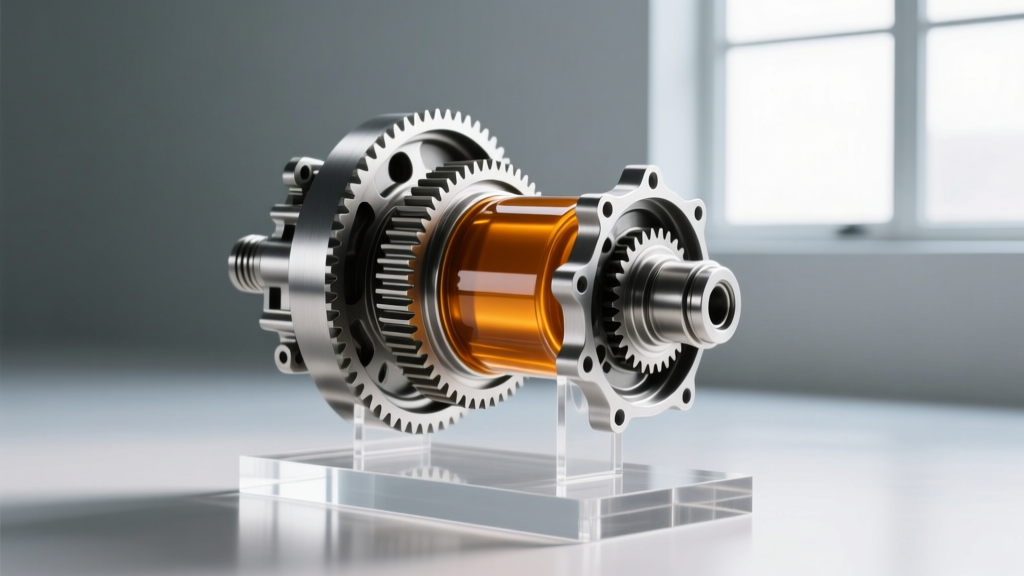
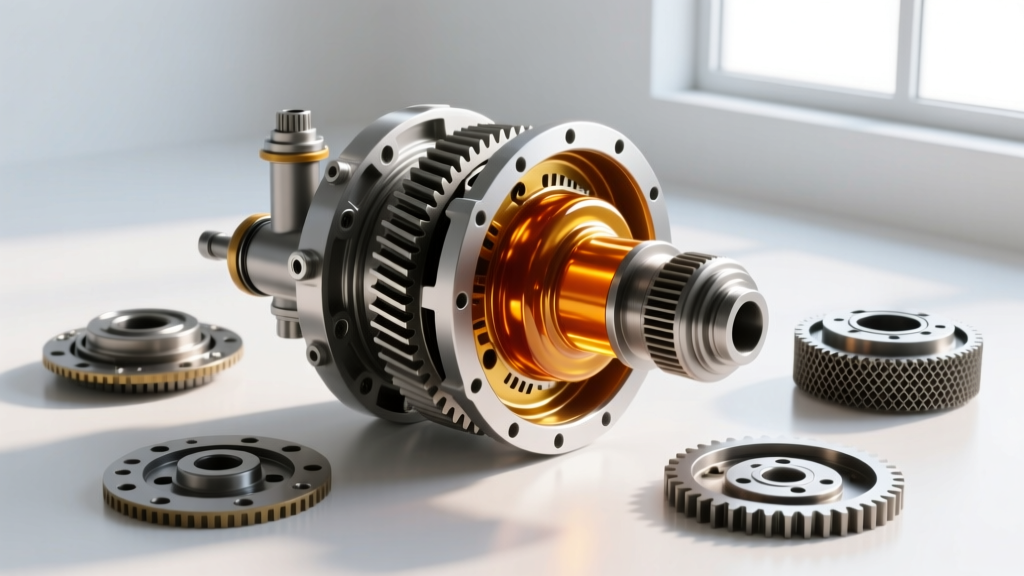
To understand why misapplication causes rapid failure, you must understand the geometry of a rear axle. Most rear-wheel-drive and four-wheel-drive vehicles utilize a hypoid gear set. Unlike standard spur or helical gears that roll against one another, the pinion gear in a rear differential is mounted below the centerline of the ring gear. This offset creates a severe wiping and sliding action across the gear teeth under immense load.
- Transmission Fluid (ATF): Lacks EP additives. If used in a rear diff, the fluid film will shear and rupture under the sliding pressure of the hypoid gears, leading to immediate micropitting, spalling, and eventual tooth shearing.
- Differential Fluid (GL-5): Contains sulfur-phosphorus compounds that react with the extreme heat and pressure of the gear contact zone to form a sacrificial solid-film boundary layer. This prevents metal-on-metal contact.
Note: Never use GL-5 gear oil in a manual transmission unless explicitly specified by the manufacturer, as the sulfur compounds can corrode yellow metals (bronze synchronizers).
Symptom Diagnosis: Identifying Rear Differential Failure
When troubleshooting rear axle noise, it is vital to isolate the differential from the transmission and wheel bearings. According to AA1Car's Drivetrain Noise Diagnosis guidelines, auditory symptoms change based on load, deceleration, and cornering. If you suspect previous fluid misapplication or severe degradation, listen for the following specific failure modes:
1. Acceleration vs. Deceleration Whine
A howling or whining noise that occurs only under acceleration typically indicates wear on the drive side (convex) of the ring gear teeth, often caused by insufficient fluid film thickness. If the whine occurs only on deceleration (coasting), the wear is on the coast side (concave) of the ring gear, or the pinion bearing preload has degraded. If it whines continuously regardless of load, the gear set is likely mismatched, improperly lapped, or completely starved of lubrication.
2. Low-Speed Cornering Chatter (LSD Equipped)
If your vehicle features a clutch-type Limited Slip Differential (LSD) and you feel a shuddering vibration or hear a rhythmic 'chatter' when turning at low speeds (like pulling into a parking spot), the fluid is lacking the required Friction Modifier additive. Standard GL-5 fluid is not enough; you must add an OEM-equivalent modifier (e.g., Ford XL-3 or GM EOS) to allow the clutch packs to slip smoothly rather than bind and release violently.
3. The 'Clunk' on Engagement
A distinct mechanical clunk when shifting from Reverse to Drive usually points to excessive backlash between the ring and pinion gears, or worn spider gears in the carrier. While fluid degradation accelerates this wear, the clunk itself is a mechanical clearance issue that requires a rebuild or backlash adjustment, not just a fluid swap.
The Misapplication Matrix: What Happens When You Mix Them Up?
| Scenario | Immediate Symptoms | Long-Term Damage (5k+ Miles) |
|---|---|---|
| ATF in Rear Differential | Increased operating temperatures, slight whine under heavy load. | Severe hypoid gear pitting, pinion bearing seizure, catastrophic ring gear failure. |
| GL-5 in Automatic Transmission | Sluggish shifts, overheating, torque converter shudder. | Clogged valve body passages, burnt clutch packs, complete transmission failure. |
| Missing LSD Friction Modifier | Chatter/judder during low-speed turns, tire hopping. | Glazed or shattered clutch packs inside the differential carrier. |
Step-by-Step Rear Differential Service Protocol
Proper rear differential service goes beyond simply draining and filling. To ensure longevity, especially on high-mileage trucks and SUVs, follow this exact protocol:
- Preparation: Warm the axle by driving for 15 minutes. Warm fluid suspends metallic particulates and drains faster.
- Cover Removal: Break the seal with a flathead screwdriver or specialized pry tool. Avoid hammering a chisel between the mating surfaces, as scoring the aluminum or cast-iron face will guarantee future leaks.
- Internal Cleaning: Do not use aerosol brake cleaner on the internal gears if your differential has painted identification tags or if you risk washing grease out of the wheel bearings. Instead, use lint-free shop towels and a mild solvent to wipe out the sludge. Inspect the bottom of the housing for large metal chunks (a fine metallic paste on the magnet is normal; jagged shards indicate bearing failure).
- Surface Prep: Scrape all old RTV silicone from the axle housing and cover using a plastic gasket scraper. Wipe both surfaces with isopropyl alcohol to ensure a completely oil-free mating surface.
- Sealing: Apply a continuous 1/4-inch bead of high-quality RTV (like Permatex Ultra Black or The Right Stuff) to the cover. Do not use pre-cut cork or rubber gaskets on modern differentials; they are prone to crushing and weeping under high-torque loads.
- Cure Time: Allow the RTV to skin over for 1 hour and cure for at least 12-24 hours before filling with fluid and driving. Filling immediately can cause the fluid to wash out the uncured silicone.
- Filling: Fill with the specified 75W-90 or 75W-140 synthetic GL-5 gear oil until it reaches the bottom edge of the fill hole. Add the LSD friction modifier *before* the gear oil if applicable.
Rear Differential Torque Specifications & Capacities
Overtorquing differential cover bolts is a primary cause of warped covers and stripped threads. Use a calibrated inch-pound or low-range foot-pound torque wrench. Below are specifications for the most common rear axles found in light trucks and SUVs:
| Axle Model | Cover Bolt Torque | Fill Plug Torque | Approx. Capacity |
|---|---|---|---|
| Ford 8.8-inch (Super 8.8) | 28 - 38 lb-ft | 25 - 30 lb-ft | 2.5 - 3.0 Quarts |
| GM 10-Bolt (8.5 / 8.6-inch) | 22 lb-ft | 25 - 30 lb-ft | 2.0 - 2.4 Quarts |
| Dana 44 (Standard) | 30 - 35 lb-ft | 25 - 35 lb-ft | 2.0 - 2.5 Quarts |
| Chrysler 9.25-inch (AAM) | 30 - 40 lb-ft | 25 - 30 lb-ft | 2.8 - 3.2 Quarts |
Always refer to the specific OEM service manual for your vehicle's exact year and model, as bolt grades and housing materials can alter torque requirements.
Cost Analysis: DIY vs. Dealership Service (2026 Pricing)
Rear differential maintenance is one of the most cost-effective preventative services you can perform at home. DIY Cost: A premium synthetic 75W-90 GL-5 gear oil (such as AMSOIL Severe Gear or Red Line 75W90) costs between $18 and $25 per quart. Combined with a tube of RTV and brake cleaner, your total out-of-pocket expense will range from $45 to $75. Professional Cost: Independent shops typically charge between $120 and $180 for a standard drain-and-fill, while dealerships can quote upwards of $250 to $350, especially if they use OEM-branded fluids and include a mandatory 'flush' additive fee. For further installation and diagnostic guidance, the Ring & Pinion Technical Support Archives offer excellent visual references for gear wear patterns and bearing preload setups.
Final Diagnostic Takeaway
Returning to the core question: is differential fluid the same as transmission fluid? Absolutely not. Treating them as interchangeable is a fast track to destroying a $2,000+ rear axle assembly. By understanding the chemical necessity of GL-5 EP additives, accurately diagnosing the auditory symptoms of hypoid gear wear, and adhering to strict torque and RTV curing protocols, you can easily extend the life of your rear differential well past the 200,000-mile mark.