The Hidden Cost of Traction: Understanding Locker Mechanics
Understanding exactly when to use differential lock is a fundamental skill for off-road enthusiasts, overlanders, and heavy-duty truck owners. Engaging a locking differential—whether it is an OEM electronic locker, an ARB Air Locker, or an Eaton Detroit Locker—forces both axle shafts to turn at the exact same speed, maximizing traction in mud, sand, and rock-crawling scenarios. However, this mechanical advantage comes with a hidden cost: extreme thermal and mechanical stress on your differential fluid.
When a locker is engaged, especially if accidentally left on high-traction surfaces like packed dirt or dry pavement, the axle experiences severe torsional wind-up. This binding transfers immense shock loads directly to the ring and pinion gear teeth. According to engineering data from Dana Spicer, these shock loads can generate localized flash temperatures exceeding 300°F (149°C) at the gear mesh point. This extreme heat fundamentally alters the chemical structure of your gear oil, making regular inspection of differential fluid color and condition a critical preventive maintenance task.
Thermal Shock and EP Additive Depletion
Modern API GL-5 gear oils rely on a delicate balance of sulfur-phosphorus Extreme Pressure (EP) additives to prevent metal-to-metal contact under heavy loads. When you subject your axle to the repeated shock loading of a locking differential, these EP additives are consumed and depleted at an accelerated rate. Furthermore, the intense heat causes the base oil to oxidize.
Oxidation thickens the fluid, forms varnish deposits on the bearing cages, and creates acidic byproducts that can corrode the brass synchronizers in manual transfer cases if the fluid is shared, or damage the axle seals over time. By monitoring the fluid's color and smell, you can diagnose the internal health of your axle without pulling the differential cover.
Decoding Differential Fluid Color and Condition
Visual and olfactory inspections are your first line of defense against catastrophic axle failure. Below is a comprehensive diagnostic matrix used by drivetrain specialists to interpret fluid condition.
| Fluid Color | Odor Profile | Technical Diagnosis | Required Action |
|---|---|---|---|
| Translucent Honey / Amber | Mild, synthetic chemical or faint sulfur | Healthy, uncompromised fluid. Additives are fully active. | No action required. Continue standard interval monitoring. |
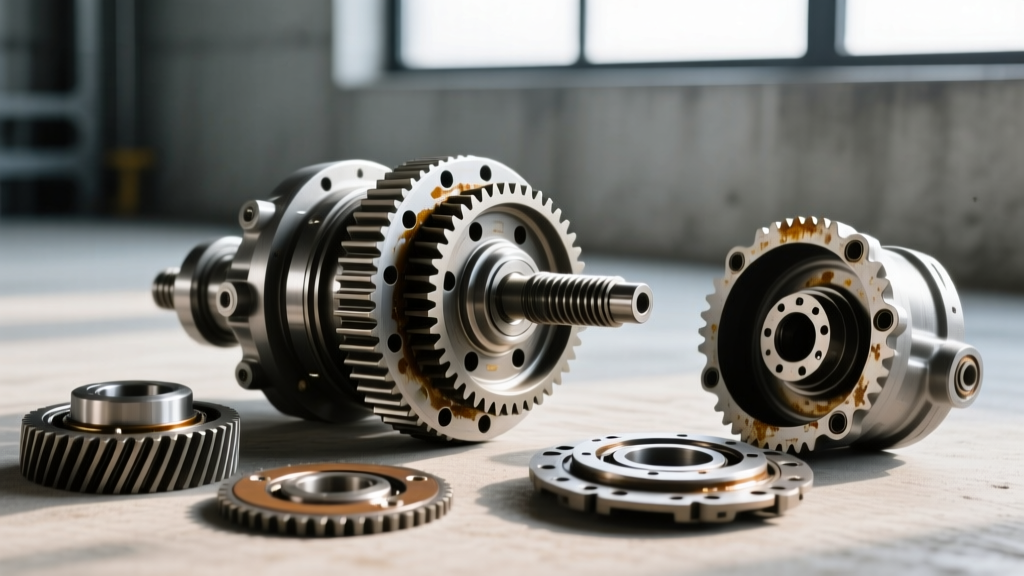
| Opaque Dark Brown / Black | Strong, acrid, burnt toast | Severe thermal degradation. EP additives depleted due to excessive locker use or heavy towing. | Immediate drain and refill. Inspect for glazing on ring gear. |
| Milky / Chocolate Milk | Damp, musty, or no distinct gear oil smell | Water emulsion. Caused by submerged axle cooling or clogged breather tubes drawing in moisture. | Flush immediately. Replace axle seals and clear/extend breather lines. |
| Gray with Fine Glitter | Standard sulfur / rotten egg | Normal break-in wear. Common in the first 3,000 miles of a new ring and pinion set. | Perform the initial break-in fluid change at 3,000 miles. |
| Black with Metal Chunks | Burnt oil and raw hot metal | Catastrophic mechanical failure. Bearing cage disintegration or ring gear tooth shearing. | Do not drive. Requires full differential teardown and rebuild. |
The "Chocolate Milk" Emulsion Phenomenon
One of the most common issues tied to off-road locker use is water intrusion. When you engage a differential lock to crawl through a water crossing, the axle housing is submerged. As the hot axle housing rapidly cools in the water, it creates a vacuum effect. If the axle breather tube is clogged with mud or routed too low, water is sucked past the axle shaft seals directly into the gear oil. The churning action of the ring gear whips the water and oil into a thick, mayonnaise-like emulsion. This emulsion lacks the hydrodynamic film strength required to protect the pinion bearings, leading to rapid spalling and failure.
Preventive Maintenance: Service Intervals and Specifications
If you frequently use your differential lock in extreme conditions, the standard "fill-for-life" or 100,000-mile factory service intervals are entirely inadequate. For vehicles equipped with locking differentials that see regular off-road or heavy-towing use, a 30,000-mile severe-duty interval is recommended.
Fluid Selection and Capacities
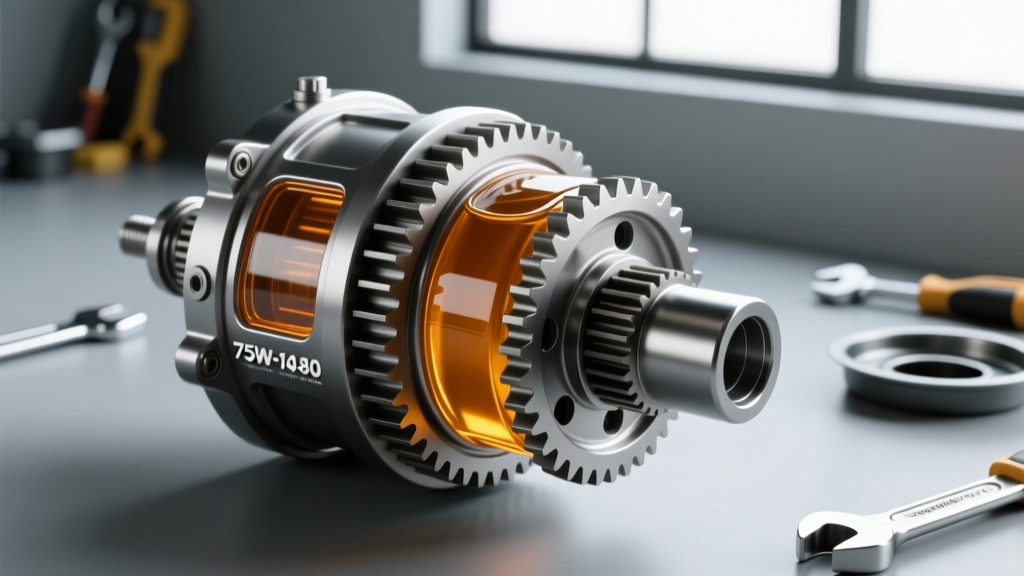
For heavy-duty applications involving locking differentials, stepping up to a higher viscosity synthetic is highly recommended. While many factory manuals call for 75W-90, utilizing a full synthetic SAE 75W-140 gear oil (such as AMSOIL Severe Gear or Mobil 1 Synthetic Gear Lubricant) provides a thicker protective film at extreme temperatures. Expect to pay between $22 and $28 per quart for premium synthetic 75W-140.
- Dana Spicer 60: Capacity ~3.5 to 4.0 quarts. Requires limited-slip friction modifier if equipped with a clutch-type LSD, though full lockers (like the Detroit Locker) do not require friction modifiers.
- GM AAM 11.5-inch: Capacity ~3.8 quarts. Commonly found in 2500/3500 HD trucks.
- Ford 10.5-inch Sterling: Capacity ~3.5 quarts.
Critical Torque Specifications
Over-torquing drain and fill plugs is a common mistake that strips the threads on aluminum differential covers or cast-iron housings. Always use a calibrated torque wrench. Resources from Ring & Pinion emphasize the following industry-standard torque specs:
- Dana 60 Fill/Drain Plug: 25 - 35 lb-ft
- Dana 60 Cover Bolts: 30 - 35 lb-ft (criss-cross pattern)
- GM AAM 11.5" Fill Plug: 24 lb-ft (32 Nm)
- Ford 10.5" Sterling Fill Plug: 22 lb-ft (30 Nm)
Expert Preventive Tip: Before every off-road trip where you anticipate needing your differential lock, inspect your axle breather tubes. Ensure they are routed high up into the engine bay or bed, and verify the one-way check valves are not clogged with dust. This single $5 maintenance step prevents the vacuum effect that causes water intrusion and fluid emulsion.
Step-by-Step Fluid Inspection Protocol
To accurately assess your differential fluid color and condition without dropping the entire pan or removing the cover, follow this extraction protocol:
- Warm the Axle: Drive the vehicle for 15-20 minutes to bring the gear oil up to operating temperature. This suspends wear metals and contaminants in the fluid, providing a more accurate sample.
- Extract via Fill Plug: Remove the fill plug using the correct socket or hex bit. Insert a clean, dedicated fluid extraction pump tube down to the bottom of the housing.
- Evaluate the Sample: Pull a 2 oz sample into a clear glass or plastic container. Hold it up to natural sunlight. Check for the metallic glitter (normal wear) versus chunky shavings (bearing failure).
- Check for Water Separation: Let the sample sit for 10 minutes. If water is present, it will begin to separate and settle at the bottom of the clear container, as water is heavier than gear oil.
- Refill to Proper Level: Reinstall the fill plug and torque to spec. If the sample was degraded, proceed with a full drain, cover removal, and brake cleaner flush of the housing.
Conclusion: Respecting the Drivetrain
Knowing when to use differential lock is only half the battle; understanding the mechanical fallout of that traction is what separates novice wheelers from seasoned drivetrain experts. Locking differentials subject ring and pinion gears to immense, unnatural stress. By closely monitoring your differential fluid color, smell, and condition, and adhering to strict severe-duty service intervals with high-quality 75W-140 synthetic lubricants, you ensure your axles survive the punishment you put them through. For further reading on axle dynamics and gear ratios, consult the technical archives at SAE International to stay updated on the latest metallurgy and lubrication standards for 2026 and beyond.