The True Cost of Rear Differential Maintenance in 2026
Drivetrain maintenance often takes a backseat to engine oil changes, but neglecting your ring and pinion assembly is a fast track to catastrophic whine, gear pitting, and total axle failure. When evaluating the rear differential fluid service cost, the final price tag shifts dramatically depending on whether your axle houses a standard open differential or a clutch-type limited-slip differential (LSD). In 2026, with synthetic lubricant prices and shop labor rates continuing to climb, understanding the mechanical and chemical differences between these axle types is critical for both your wallet and your vehicle's longevity.
Whether you are daily-driving a Ford F-150 with an 8.8-inch axle, wheeling a Jeep Wrangler on Dana 44s, or towing with a GM Silverado 10-bolt, this buyer’s guide and comparison breakdown will help you navigate fluid specifications, friction modifiers, and exact service costs.
The Mechanical Divide: Open vs. Limited-Slip Axles
To understand why service costs and fluid requirements differ, we must first look at the internal hardware. Both open and limited-slip differentials utilize hypoid gear sets. The pinion gear sits below the centerline of the ring gear, creating a massive amount of sliding friction alongside rotational force. This requires extreme pressure (EP) gear oils, typically API GL-5 certified, loaded with sulfur-phosphorus additives to prevent the gear teeth from welding together under load.
Open Differentials
Open differentials (found in base-model trucks and economy SUVs) use simple spider and side gears to allow wheels to rotate at different speeds during cornering. However, they always send power to the wheel with the least resistance. Because there are no internal clutch packs or friction surfaces to manage, an open differential only requires standard 75W-90 GL-5 gear oil. Servicing it is a straightforward drain, clean, and fill procedure.
Limited-Slip Differentials (LSD)
Limited-slip axles, such as the Ford Traction-Lok, Eaton Posi, or aftermarket Auburn units, utilize internal clutch packs to bias torque to the wheel with traction. When these clutch packs engage and disengage without the proper chemical lubrication, they experience 'stick-slip' vibration, resulting in the infamous 'LSD chatter' or groaning noise during tight turns. To prevent this, clutch-type LSDs require a specialized Friction Modifier additive mixed into the GL-5 gear oil. (Note: Helical gear LSDs like the Eaton Truetrac or Torsen do not use clutch packs and therefore do not require friction modifiers, keeping their maintenance costs closer to open differentials).
2026 Rear Differential Fluid Service Cost Breakdown
Below is a comprehensive comparison of what you can expect to pay in 2026, factoring in current synthetic fluid prices, additive costs, and average national shop labor rates ($120–$165/hour).
| Differential Type | Common Examples | Fluid Requirement (API GL-5) | Est. DIY Cost (2026) | Est. Pro Shop Cost (2026) |
|---|---|---|---|---|
| Open Differential | Dana 35, GM 8.5' 10-Bolt | 75W-90 Synthetic | $45 - $75 | $150 - $225 |
| Clutch-Type LSD | Ford 8.8 Traction-Lok, Eaton Posi | 75W-90 Synthetic + Friction Modifier | $65 - $105 | $225 - $350 |
| Helical Gear LSD | Eaton Truetrac, Torsen T-2 | 75W-90 Synthetic (No Modifier) | $45 - $75 | $160 - $250 |
Source data for labor estimates aggregated from national automotive repair databases and dealership service menus for the 2026 fiscal year.
The Chemistry of Chatter: Friction Modifiers Explained
Why exactly do clutch-type LSDs demand a higher rear differential fluid service cost? The answer lies in the friction modifier. Standard GL-5 gear oils are designed to reduce friction to protect hypoid gears. However, LSD clutch packs require a specific coefficient of friction to lock smoothly. If the oil is too 'slippery,' the clutches will slip continuously under load, causing premature wear and glazing. If the oil lacks friction modifiers, the clutches will grab aggressively, causing chatter, binding, and eventual shattering of the spider gears.
According to lubrication experts at Red Line Oil, friction modifiers alter the surface tension of the gear oil, allowing the clutch plates to engage progressively rather than abruptly. If you are servicing a clutch-type LSD, you must purchase a dedicated modifier.
Recommended Fluid & Additive Part Numbers
- Base Gear Oil: Mobil 1 Synthetic Gear Lube 75W-90 (Part #104361) or Amsoil Severe Gear 75W-90. Expect to pay $18–$24 per quart. Most light-duty truck axles (like the Ford 8.8 or GM 10-bolt) require between 2.1 and 2.8 quarts.
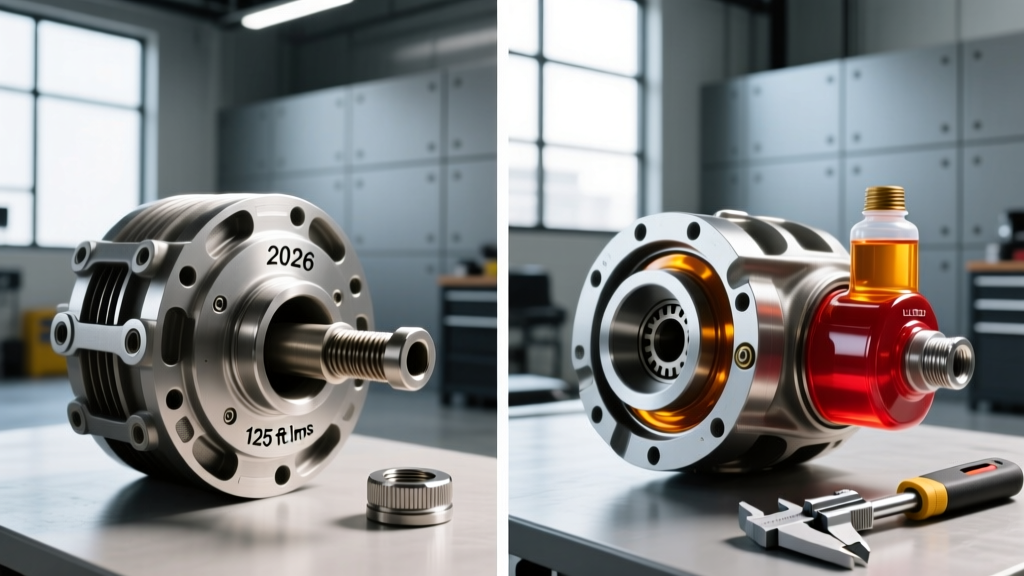
- Friction Modifier: Motorcraft XL-3 Friction Modifier Additive (Part #XL-3) or GM Limited Slip Axle Lubricant Additive (Part #88900333). Cost: $8–$14 per 4 oz bottle. Typically, 4 oz is sufficient for a standard half-ton truck axle.
Expert Warning: Never use friction modifier in an open differential or a helical gear LSD (like the Truetrac). It will unnecessarily reduce the oil's load-carrying capacity and accelerate hypoid gear wear. For a deeper dive into EP additives and gear lube chemistry, refer to the AMSOIL Gear Lube Basics Guide.
DIY Service Protocol: Torque Specs and RTV Selection
If you are tackling the service yourself to avoid the $200+ shop labor premium, precision is paramount. Over-torquing differential cover bolts will warp the housing, leading to leaks and bearing misalignment. Under-torquing will result in immediate fluid loss and axle starvation.
Factory Torque Specifications (Common Axles)
- Ford 8.8-inch & Super 8.8: Cover bolts (12-point) – 35-45 lb-ft; Fill/Drain plug – 25-30 lb-ft. Capacity: ~2.5 quarts.
- GM 8.5/8.6-inch 10-Bolt: Cover bolts – 25-30 lb-ft; Fill plug – 33 lb-ft. Capacity: ~2.1 quarts.
- Dana 44 (Jeep/Truck): Cover bolts – 30-35 lb-ft; Fill plug – 25 lb-ft. Capacity: ~2.0 quarts.
Always tighten cover bolts in a crisscross star pattern to ensure even gasket compression. Consult Dana Spicer Resources for specific OEM service manuals regarding your exact axle ratio and housing.
Sealing the Housing: RTV vs. Reusable Gaskets
Many modern differentials do not use a pre-cut cork or rubber gasket; instead, they rely on RTV silicone. Using the wrong RTV will result in the silicone dissolving into the gear oil, clogging the bearing journals and destroying the pinion bearings.
- RTV Silicone: Permatex Ultra Black (Part #81180) is sensor-safe and oil-resistant. Apply a continuous 1/8-inch bead, and allow it to skin over for 10 minutes before mating the cover. Wait 24 hours before filling with fluid to prevent wash-out.
- Reusable Gaskets: For a cleaner, faster service, upgrade to a LubeLocker reusable elastomer gasket (e.g., Part #LL-D044 for Dana 44, approx. $35). These eliminate RTV cure times and the risk of internal debris.
Buyer’s Guide: Is the LSD Maintenance Premium Worth It?
When purchasing a used truck or deciding whether to swap an open carrier for an LSD, the higher rear differential fluid service cost is a frequent concern. Is paying an extra $20 for friction modifier and $50 in shop labor every 30,000 miles worth it?
The Verdict: If your vehicle is strictly a highway commuter or a light-duty tow rig, an open differential (or a maintenance-free helical Truetrac) is the most economical choice. However, if you regularly drive on snow, ice, loose gravel, or tow heavy trailers up steep, uneven grades, a clutch-type LSD is non-negotiable. The traction benefits vastly outweigh the marginal increase in annual maintenance costs.
By understanding the exact fluid requirements, adhering to strict torque specifications, and utilizing high-quality synthetic GL-5 oils with the correct friction modifiers, you can easily extend the life of your ring and pinion well past 200,000 miles, regardless of which differential type sits between your rear wheels.