The Engineering Behind the Charger's Rear Axle
When managing the drivetrain of a modern American muscle sedan, the rear axle is subjected to immense torsional stress. Whether you are launching a 5.7L Hemi R/T or managing the 700+ lb-ft of torque from a supercharged Hellcat variant, the limited-slip differential (LSD) is the critical nexus translating engine output into forward traction. However, the internal clutch packs and helical gears rely entirely on precise hydrodynamic lubrication. Finding the correct dodge charger rear differential fluid type is not merely a matter of pouring in generic gear oil; it requires a deep understanding of viscosity grades, extreme pressure (EP) additives, and friction modifier chemistry tailored to your specific axle housing.
As we navigate the 2026 automotive landscape, fluid formulations have evolved to handle higher thermal loads generated by modern traction control systems and advanced launch control algorithms. This technical deep-dive explores the mechanical operation of the Charger’s LSD, the exact fluid specifications required, and the precision maintenance procedures necessary to prevent catastrophic gear wear and clutch chatter.
Anatomy of the Charger's Limited-Slip Differentials
Before selecting a fluid, you must identify the specific LSD mechanism housed within your Charger's rear axle. Stellantis (formerly FCA) has utilized several distinct rear-end configurations across the LX and LA platforms, each with unique lubrication requirements.
1. Clutch-Type LSDs (Trac-Lok and Auburn Variants)
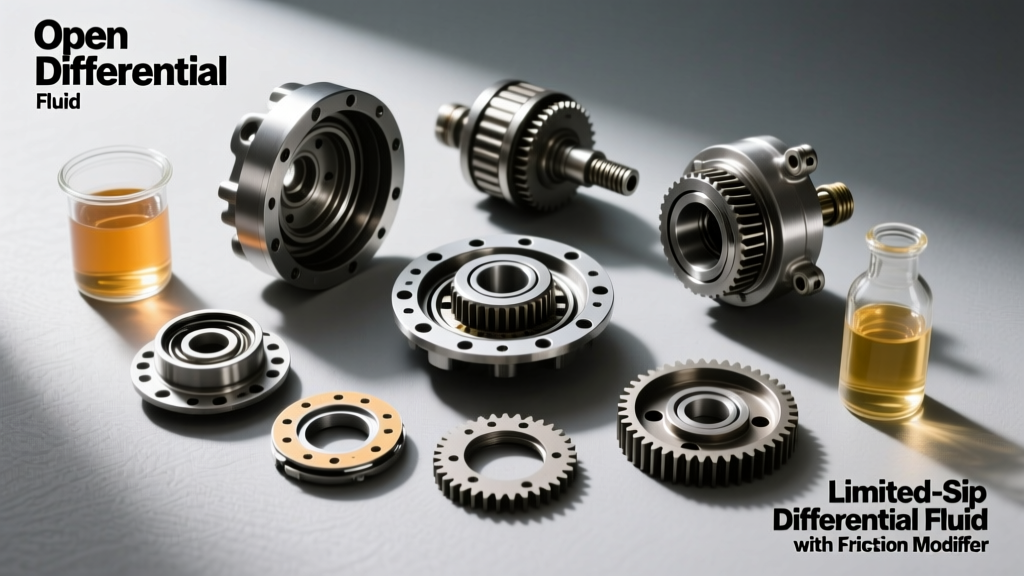
Found predominantly in R/T models, Scat Pack variants, and older Charger platforms, clutch-type LSDs utilize a series of alternating friction and steel clutch packs positioned behind the side gears. When torque is applied, the preload springs and hydraulic pressure from the gear oil force the clutches to lock, transferring power to the wheel with traction. Because these clutches rely on controlled slip during cornering, the fluid must contain specific friction modifiers to prevent 'stick-slip' chatter, which manifests as a low-frequency shudder during tight, low-speed turns.
2. Helical / Torsen-Style LSDs (ZF and Getrag SRT Axles)
High-performance SRT models, particularly those equipped with ZF-sourced or Getrag rear axles, often utilize helical gear-driven limited-slip differentials. These units rely on gear mesh separation forces and worm-gear mechanics to multiply torque bias without the use of friction clutches. While they do not strictly require friction modifiers, they demand gear oils with exceptional shear stability and high concentrations of zinc and phosphorus (ZDDP) to protect the aggressive gear tooth profiles under extreme shock loads.
Fluid Specifications and Capacity Matrix
The viscosity of your gear oil dictates the hydrodynamic film thickness separating the ring and pinion gears. Using an oil that is too thin will result in metal-on-metal contact during high-G cornering, while an oil that is too thick will cause parasitic drag, reducing fuel economy and delaying lubrication during cold starts.
| Charger Trim Level | Axle Type & Ring Gear | Recommended Fluid Viscosity | Capacity (Approx.) | Friction Modifier Required? |
|---|---|---|---|---|
| R/T (5.7L Hemi) | Chrysler 8.75' (215mm) | 75W-85 Synthetic (API GL-5) | 1.6 Liters | Yes (If equipped with clutch LSD) |
| Scat Pack (6.4L Hemi) | Chrysler 8.75' (215mm) | 75W-85 or 75W-90 Synthetic | 1.6 - 1.8 Liters | Yes (Clutch LSD) |
| SRT Hellcat / Redeye | ZF / Getrag Heavy Duty | 75W-140 Synthetic (API GL-5) | 1.4 - 1.5 Liters | No (Helical Gear LSD) |
| SRT 392 (Widebody) | ZF Rear Axle | 75W-85 ZF Spec Synthetic | 1.5 Liters | Varies by specific ZF unit |
For the Chrysler 8.75-inch axle, the OEM standard is typically Mopar 75W-85 Synthetic Gear Oil (Part # 68218657AA). For SRT models subjected to track duty or frequent launch control usage, upgrading to a high-quality Group IV (PAO) or Group V (Ester) 75W-140 synthetic is highly recommended to maintain film strength when differential temperatures exceed 250°F (121°C).
The Chemistry of Friction Modifiers
If your Charger utilizes a clutch-type LSD, the friction modifier is not optional—it is a mechanical necessity. Friction modifiers are long-chain organic molecules that attach to the porous surfaces of the clutch friction discs. They alter the coefficient of friction, ensuring a smooth transition between static and kinetic friction states.
'Skipping the friction modifier in a clutch-type Charger rear end won't destroy the differential immediately, but it will glaze the clutch packs within 5,000 miles of aggressive driving, leading to permanent one-wheel-slip scenarios and expensive teardowns.' — Master Drivetrain Technician, Autogear Nexus
The standard OEM additive is Mopar Limited Slip Additive (Part # 04318060AD / 05136081AA). The general rule of thumb is to add 2.5 oz (74 ml) of modifier per quart of gear oil. However, many premium aftermarket synthetic gear oils (such as those from AMSOIL or Red Line) come pre-blended with the correct ratio of friction modifiers, eliminating the need for a separate additive bottle. Always verify the product data sheet before mixing additives, as over-saturating the fluid can cause the clutches to slip excessively under hard acceleration, generating dangerous amounts of heat.
Precision Service Procedure: Drain, Fill, and Torque
Servicing the rear differential requires meticulous attention to cleanliness and torque specifications. The Chrysler 8.75' axle typically features a removable aluminum or stamped steel cover, while ZF and Getrag SRT axles utilize sealed housings with specific drain and fill plugs.
Chrysler 8.75' Axle Cover Service
- Preparation: Safely elevate the vehicle on a level lift or jack stands. Ensure the vehicle is perfectly level; an uneven stance will result in an inaccurate fluid fill level.
- Drain: If equipped with a bottom drain plug, remove it using a 3/8' square drive or appropriate hex bit. If no plug is present, place a high-capacity drain pan beneath the axle and break the cover seal using a gasket scraper. Never pry the cover with a screwdriver, as this will gouge the aluminum mating surface and cause permanent leaks.
- Inspection: Inspect the magnetic drain plug or the magnet inside the cover. A fine, silty metallic paste is normal for break-in and standard wear. Chunky metal shards or brass-colored flakes indicate catastrophic bearing or synchro failure.
- Reseal: Clean the mating surfaces with brake cleaner. Apply a continuous 3mm bead of Mopar RTV Silicone (Part # 04883971). Allow 10 minutes for the RTV to skin over before installing the cover.
- Torque Specs: Install the cover bolts and torque them in a crisscross pattern to 33 lb-ft (45 Nm). Overtorquing will warp the cover or strip the aluminum housing threads.
- Fill: Remove the top fill plug. Pump the 75W-85 fluid until it reaches the bottom edge of the fill hole. Reinstall the fill plug and torque to 25 lb-ft (34 Nm).
ZF / Getrag SRT Axle Plug Service
For sealed SRT axles, the procedure relies entirely on the drain and fill plugs. CRITICAL RULE: Always remove the fill plug first before draining the fluid. If the drain plug is stripped or the fill plug is seized, you will be left with an empty, immovable vehicle.
- Fill Plug Torque: 22 lb-ft (30 Nm)
- Drain Plug Torque: 22 lb-ft (30 Nm)
- Fluid Spec: Ensure the fluid meets ZF TE-ML 05A or the specific API GL-5 rating outlined in your 2026 Stellantis owner's manual. Consult Mopar's official parts catalog for the exact OEM fluid part number corresponding to your VIN.
Diagnosing Fluid Degradation and LSD Wear
Differential fluid degrades primarily through thermal oxidation and shear breakdown. High-speed highway driving generates sustained heat, while repetitive drag-strip launches cause localized shock-loading that shears the viscosity index improvers in lower-quality oils.
Audible and Tactile Warning Signs
- Low-Speed Cornering Chatter: A rhythmic 'thumping' or binding sensation when turning out of a parking space. This indicates depleted friction modifiers or glazed clutch packs. Remedy: Drain fluid, flush with a carrier cleaner, and refill with fresh fluid and the precise dose of friction modifier.
- Coast-Down Whine: A howling noise that changes pitch between 40-60 mph when lifting off the throttle. This is rarely a fluid issue; it typically points to incorrect ring and pinion backlash or worn pinion bearings. Fluid analysis will likely show high iron content.
- Clutch Slip Under Load: If the inside wheel spins freely during a hard launch despite the LSD, the clutch packs are worn beyond the fluid's ability to compensate. A physical differential rebuild with new Eaton or Auburn clutch kits is required.
Maintaining the correct Dodge Charger rear differential fluid type and adhering to a strict 30,000-mile service interval (or 15,000 miles for track-driven SRT models) is the most cost-effective insurance policy for your vehicle's drivetrain. By respecting the intricate chemistry of synthetic gear oils and the precise torque specifications of the axle hardware, you ensure that every ounce of torque reaches the pavement exactly as the engineers intended.