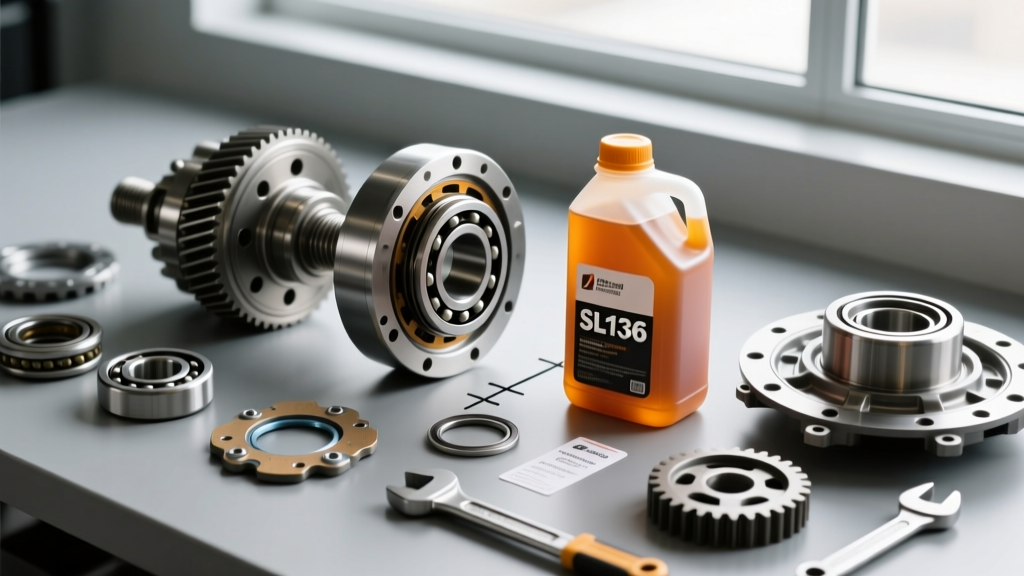
The Strategic Importance of the Fill Plug in Preventive Maintenance
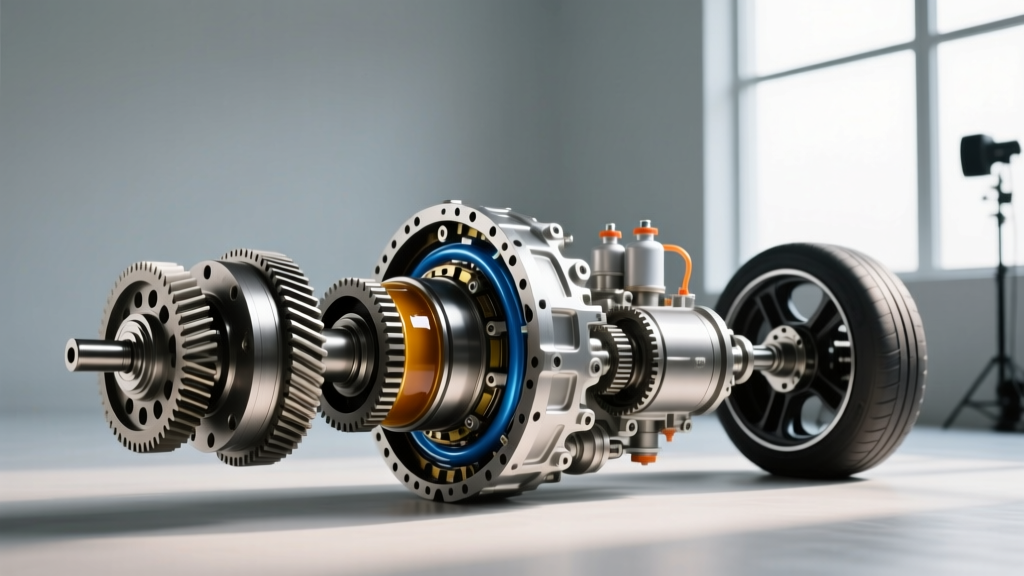
In the realm of drivetrain longevity, the hypoid ring and pinion gear set operates under some of the most extreme sliding friction and shear forces found anywhere on a vehicle. To survive these conditions, differentials rely on API GL-5 rated gear oils fortified with sulfur-phosphorus Extreme Pressure (EP) additives. Over time, thermal cycling, mechanical shear, and environmental contamination degrade these vital chemical buffers. While many DIYers and even some quick-lube technicians treat differential service as a simple 'drain and fill' chore, true preventive maintenance begins with a meticulous inspection of the fluid before a single drop is drained. Pulling the fill plug rear differential provides a pristine, in-situ window into the mechanical health of your axle assembly.
By sampling the fluid directly from the fill port, you avoid the cross-contamination that often occurs when draining old fluid into a reused catch pan. More importantly, the fluid clinging to the fill plug and the initial stream that exits the port will tell a highly detailed story about bearing wear, seal integrity, and gear mesh health. This guide will teach you how to decode the visual, tactile, and olfactory clues hidden inside your axle housing.
Visual Triage: Decoding Differential Fluid Colors
Before you commit to a full fluid exchange or tear down the third member, pull the fill plug rear differential and capture a sample in a clear glass or plastic vessel. Hold it up to a bright, natural light source and evaluate the baseline color.
1. Clear Honey to Light Amber
Diagnosis: New or exceptionally well-maintained fluid.
Action: No service required. If this is a new vehicle with less than 5,000 miles, you are likely looking at the factory fill. Note that some premium synthetic fluids (like Red Line 75W90 or Motul Gear 300) have a distinct reddish or greenish tint straight from the bottle due to their specific ester base stocks and dye packages.
2. Dark Brown to Opaque Black
Diagnosis: Normal oxidation and EP additive depletion.
Action: Schedule a drain and fill. As the sulfur-phosphorus additives sacrifice themselves to protect the hypoid gear sliding surfaces, the fluid darkens. If the fluid is black but still translucent at the edges of your sample cup, the gears are likely healthy, but the fluid has exceeded its service life (typically 30,000 to 60,000 miles for conventional, up to 100,000 for synthetics).
3. Milky, Frothy, or 'Chocolate Milk' Appearance
Diagnosis: Severe water intrusion and emulsification.
Action: Immediate service and breather system diagnosis. Water destroys the load-bearing film strength of gear oil, leading to rapid micropitting on the ring gear. This condition almost always points to a clogged or submerged axle breather tube. When the axle cools down after a hot run, it creates a vacuum that sucks moisture past the axle seals or directly through a compromised breather. Replace the breather with an extended, filtered unit (e.g., Dorman 600-110 or ARB extended breather kits) and flush the housing with a cheap flush oil before refilling with premium GL-5.
4. Silver Glitter or 'Chunky' Metallic Particles
Diagnosis: Active mechanical failure.
Action: Do not simply change the fluid. A fine, silvery paste on the magnetic fill plug is normal for the first 15,000 miles of a new or freshly rebuilt differential (the result of gear lapping and bearing seating). However, if you see distinct metallic flakes, needle bearing shards, or chunky spalling, the pinion bearing or carrier bearings are disintegrating. The third member must be removed for a complete rebuild.
The Olfactory and Tactile Evaluation
Your nose and fingertips are remarkably sensitive diagnostic tools when evaluating the fill plug rear differential fluid sample.
- The Smell Test: GL-5 gear oil naturally smells like sulfur or rotten eggs due to the EP additives. This is normal. However, if the fluid smells sharply of burnt toast or acrid smoke, the differential has experienced severe overheating (exceeding 250°F / 121°C). This thermal runaway breaks down the base oil's viscosity, often caused by excessive towing, undersized fluid capacity, or a dragging parking brake shoe inside a drum-in-hat rear axle.
- The Rub Test: Place a drop of the fluid between your thumb and index finger and rub them together. You should feel a smooth, slippery film. If you feel a gritty, sand-like texture, silica (dirt) has bypassed the fill plug threads or axle seals, acting as a lapping compound on your ring and pinion. If you feel sharp, distinct edges, you are feeling fractured steel from the gear teeth or bearing races.
Rear Differential Fluid Diagnostic Matrix
| Fluid Condition | Primary Cause | Preventive Action Required | Estimated Cost |
|---|---|---|---|
| Dark Brown / Black | Normal thermal cycling & additive depletion | Standard drain, flush, and refill with 75W-90 or 75W-140 GL-5 | $40 - $80 (DIY) |
| Milky / Emulsified | Water ingress via clogged breather or bad seal | Flush housing, replace breather tube, inspect axle seals | $60 - $150 (Parts) |
| Burnt Smell / Thin | Overheating from heavy towing or low fluid level | Refill with higher viscosity (75W-140), add auxiliary cooler | $50 - $120 (DIY) |
| Chunky Metal Flakes | Bearing spalling or ring/pinion tooth fracture | Complete teardown, bearing kit, and potential gear replacement | $800 - $2,500+ (Shop) |
| Brass / Gold Flakes | Limited-slip clutch pack wear (e.g., Auburn, Eaton) | Rebuild LSD clutch pack, add friction modifier (e.g., Ford XL-3) | $150 - $400 (Shop) |
Step-by-Step Preventive Inspection Protocol
To properly sample and evaluate the fill plug rear differential, follow this exact sequence to prevent contamination and ensure accurate diagnostics.
- Pre-Clean the Housing: Use aerosol brake cleaner and a wire brush to remove caked mud and road grime from the area immediately surrounding the fill plug. Never skip this step; pushing dirt into the housing during plug removal is a leading cause of premature bearing failure.
- Extract the Plug: Identify the drive type. Common configurations include a 3/8" or 1/2" square drive (Ford 8.8, Dana 35/44), a 14mm/17mm hex (many GM aluminum housings), or a 24mm hex (Toyota 8" and 9.5" axles). Use a high-quality breaker bar. If seized, apply localized heat to the housing (not the plug) to break the threadlocker bond.
- Capture the Sample: Allow the fluid level to equalize. Catch the first 2 ounces in a clear container. This fluid represents what has been sitting in the lower gear mesh and will contain the highest concentration of wear metals and water.
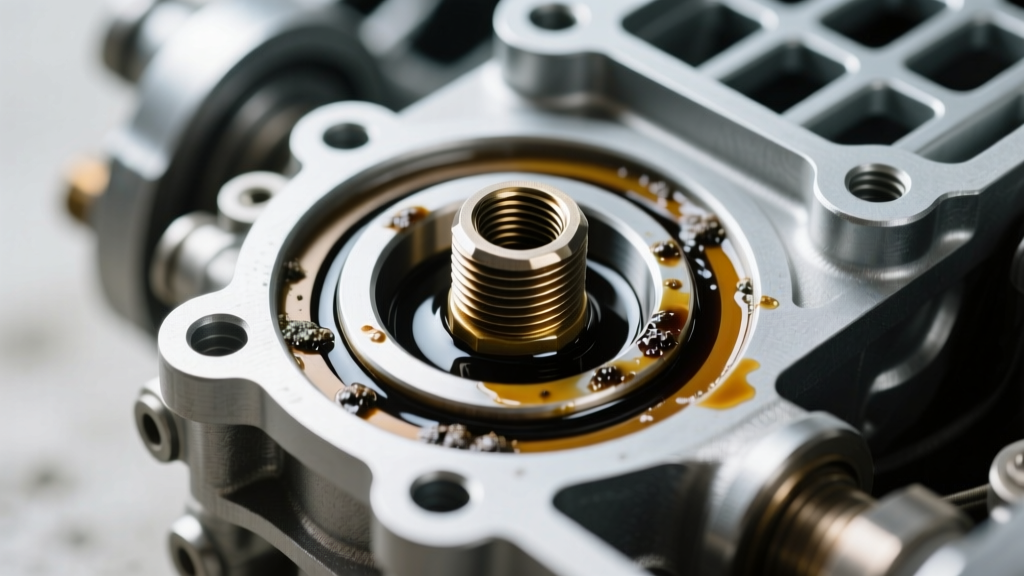
- Inspect the Magnetic Element: If your fill plug is equipped with a magnet (standard on most Dana 60 and heavy-duty truck axles), evaluate the debris. A fine, fuzzy grey coating is normal. Hard, jagged chunks indicate catastrophic failure.
- Reinstall with Proper Sealant: Do not reuse old, crushed sealing washers or dry threads. Apply a high-quality thread sealant like Permatex 56521 High Temperature Thread Sealant or wrap with 2-3 layers of PTFE tape. This prevents weeping and keeps moisture out.
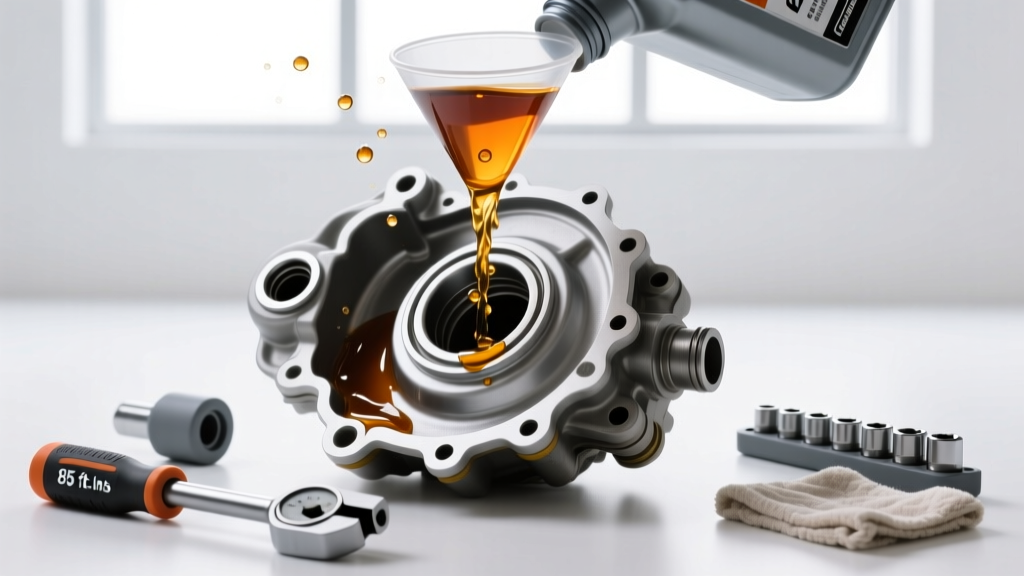
- Apply Correct Torque: Overtightening can crack cast aluminum housings or distort the differential cover.
- 1/2" Square Drive (Steel Housings): 25 - 30 lb-ft.
- Metric Hex (Aluminum Housings, e.g., M16x1.5): 30 - 35 Nm (22 - 26 lb-ft).
- Toyota 24mm Hex: 49 Nm (36 lb-ft).
Real-World Application: Popular Axle Profiles
Different axle manufacturers utilize specific fill plug designs and fluid requirements. Understanding these nuances is critical for the preventive maintenance practitioner.
Ford 8.8-Inch (Super 8.8 & Standard)
The ubiquitous Ford 8.8 uses a 1/2" square drive fill plug located on the driver's side of the differential cover or directly on the housing. The factory fill is typically 75W-140 synthetic. If equipped with a Track-Lok limited-slip differential, you must verify the condition of the fluid for clutch pack chatter. If the fluid is dark and the axle chatters during low-speed turns, a simple fluid change combined with 4 oz of Motorcraft XL-3 Friction Modifier will often restore proper operation without a teardown.
Dana 44 & Dana 60 (Jeep & Heavy Duty Trucks)
Dana axles frequently use a magnetic 1/2" hex or square fill plug. According to Dana Spicer's official maintenance guidelines, checking the fluid level at the fill plug hole is the only accurate way to verify capacity, as the housing geometry can vary based on the vehicle's suspension setup and pinion angle. Always fill until the fluid begins to weep out of the fill hole, then wait 5 minutes for trapped air to escape before topping off and installing the plug.
Toyota 8-Inch and 9.5-Inch (Tacoma, Tundra, 4Runner)
Toyota axles are notorious for using a large 24mm hex fill plug and a smaller 14mm drain plug. A common point of failure here is the crush washer. Toyota specifies a new aluminum crush washer (Part # 90430-24003 for the fill, # 90430-14007 for the drain) for every service. Reusing old crush washers leads to micro-leaks, which eventually drop the fluid level below the pinion bearing centerline, resulting in catastrophic pinion bearing seizure. As noted by lubrication experts at AMSOIL's technical blog, maintaining the exact fluid level in these housings is critical because the pinion bearing relies entirely on the oil slung by the ring gear for cooling and lubrication.
Conclusion: The Mindset of Drivetrain Preservation
Treating the fill plug rear differential as a mere access port is a missed opportunity. By adopting a diagnostic mindset—evaluating the color, smell, texture, and magnetic debris of the fluid before it leaves the housing—you transition from reactive repairs to true preventive maintenance. Whether you are maintaining a daily-driven commuter with a GM 9.5" axle or preparing a Dana 60 for heavy off-road use, the secrets to your drivetrain's longevity are written in the oil. Read them carefully, torque the plug to spec, and let your gears run in silence for hundreds of thousands of miles.
For further community-driven analysis on gear oil shear stability and EP additive formulations, the Bob Is The Oil Guy Gear Oil Forums remain an invaluable resource for independent laboratory testing data and real-world fleet feedback.