The Anatomy of AWD Drivetrain Bind in Modern Platforms
All-wheel-drive (AWD) systems represent some of the most complex mechanical packaging in modern automotive engineering. Unlike part-time 4WD systems that rely on a locked transfer case, full-time AWD systems utilize a center differential to manage speed differentials between the front and rear axles. When a drivetrain bind, clunk, or whine occurs, technicians and DIY enthusiasts face a critical diagnostic crossroads: is the fault originating in the transfer case/center differential, or is it isolated to the car front differential?
Misdiagnosing the source of AWD drivetrain bind can lead to catastrophic financial consequences. Replacing a center differential assembly or transfer case can easily exceed $2,500 in parts and labor at 2026 dealership rates, whereas servicing a car front differential or addressing a tire mismatch might cost a fraction of that amount. This guide provides an advanced, symptom-driven framework for isolating AWD drivetrain faults, analyzing gear oil forensics, and applying OEM-specific diagnostic procedures.
Isolating the Car Front Differential from the Center Unit
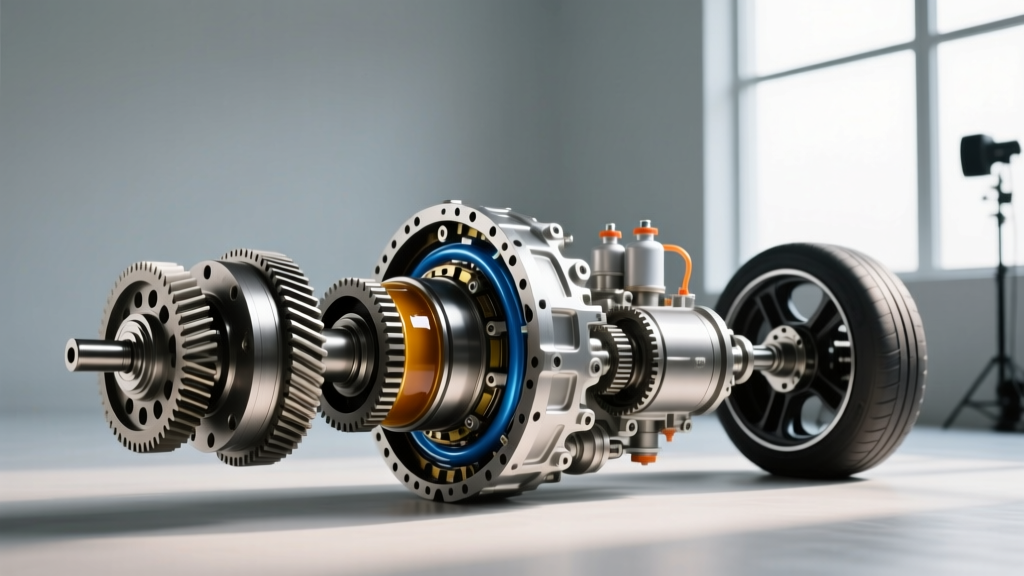
To accurately diagnose AWD bind, you must understand the torque path. In a longitudinal AWD layout (like Subaru's Symmetrical AWD or Audi's Quattro), power exits the transmission and immediately enters the center differential. From there, torque is split: one output shaft drives the rear driveshaft, while the other routes power through the car front differential to the front axles. In transverse AWD layouts (like Haldex-based systems), the center coupling is typically attached to the rear of the transaxle, and the car front differential operates entirely independently of the rear-biased coupling.
The Figure-8 Parking Lot Test
The most common complaint associated with AWD bind is a "hopping" or "skipping" sensation from the drivetrain during low-speed, tight cornering. This occurs because the front and rear axles are traveling at different speeds, and the center differential is failing to accommodate the variance.
- Verify Tire Circumference: Before condemning any differential, measure the tread depth of all four tires. AWD systems are notoriously sensitive to tire diameter variations. According to Tire Rack's AWD tire replacement guidelines, a variance of more than 2/32" to 3/32" in tread depth (or roughly 1/4" in overall circumference) can cause the center differential to remain in a constant state of slip, leading to overheating and bind.
- Perform the Figure-8: Find a smooth, flat, wet or dusty parking lot. Drive the vehicle in a tight figure-8 pattern at 3-5 MPH with the steering wheel at full lock.
- Interpret the Bind: If the vehicle hops aggressively, place the vehicle on a four-post lift with the wheels hanging free. Start the engine, place it in gear, and let the wheels spin. Apply light braking to the rear driveshaft using a strap clamp. If the bind persists mechanically when the tires are removed from the equation, you have a mechanical failure in the center differential (e.g., a seized viscous coupling or locked Torsen gearset). If the bind disappears on the lift, the issue is tire-related or localized to a binding CV axle feeding the car front differential.
Acoustic Isolation Under Load
Highway-speed whining requires acoustic isolation. A failing ring and pinion gearset inside the car front differential will typically produce a frequency that changes pitch directly in proportion to vehicle speed, regardless of engine RPM. Conversely, a failing center differential or transfer case bearing will often produce a whine that correlates with engine RPM and load.
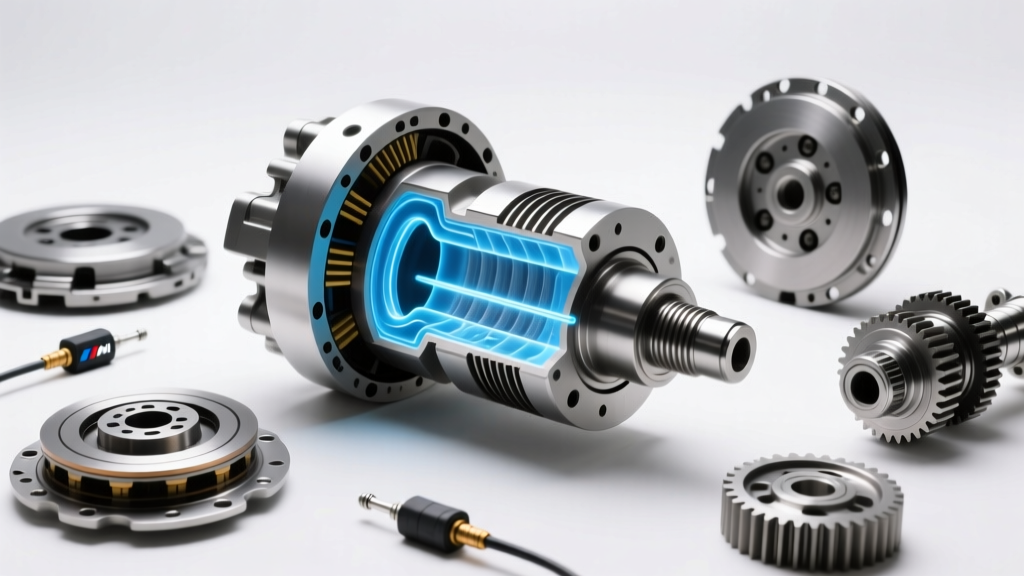
Use a wireless chassis ear system. Place one sensor on the car front differential housing and another on the center differential/transfer case housing. Under heavy acceleration (loading the gear teeth), a worn pinion bearing in the front unit will emit a harsh, metallic growl. If the noise is isolated to the center of the vehicle, the center differential's internal thrust washers or planetary gears are likely starved of lubrication.
Fluid Forensics: What the Drain Plug Tells You
Draining the fluid is the most definitive way to assess internal differential health. However, you must understand the distinct fluid requirements of the AWD system. As noted in Mobil's comprehensive guide to gear oil, API GL-5 fluids contain high levels of sulfur-phosphorus extreme pressure (EP) additives designed for the high-sliding friction of hypoid ring and pinion gears found in the car front differential and rear differential.
The center differential, however, often shares fluid with the manual transmission (requiring GL-4 to protect brass synchronizers) or utilizes a dedicated automatic transmission fluid (ATF) if it is a wet-clutch or active torque-vectoring unit. Cross-contamination or incorrect fluid application is a leading cause of AWD bind.
Analyzing the Drain Plug Debris
- Fine, Dark Paste: Normal clutch pack wear (if equipped with a limited-slip car front differential). Requires a fluid change and potentially a friction modifier top-off.
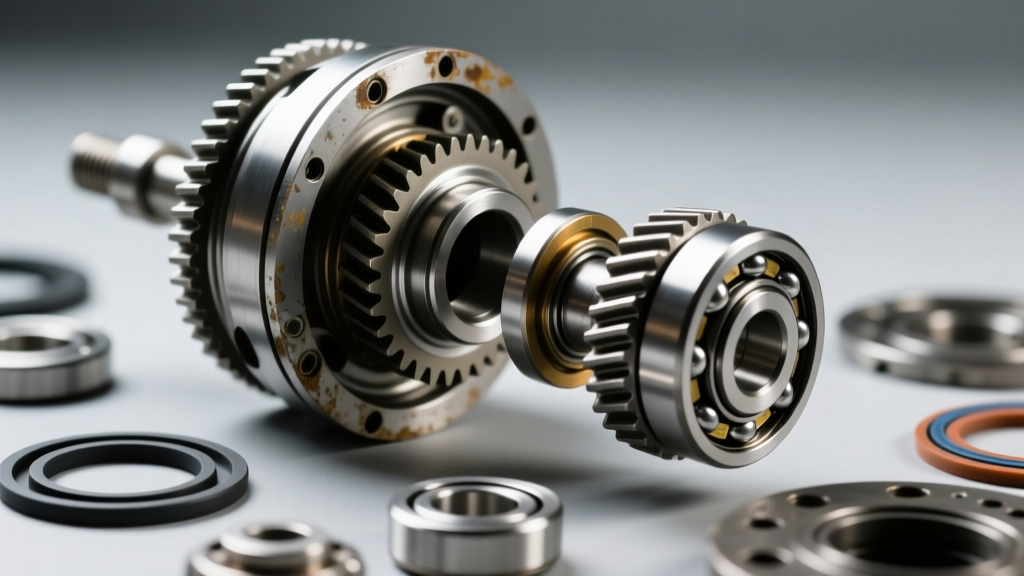
- Glitter / Metallic Flake: Indicates bearing failure or thrust washer degradation. If found in the front diff drain, the car front differential requires a rebuild. If found in the center diff, the transfer case must be torn down.
- Chunky Metal Shards: Catastrophic gear tooth failure. Immediate teardown is required. Do not drive the vehicle, as metal shards will migrate through the fluid galleries and destroy the oil pump or secondary bearings.
Diagnostic Matrix: Bind, Whine, and Clunk
| Symptom | Driving Condition | Probable Fault Location | Verification Test |
|---|---|---|---|
| Low-Speed Cornering Hop/Bind | Tight turns, parking lots | Seized Center Diff or Mismatched Tires | Figure-8 test on lift; measure tire circumference |
| Deceleration Clunk | Lifting off throttle at 45+ MPH | Excessive Backlash in Car Front Differential | Check pinion nut torque; inspect ring/pinion gear wear pattern |
| Load-Dependent Whine | Hard acceleration, 60-80 MPH | Worn Pinion Bearing in Car Front Differential | Chassis ear on front diff housing; check for gear oil glitter |
| High-Frequency Hiss/Whine | Coasting, light throttle | Center Diff Planetary Gear Starvation | Check center diff fluid level and condition; verify pump operation |
| Shudder Under Hard Cornering | High-G sweeping turns | LSD Clutch Pack Chatter in Car Front Differential | Verify presence of OEM friction modifier; perform fluid flush |
OEM Case Studies: Subaru Viscous vs. Audi Torsen
Subaru Symmetrical AWD (5-Speed Manual)
In Subaru's traditional 5-speed manual AWD layout, the center differential is a viscous-coupling limited-slip unit, while the car front differential is typically an open or helical LSD integrated into the front transaxle housing. A common failure mode is the viscous coupling seizing due to age and thermal cycling. When this happens, the vehicle behaves as if it is in a locked 4WD state on dry pavement, causing severe bind.
Part Reference: Subaru viscous coupling assembly (e.g., Part # 31325AA052 for applicable Impreza/Forester models) retails for approximately $750-$900 in 2026.
Fluid Warning: The car front differential on these models requires 75W-90 GL-5 (0.8L capacity), while the manual transmission/center diff housing requires 75W-85 GL-4 (3.5L capacity). Putting GL-5 in the center housing will corrode the brass synchronizers, while putting GL-4 in the car front differential will lead to rapid ring and pinion wear.
Audi Quattro (Torsen Type C / Crown Gear)
Audi's longitudinal Quattro systems utilize a Torsen (Torque Sensing) center differential, which relies on complex worm gear sets rather than clutch packs or viscous fluids. If a Torsen center diff fails, it usually defaults to an open state (sending 100% of torque to the axle with the least grip), rather than binding. Therefore, if an Audi Quattro is exhibiting severe mechanical bind and hopping, the technician should immediately pivot away from the center differential and inspect the car front differential, rear differential, or the electronic torque-vectoring rear sport differential for seized clutch packs.
Critical Torque Specifications and Fluid Capacities
When performing diagnostic fluid drains or resealing a differential housing after inspection, adhering to OEM torque specifications is non-negotiable. Over-torquing drain plugs on aluminum differential housings will strip the threads, necessitating a costly housing replacement or helicoil repair.
| Component | Typical Fluid Spec | Capacity (Approx.) | Drain/Fill Plug Torque |
|---|---|---|---|
| Car Front Differential (Standalone / Transverse) | 75W-90 API GL-5 | 0.5L - 0.9L | 30 - 35 ft-lbs (40 - 47 Nm) |
| Car Front Differential (Subaru 5MT Integrated) | 75W-90 API GL-5 | 0.8L | 33 ft-lbs (44 Nm) |
| Center Diff / Transfer Case (Active Clutch) | OEM Specific ATF / DCT Fluid | 1.0L - 1.5L | 25 - 30 ft-lbs (34 - 40 Nm) |
| Rear Differential (Standard Open / LSD) | 75W-90 or 75W-140 GL-5 | 1.2L - 2.5L | 35 - 50 ft-lbs (47 - 67 Nm) |
Expert Tip for 2026 EV and Hybrid AWD Systems: Many modern electric and hybrid AWD platforms utilize independent front and rear drive motors, completely eliminating the mechanical center differential. However, the car front differential (often a single-speed reduction gearset) still requires specialized low-viscosity EV gear fluids. Diagnosing "bind" in these vehicles usually points to software torque-vectoring faults or inverter lag rather than mechanical differential failure.
Conclusion: Methodical Isolation Saves Time and Money
Diagnosing AWD drivetrain noise and bind requires a systematic approach that separates tire dynamics, center differential operation, and car front differential health. By utilizing the figure-8 lift test, analyzing fluid debris, and respecting the distinct lubrication requirements of each AWD component, you can accurately pinpoint the failure. Whether you are dealing with a seized viscous coupling or a failing pinion bearing in the front axle, methodical troubleshooting is the key to a reliable, long-lasting AWD repair.