Decoding Differential Gear Oil Specifications
When planning a rear differential fluid change, most vehicle owners focus solely on the labor rate or the mileage interval. However, the true cost and longevity of your axle assembly hinge on understanding differential gear oil specifications. In 2026, with factory towing capacities and horsepower figures higher than ever, the thermal load on hypoid ring and pinion gears demands precise lubrication. This guide breaks down the exact gear oil specs, the financial impact of synthetic versus conventional fluids, and a comprehensive cost analysis for DIY versus professional service.
Viscosity Grades and the SAE J306 Standard
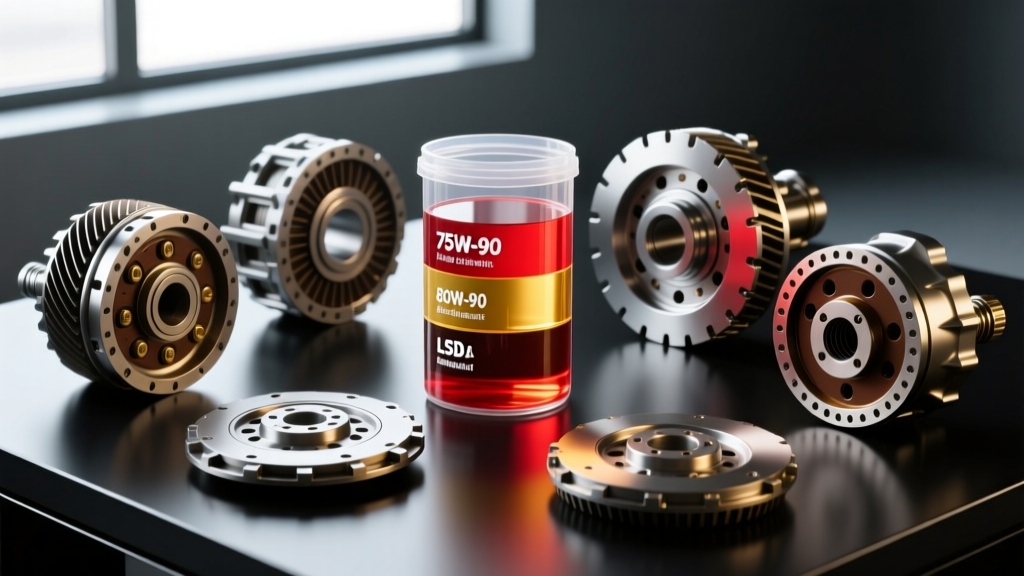
Unlike engine oil, which is governed by the SAE J300 standard, gear oil viscosity is classified under the SAE J306 standard. The most common grades you will encounter for a rear differential fluid change are 75W-90, 80W-90, and 75W-140. The 'W' denotes winter or low-temperature fluidity, ensuring the gear oil flows to the pinion bearings during cold starts. The second number represents the kinematic viscosity at 100°C (212°F). For example, a 75W-90 gear oil must maintain a viscosity between 13.5 and 24.0 centistokes (cSt) at operating temperature, while a 75W-140 must stay above 24.0 cSt. Choosing the wrong viscosity can lead to catastrophic bearing failure or excessive parasitic drag, directly impacting your fuel economy and wallet.
API Service Classifications: Why GL-5 is Mandatory
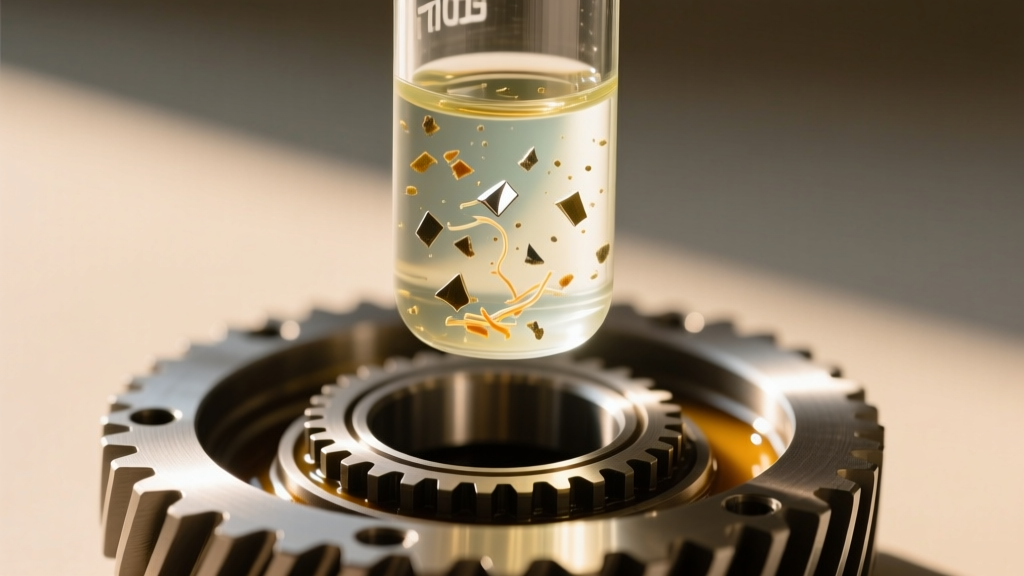
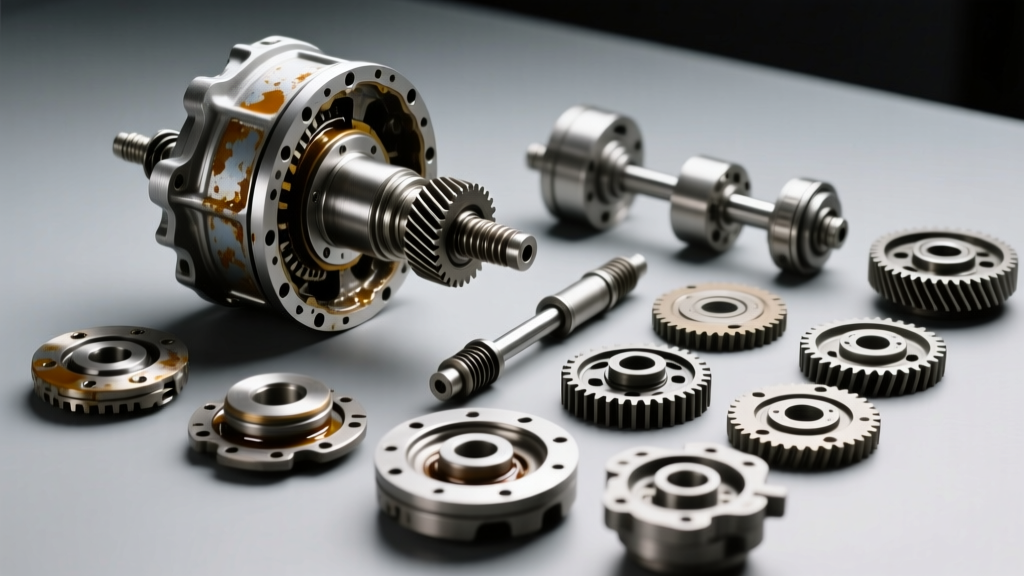
The American Petroleum Institute (API) categorizes gear lubricants based on their extreme pressure (EP) additive packages. According to the API GL-5 specifications, this classification is specifically engineered for hypoid gears found in virtually all modern automotive and truck axles. Hypoid gears operate with a high degree of sliding friction, which wipes away standard lubricant films. GL-5 fluids contain high levels of sulfur-phosphorus EP additives that chemically react with the metal surfaces under extreme heat and pressure, forming a sacrificial boundary layer. Never substitute a GL-4 fluid in a hypoid rear axle; it lacks the necessary EP additives and will result in rapid gear scoring and a $2,500+ axle rebuild.
Limited-Slip Friction Modifiers
If your vehicle is equipped with a clutch-type limited-slip differential (LSD), the base gear oil is only half the equation. Clutch packs require specialized friction modifiers to prevent stick-slip chatter during low-speed cornering. Factory modifiers, such as Motorcraft XL-3 or ACDelco 10-4017, typically cost between $8 and $12 per small bottle. While some premium synthetic gear oils claim to have modifiers pre-blended, experienced drivetrain technicians universally recommend adding a dedicated bottle of modifier and performing a test drive to fine-tune the clutch pack engagement.
Gear Oil Price Breakdown: Viscosity and Formulation
The cost of the fluid itself varies wildly based on the base oil chemistry (Group I/II conventional vs. Group IV/V PAO/Ester synthetics). Below is a 2026 market average for premium gear oils commonly used in a rear differential fluid change.
| Viscosity Grade | Formulation | Avg Price Per Quart | Common Application |
|---|---|---|---|
| 80W-90 | Conventional | $7.00 - $9.00 | Light duty, older trucks, budget fleet maintenance |
| 75W-90 | Full Synthetic | $11.00 - $14.00 | Daily drivers, half-ton pickups, standard SUVs |
| 75W-140 | Full Synthetic | $15.00 - $19.00 | Heavy towing, 3/4-ton and 1-ton trucks, off-road |
| 75W-90 | Synthetic Blend | $9.50 - $11.50 | Mid-range commercial fleets, moderate towing |
Synthetic vs. Conventional: Is the Premium Worth It?
When analyzing the cost of a rear differential fluid change, conventional 80W-90 gear oil is undeniably the cheapest upfront option. However, conventional oils suffer from high volatility and poor shear stability. Under heavy towing loads, the polymer thickeners in conventional oils shear down, causing the fluid to lose its protective film strength. A full synthetic 75W-90 or 75W-140 utilizes uniform molecular structures that resist thermal breakdown and oxidation. While you might spend $45 on synthetic fluid compared to $20 on conventional, the synthetic fluid can safely extend your service interval from 30,000 miles to 60,000+ miles under severe duty cycles, ultimately reducing your long-term cost per mile.
Rear Differential Fluid Change: Labor and Shop Costs
If you opt to have a professional perform the service, labor rates and shop markups will dictate your final bill. In 2026, average independent shop labor rates hover between $120 and $160 per hour, while dealerships often charge $150 to $190 per hour.
- Dealership Service: Expect to pay $180 to $280 for a rear differential fluid change. Dealerships use OEM-branded fluids and factory friction modifiers, which carry a premium markup. The book time for a standard drain-and-fill or cover-removal service is typically 0.8 to 1.2 hours.
- Independent Drivetrain Shop: A specialized 4x4 or drivetrain shop will generally charge $140 to $220. These shops are often more willing to use high-end aftermarket synthetics like Amsoil Severe Gear or Royal Purple Max Gear, which can offer superior protection for modified vehicles.
- Quick Lube Centers: While some chain lube shops offer differential services for as low as $90 to $120, they frequently lack the specific friction modifiers required for LSDs and may use bulk conventional gear oil that does not meet your manufacturer's severe-duty specifications.
Axle-Specific Capacities and Hidden DIY Costs
Performing a DIY rear differential fluid change is one of the most cost-effective maintenance tasks you can undertake, but it requires specific hardware and tools. Let us break down the exact specifications and hidden costs for the three most common axle platforms.
GM 8.6 / 10-Bolt (Silverado, Sierra, Tahoe)
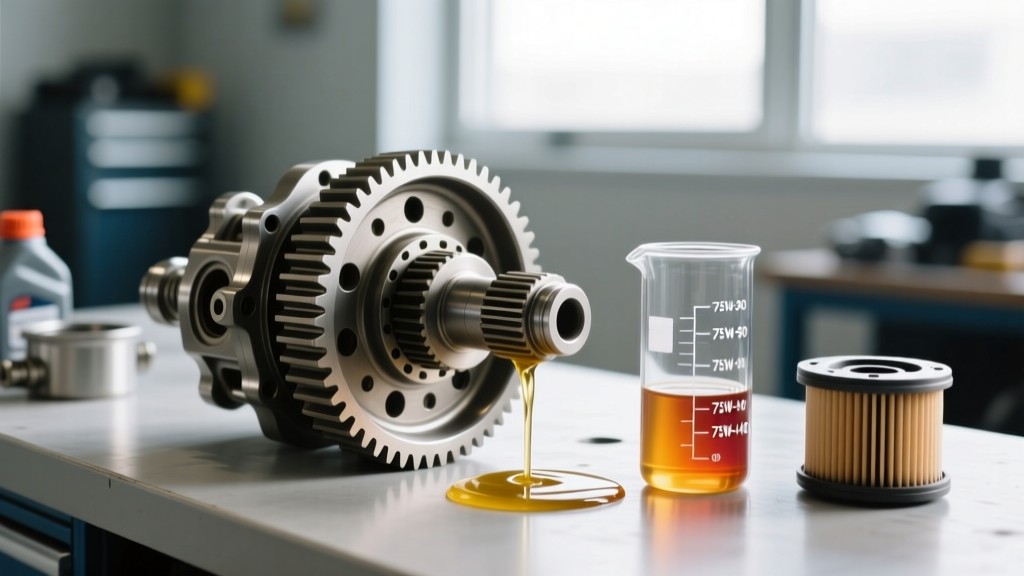
Capacity: 2.0 to 2.4 quarts. Specification: 75W-90 Synthetic GL-5. DIY Fluid Cost: ~$28. The GM 10-bolt features dedicated drain and fill plugs, making this a clean, 20-minute job. Critical Spec: The fill and drain plugs require a 3/8-inch drive and must be torqued to exactly 25 lb-ft. Over-torquing can crack the aluminum or cast-iron housing. Always remove the fill plug before the drain plug to ensure you are not left with an empty axle and a stuck fill plug.
Ford 8.8 (Mustang, F-150, Explorer)
Capacity: 2.5 to 3.0 quarts. Specification: 75W-140 Synthetic GL-5 (for towing) + Motorcraft XL-3 Modifier. DIY Fluid Cost: ~$55. The Ford 8.8 typically lacks a drain plug, requiring the removal of the 10-bolt rear cover. Hidden Cost: You must purchase a tube of high-temp RTV silicone ($8) or a pre-cut LubeLocker gasket ($18). Torque Spec: Cover bolts must be torqued to 25-30 lb-ft in a crisscross pattern. Allow the RTV to cure for 2 hours before filling.
Dana 44 (Jeep Wrangler, Gladiator)
Capacity: 2.0 to 2.2 quarts. Specification: 75W-90 or 80W-90 GL-5. DIY Fluid Cost: ~$25. The Dana 44 uses a 10-bolt cover. If equipped with an electronic locker (e-Locker), you must route the wiring harness carefully to avoid pinching it between the cover and the housing. Torque Spec: 35 lb-ft for the cover bolts. If your Dana 44 is equipped with an Auburn or Truetrac limited-slip unit, verify the specific modifier requirements, as gear-type LSDs (Truetrac) do not require friction modifiers, saving you $10.
Essential DIY Tool Costs
If you are tackling this job for the first time, factor in the cost of the necessary equipment. A standard fluid transfer hand pump costs $12 to $18 and is mandatory for pumping thick 75W-140 gear oil upward into the fill hole. A dedicated 3/8-inch drive torque wrench is required to hit the 25-35 lb-ft specifications safely. Finally, factor in $10 for a drain pan and proper disposal fees, as many municipal recycling centers charge a small fee for gear oil disposal due to its high sulfur content.
Conclusion: Budgeting for Axle Longevity
A rear differential fluid change is not a place to cut corners. While a DIY service using premium synthetic 75W-90 or 75W-140 gear oil and the correct limited-slip modifiers will cost between $50 and $80 out of pocket, it protects a rear axle assembly that costs upwards of $3,000 to replace. By understanding the SAE J306 viscosity requirements, adhering to API GL-5 standards, and respecting exact torque specifications, you ensure your drivetrain operates smoothly, quietly, and reliably for hundreds of thousands of miles.