The Medical Analogy: Drivetrain Hemogram and Differential
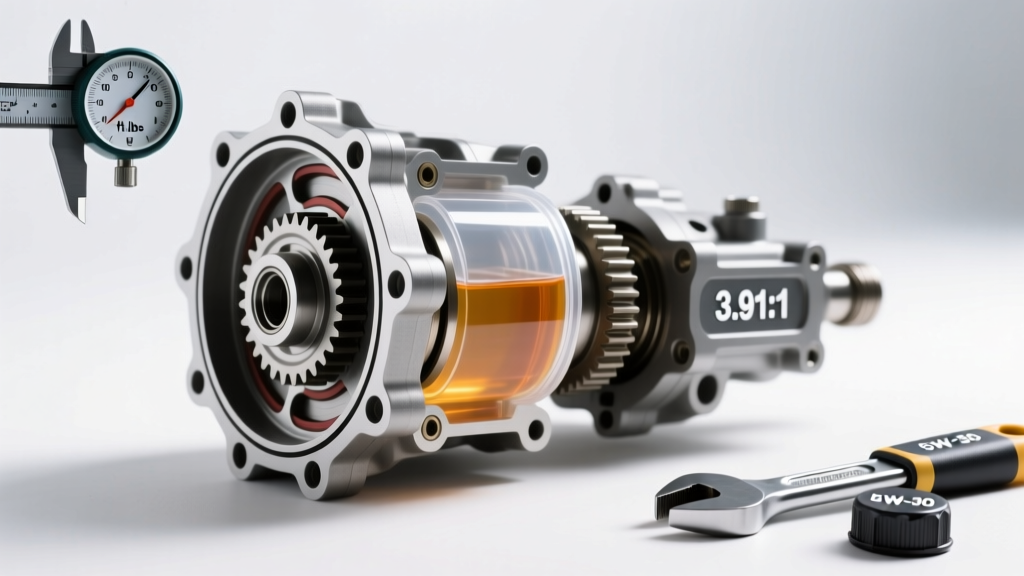
In medicine, a hemogram (complete blood count) and a white blood cell differential provide a comprehensive snapshot of systemic health, pinpointing hidden infections, anemias, or deficiencies before acute symptoms arise. In advanced automotive diagnostics, applying a 'drivetrain hemogram and differential' approach means treating your rear axle’s gear oil as the lifeblood of the system. By combining Used Oil Analysis (UOA)—the hemogram—with physical debris and spectrometric metal breakdown—the differential—you can diagnose ring and pinion wear, bearing failure, and limited-slip differential (LSD) clutch degradation long before catastrophic failure occurs.
For fleet managers, off-road enthusiasts, and heavy-duty truck owners, waiting for a rear differential to whine or clunk is a failure of maintenance. Modern 75W-90 and 75W-140 synthetic gear oils are engineered to mask mechanical wear, meaning by the time you hear gear noise, the damage is already severe. This guide will teach you how to perform a drivetrain fluid biopsy, interpret the results, and execute precise rear differential service based on empirical data.
The 'Blood Draw': Extracting Rear Axle Fluid for Analysis
Before you can run a drivetrain hemogram and differential test, you need a pristine sample. Extracting fluid from a rear differential requires care to avoid cross-contamination, which can skew spectrometric readings. Never pull a sample immediately after the vehicle has sat for weeks; heavy metals settle at the bottom of the housing, and moisture separates. The ideal time to extract a sample is when the differential is at operating temperature (around 160°F to 180°F), ensuring wear metals and additives are fully suspended in the gear oil.
While dropping the differential cover is necessary for a full service and physical debris inspection, pulling the UOA sample should be done via the fill plug using a clean, dedicated fluid extraction pump. Insert the pump tube about two inches into the fluid—avoiding the very bottom where heavy sludge rests and the very top where aerated foam gathers. Draw 3 to 4 ounces into a sterile, high-density polyethylene (HDPE) sample bottle. Seal it immediately to prevent ambient dust (silicon) contamination.
The Hemogram: Used Oil Analysis (UOA) Breakdown
The 'hemogram' of your rear axle is the UOA report provided by labs like Blackstone Laboratories. Just as a CBC measures red blood cells, hemoglobin, and platelets, a UOA measures viscosity, oxidation, total base number (TBN), and elemental metals. Understanding these metrics is critical for diagnosing rear axle health.
| Element | Chemical Symbol | Drivetrain Source | Diagnostic Threshold (PPM) | Failure Mode Indication |
|---|---|---|---|---|
| Iron | Fe | Ring & Pinion Gears, Axle Shafts | > 150 ppm | Normal gear meshing wear; spikes indicate improper backlash or severe pitting. |
| Copper | Cu | Thrust Washers, Pinion Bearings | > 50 ppm | High copper often points to thrust washer degradation or aggressive GL-5 sulfur attack on yellow metals. |
| Chromium | Cr | Bearing Races, Piston Rings (if engine) | > 15 ppm | Carrier or pinion bearing race wear; requires immediate teardown. |
| Silicon | Si | Dirt, Dust, RTV Silicone | > 25 ppm | Axle seal failure or improper RTV application during previous service. Acts as a lapping compound. |
| Phosphorus/Zinc | P / Zn | Extreme Pressure (EP) Additives | Depletion > 30% | Additive shear. The fluid can no longer protect gear teeth under high-load towing. |
If your UOA reveals high Silicon (Si) levels alongside elevated Iron (Fe), your axle seals are compromised. Dirt is entering the housing, acting as an abrasive lapping compound that is rapidly destroying the precision-machined surfaces of your ring and pinion. If Copper (Cu) is spiking, check your API fluid rating; using an older, non-formulated GL-5 fluid can cause sulfur-phosphorus additives to corrode the bronze thrust washers inside the differential carrier.
The 'WBC Differential': Categorizing Physical Debris
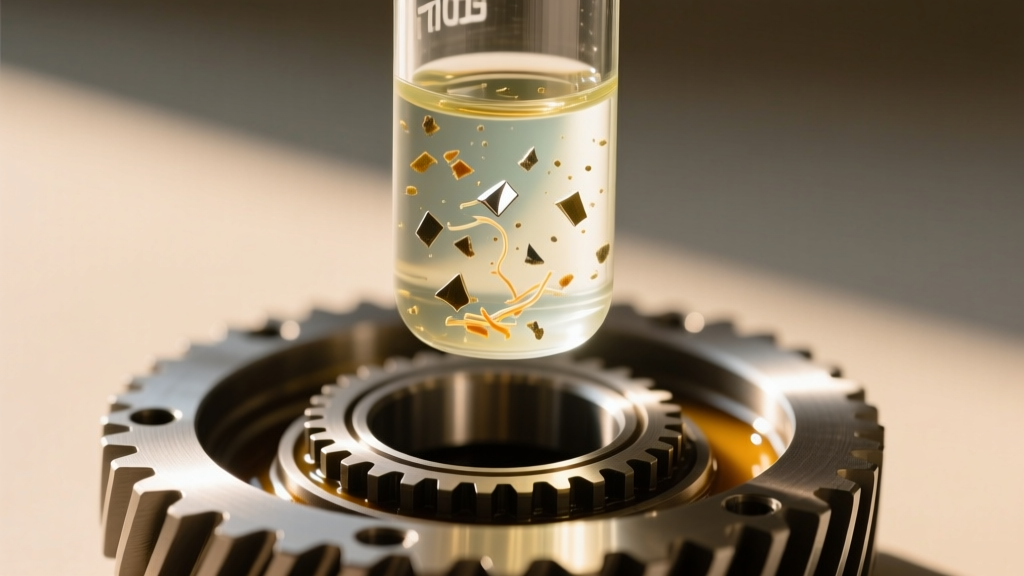
While the UOA provides the chemical hemogram, the physical debris inspection is your 'WBC differential'—categorizing the specific types of macro-particles to identify the exact failing component. When you unbolt the rear differential cover, do not immediately drain the fluid into a waste bin. Drain it through a fine-mesh stainless steel screen or a dedicated fluid filter bag.
Magnetic Plug vs. Non-Magnetic Sludge
Most rear differential fill plugs or internal carrier magnets are designed to catch ferrous metals. The texture of the material on the magnet tells a distinct story:
- Fine, Paste-Like Fuzz: This is normal. It represents microscopic iron particles from the initial break-in period or standard gear meshing over 30,000 to 50,000 miles. Wipe it clean and proceed with service.
- Glitter or Metallic Flake: If the fluid resembles metallic paint, your ring and pinion are experiencing severe fatigue, or the pinion bearing is shedding its roller cages. This requires immediate backlash and gear pattern verification.
- Hard, Chunky Shards: Finding distinct, jagged pieces of steel indicates catastrophic spalling of the gear teeth or a shattered bearing race. A full differential rebuild is mandatory.
- Dark, Fibrous Sludge (Non-Magnetic):strong> If your truck is equipped with a clutch-type Limited Slip Differential (LSD), dark, foul-smelling sludge is often the degraded friction material from the clutch packs. This is the primary cause of 'chatter' during low-speed cornering.
Corrective Action: Rear Differential Service Specs
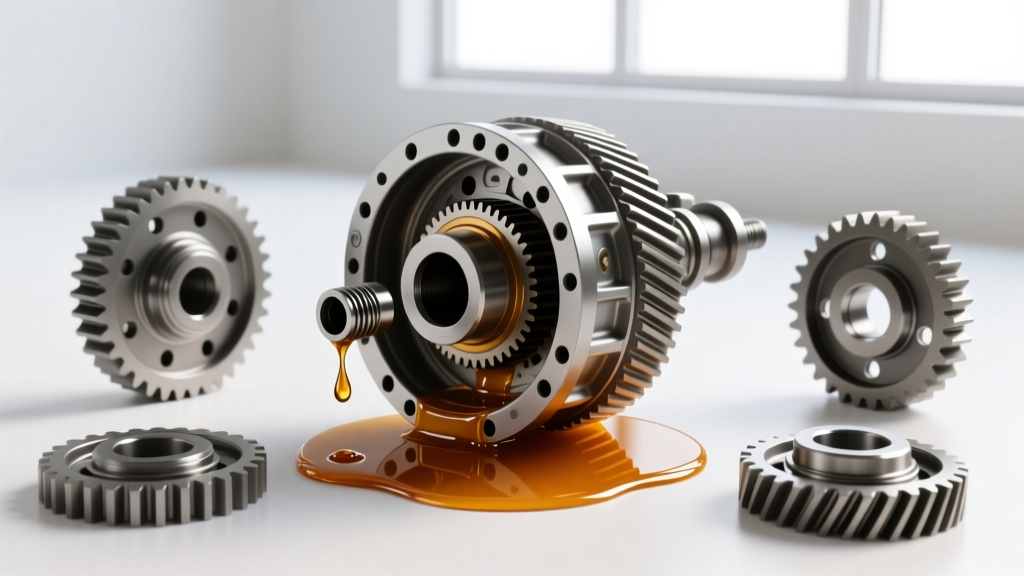
Once your drivetrain hemogram and differential analysis dictates that service is required, precision is paramount. Over-torquing differential cover bolts will warp the housing and cause leaks, while under-torquing will result in fluid loss and gear starvation. Furthermore, using the correct friction modifier for LSDs is non-negotiable. According to Yukon Gear & Axle, failing to use the proper limited-slip additive will cause clutch packs to bind and shatter the spider gears.
| Axle Model | Fluid Capacity | Fill Plug Torque | Cover Bolt Torque | Friction Modifier Req. |
|---|---|---|---|---|
| GM 8.5" / 8.6" (10-Bolt) | ~2.0 Quarts | N/A (Cover Fill) | 25 lb-ft | GM 88900338 (if Gov-Loc/Clutch) |
| Ford 8.8" (Super 8.8) | 2.0 - 2.5 Quarts | 33 lb-ft | 28 - 38 lb-ft | Motorcraft XL-3 (Trac-Lok) |
| Dana 44 (Jeep/Truck) | ~2.0 Quarts | 25 - 30 lb-ft | 30 - 35 lb-ft | Required for Trac-Loc LSD |
| Chrysler 8.75" | ~2.25 Quarts | 30 lb-ft | N/A (Drop-out 3rd Member) | Required for Sure-Grip |
Note: Always use a high-quality synthetic 75W-90 or 75W-140 gear oil meeting the API GL-5 specification. For heavy-duty towing or off-road crawling, step up to 75W-140 to maintain film strength at extreme sump temperatures.
Troubleshooting Common Rear Axle Symptoms Based on 'Test Results'
Combine the physical symptoms of your vehicle with your fluid analysis to form a complete diagnostic picture:
- Symptom: Low-Speed Cornering Chatter. Fluid Clue: Dark, burnt-smelling fluid with non-magnetic fibrous debris. Diagnosis: LSD clutch pack friction material is depleted. Fix: Drain, clean housing, refill with fresh 75W-90 and the exact OEM dose of friction modifier. Perform three figure-8 turns in a parking lot to work the additive into the clutches.
- Symptom: Coast-Down Whine (Deceleration). Fluid Clue: High Iron (Fe) and Chromium (Cr) in UOA; metallic glitter on the magnet. Diagnosis: Pinion bearing preload is lost, or the ring gear backlash is excessive, causing the gears to ride on the coast side of the tooth face. Fix: Teardown, replace pinion and carrier bearings, and reset the gear pattern using marking compound.
- Symptom: Persistent Fluid Leaks at the Pinion Seal. Fluid Clue: Fluid level drops, UOA shows high Silicon (Si). Diagnosis: The pinion seal is weeping, but more importantly, the pinion yoke mating surface may be grooved, or the axle breather valve is clogged, causing internal pressure buildup that blows out seals. Fix: Clear the axle tube breather, install a speedi-sleeve on the yoke, and replace the pinion seal.
Conclusion
Treating your rear axle maintenance with the rigor of a medical diagnostic transforms you from a reactive mechanic into a proactive drivetrain engineer. By utilizing a drivetrain hemogram and differential approach—leveraging UOA lab results alongside meticulous physical debris inspection—you can extend the life of your ring and pinion, optimize your differential service intervals, and prevent catastrophic trail or highway failures. Stop guessing based on mileage intervals; let the fluid tell you exactly what is happening inside the housing.