The Diagnostic Paradigm: Medicine Meets Drivetrain Engineering
At first glance, the medical concept of a posterior mediastinal mass differential and the mechanical specifications of automotive gear oil share absolutely nothing in common. In the medical field, evaluating a posterior mediastinal mass requires a rigorous differential diagnosis to distinguish between neurogenic tumors (like schwannomas), foregut cysts, descending aortic aneurysms, and extramedullary hematopoiesis. According to Radiopaedia, misdiagnosing these anomalies leads to catastrophic surgical outcomes. The radiologist must rely on exact imaging protocols, precise tissue density measurements, and strict classification criteria to isolate the exact pathology.
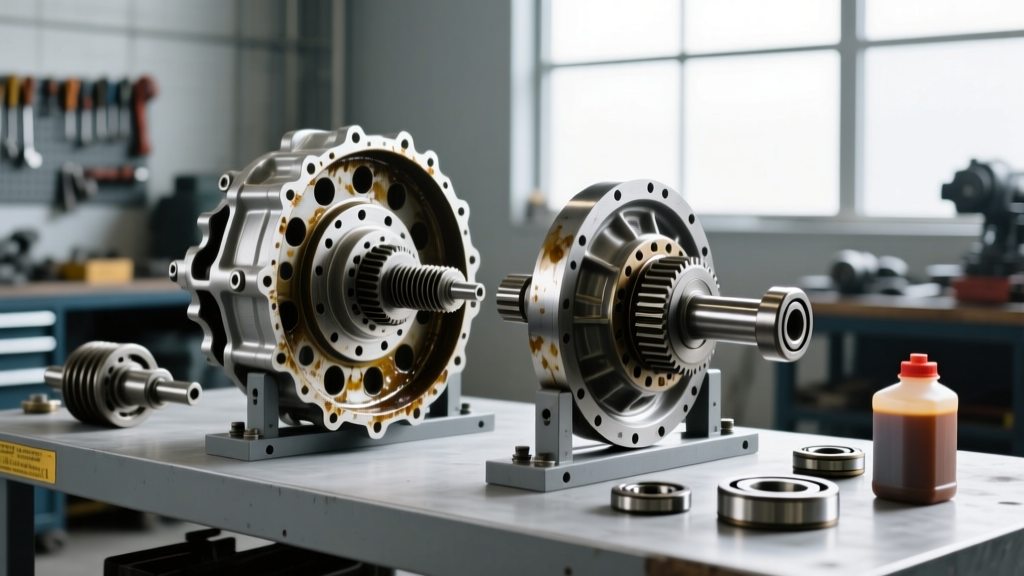
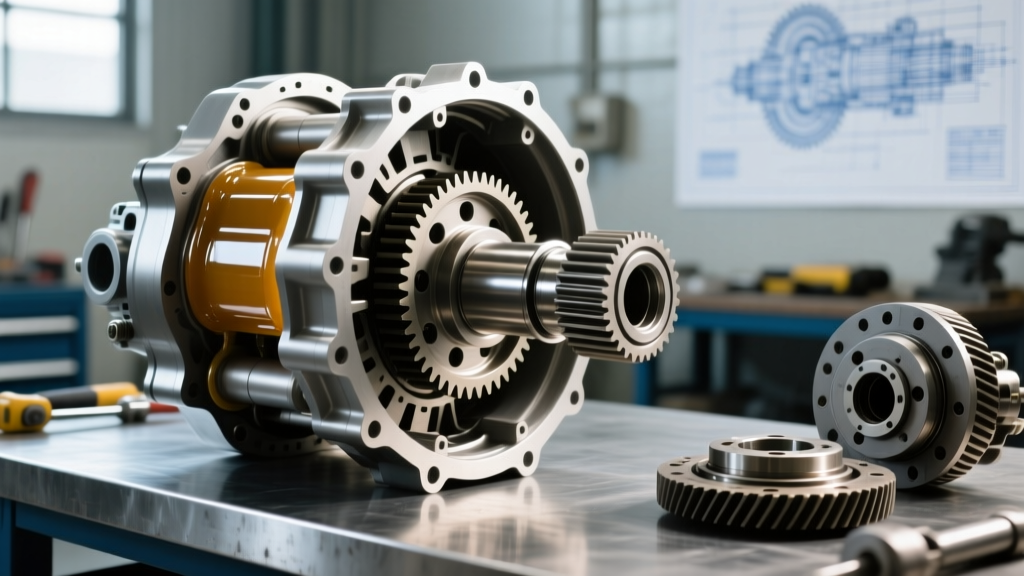
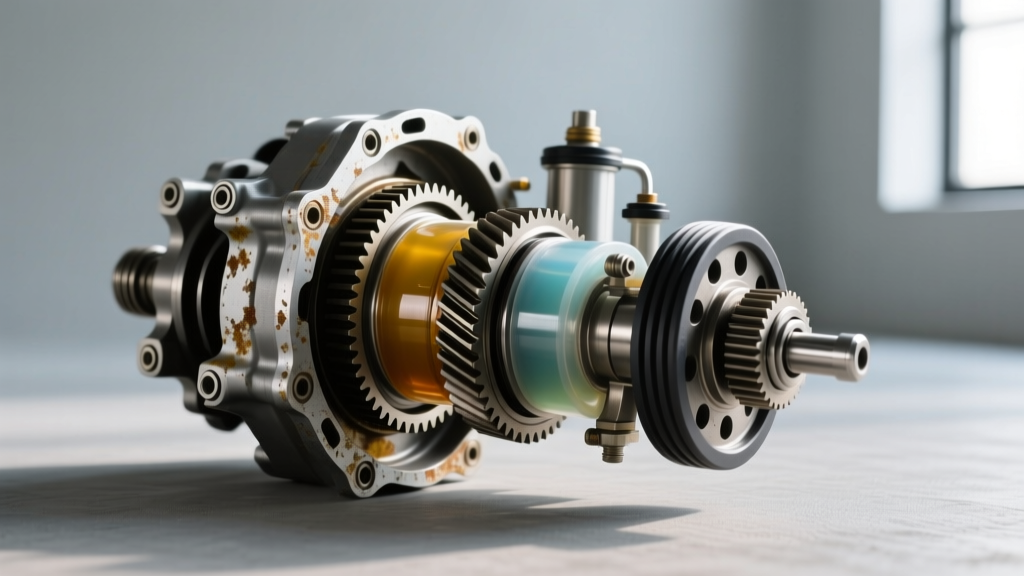
In automotive engineering, selecting and diagnosing the correct differential fluid requires this exact same level of uncompromising, systematic precision. The hypoid ring and pinion gearsets inside your vehicle's axle operate under extreme sliding friction and immense shearing forces. Applying the wrong viscosity, ignoring API classification boundaries, or failing to account for limited-slip friction modifiers will result in catastrophic mechanical failure, micro-pitting, and irreversible gear whine. Just as a physician uses a differential diagnosis to eliminate variables and isolate a treatment plan, an automotive technician must use a rigorous specification matrix to isolate the correct lubricant for a specific axle architecture.
This 2026 buyer's guide and technical comparison bridges the gap between diagnostic theory and hard automotive data, providing you with the exact specifications, torque values, and product recommendations needed to service modern drivetrains.
Decoding the 'Biopsy': Viscosity and API Classifications
Before purchasing gear oil, you must understand the chemical 'biopsy' of the fluid. The American Petroleum Institute (API) categorizes gear oils based on their Extreme Pressure (EP) additive packages. The most common point of failure in driveway differential services is confusing API GL-4 with API GL-5.
The Chemistry of Extreme Pressure
Hypoid gears, found in 99% of solid rear axles (like the Ford 8.8, GM 10-bolt, and Dana 44), feature a pinion gear that sits below the centerline of the ring gear. This creates a massive sliding motion rather than a pure rolling motion. To prevent the oil film from collapsing, API GL-5 fluids are loaded with sulfur-phosphorus EP additives. Under high heat and pressure, these additives react with the iron surfaces to create a sacrificial solid film of iron sulfide and iron phosphide.
Critical Warning: While GL-5 is mandatory for hypoid axles, its high sulfur content can corrode yellow metals (brass, bronze, copper). Never use a standard GL-5 gear oil in a manual transmission or transaxle with brass synchronizers unless the fluid is explicitly certified as 'yellow-metal safe' by the manufacturer.
Viscosity Grades: 75W-90 vs. 80W-90 vs. 75W-140
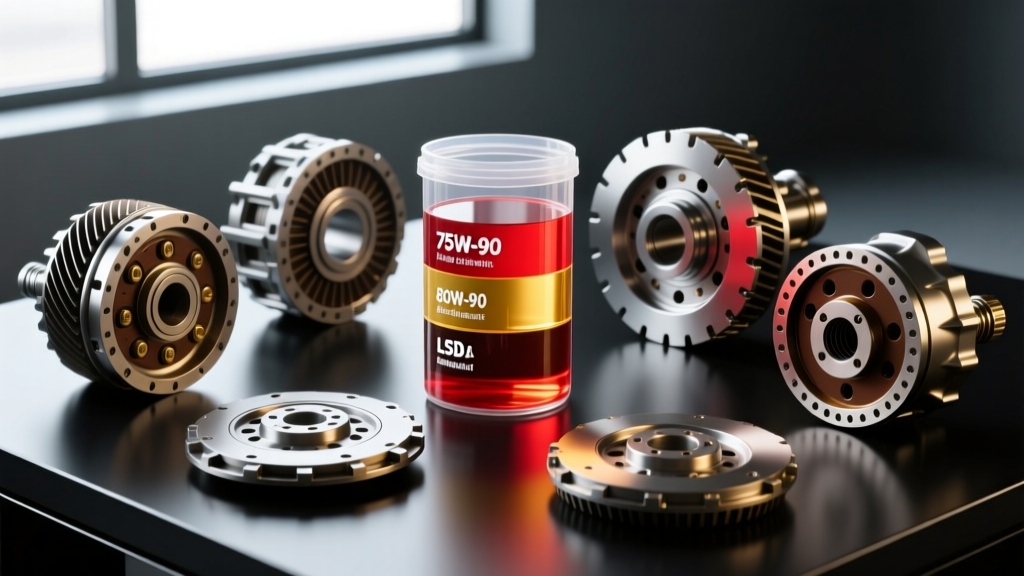
The 'W' denotes winter flow characteristics, critical for cold-start protection where 80% of gear wear occurs. A 75W-90 synthetic will flow significantly better at -40°C than an 80W-90 conventional mineral oil, ensuring the pinion bearings receive immediate lubrication upon startup. Heavy-duty applications, such as 1-ton trucks towing over 10,000 lbs in high ambient temperatures, often require a 75W-140 to maintain film thickness and prevent shear-induced viscosity loss.
2026 Gear Oil Specification Matrix
| Specification | Viscosity | API Rating | Primary Application | Est. Price (2026) |
|---|---|---|---|---|
| Standard Synthetic | 75W-90 | GL-5 | Light/Medium Duty Axles, Open Differentials | $11 - $14 / qt |
| Heavy Duty Synthetic | 75W-140 | GL-5 | 1-Ton Trucks, Heavy Towing, Off-Road | $15 - $19 / qt |
| Conventional Mineral | 80W-90 | GL-5 | Older Solid Axles, Budget Fleet Maintenance | $6 - $9 / qt |
| LSD-Specific Synthetic | 75W-90 | GL-5 + FM | Clutch-Type Limited Slip Differentials | $16 - $22 / qt |
The Friction Modifier Variable: Treating Limited Slip Differentials
Just as a posterior mediastinal mass differential requires distinguishing between benign and malignant tissue, a drivetrain technician must distinguish between gear-biased (Torque-sensing) and clutch-biased (Torque-preloading) differentials. This distinction dictates the use of Friction Modifiers (FM).
Clutch-Type LSDs (Eaton Posi, Ford Trac-Lok, Auburn)
These differentials use internal clutch packs to transfer torque. Under tight cornering, the clutches must slip slightly. If standard gear oil is used, the clutches will bind and release violently, causing a phenomenon known as 'chatter' or 'judder,' which will physically destroy the clutch discs and spider gears. These units require a friction modifier additive (typically long-chain organic compounds like fatty acids) to alter the static-to-dynamic friction coefficient.
- GM LSD Additive: Part # 88900338 (4 oz bottle)
- Ford Motorcraft Additive: Part # XL-3 (4 oz bottle)
Gear-Biased & Locking Differentials (Torsen, Detroit Locker, ARB)
Torque-sensing differentials like the Torsen (Torque Sensing) use helical worm gears and do not contain friction clutches. Similarly, automatic lockers like the Detroit Locker use dog clutches and springs. Do not add friction modifiers to these units. Doing so can reduce the bias ratio of a Torsen unit or cause delayed engagement in a locking differential. Furthermore, synthetic oils with built-in friction modifiers (labeled 'LS' or 'Limited Slip') should be avoided in Detroit Lockers, as the slick additives can prevent the dog clutches from seating firmly.
Surgical Precision: Torque Specs and Fill Protocols
Over-torquing differential cover bolts or fill plugs is the equivalent of surgical malpractice. It leads to stripped threads in aluminum housings, warped stamped-steel covers, and crushed gaskets. Below are the exact surgical protocols for the three most common solid axles on the road.
Ford 8.8-Inch Axle Protocol
The Ford 8.8 is ubiquitous in Mustangs, F-150s, and Rangers. Many feature a stamped steel cover, while newer models use an aluminum finned cover.
- Capacity: 2.5 to 3.0 pints (varies by cover depth).
- Cover Bolt Torque: 28-38 lb-ft (Use a criss-cross pattern. Do not exceed 38 lb-ft on aluminum covers).
- Fill Plug Torque: 15-30 lb-ft (Typically a 3/8-inch NPT plug. Use Teflon tape or liquid thread sealant on the threads).
- Gasket: RTV Silicone (Black or Grey) or a reusable LubeLocker elastomer gasket.
GM 8.5-Inch / 8.6-Inch 10-Bolt Protocol
Found in millions of GM half-ton trucks and SUVs (Silverado, Tahoe, Yukon).
- Capacity: 2.0 to 2.5 pints.
- Cover Bolt Torque: 22-25 lb-ft. (The 10-bolt cover is prone to warping; use a star pattern and strictly adhere to the 25 lb-ft limit).
- Fill Plug Torque: 15-25 lb-ft.
- Procedure: Always remove the fill plug before draining the fluid or removing the cover. If the fill plug is seized, you do not want to be left with an empty axle and no way to refill it.
Dana 44 / Jeep Wrangler Protocol
The Dana 44 is the benchmark for off-road applications, often equipped with heavy-duty cast iron or thick-wall aluminum housings.
- Capacity: 2.0 to 2.5 pints.
- Cover Bolt Torque: 30-35 lb-ft.
- Fill Plug Torque: 25-35 lb-ft.
- Note on Rubicon Models: Jeep Wrangler Rubicons feature electronic locking differententials. Ensure the wiring harness for the locker actuator is securely zip-tied away from the cover mating surface before applying RTV and torquing the bolts.
Buyer's Guide: Top Differential Fluids for 2026
Based on shear stability testing, oxidation resistance, and real-world fleet data, here are the top-tier differential fluids available in 2026. For deeper technical insights on locker and LSD compatibility, consult the Eaton Performance Differentials catalog.
1. Amsoil Severe Gear 75W-90 (Part # SVGQT)
Price: ~$16.50 / qt
Best For: Heavy towing, off-road use, and extreme temperature variances.
Analysis: Amsoil's Severe Gear line features an exceptionally high viscosity index and a robust sulfur-phosphorus EP package. It maintains its 90-weight film strength even when axle temperatures exceed 250°F during sustained highway towing. It does not contain built-in friction modifiers, making it a perfect base fluid to which you can add the exact OEM dosage of FM for clutch-type LSDs.
2. Red Line 75W-90 Standard (Part # 50104)
Price: ~$21.00 / qt
Best For: High-performance street vehicles, track cars, and dedicated off-road rigs.
Analysis: Red Line uses polyol ester base stocks, which possess a natural polarity that clings to gear teeth, providing outstanding startup protection. The standard 75W-90 contains the necessary friction modifiers for most OEM limited-slip differentials. If you are running a Detroit Locker or an open differential, opt for Red Line's 'NS' (Non-Slipping) variant to maximize gear protection without the unnecessary friction modifiers.
3. Mobil 1 Synthetic Gear Lube 75W-90 (Part # 104361)
Price: ~$11.50 / qt
Best For: Daily drivers, commuter SUVs, and standard OEM replacement.
Analysis: Mobil 1 remains the gold standard for accessible, high-quality synthetic gear oil. It meets API GL-5 and MT-1 specifications, offering excellent thermal stability and resistance to sludge formation. It includes a mild friction modifier package suitable for most GM and Ford clutch-type LSDs, though severe chatter cases may still require a top-off of OEM XL-3 or 88900338 additive.
Conclusion: The Final Diagnosis
Whether you are evaluating a posterior mediastinal mass differential in a clinical setting or diagnosing gear whine in a high-mileage Dana 60, the underlying principle remains identical: precision dictates survival. By matching the exact API classification, viscosity grade, and friction modifier profile to your specific axle architecture, you ensure the longevity of your ring and pinion. Always adhere to manufacturer torque specifications, utilize high-quality RTV or elastomer gaskets, and treat your differential service with the diagnostic rigor it demands.