The Core Question: What Causes a Rear Differential to Go Bad?
When drivers search for answers to what causes a rear differential to go bad, they often suspect catastrophic mechanical overload, towing beyond capacity, or manufacturing defects. While those factors play a role, the vast majority of premature rear differential failures in daily-driven trucks, SUVs, and performance cars trace directly back to one critical, often overlooked variable: improper gear oil specifications and neglected fluid maintenance.
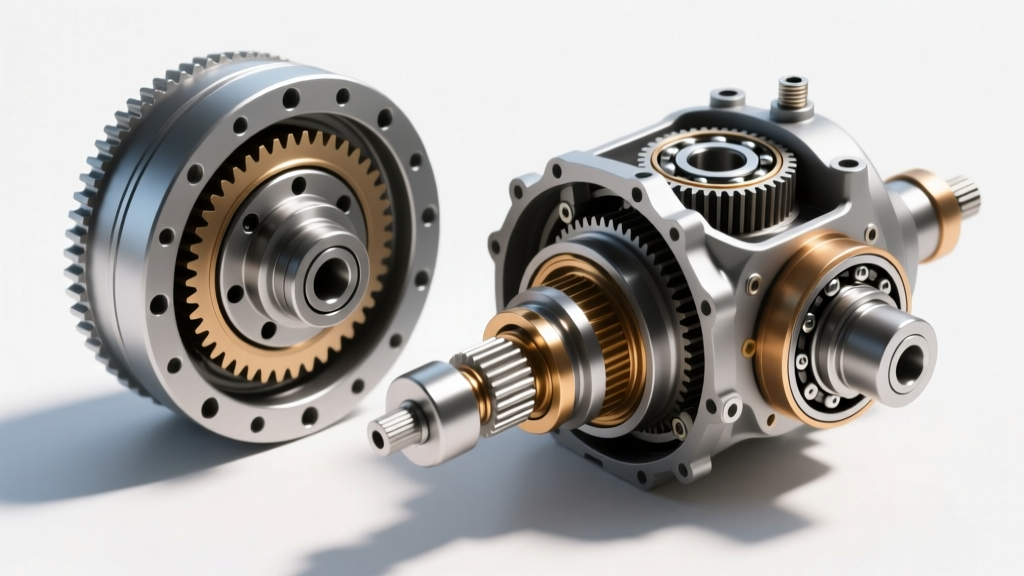
Unlike a manual transmission or an engine, a differential operates under extreme sliding friction. The hypoid gear design used in almost all modern rear axles requires the pinion gear to slide across the face of the ring gear rather than simply rolling against it. This sliding action generates immense localized heat and shear forces. If the gear oil lacks the correct Extreme Pressure (EP) additives, or if the viscosity breaks down under thermal load, the protective boundary layer between the gears fails. This leads to microwelding, pitting, and eventually, total tooth shearing.
From a cost analysis perspective, understanding the exact specifications of differential gear oil is not just a matter of mechanical theory—it is the difference between a $60 preventative maintenance interval and a $2,400 axle rebuild. In this 2026 guide, we break down the chemical specifications, the financial impact of fluid neglect, and the exact costs associated with keeping your rear differential alive.
Differential Gear Oil Specifications: The Chemistry of Survival
To understand failure, we must understand the fluid designed to prevent it. Gear oil is classified primarily by two metrics: SAE viscosity grade and API service classification. Using the wrong specification is a guaranteed way to destroy an axle assembly.
API GL-5 vs. GL-4: The Hypoid Gear Requirement
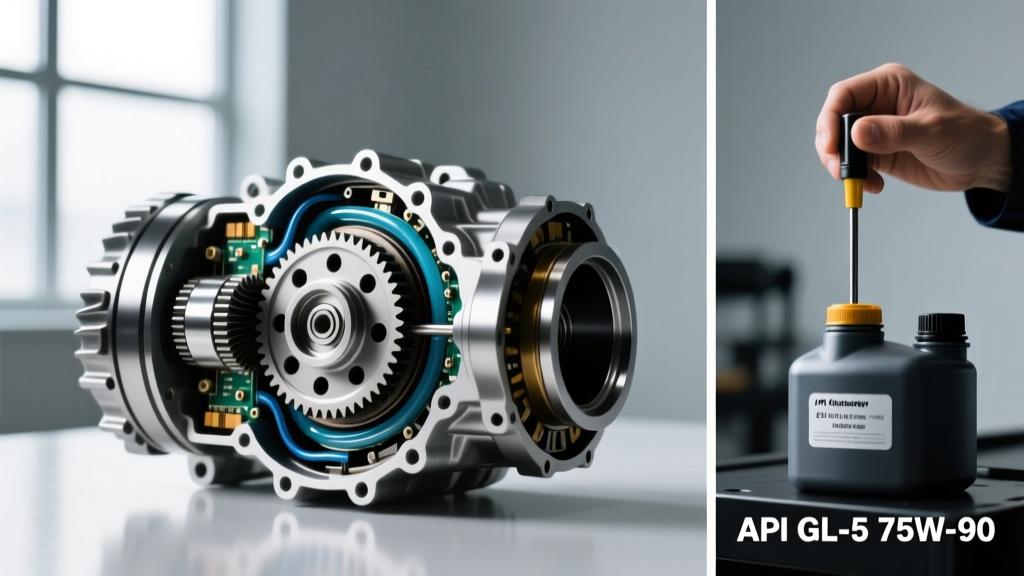
A common and costly mistake is using API GL-4 gear oil in a standard rear differential. GL-4 is designed for manual transmissions with yellow metals (brass synchronizers) and lacks the high concentration of sulfur-phosphorus EP additives required for hypoid gears. API GL-5 gear oil contains up to 5% sulfur-phosphorus compounds. When the hypoid gear's sliding action breaches the hydrodynamic fluid film, these EP additives react chemically with the hot steel surface to create a sacrificial iron sulfide/phosphate layer, preventing metal-on-metal contact.
Using GL-4 in a rear differential will result in rapid ring and pinion scoring within 5,000 to 10,000 miles. For a comprehensive overview of axle lubricant viscosity standards, refer to the SAE J306 Standard for Automotive Gear Lubricants.
Viscosity Grades: 75W-90, 80W-90, and 75W-140
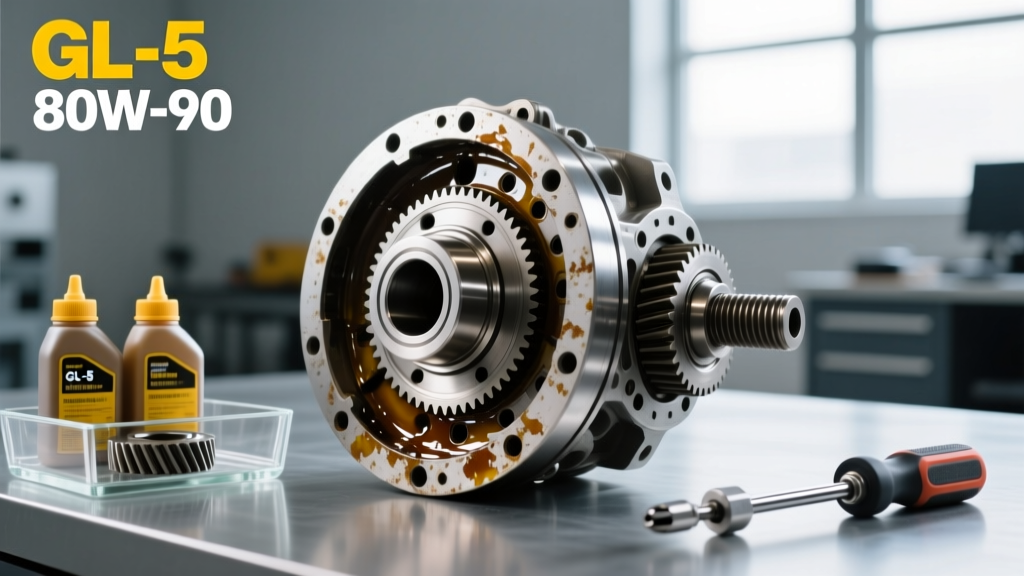
Viscosity dictates the fluid's ability to maintain a physical wedge between moving parts. Most modern OEMs specify synthetic 75W-90 for its balance of cold-weather flow (reducing parasitic drag and improving fuel economy) and high-temperature shear stability. Heavy-duty towing applications often require 75W-140 to prevent the fluid from thinning out when differential temperatures exceed 250°F (121°C).
| Specification | Primary Application | EP Additive Level | Avg. Cost (Per Quart) |
|---|---|---|---|
| API GL-4 (80W-90) | Manual Transmissions | Low (Protects Brass) | $9.00 - $12.00 |
| API GL-5 (75W-90 Synth) | Standard Open & LSD Axles | High (Sulfur-Phosphorus) | $14.00 - $19.00 |
| API GL-5 (75W-140 Synth) | Heavy Towing / Off-Road | High + Viscosity Modifiers | $18.00 - $24.00 |
The Hidden Culprit: Limited Slip Friction Modifiers
If your vehicle is equipped with a clutch-type Limited Slip Differential (LSD)—such as the Ford Trac-Lok, GM Positraction, or Dodge Sure-Grip—gear oil specifications extend beyond viscosity and EP additives. Clutch-type LSDs require a specific friction modifier (typically long-chain organic esters) to alter the coefficient of friction between the clutch discs and steel separator plates.
What happens if you omit the modifier? Without it, the clutch packs experience 'stick-slip' friction. This manifests as a violent shuddering or 'chatter' during low-speed turns. This chatter is not just an annoyance; it is the sound of physical destruction. The aggressive grabbing tears the friction material off the clutch discs, sending abrasive debris into the gear oil. This debris acts as lapping compound, rapidly destroying the carrier bearings and scoring the ring gear. This specific failure mode is one of the most common answers to what causes a rear differential to go bad in performance and truck applications.
Expert Mechanic Insight: Never rely solely on 'pre-modified' synthetic gear oils for clutch-type LSDs. While brands market them as LSD-compatible, the additive packages often degrade over a 30,000-mile drain interval. Always add a dedicated OEM friction modifier (e.g., Ford XL-3 or GM ACDelco 88900333) during every fluid service to guarantee chatter-free operation and protect your $400 clutch pack.
Cost Analysis: Preventative Service vs. Catastrophic Failure
Let us break down the financial reality of differential maintenance in 2026. The cost disparity between adhering to proper gear oil specifications and ignoring them is staggering. Below is a detailed price breakdown comparing a standard preventative fluid service against the costs associated with common lubrication-related failures.
| Service / Repair Type | Parts Cost | Labor Cost (Shop) | Total Estimated Cost |
|---|---|---|---|
| DIY Preventative Fluid Service (GL-5 + Modifier) | $45.00 - $65.00 | $0.00 | $45.00 - $65.00 |
| Shop Preventative Fluid Service | $60.00 - $85.00 | $90.00 - $140.00 | $150.00 - $225.00 |
| LSD Clutch Pack Replacement (Due to chatter/wear) | $180.00 - $350.00 | $350.00 - $550.00 | $530.00 - $900.00 |
| Carrier & Pinion Bearing Replacement (Spun bearings) | $120.00 - $250.00 | $450.00 - $700.00 | $570.00 - $950.00 |
| Full Ring & Pinion Rebuild (Pitting/Shearing) | $350.00 - $750.00 | $800.00 - $1,400.00 | $1,150.00 - $2,150.00 |
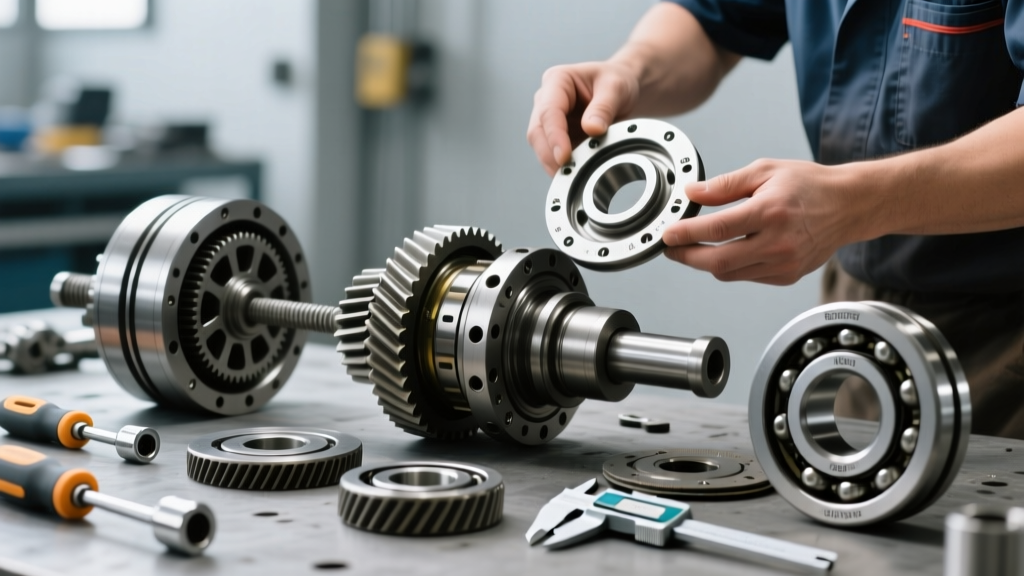
As the data illustrates, neglecting a $60 fluid service can easily cascade into a $2,000+ rebuild. The labor involved in setting up a new ring and pinion gear set requires specialized tools (dial indicators, inch-pound torque wrenches, bearing pullers) and commands premium shop rates of $140 to $180 per hour.
Real-World Application: Torque Specs and Fill Procedures
Part of the cost-saving equation involves doing the job correctly the first time to prevent leaks, which lead to fluid starvation. Over-torquing differential cover bolts will warp the mounting flange, guaranteeing a leak that will eventually drain the axle dry. Here are the exact specifications for three of the most common rear differentials on the road:
Ford 8.8-Inch (Solid Axle)
- Fluid Capacity: 2.5 - 3.0 Quarts (75W-140 Synthetic recommended for towing)
- Cover Bolt Torque: 28 - 38 lb-ft (Use a criss-cross pattern)
- Fill Plug Torque: 22 lb-ft
- Friction Modifier: 4 oz Ford XL-3 (Part # XL-3)
GM 8.6-Inch 10-Bolt (Silverado/Sierra 1500)
- Fluid Capacity: 2.1 - 2.4 Quarts (75W-90 Synthetic)
- Cover Bolt Torque: 22 lb-ft
- Fill Plug Torque: 24 lb-ft
- Friction Modifier: 4 oz ACDelco (Part # 88900333) for G80 Locking Diff
Dana 44 (Jeep Wrangler / Heavy Duty Applications)
- Fluid Capacity: 2.0 - 2.5 Quarts (80W-90 or 75W-140)
- Cover Bolt Torque: 30 - 35 lb-ft
- Fill Plug Torque: 25 - 35 lb-ft
- Note: If equipped with a Trac-Lok LSD, 4 oz of Mopar Friction Modifier is mandatory.
How to Choose the Right Fluid to Avoid Premature Failure
Not all synthetic gear oils are created equal. When sourcing fluid, look for products that explicitly state API GL-5 certification and meet MIL-PRF-2105E specifications. Premium synthetics utilize polyalphaolefin (PAO) or ester base stocks that resist thermal breakdown far better than conventional petroleum-based oils. For example, AMSOIL Severe Gear 75W-90 and Mobil 1 Synthetic Gear Lubricant LS (Part # 104361) are industry benchmarks that maintain their shear stability even when differential temperatures spike during steep grade towing.
Furthermore, always replace the differential cover gasket. Reusing old cork or rubber gaskets is a false economy that leads to weeping seals. If your axle uses RTV silicone instead of a pre-cut gasket, ensure you use a high-temp, oil-resistant sensor-safe RTV (like Permatex Ultra Black), and allow it to cure for a minimum of two hours before filling with gear oil to prevent the silicone from washing into the pickup area.
Conclusion: The ROI of Proper Gear Oil Specifications
So, what causes a rear differential to go bad? More often than not, it is the slow, invisible destruction caused by incorrect fluid chemistry, missing friction modifiers, and thermal breakdown. By understanding the vital importance of API GL-5 specifications, respecting hypoid gear sliding friction, and adhering to strict torque and fill procedures, you completely insulate yourself from the devastating costs of an axle rebuild. Spending $60 and an hour in your driveway every 30,000 to 50,000 miles is the highest return on investment you can make for your vehicle's drivetrain longevity.
For further reading on drivetrain lubrication chemistry and API classifications, consult the Lubrizol Driveline Technology Resources.