The Shift to Electro-Hydraulic Torque Vectoring
As we navigate the 2026 automotive landscape, the traditional mechanical limited-slip differential (LSD) has largely been superseded in performance and luxury platforms by the electronic differential (eDiff). Whether it is the BMW M Active Differential, the GM Alpha-platform eLSD found in the CT5-V Blackwing, or the ZF-sourced torque vectoring axles in modern Audi RS models, these systems offer unprecedented control over yaw dynamics. However, this complexity introduces entirely new NVH (Noise, Vibration, and Harshness) profiles. Diagnosing an electronic differential requires a fundamental shift in mindset: you are no longer just listening to gear mesh and clutch packs; you are diagnosing electro-hydraulic pumps, solenoid valves, and specialized dielectric fluids.
According to engineering whitepapers published by ZF Group, modern eDiffs utilize an external or integrated gerotor pump driven by a high-speed brushless electric motor. This pump generates hydraulic pressure (often between 20 and 45 bar) to actuate a multi-plate clutch pack, effectively locking the axle shafts together on demand. When these systems fail or degrade, the resulting noises are distinct from the classic ring-and-pinion whine of an open differential. Below is an expert-level troubleshooting framework for isolating and resolving eDiff noise complaints.
Decoding Electronic Differential Noise Profiles
1. High-Frequency Pump Whine (Cavitation and Aeration)
The most common complaint specific to electronic differentials is a high-pitched, turbine-like whine emanating from the rear axle during low-speed maneuvers or initial cold starts. This is almost exclusively tied to the electro-hydraulic pump.
- Cavitation: If the eDiff fluid level is low, or if the wrong fluid viscosity is used, the gerotor pump will draw in air or fail to maintain hydraulic prime. This cavitation creates a distinct whining noise that pitches up with pump RPM, not vehicle speed.
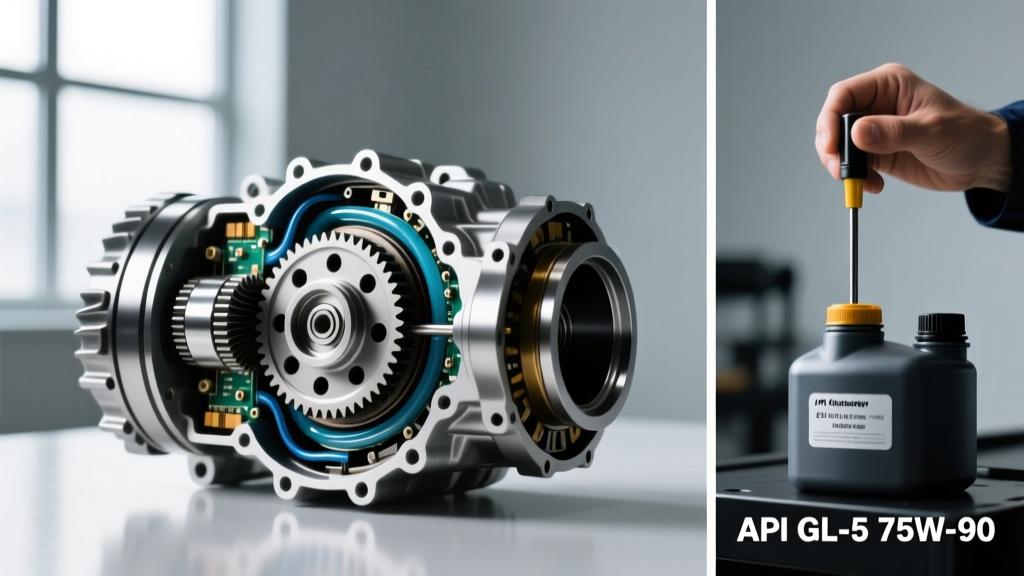
- Fluid Aeration and Foaming: eDiff fluids require specialized anti-foaming agents. If a technician mistakenly services a BMW M Active Diff with standard 75W-90 GL-5 gear oil, the fluid will foam under the high-shear environment of the pump. The aerated fluid becomes compressible, causing the pump to work harder and whine loudly while failing to build adequate clutch pressure.
- Pump Bearing Wear: Over time, the needle bearings supporting the electric motor armature and gerotor gears can wear, producing a mechanical whine that persists even when the clutch pack is disengaged.
2. Low-Speed Chatter and Shudder (Friction Degradation)
While mechanical LSDs are notorious for low-speed parking lot chatter, eDiffs can also exhibit shudder, but the root cause is usually chemical rather than mechanical. The multi-plate clutch packs in systems like the GM Camaro ZL1 eLSD utilize carbon-fiber or sintered bronze friction materials mated to steel reaction plates.
These materials rely on specific friction modifiers present in the factory fluid to maintain a precise coefficient of friction (Mu). As the fluid shears over 30,000 to 40,000 miles, the friction modifiers deplete. When the ECU commands a partial lock (slip state) during tight cornering, the degraded fluid fails to lubricate the microscopic asperities of the clutch plates, resulting in a stick-slip phenomenon that translates into a violent, shuddering chatter felt through the chassis and heard as a low-frequency groaning from the axle housing.
3. Engagement Clunks (Mechanical Backlash and Actuator Lag)
A sharp 'clunk' from the rear axle when transitioning from coast to drive, or when the eDiff aggressively locks during hard cornering, points to mechanical clearances or hydraulic lag.
- Thrust Bearing Wear: The clutch pack exerts immense axial force against the differential case. Worn thrust washers or needle bearings allow the internal assembly to shift laterally, creating a physical clunk when hydraulic pressure is applied.
- Excessive Backlash: If the ring and pinion gear backlash is out of spec (typically 0.005 to 0.008 inches for performance eDiffs), the sudden torque transfer when the eDiff locks will cause the gears to slam against the drive side of the teeth.
- Hydraulic Lag: A clogged internal filter or a failing solenoid valve can delay pressure buildup, causing the ECU to overcompensate and 'slam' the clutch pack shut, resulting in an audible engagement clunk.
Structured Diagnostic Matrix
Use the following matrix to cross-reference customer complaints with probable root causes before tearing down the axle assembly.
| Noise Signature | Operating Condition | Probable Root Cause | Corrective Action |
|---|---|---|---|
| High-pitched turbine whine | Cold start, low-speed turns | Pump cavitation, incorrect fluid viscosity, low fluid level | Verify fluid level; perform complete fluid exchange with OEM-specific eDiff fluid |
| Low-frequency groan/shudder | Tight parking lot turns, 5-15 mph | Depleted friction modifiers, glazed clutch plates | Fluid flush with friction modifier additive; if unresolved, replace clutch pack |
| Sharp metallic clunk | Coast-to-drive transition, heavy throttle | Excessive R&P backlash, worn thrust bearings, solenoid spike | Measure backlash with dial indicator; inspect thrust washers; test solenoid PWM |
| Constant high-speed howl | Highway cruising (65+ mph) | Ring and pinion gear wear, pinion bearing preload loss | Check pinion bearing preload; inspect gear tooth contact pattern; rebuild required |
Critical Fluid Specifications and Torque Data
The single most common cause of premature electronic differential failure is the use of generic hypoid gear oils. eDiffs require fluids that not only protect hypoid gears but also possess specific dielectric properties, anti-foaming agents, and precise friction coefficients for the clutch packs. Furthermore, adhering to exact torque specifications for fill and drain plugs is critical, as many eDiff housings are cast aluminum and prone to thread stripping.
- BMW M Active Differential (G80 M3/M4, F80/F82 platforms): Requires BMW SAF-XJ Fluid (Part #83222446673). Capacity is approximately 1.2 Liters. Torque Spec: Fill and drain plugs must be torqued to exactly 35 Nm (26 lb-ft). Do not overtighten.
- GM Alpha-Platform eLSD (Camaro ZL1, CT5-V Blackwing): Requires GM specific eLSD Fluid (Part #88865490 or equivalent Dexron ULV depending on the specific actuator generation). Torque Spec: Fill and drain plugs require 25 Nm (18 lb-ft). Ensure the O-ring on the fill plug is replaced at every service.
- Audi Sport Differential (Quattro Torque Vectoring): Requires specific ZF/Audi approved electro-hydraulic fluid (often G 055 017 A2 or similar, varying by generation). Torque Spec: Typically 30 Nm for the fluid level check plug, but always consult the exact ElsaPro routing for the specific axle code.
Advanced Bi-Directional Scan Tool Testing
You cannot accurately diagnose an electronic differential with a stethoscope alone. Modern troubleshooting requires a professional bi-directional scan tool (such as an Autel MaxiSys or Snap-On Zeus) to isolate mechanical noise from electrical/hydraulic noise.
The 100% Lock Test: With the vehicle safely on a lift and wheels off the ground, use the scan tool to access the eDiff control module. Command the clutch pack pressure to 100% lock while monitoring the eLSD_Pump_Duty_Cycle and eLSD_Clutch_Pressure PIDs. If the pump duty cycle spikes to maximum but the pressure PID fails to rise, you have an internal hydraulic leak, a clogged pump inlet screen, or severe pump wear. If the pressure builds instantly but the whine persists, the issue is likely mechanical bearing wear within the pump assembly itself.
Expert Best Practice: Never perform an eDiff fluid drain-and-fill by simply pulling the plug. Many electronic differentials feature internal accumulators and hydraulic lines that trap old, sheared fluid. Always use a vacuum extraction tool through the fill port to pull as much old fluid from the clutch pack housing as possible before refilling, or perform a dynamic flush by commanding the pump via scan tool while the axle is submerged in a catch basin to cycle the old fluid out.
Longevity and Maintenance Intervals
While many manufacturers label eDiff fluids as 'lifetime,' industry consensus and data tracked by organizations like SAE International dictate otherwise. The intense thermal cycling and shear forces generated by the electro-hydraulic pump rapidly degrade the fluid's rheological properties. For vehicles subjected to track days, aggressive canyon driving, or frequent towing, the eDiff fluid should be serviced every 25,000 to 30,000 miles. For standard street use, a 40,000-mile interval is the maximum recommended threshold to prevent clutch pack glazing and pump cavitation. By treating the electronic differential as a highly sensitive electro-mechanical assembly rather than a simple gearset, technicians can eliminate drivetrain NVH and restore factory-level torque vectoring performance.