The Symbiosis of Hardware and Chemistry: Why Your Cover Dictates Your Fluid
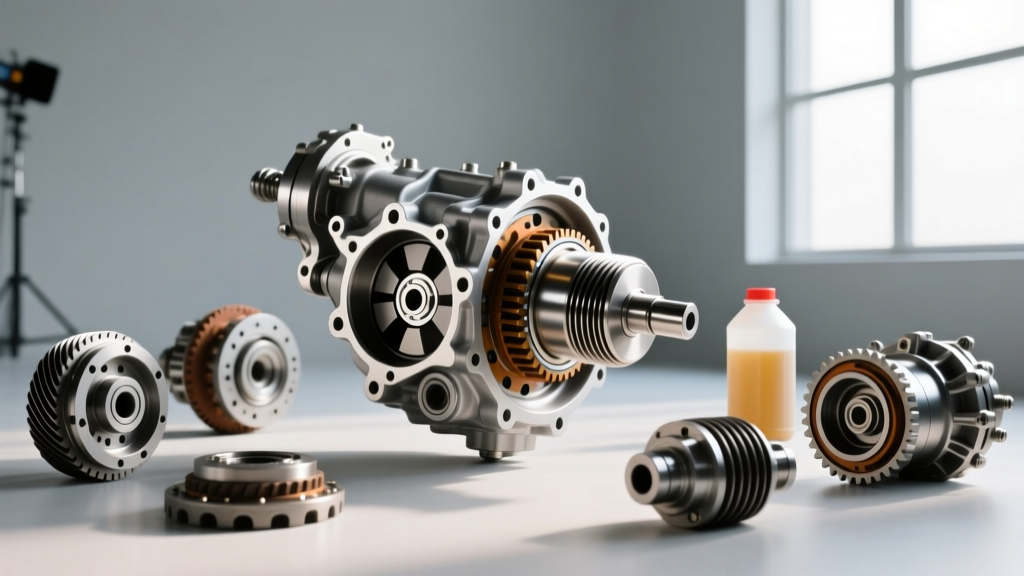
When enthusiasts and fleet managers look to increase the durability of their solid axles, upgrading to heavy-duty rear differential covers is often the first step. However, swapping a stamped-steel OEM pan for a finned, cast-aluminum aftermarket sump fundamentally alters the thermal dynamics and volumetric requirements of the axle assembly. In 2026, understanding the intersection between differential hardware and gear oil chemistry is critical. An upgraded cover increases fluid capacity and lowers operating temperatures, which directly influences whether you should run a 75W-90 or a 75W-140 synthetic, and how you manage limited-slip friction modifiers.
This buyer's guide bridges the gap between axle hardware and differential fluid types and specifications, ensuring your drivetrain investment is protected by the exact chemical formulation it requires.
2026 Hardware Comparison: Top Rear Differential Covers & Capacity Shifts
Before selecting a gear oil, you must quantify your new sump volume and cooling surface area. The most popular axles in the heavy-duty and light-duty truck segments—the GM AAM 11.5-inch, Ford Sterling 10.5-inch, and Dana 80—all suffer from inadequate OEM stamped-steel covers that flex under load and offer zero passive cooling.
| Cover Manufacturer | Axle Fitment | Material & Design | Capacity Increase | 2026 Price Range |
|---|---|---|---|---|
| Mag-Hytec | GM AAM 11.5" | A356 Cast Aluminum, Finned | +1.5 Quarts | $285 - $320 |
| PPE (Pacific Performance) | Ford Sterling 10.5" | Cast Aluminum, Internal Baffles | +1.2 Quarts | $190 - $225 |
| AFE Power | Dana 80 | Nodular Iron / Aluminum Hybrid | +0.8 Quarts | $165 - $195 |
| OEM Replacement | Various HD Axles | Stamped Low-Carbon Steel | Baseline | $40 - $65 |
Expert Insight: The internal baffles found in PPE and Mag-Hytec covers are not just for structural rigidity; they act as directional channels, forcing the ring gear to carry fluid directly to the pinion bearings and the upper axle tubes, ensuring adequate lubrication during steep-grade towing.
Decoding Differential Fluid Specifications for Upgraded Sumps
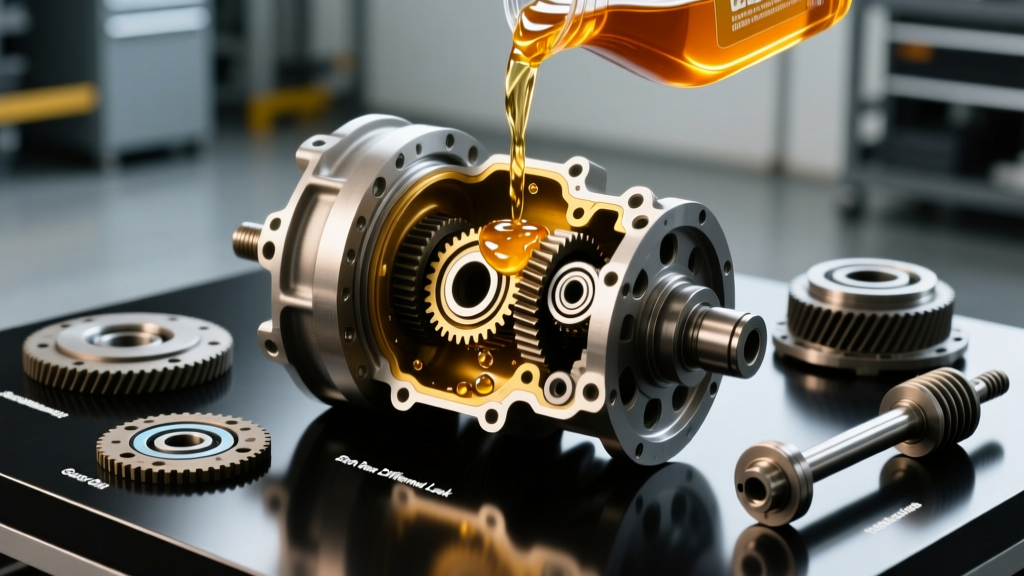
Once you have installed an aftermarket cover, your fluid volume may jump from a baseline of 3.5 quarts to over 5.0 quarts. This massive increase in thermal mass changes your viscosity requirements.
API GL-5 and the Extreme Pressure (EP) Dilemma
Modern hypoid ring and pinion gears operate with a severe sliding action that wipes standard lubricants away from the gear teeth. The American Petroleum Institute (API) classifies gear oils to address this. You must exclusively use API GL-5 rated fluids for hypoid differentials. GL-5 fluids contain high levels of Sulfur-Phosphorus (S-P) Extreme Pressure additives that form a sacrificial solid-film layer on the gear teeth under extreme boundary lubrication conditions.
Warning: Never use API GL-4 fluid in a standard hypoid differential. GL-4 contains roughly 50% less S-P additives and will result in catastrophic ring and pinion galling within 10,000 miles under load.
Viscosity Grades: 75W-90 vs. 75W-140
With a stock stamped-steel cover, differential fluid temperatures can easily exceed 230°F (110°C) while towing a 12,000 lb trailer. At these temperatures, a 75W-90 synthetic fluid may experience excessive shear thinning, dropping below the critical 15 cSt (centistokes) minimum film thickness required to protect the pinion bearing.
- SAE 75W-90 Synthetic: Ideal for daily driving, unloaded commuting, and light towing (under 5,000 lbs). Offers superior cold-weather flow and marginally better fuel economy due to reduced parasitic drag.
- SAE 75W-140 Synthetic: The mandatory choice for heavy towing, commercial use, and off-roading. When paired with a finned aluminum rear differential cover, the 75W-140 fluid maintains a robust hydrodynamic film at 250°F+ without oxidizing, thanks to the cover's passive heat dissipation.
The Limited-Slip Differential (LSD): Friction Modifier Matrix
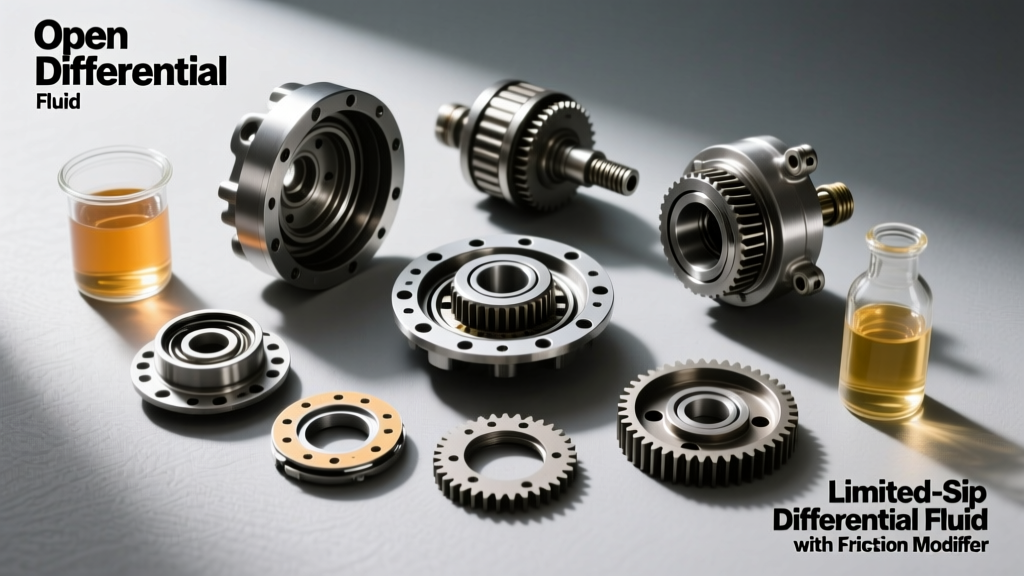
If your axle houses a clutch-type limited-slip differential (such as the Ford Traction-Lok, Auburn LSD, or Eaton Posi), the fluid specification requires a critical secondary component: a Friction Modifier (FM). Clutch-type LSDs rely on controlled slip to allow for cornering. Without an FM, the clutches will bind and release violently, causing the infamous 'chatter' or 'hopping' sensation during low-speed turns.
When increasing your fluid capacity with an upgraded cover, you must scale your friction modifier dosage accordingly. Standard FM bottles are dosed for 2.5 to 3.0 quarts of fluid. If your new Mag-Hytec cover holds 5.2 quarts, you must use nearly two bottles of modifier to maintain the correct coefficient of friction.
OEM vs. Aftermarket Friction Modifiers
According to Red Line Synthetic Technical Data, many modern synthetic gear oils (like Red Line's 75W140 or AMSOIL Severe Gear) already contain a baseline friction modifier package. However, for highly sensitive clutch packs, supplemental OEM modifiers are still the gold standard:
- Ford / Motorcraft XL-3 (EST-M2C118-A): The benchmark for Ford 8.8, 9.75, and 10.5-inch Traction-Lok axles.
- GM EOS (1052358): Required for older GM G80 locking differentials and Eaton Posi units.
- Chrysler / Mopar Friction Modifier (04318060AB): Essential for Ram trucks equipped with the AAM 11.5-inch anti-spin differential.
Note: Helical gear-type LSDs (like the Detroit Truetrac or Torsen) do not use clutch packs and therefore do not require friction modifiers. Using standard GL-5 without FM is perfectly safe and preferred for these units.
Installation Protocol: Torque Specs and Sealant Best Practices
The best rear differential covers and premium fluids are useless if the mating surface leaks. The transition from OEM stamped steel to thick cast aluminum requires a shift in sealing methodology.
Gasket / O-Ring vs. RTV Silicone
Premium covers like Mag-Hytec utilize a thick, reusable nitrile O-ring seated in a machined groove. This eliminates the need for messy RTV silicone and prevents the #1 cause of differential failure: silicone bead 'worms' breaking off inside the axle housing and clogging the pinion bearing oil feed galleries.
If your aftermarket cover requires RTV, use a sensor-safe, high-oil-resistance formula like Permatex Ultra Black (Part #85G). Apply a continuous 3mm bead, ensuring you circle the inside of every bolt hole to prevent oil from wicking up the bolt threads.
Critical Torque Specifications
Overtightening cover bolts on an aluminum aftermarket cover can strip the threads or warp the mounting flange, creating a permanent leak. Always use a calibrated inch-pound or low-range foot-pound torque wrench in a crisscross (star) pattern.
- GM AAM 11.5" (M10x1.5 Bolts): Torque to 33 lb-ft (45 Nm). Do not exceed 35 lb-ft.
- Ford Sterling 10.5" (3/8"-16 Bolts): Torque to 32 lb-ft (43 Nm).
- Dana 80 (3/8" Bolts): Torque to 30 lb-ft (40 Nm).
- Chrysler / Ram AAM 11.5" (M10 Bolts): Torque to 30 lb-ft (40 Nm).
Thermal Dynamics and Fluid Degradation
Why invest in an aluminum cover and 75W-140 synthetic? The answer lies in the Arrhenius equation of chemical kinetics: the oxidation rate of gear oil doubles for every 18°F (10°C) increase in temperature. If your stock steel cover allows the differential to run at 240°F while towing through a mountain pass, the fluid is degrading 16 times faster than it would at a baseline 168°F. By installing a finned aluminum cover, you drop the peak operating temperature to 195°F. Combined with the high oxidative stability of Group IV (PAO) or Group V (Ester) synthetic base stocks, you can safely extend your differential fluid drain intervals from the OEM-recommended 50,000 miles to 100,000+ miles under severe service conditions.
Final Verdict: Matching the Cover to the Fluid
Upgrading your rear differential covers is not just a cosmetic enhancement; it is a functional recalibration of your axle's lubrication system. For heavy-duty towing and off-road applications, pair a high-capacity cast-aluminum cover with a full-synthetic API GL-5 75W-140 gear oil. Scale your friction modifiers to match your new sump volume, adhere strictly to aluminum-specific torque specs, and your ring and pinion will survive the most punishing environments the road can offer.