The Reality of Rear Differential Leaks: Can Fluid Help?
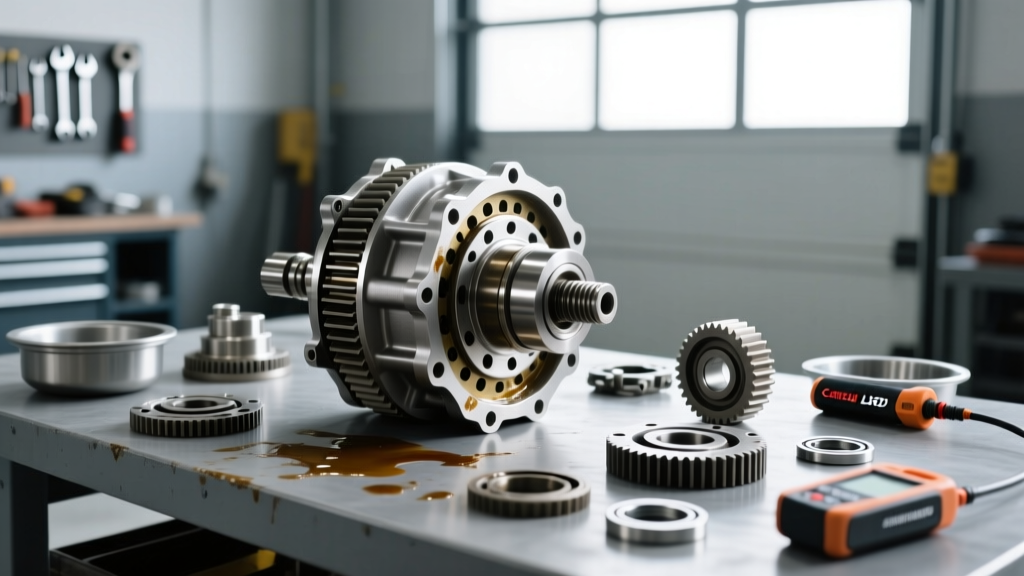
If you have spotted a puddle of thick, sulfur-smelling oil on your driveway, you likely have a rear differential leak. For truck and SUV owners, this is a common headache as vehicles cross the 100,000-mile threshold. While a severely torn pinion seal or a deeply grooved axle shaft requires mechanical replacement, minor weeping from dried-out elastomer seals or porous cover gaskets can often be mitigated. The secret lies in selecting the right high-mileage gear oil formulated with advanced seal conditioners and polymer swell agents.
In this 2026 buyer's guide, we evaluate the top differential fluids designed to address minor seepage while maintaining the extreme-pressure (EP) protection required by hypoid ring and pinion gears. We will also cover critical diagnostic steps, API specifications, and exact torque values for your next service interval.
The Chemistry of Seal Swell and Elastomer Reconditioning
Standard gear oils rely on sulfur-phosphorus additives to protect gear teeth under high shear. However, they do little to maintain the rubber lip seals and O-rings that keep the fluid inside the housing. Over time, heat cycles cause these elastomers to shrink, harden, and crack, resulting in a rear differential leak.
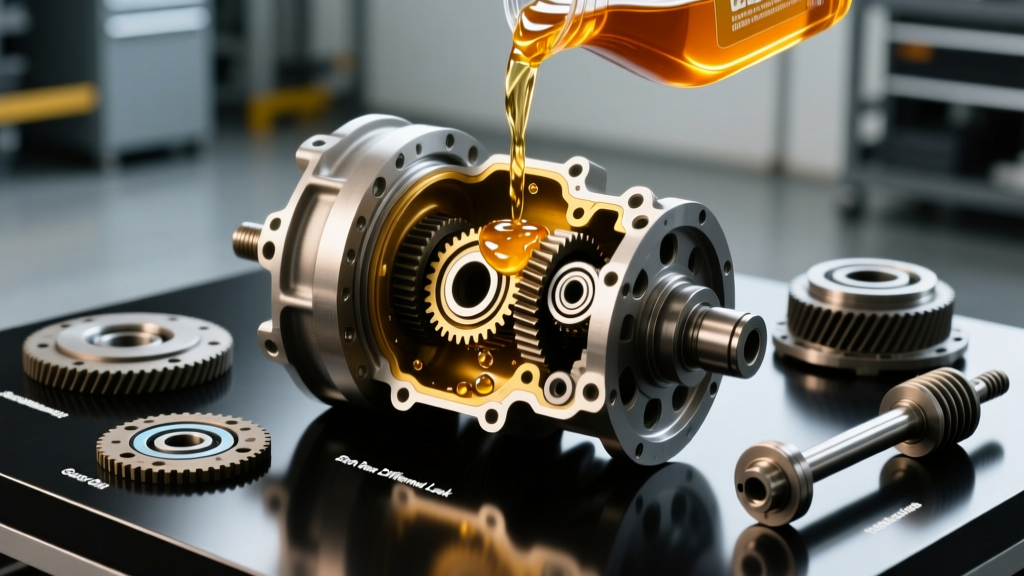
High-mileage gear oils incorporate specific ester base stocks and polymer additives. These compounds are designed to penetrate the microscopic pores of hardened rubber, causing a slight, controlled 'swell' that restores the seal's tension against the rotating shaft. This chemical reconditioning can stop minor weeps in their tracks, saving you the cost of a $400+ pinion seal replacement and bearing reset procedure.
2026 Gear Oil Comparison Chart for High-Mileage Differentials
| Brand & Product | Viscosity | Base Oil & Additives | Seal Conditioner | Est. Price (Per Qt) |
|---|---|---|---|---|
| Valvoline High Mileage MaxLife | 75W-90 | Synthetic Blend + EP Additives | Yes (Proprietary Polymer) | $12.50 |
| Lucas Oil Heavy Duty Gear Oil | 80W-90 | Mineral + High Film Strength | Mild (Swell Agents) | $11.00 |
| Royal Purple Max Gear | 75W-90 | Full Synthetic (Synerlec) | No (Focus on Friction) | $23.00 |
| Red Line Synthetic Gear Oil | 75W90 | Polyol Ester (POE) Base | Yes (Ester Swell) | $21.50 |
Valvoline High Mileage 75W-90 (Part # VV986)
Valvoline's MaxLife line is specifically engineered for drivetrains showing signs of age. The VV986 formulation includes dedicated seal conditioners that rejuvenate dried axle and pinion seals. It meets API GL-5 specifications and contains the necessary friction modifiers for most limited-slip differentials (LSD) right out of the bottle, though heavily loaded clutches (like Ford Trac-Lok) may still require a top-off of XL-3 additive.
Lucas Oil Heavy Duty 80W-90 (Part # 10048)
Lucas Oil is legendary for its high film strength and tackiness. While it is a conventional mineral-based oil, its proprietary additive package includes mild swelling agents that help condition seals. The 80W-90 viscosity is slightly thicker at operating temperature than a 75W-90, which can physically slow down a weeping seal, though it may marginally reduce fuel economy in lighter-duty applications.
Red Line 75W90 Synthetic (Part # 50104)
Red Line utilizes a Polyol Ester (POE) base stock. Esters are naturally polar, meaning they cling to metal surfaces, but they also have a mild, natural swelling effect on certain rubber compounds. While not marketed strictly as a 'stop-leak' product, the POE chemistry is excellent for maintaining seal pliability in high-heat environments, such as towing with a Dana 44 or GM 9.5-inch semi-floating axle.
Understanding Viscosity and API GL Ratings
When addressing a rear differential leak, it is tempting to simply install the thickest fluid available (like a 75W-140 or straight 90-weight) to physically block the leak. This is a critical mistake. Hypoid gear sets rely on fluid splash lubrication. Overfilling or using excessively high-viscosity fluid prevents the oil from reaching the upper pinion bearing, leading to catastrophic bearing failure and whining noises.
- 75W-90: The modern standard for most light-duty trucks and SUVs (GM 8.5/10-bolt, Ford 8.8, Dana 44). Offers the best cold-weather flow and fuel efficiency.
- 80W-90: Traditional mineral-based viscosity. Excellent for older, high-mileage axles where clearances have opened up slightly.
- 75W-140: Reserved for heavy-duty towing applications (Ford 10.5, Ram AAM 11.5). Do not use in light-duty axles unless specified by the OEM.
Always ensure the fluid meets API GL-5 standards. GL-5 contains 3-4 times the sulfur-phosphorus EP additives of GL-4, which is mandatory to prevent the wiping of hypoid gear teeth under high-torque sliding friction.
The Hidden Culprit: Clogged Axle Breather Vents
Before spending money on high-mileage fluids or tearing into your differential cover, you must check the axle breather vent. As the differential fluid heats up during driving, the air inside the housing expands. The breather vent allows this pressurized air to escape. If the vent becomes clogged with mud, road grime, or ice, internal pressure will build until it forces gear oil past the path of least resistance—usually the pinion seal or the axle shaft seals.
Expert Diagnostic Tip: If your rear differential leak only occurs after long highway drives or heavy towing, but the seals look visually intact, a clogged breather vent is the culprit 90% of the time. Locate the vent tube (usually on the upper driver-side axle tube), remove the cap, and blow it out with compressed air. Upgrade to a remote, extended breather kit (approx. $35) if you frequently drive in deep water or mud.
Service Specifications: Torque, Capacities, and Gaskets
If you are swapping to a conditioning gear oil to address a minor leak, proper service procedures are paramount. Stripped cover bolts or warped flanges will create new leaks that no fluid additive can fix.
Common Differential Fluid Capacities
- GM 8.5 / 8.6-inch 10-Bolt: ~2.1 Quarts
- Ford 8.8-inch (Super 8.8): ~1.9 to 2.2 Quarts
- Dana 44 (Jeep Wrangler / HD Trucks): ~2.0 Quarts
- Ram AAM 11.5-inch: ~3.5 Quarts (Requires 75W-140)
Cover Bolt and Plug Torque Specifications
Always use a calibrated inch-pound or foot-pound torque wrench. Over-tightening differential cover bolts will warp the stamped steel cover or crush the cork/rubber gasket, guaranteeing a leak.
- GM 10-Bolt Cover Bolts (10mm): 15 lb-ft (180 in-lbs)
- Ford 8.8 Cover Bolts (1/2" or 13mm): 28 lb-ft
- Dana 60 Cover Bolts: 25 lb-ft
- Standard 3/8" Drain/Fill Plugs: 15 - 20 lb-ft
- Standard 1/2" Drain/Fill Plugs: 25 - 35 lb-ft
Note: For axles that use RTV silicone instead of a pre-cut gasket (common on many Dana and Chrysler axles), use a high-temperature, oil-resistant black or grey RTV. Apply a continuous 1/8-inch bead, torque to spec, and allow 2 hours to cure before filling with fluid to prevent the silicone from extruding into the gear set.
When to Abandon Fluid Fixes and Replace the Seal
High-mileage gear oils with seal conditioners are a fantastic, cost-effective band-aid for minor weeps and aging rubber. However, they cannot fix mechanical damage. You must replace the physical seals if you observe the following:
- Grooved Companion Flange: If the pinion yoke/flange has a deep wear groove cut into it by years of friction, no rubber lip seal will hold the fluid. The flange must be replaced, or a speedy-sleeve must be installed.
- Axle Shaft Scoring: Pull the axle shafts. If the bearing and seal contact surfaces are pitted or scored, the new seal will leak immediately. Replace the axle shafts or use a press-on axle seal repair sleeve.
- Active Dripping: Conditioners take 200-500 miles of driving to swell the rubber. If fluid is actively dripping onto your brake rotors or exhaust, mechanical intervention is required immediately to prevent brake failure or a fire hazard.
For more in-depth drivetrain diagnostics and OEM service data, consult the engineering resources available at Dana Incorporated or your specific vehicle manufacturer's service portal. By pairing the correct high-mileage API GL-5 fluid with proper mechanical maintenance, you can extend the life of your axle assembly well past the 200,000-mile mark.