The Drivetrain Ecosystem: Where the Transfer Case Meets the Axle
For beginners exploring four-wheel-drive (4WD) and all-wheel-drive (AWD) vehicles, the undercarriage can seem like a maze of heavy metal components. Two of the most frequently confused parts are the transfer case and the differential. While they both deal with splitting engine power, they do so on entirely different axes. Understanding the mechanical relationship between these two units—especially when an lsd differential is introduced into the mix—is critical for vehicle longevity, off-road capability, and proper maintenance.
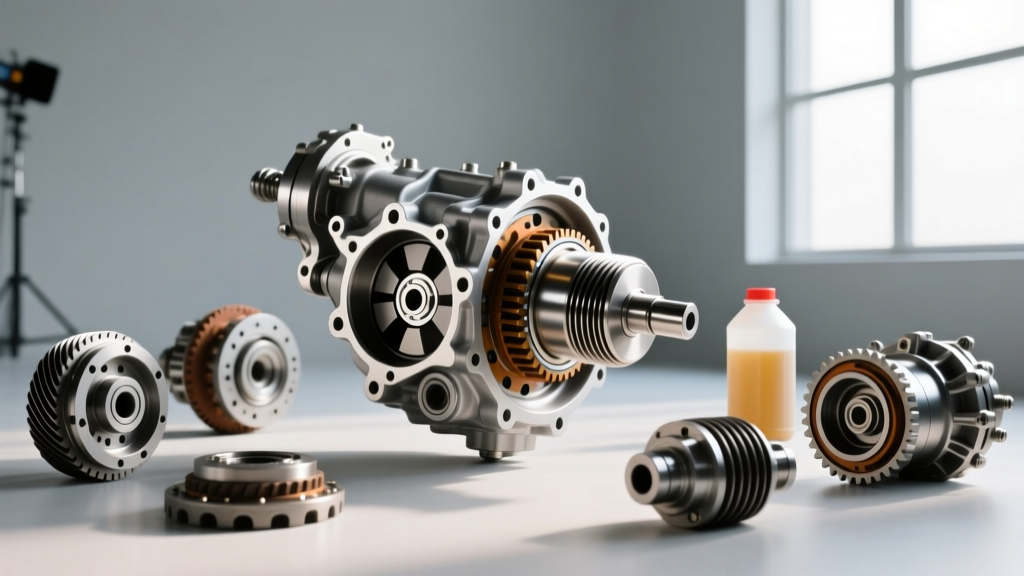
In a traditional rear-wheel-drive layout, the transmission sends power straight back to a single rear differential. However, in a 4WD truck or SUV (like a Chevrolet Silverado, Jeep Wrangler, or Ford F-150), the transmission sends power into a transfer case. The transfer case acts as a longitudinal splitter, dividing torque between the front and rear driveshafts. At the end of each driveshaft sits a differential, which acts as a lateral splitter, dividing torque between the left and right wheels while allowing them to rotate at different speeds during a turn.
Why the LSD Differential Changes the Equation
A standard 'open' differential always sends power to the wheel with the least resistance. If your right rear wheel is on ice and the left is on dry asphalt, an open diff will spin the ice-bound wheel endlessly while the vehicle goes nowhere. This is where the lsd differential (Limited Slip Differential) becomes essential.
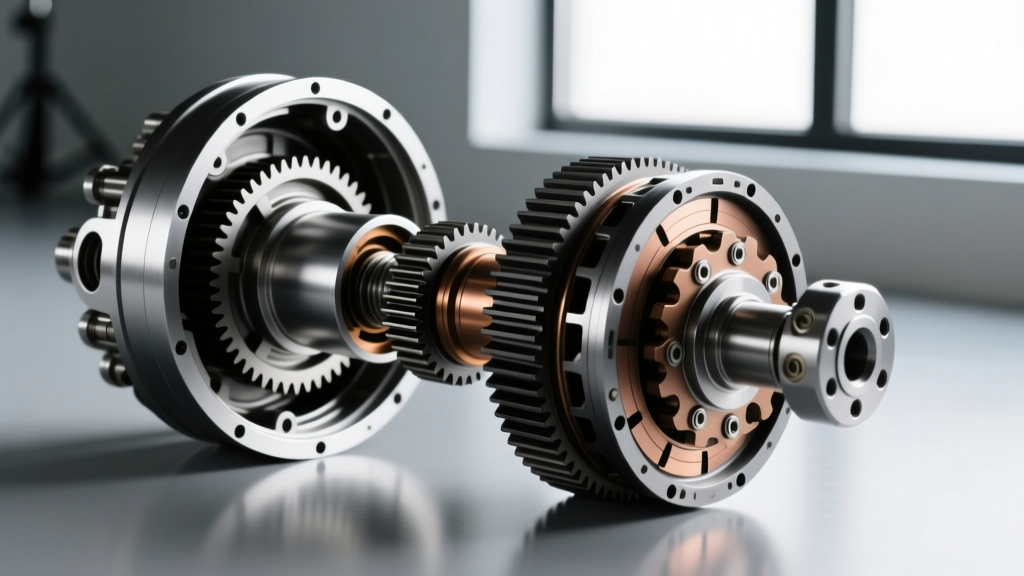
An lsd differential uses internal clutch packs, helical gears (like the famous Torsen design), or viscous fluids to limit the speed difference between the two wheels. When one wheel loses traction, the LSD transfers torque to the wheel that still has grip. While this is a massive upgrade for traction, it fundamentally alters how your drivetrain handles the rotational forces generated by the transfer case.
The Binding Phenomenon: Transfer Case and LSD Differential Interaction
To understand the relationship between these components, we must discuss a phenomenon known as drivetrain wind-up (or binding). This occurs primarily in part-time 4WD systems equipped with a locked transfer case (such as the New Process NP241 or NP261).
When you shift a part-time transfer case into '4-High' or '4-Low', it locks the front and rear output shafts together, forcing them to spin at the exact same speed. However, when you drive on a surface with high traction (like dry pavement), the front and rear axles actually need to spin at slightly different speeds. This is because the front tires track a wider arc than the rear tires during steering maneuvers, and because slight differences in tire wear or air pressure alter the effective rolling radius of the tires.
How the LSD Differential Reacts to Wind-Up
If your vehicle is equipped with open differentials, the internal gears will naturally slip and absorb this rotational mismatch. But if you have an aggressive lsd differential installed in the rear or front axle, the unit will actively resist this slipping. The lsd differential interprets the speed difference as 'wheel slip' and clamps the clutches tighter to lock the axles together.
Because the lsd differential refuses to slip, the rotational stress is pushed backward through the driveshafts and directly into the transfer case. In an NP261 transfer case, this immense torque can literally stretch the 1.5-inch-wide internal drive chain, wear out the planetary gears, or cause the transfer case housing to crack. Conversely, the stress can overwhelm the lsd differential, burning up the clutch packs or shattering the cross-pins.
Expert Warning: Never engage a locked, part-time transfer case on dry, high-traction pavement, especially if your vehicle is equipped with a clutch-type lsd differential. The resulting drivetrain wind-up will destroy either the transfer case chain or the differential clutches—often both.
Fluid Dynamics: Servicing the Transfer Case and LSD Differential
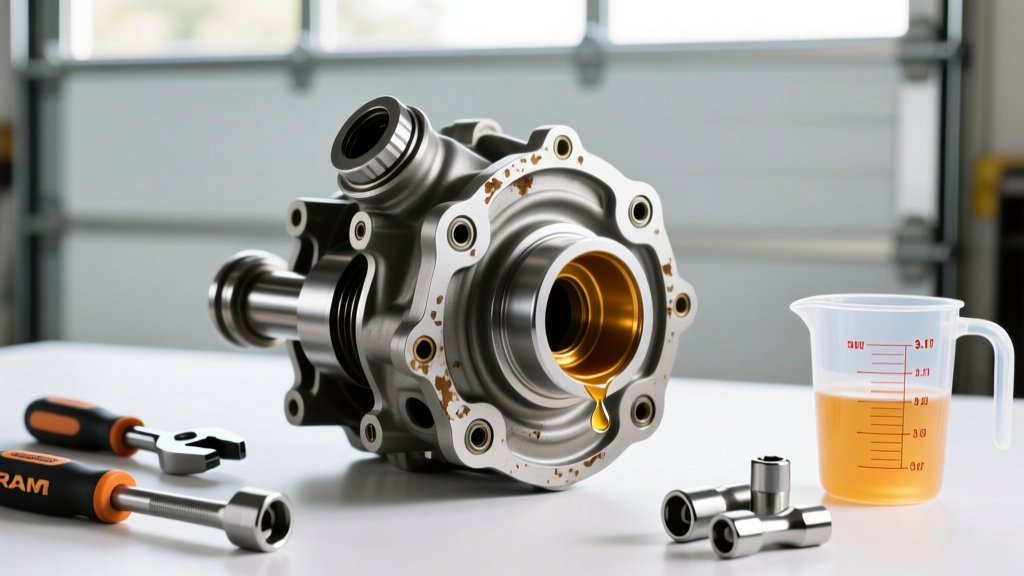
Because the transfer case and the lsd differential operate under vastly different mechanical principles, they require entirely different lubrication strategies. The transfer case relies on fluid to lubricate chains, bearings, and shift forks, while the lsd differential requires extreme pressure (EP) additives to protect the hypoid ring and pinion gears, alongside specialized friction modifiers to ensure the LSD clutches engage smoothly without chattering.
Below is a maintenance matrix comparing common setups found in modern 4WD trucks and SUVs.
| Component | Example Model | Fluid Specification | Capacity | Friction Modifier? | Drain/Fill Torque |
|---|---|---|---|---|---|
| Transfer Case | GM NP261 / NP263 | ACDelco AutoTrak II | 2.0 Quarts | No | 15 lb-ft (Aluminum) |
| Rear Axle (Clutch LSD) | Ford 8.8-inch (Traction-Lok) | 75W-140 Synthetic GL-5 | 2.0 Quarts | Yes (4 oz XL-3) | 25 lb-ft |
| Front Axle (Helical LSD) | Dana 44 (Eaton Truetrac) | 80W-90 GL-5 | 2.0 Quarts | No (Gear only) | 25 lb-ft |
The Importance of Friction Modifiers
One of the most common beginner mistakes when servicing an lsd differential is forgetting the friction modifier. Standard GL-5 gear oil is designed for the sliding friction of hypoid gears. However, clutch-based LSDs require a specific additive (like Motorcraft XL-3 or GM EOS) that alters the fluid's coefficient of friction. Without it, the clutches will grab and release rapidly during low-speed turns, resulting in a violent 'chatter' or 'clunk' from the rear end, eventually glazing and ruining the clutch packs. Note that helical gear LSDs (like the Truetrac) do not use clutches and therefore do not require friction modifiers.
Step-by-Step Service Guide and Real-World Costs
Servicing the transfer case and the lsd differential is a straightforward DIY job that can save you hundreds of dollars. According to AMSOIL's technical guide on differential fluid, severe service conditions (towing, off-roading, water crossings) dictate that differential fluid should be changed every 15,000 to 30,000 miles, while transfer case fluid should be swapped every 30,000 to 50,000 miles.
Cost Breakdown (DIY vs. Dealership)
- Transfer Case Fluid: ACDelco AutoTrak II runs about $18 per quart. (Total: $36)
- LSD Differential Fluid: Mobil 1 75W-140 Synthetic is roughly $24 per quart. (Total: $48)
- Friction Modifier: Motorcraft XL-3 is approximately $9 per bottle.
- Crush Washers/Gaskets: ~$10
- Total DIY Cost: ~$103
By contrast, a dealership or specialized 4WD shop will typically charge between $350 and $500 to perform a complete transfer case and dual-differential fluid service, largely due to shop markups on synthetic fluids and labor rates averaging $150/hour.
Pro-Tips for the DIY Mechanic
- Order of Operations: Always remove the fill plug before removing the drain plug. If your fill plug is seized or stripped, you do not want to be left with an empty transfer case or differential and no way to refill it.
- Aluminum Housing Care: Modern transfer cases like the NP261 feature thin aluminum housings. Over-torquing the drain plug will strip the threads instantly. Use a calibrated torque wrench set precisely to 15 lb-ft.
- Pumping the Fluid: Transfer cases and differentials lack large fill openings. Invest in a $15 manual fluid transfer pump that threads directly onto the quart bottle to make filling the tight spaces much easier.
Diagnosing Cross-Contamination and Failures
Because these components are mounted low on the chassis, they are highly susceptible to water ingress during river crossings or deep snow driving. If water bypasses the axle seals or the transfer case vent tube, it mixes with the gear oil, creating a milky, emulsified substance that looks like a chocolate milkshake. This emulsion completely destroys the lubricity of the fluid and the frictional properties required by the lsd differential clutches.
If you notice a milky residue on your dipstick or drain plug, immediate service is required. Running an lsd differential on emulsified fluid will cause the hypoid ring and pinion gears to score and pit within a few hundred miles, leading to a catastrophic axle failure and a rebuild bill exceeding $1,500. For deep-water enthusiasts, installing extended breather tubes routed up into the engine bay is a mandatory upgrade to prevent this exact failure mode.
Summary: Respecting the Mechanical Link
The relationship between your transfer case and your lsd differential is a delicate balance of torque management and traction. The transfer case dictates the longitudinal power delivery, while the lsd differential manages the lateral grip. By understanding how drivetrain wind-up occurs, respecting the limitations of part-time 4WD systems on dry pavement, and adhering to strict fluid and friction modifier specifications, you can ensure your 4WD vehicle remains reliable for hundreds of thousands of miles. For further reading on axle engineering and component specifications, Dana Incorporated offers extensive technical resources on drivetrain architecture and differential dynamics.