Preventive maintenance on your vehicle's drivetrain extends far beyond simply swapping gear oil at arbitrary mileage intervals. As we navigate the 2026 landscape of heavy-duty towing, off-road platforms, and high-output turbocharged trucks, the rear axle is subjected to unprecedented thermal and mechanical stress. In many professional service bays, technicians refer to rear-case gear oil simply as rc differential fluid—a shorthand that highlights the critical nature of the rear-case assembly in transferring torque to the wheels.
By pulling a sample and analyzing the color, viscosity, and particulate matter of your rc differential fluid, you can predict catastrophic ring-and-pinion failures months before they occur. This guide decodes the visual and olfactory warnings your differential is trying to communicate.
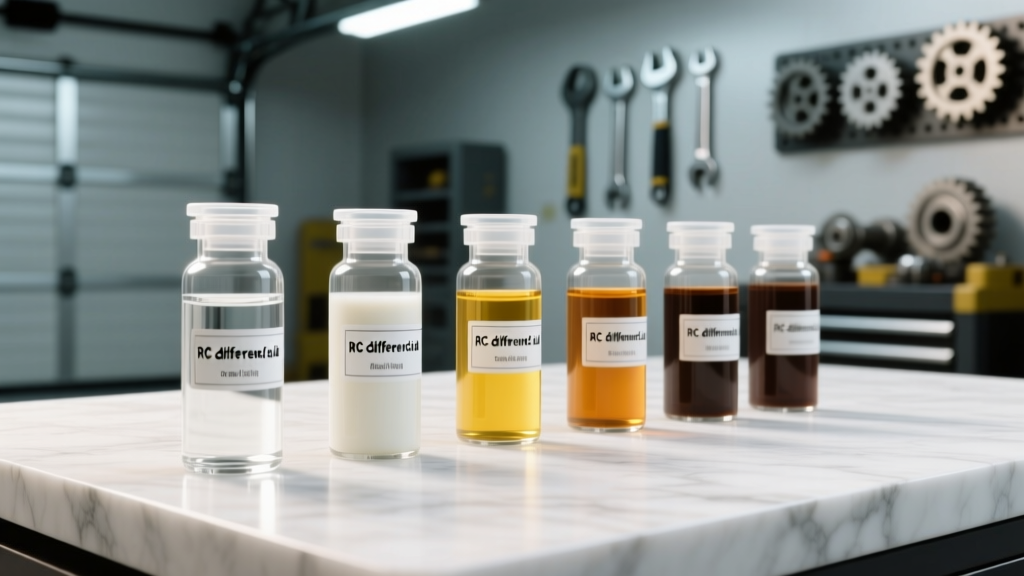
Rapid Diagnostic Matrix: Fluid Color and Condition
Before draining the axle, extract a 10ml sample via the fill plug using a fluid syringe. Compare your sample against this baseline diagnostic matrix.
| Fluid Appearance | Odor Profile | Underlying Mechanical Condition | Required Action |
|---|---|---|---|
| Translucent Amber / Honey | Mild sulfur / chemical | Optimal health; EP additives fully active. | Reinstall plug; monitor. |
| Dark Brown / Opaque | Strong sulfur / earthy | Normal thermal aging; additive depletion beginning. | Schedule drain and fill within 3,000 miles. |
| Milky / Chocolate Emulsion | Sour / Musty | Water intrusion; breached seal or submerged breather. | Immediate flush; inspect pinion and axle seals. |
| Jet Black with Glitter | Acrid / Burnt toast | Severe gear spalling; thrust washer disintegration. | Drop cover; magnetic inspection; rebuild likely. |
| Thin / Charred | Sharp / Acrid smoke | Thermal runaway; base oil shearing from overloading. | Flush; upgrade to higher viscosity synthetic. |
The Chemistry of Gear Oil Degradation
To understand why rc differential fluid changes color, you must understand its chemical composition. Modern 75W-90 and 75W-140 synthetic gear oils rely on Extreme Pressure (EP) additives—primarily sulfur-phosphorus compounds like Zinc Dialkyldithiophosphate (ZDDP). These additives form a sacrificial microscopic film on the hypoid gear teeth to prevent metal-on-metal contact during high-sliding-velocity events, such as the initial engagement of the ring and pinion.
Thermal Oxidation vs. Mechanical Shearing
When differential temperatures exceed 250°F (common when towing heavy trailers up 6% grades), the base oil undergoes thermal oxidation. This causes the fluid to transition from translucent amber to dark brown. Conversely, mechanical shearing occurs when the physical molecular chains of the viscosity index improvers are torn apart by the sheer force of the gear teeth meshing. Sheared fluid loses its film strength, leading to increased friction, higher operating temperatures, and ultimately, a burnt, acrid smell.
Decoding the Colors: Deep-Dive Analysis
1. The Milky Emulsion (Water Intrusion)
If your extracted fluid resembles a chocolate milkshake, water has entered the rear-case. This is the most common preventable cause of differential bearing failure. When a hot axle is submerged in cold water (e.g., crossing a river or driving through deep puddles), the rapid temperature drop creates a vacuum inside the axle housing. If the factory axle breather valve is clogged or located too low, it will suck water directly past the lip seals.
- Preventive Fix: Install a remote differential breather kit. Route the polyurethane tubing up to the engine bay or bed rail, terminating in a high-flow, water-resistant filter (such as the ARB 4x4 Accessories diff breath kit).
- Emulsion Damage: Water as low as 1% concentration in gear oil can reduce bearing fatigue life by up to 90% due to hydrogen-induced cracking on the roller bearings.
2. Metallic Glitter and Particulates
Not all glitter is created equal. When inspecting your drain plug or extracting a sample, note the type of metallic debris:
- Fine, Ferrous Paste: A small amount of dark, magnetic paste on the drain plug magnet is normal wear from the clutch packs in a Limited Slip Differential (LSD) or the break-in of new gears.
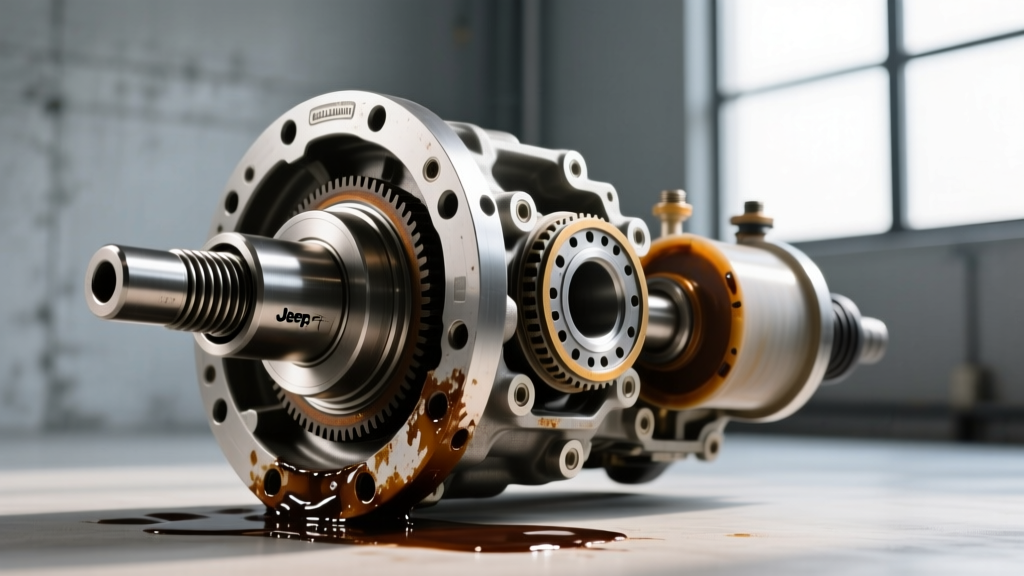
- Chunky, Metallic Flakes: If you see distinct, shiny flakes resembling silver leaf, your ring and pinion are spalling. This indicates improper backlash setting or severe overloading.
- Non-Magnetic (Brass/Bronze) Shavings: If your fluid contains non-magnetic golden flakes, you are witnessing the destruction of the differential's internal thrust washers or the pilot bearings. In a Torsen or helical limited-slip unit, this points to the degradation of the internal worm gear element washers.
3. Limited-Slip Friction Modifier Breakdown
For clutch-type LSDs (like the Ford 8.8 Trac-Lok or Dana Trac-Loc), the fluid requires a specific friction modifier (e.g., Motorcraft XL-3 or equivalent). As this modifier degrades over 30,000 miles, the fluid may still look relatively clean, but the clutch packs will begin to chatter during low-speed turns. If you experience chatter but the fluid color is normal, a simple drain, fill, and addition of 4 oz of friction modifier will often resolve the issue without a mechanical rebuild.
Preventive Maintenance: Extraction and Service Specs
Proper servicing requires adherence to exact torque specifications and fluid capacities. Overfilling a differential can cause the gear oil to foam and be pushed out past the pinion seal due to windage and churning.
| Axle Model | Fluid Capacity | Fill Plug Torque | Cover Bolt Torque / Sealant |
|---|---|---|---|
| Ford 8.8 (Super 8.8) | 2.5 - 3.0 Pints | 25 lb-ft (3/8" NPT) | N/A (Plug and play cover) |
| Dana 44 (JK/JL Wrangler) | 3.5 - 4.0 Pints | 25 lb-ft | 30-35 lb-ft (RTV or Lube Locker Gasket) |
| GM 9.5" (14-Bolt Semi-Float) | 4.5 Pints | 25 lb-ft | 35 lb-ft (Fel-Pro RDS 55024 Gasket) |
| Dana 60 (Heavy Duty) | 6.0 - 7.5 Pints | 30 lb-ft | 35-40 lb-ft (Ultra Black RTV) |
The Correct Sampling and Draining Procedure
- Warm the Axle: Drive the vehicle for 15 minutes. Warm fluid (approx. 140°F) flows more easily and keeps particulate matter suspended, ensuring your sample is representative of the entire sump.
- Extract via Fill Plug: Before removing the cover or drain plug, always remove the fill plug first. If the fill plug is seized or stripped, you do not want to be left with an empty differential and no way to refill it.
- Clean the Mating Surfaces: If dropping the cover on a Dana or GM axle, use a brass scraper or plastic gasket remover to clean the housing face. Never use steel scrapers on the axle housing, as gouges will create permanent leak paths for gear oil.
- Verify Level: The correct fluid level is exactly flush with the bottom of the fill hole threads. Do not overfill based on the "cover volume"; the fluid level must be dictated by the fill plug height to allow for thermal expansion.
Expert Sourcing and Further Reading
For exact torque specifications, breather routing diagrams, and limited-slip additive requirements, always consult the OEM engineering documentation or trusted drivetrain manufacturers. We recommend referencing the technical service bulletins available through Dana Spicer's official portal for axle-specific tear-down limits. For advanced synthetic fluid chemistry and thermal breakdown thresholds, the AMSOIL Technical Guides provide excellent whitepapers on EP additive longevity. Finally, for Ford-specific friction modifier part numbers and 8.8/9.75 axle capacities, the Ford Motorcraft Service Manuals remain the definitive authority.
By treating your rc differential fluid as a diagnostic window rather than just a consumable lubricant, you can add hundreds of thousands of miles to your axle's operational lifespan while avoiding catastrophic trail or highway failures.