The Unique Demands of an Off Road Locking Differential
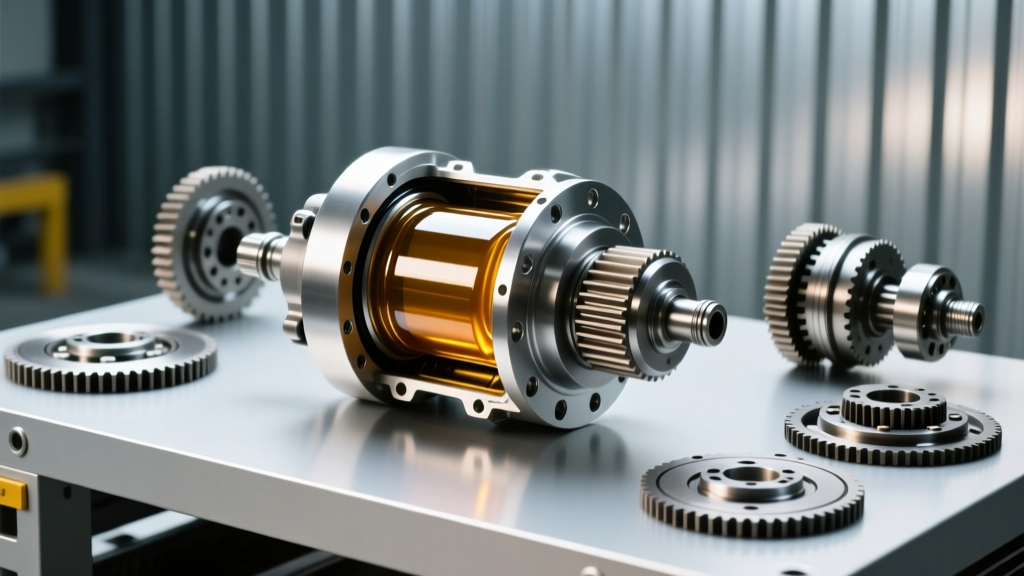
When navigating extreme terrain, your rig's drivetrain is subjected to forces that would shatter lesser components. For enthusiasts running an ARB Air Locker, Eaton E-Locker, Yukon Zip Locker, or a mechanical Detroit Locker, the differential is no longer just a torque-splitting device; it is a solid mechanical link. When an off road locking differential engages on uneven terrain, the instantaneous torque spike can exceed 8,000 lb-ft at the ring gear. This massive shock loading places extraordinary shear stress on your gear oil.
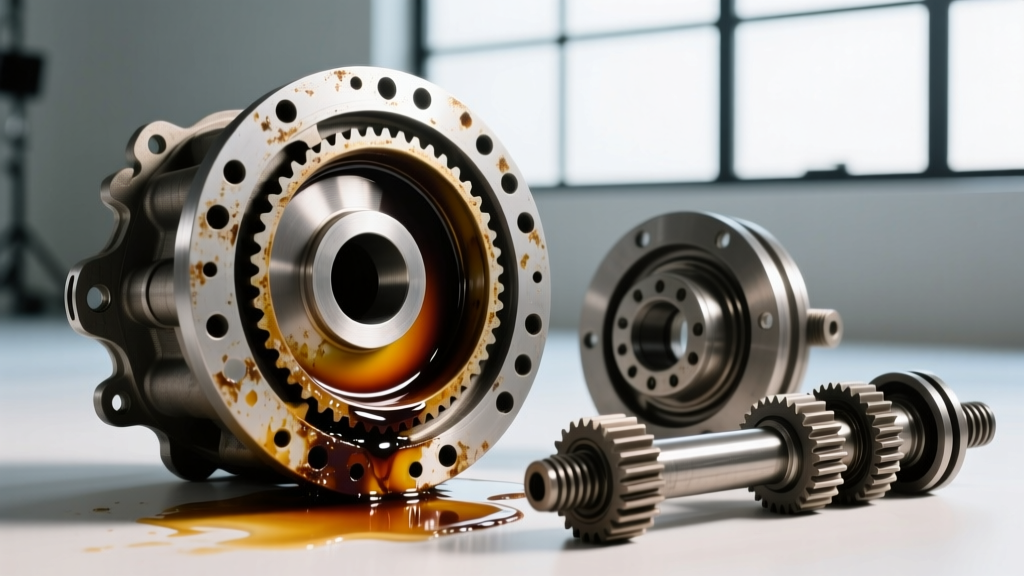
Standard mineral-based 80W-90 fluids simply cannot withstand the localized heat and shear forces generated when a locked axle forces both tires to turn at the same speed across boulders or deep ruts. The fluid film ruptures, leading to metal-on-metal contact, microwelding, and catastrophic pitting on the SAE 8620 steel ring and pinion gears. In this 2026 buyer's guide, we break down the exact differential fluid types and specifications required to keep your locking differententials alive under the harshest conditions.
Understanding Viscosity: 75W-90 vs. 75W-140 for Off-Road Abuse
The Society of Automotive Engineers (SAE) J306 standard defines gear oil viscosity. Choosing the right weight for your off road locking differential depends entirely on your tire size, gearing, and crawling speed.
When to use 75W-90 Synthetic
A high-quality synthetic 75W-90 is the gold standard for daily-driven rigs that see weekend trail use. Vehicles like the Jeep Wrangler Rubicon (factory Dana 44s with electronic lockers) or the Toyota Tacoma TRD Off-Road (Toyota 8-inch solid axle with an E-Locker) benefit from the lower parasitic drag of 75W-90. It provides excellent cold-weather flow for winter trail rides while maintaining a robust hydrodynamic film at operating temperatures up to 250°F (121°C).
When to step up to 75W-140 Synthetic
If your rig is a dedicated rock crawler or overland expedition vehicle running 37-inch (or larger) tires with deep numerical gears (e.g., 4.88 or 5.13 ratios), you must step up to a 75W-140. The larger tires multiply the leverage applied to the axle shafts and ring gear. A 75W-140 fluid offers a thicker protective boundary layer, preventing the fluid from being squeezed out from between the hypoid gear teeth during low-speed, high-torque crawling scenarios where axle temperatures can easily exceed 300°F (149°C).
The Friction Modifier Myth for Locking Differentials
One of the most common mistakes DIY mechanics make when servicing an axle is indiscriminately adding friction modifiers. Full locking differentials do NOT require friction modifiers.
Friction modifiers (like Ford XL-3 or GM 88900338) are specifically engineered for clutch-type Limited Slip Differentials (LSDs), such as the Trac-Loc or Auburn Gear cones, to prevent the clutches from chattering during tight turns. However, an off road locking differential operates via mechanical dogs, air pressure, or electromagnetic pins. There are no friction clutches to chatter. Worse, adding a friction modifier to a GL-5 gear oil can actually reduce the fluid's extreme pressure (EP) film strength, making it more susceptible to shear under the heavy shock loads of a locked axle.
2026 Comparison Chart: Top Synthetic Gear Oils for Lockers
We tested and reviewed the top synthetic gear oils on the market, focusing on shear stability, EP additive concentration, and real-world pricing for 2026. Below is our comparison matrix for fluids optimized for locking differentials.
| Brand & Product | Viscosity | API Rating | Part Number (Qt) | Est. Price | Best Application |
|---|---|---|---|---|---|
| AMSOIL Severe Gear | 75W-90 | GL-5 / MT-1 | SVGPK-EA | $21.50 | Daily drivers, moderate trails, factory E-Lockers |
| Red Line ShockProof | 75W-140 (Equivalent) | GL-5 | 50304 | $26.95 | Extreme rock crawling, heavy shock loads, ARB/Detroit |
| Lucas Oil Heavy Duty | 80W-140 | GL-5 | 10043 | $15.25 | Budget builds, high-heat desert racing |
| Royal Purple Max Gear | 75W-90 | GL-5 / MT-1 | 01501 | $18.99 | High-speed off-road, mixed highway/trail use |
Note: Red Line ShockProof contains a unique solid-dispersant polymer that acts like a microscopic shock absorber, making it a favorite among competitive rock crawlers running massive lockers, though it is not recommended for high-speed highway driving due to its thick pour point.
Crucial Break-In Procedures for New Ring & Pinion Gears
If you are installing a new off road locking differential alongside a fresh ring and pinion gear set, do not immediately fill the axle with premium synthetic gear oil. Synthetic oils are engineered to be incredibly slippery and resist wear. However, during the first 500 miles, your new SAE 8620 steel gears need to undergo a controlled wear process to mate the micro-surface imperfections of the hypoid cut.
Use a high-quality, non-synthetic mineral 85W-90 GL-5 oil for the break-in period. Drive the vehicle under normal loads for 15-20 miles, then allow the axle to cool completely. Repeat this heat-cycle process three times. After 500 miles, drain the mineral oil (which will be full of microscopic metallic assembly paste and break-in debris), flush the housing with fresh mineral oil, and then fill with your chosen synthetic fluid for the locker.
Axle Service: Drain, Fill, and Torque Specifications
Proper service intervals for an off road locking differential are much shorter than factory recommendations. While a stock open differential might claim a 100,000-mile fluid life, a locked axle subjected to water crossings, mud, and high articulation should be serviced every 15,000 to 30,000 miles, or immediately after any deep water submersion.
Common Off-Road Axle Torque Specs
Over-torquing differential cover bolts, especially on aftermarket aluminum covers or ARB locker housings, will strip the threads and cause massive leaks. Always use a calibrated inch-pound or low-range foot-pound torque wrench.
- Dana 44 (Jeep/ARB): Fill Plug 25-30 lb-ft | Cover Bolts 30-35 lb-ft | Capacity: ~2.0 - 2.5 Quarts
- Dana 60 (Heavy Duty): Fill Plug 25-30 lb-ft | Cover Bolts 35-40 lb-ft | Capacity: ~3.0 - 3.5 Quarts
- Ford 8.8 (Super 8.8): Fill Plug 15-30 lb-ft | Cover Bolts 28-38 lb-ft | Capacity: ~2.0 - 2.2 Quarts
- Toyota 8-Inch (Solid Axle): Fill Plug 36-50 lb-ft (Requires 24mm socket) | Capacity: ~1.8 - 2.2 Quarts
Pro-Tip: Always remove the fill plug before you remove the drain plug or drop the differential cover. If the fill plug is seized or stripped, you do not want to be left with an empty axle housing and no way to refill it in your garage.
Final Verdict: Protecting Your Investment
An off road locking differential is a significant financial investment, often costing between $800 and $1,200 per axle, not including installation and setup tools. Protecting that investment requires abandoning the 'one-size-fits-all' approach to gear oil. By selecting a high-shear synthetic fluid tailored to your specific tire size and crawling style, avoiding unnecessary friction modifiers, and adhering to strict torque specifications during service, you ensure your lockers will engage flawlessly on the trail for years to come.