Identifying the Source: Dana 44 Leak Diagnostics
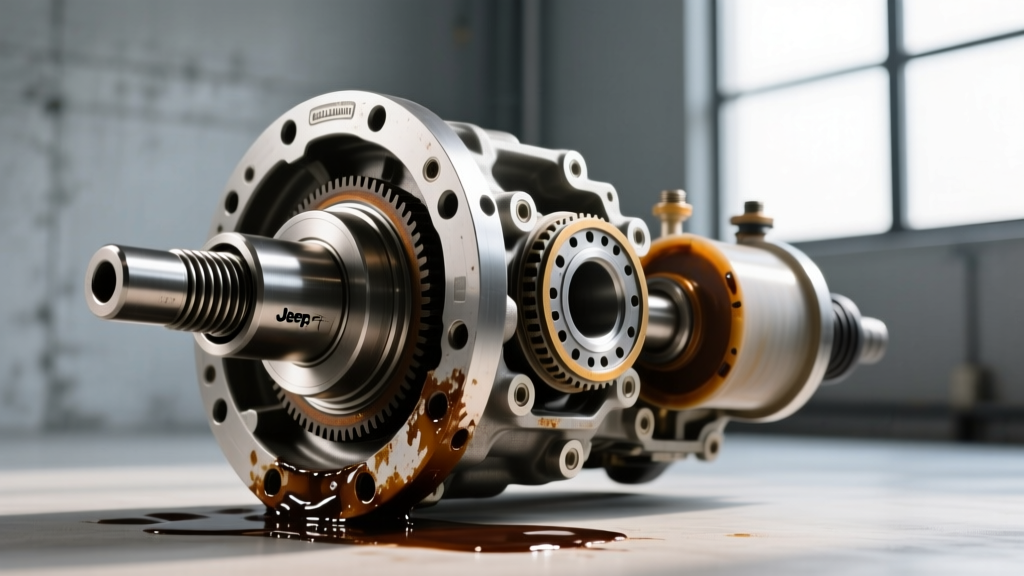
The Jeep Wrangler JK (2007-2018) is an off-road icon, but its Dana 44 front and rear axles are notorious for fluid weeping as they age and accumulate trail miles. When owners spot a thick, sulfurous puddle on their garage floor, the immediate panic often leads to a frantic search asking how much to replace differential assemblies entirely. However, in over 90% of cases, the hypoid gear set and carrier bearings are perfectly healthy, and the issue is isolated to a degraded elastomer seal costing less than $25.
Before throwing money at a full axle swap, proper diagnostics are mandatory. Gear oil (typically 75W-140 API GL-5 synthetic in JK Dana 44s) has a distinct, pungent odor and a high viscosity that clings to surfaces. To accurately map the leak, elevate the vehicle, remove the skid plates, and thoroughly degrease the axle housing, differential cover, and backing plates with aerosol brake cleaner. Once dry, run the engine and cycle the drivetrain, or take a short drive, then re-inspect with a UV flashlight if necessary.
The three primary failure points on a JK Dana 44 are:
- The Pinion Seal: Located behind the driveshaft yoke or flange. Leaks here often sling oil upward onto the exhaust or fuel tank due to rotational force.
- The Axle Shaft Seals: Located at the outboard ends of the axle tubes. Leaks here will contaminate the rear brake rotors and parking brake shoes, creating a severe safety hazard.
- The Differential Cover: Usually caused by degraded RTV silicone or a torn rubber gasket, often exacerbated by over-tightened cover bolts warping the stamped steel or cast aluminum cover.
The Financial Reality: How Much to Replace Differential Components?
Understanding the cost delta between a targeted seal repair and a full differential replacement is critical for your repair budget. In 2026, supply chain stabilization has brought remanufactured axle pricing down slightly from pandemic peaks, but labor rates have continued to climb. Below is a realistic cost matrix for Jeep JK Dana 44 rear axle repairs at an independent 4x4 specialty shop.
| Repair Procedure | OEM/Aftermarket Parts Cost | Average Shop Labor | Total Estimated Cost (2026) |
|---|---|---|---|
| Pinion Seal Replacement | $15 - $45 (Seal + Crush Sleeve) | $180 - $280 | $195 - $325 |
| Axle Shaft Seal (Per Side) | $12 - $35 (Seal + Bearing) | $150 - $220 | $162 - $255 |
| Differential Cover Reseal | $15 - $30 (RTV / Lube Locker) | $90 - $130 | $105 - $160 |
| Full Remanufactured Dana 44 | $1,800 - $2,600 (Crate Axle) | $450 - $650 | $2,250 - $3,250 |
Note: Prices assume standard 3.73 or 4.10 gear ratios. Upgrading to 4.88 or 5.13 ratios during a full swap will add $400-$600 in ring and pinion setup costs.
Rear Pinion Seal Replacement: A Model-Specific Guide
The pinion seal is the most frequent offender on the JK Dana 44. It endures constant high-speed rotation, extreme heat from the pinion bearing, and exposure to road debris. If you have confirmed a pinion leak, the repair requires precision. A botched pinion seal job will destroy your ring and pinion gear set within 5,000 miles.
Required Tooling and OEM Part Numbers
Do not attempt this repair without an inch-pound torque wrench (not a standard foot-pound clicker). You will also need a yoke holder tool, a 1-1/16" or 1-5/16" deep socket for the pinion nut, and a dial indicator. For parts, the Spicer National 2043 is the OEM-equivalent pinion seal for the Dana 44. Pair this with a genuine Spicer pinion nut and, highly recommended, a solid pinion spacer kit (such as the Yukon Gear YSPSS-001) to eliminate the factory crush sleeve.
Crush Sleeve vs. Solid Spacer Preload Procedures
The factory Dana 44 uses a crush sleeve to set pinion bearing preload. When you remove the old pinion nut to access the seal, the crush sleeve is compromised. If you simply install a new seal and tighten a new nut, you risk under-preloading (leading to pinion gear deflection and ring gear tooth chipping) or over-preloading (causing immediate bearing failure due to excessive friction and heat).
The Crush Sleeve Danger: To properly set preload with a new crush sleeve, you must torque the pinion nut while measuring rotating torque. The target for used bearings is 14-19 in-lbs of rotating drag. It can take upwards of 250 ft-lbs of breakaway torque to crush the sleeve to that specification. If you overshoot by even 2 in-lbs, the sleeve must be replaced, requiring you to pull the pinion out of the housing—a massive escalation in labor.
The Solid Spacer Upgrade: By pressing in a solid spacer with shims, you set the preload once on a press. When reinstalling the yoke and new seal, you simply torque the pinion nut to a static 160-200 ft-lbs without worrying about crushing anything. This is the definitive best practice for any JK Dana 44 undergoing seal service, especially if the vehicle is fitted with 35-inch tires or larger.
Axle Shaft Seal Failures: Outer Retainer Plate Service
Unlike the smaller, weaker Dana 35 rear axle which utilizes internal C-clips to retain the axle shafts, the JK Dana 44 uses an external bolt-on retainer plate design. This makes seal replacement significantly more straightforward, though it still requires specialized pressing equipment.
To replace an outboard axle shaft seal, the wheel, brake caliper, and rotor must be removed. You will then unbolt the four nuts (typically 9/16" or 1/2") securing the bearing retainer plate to the axle tube flange. Using a slide hammer with an axle puller attachment, extract the shaft assembly. The wheel bearing and seal are pressed onto the shaft outside the housing.
Using a hydraulic press, carefully press off the old retainer ring, bearing, and seal. Inspect the axle shaft surface where the seal rides; if a deep wear groove has been cut into the steel by years of friction, the new seal will leak immediately. In this scenario, you must use a speedi-sleeve to restore the shaft diameter or replace the axle shaft entirely. Press the new Timken bearing and National seal into place, ensuring the seal lip faces inward to retain the 75W-140 gear oil. Torque the retainer plate nuts to 60 ft-lbs in a crisscross pattern to ensure the backing plate is seated evenly against the axle tube flange.
Catastrophic Failure: When to Replace the Entire Differential
While asking how much to replace differential seals is the most common query, there are scenarios where the Dana 44 housing or internal carrier is beyond salvage. You should abandon seal repairs and budget for a full crate axle replacement if you encounter any of the following:
- Pinion Bore Walk: If the outer pinion bearing has spun in the differential housing, elongating the bore. No amount of shimming will maintain gear mesh, and the housing is scrap.
- Bent Axle Tubes: Common after high-speed rock strikes or jumping. A bent tube will bind the axle shaft, causing chronic inner seal leaks and rapid wheel bearing failure. Tube straightening is rarely cost-effective compared to replacement.
- Carrier Bearing Cap Fretting: If the differential cover is removed and you observe metal shavings shaped like tiny needles, or if the carrier bearing caps show movement marks, the main caps have walked. This destroys ring gear backlash and requires a full teardown and line-boring, which often exceeds the cost of a remanufactured unit.
Expert Insight: When sourcing a replacement Dana 44 for a JK, avoid junkyard pulls unless you have the tools to verify ring gear backlash (0.006" - 0.010") and rotating preload. Opting for a remanufactured unit from reputable suppliers like Quadratec or direct from Yukon Gear and Axle ensures the hypoid gears are lapped correctly and the housings are inspected for micro-fractures before assembly.
Fluid Specifications and Break-In Procedures
Whether you have replaced a $20 pinion seal or installed a $2,500 crate axle, the final step is proper fluid fill and break-in. The JK Dana 44 rear differential requires approximately 2.0 to 2.2 quarts of fluid. While the factory FSM calls for 75W-140 Synthetic API GL-5, many off-road specialists in 2026 recommend high-zinc, full-synthetic formulations like Amsoil Severe Gear 75W-140 to combat the extreme shearing forces generated by heavy rig loads and low-range crawling.
If a new ring and pinion was installed during a full swap, the break-in procedure is non-negotiable. Drive the vehicle for 15-20 miles at speeds under 45 MPH, then allow the axle to cool completely. Repeat this heat-cycle process 4 to 5 times before subjecting the differential to highway speeds or towing loads. This allows the gear teeth to polish mate perfectly without exceeding the thermal limits of the new bearings and gear oil. Finally, drain the break-in fluid at 500 miles to remove the initial metallic wear paste, refill with fresh synthetic, and torque the fill plug to 25 ft-lbs.