The Factory Reality: DTV AWD vs. Mechanical Lockers
As the compact SUV off-road segment continues to evolve through the 2026 model year, a common question arises among trail enthusiasts and overlanders: does the Toyota RAV4 TRD Off-Road feature a locking rear differential? The short answer is no, not in the traditional mechanical sense. Unlike the body-on-frame Toyota Tacoma or 4Runner, which utilize an electronic locking rear differential (e-locker) that physically locks the left and right axle shafts together via a mechanical dog clutch, the RAV4 TRD Off-Road relies on a highly sophisticated system called Dynamic Torque Vectoring (DTV) All-Wheel Drive.
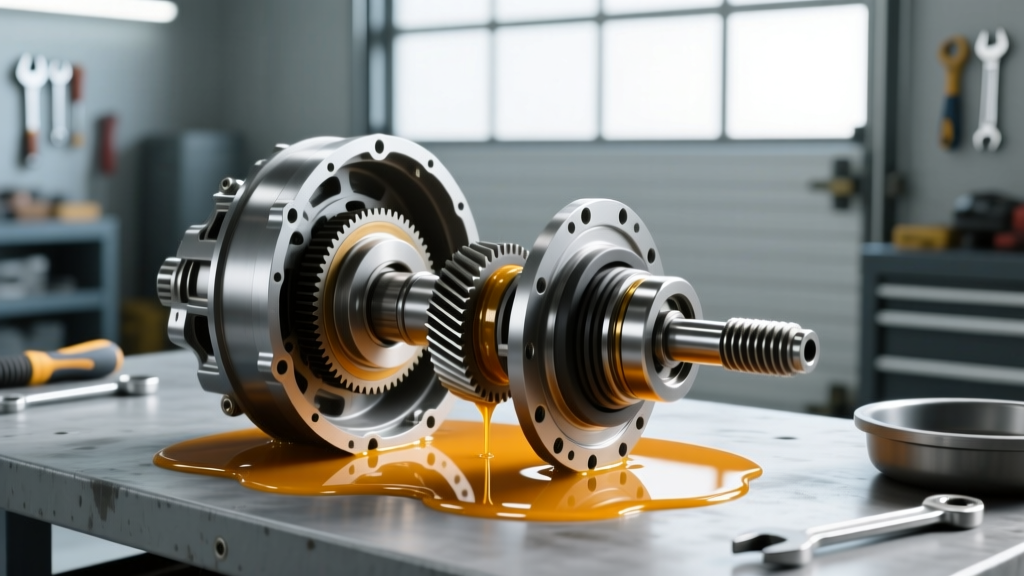
According to Toyota's official powertrain documentation, the DTV AWD system uses an electromagnetically controlled twin-clutch pack on the rear axle. Instead of a mechanical spool or locker, the DTV system can independently vary torque distribution between the left and right rear wheels. It can send up to 50% of the engine's total torque to the rear axle, and then direct 100% of that rear torque to a single wheel with traction. While this mimics the effect of a locking differential by pulling the vehicle out of low-traction scenarios, it relies on clutch pack friction and brake-based ATRAC (Active Torque Response Control) rather than a solid mechanical link.
Locking Differential Types and Selection for Compact SUVs
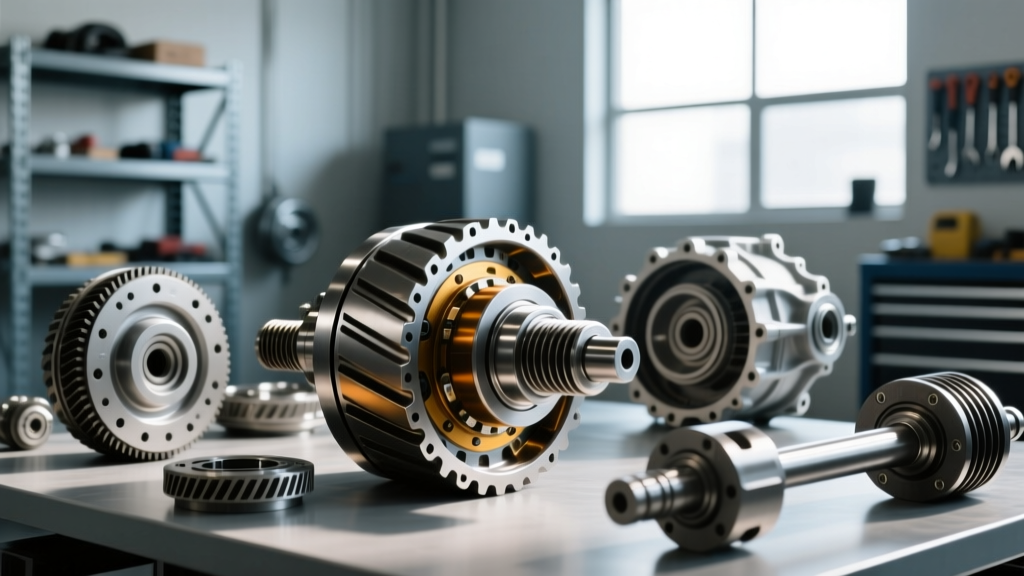
For hardcore off-roaders who find the limits of the DTV clutch packs on severe rock-crawling or deep mud trails, understanding locking differential types and selection is critical. If you are considering a custom solid-axle swap or modifying a unibody platform for dedicated trail use, here is how the primary locker categories break down.
1. Selectable Lockers (Air & Electronic)
Selectable lockers, such as the ARB Air Locker or the Eaton E-Locker, operate as an open differential when disengaged, providing smooth, predictable handling on pavement. When the driver flips a switch, compressed air or an electromagnetic actuator engages a locking collar, physically binding the side gears to the carrier.
- Best For: Vehicles that serve as daily drivers but require maximum traction on demand.
- Drawback: Requires installation of air compressors, solenoids, or complex wiring harnesses.
2. Automatic Lockers (Detroit, Aussie, Lokka)
Automatic lockers use internal ratcheting mechanisms or spring-loaded dog clutches to lock the axles under load, but allow them to unlock and differentiate when cornering.
- Best For: Budget builds, dedicated mud trucks, and rock crawlers where pavement manners are a secondary concern.
- Drawback: Can cause harsh "clunking" during turns and unpredictable handling on icy or wet pavement.
3. Spools and Welded Diffs
A spool replaces the differential carrier entirely, locking both axles permanently.
- Best For: Drag racing, dedicated competition crawlers, and sand dune runners.
- Drawback: Absolutely unsuitable for street use; causes severe tire chirping, driveline binding, and dangerous understeer on pavement.
| System Type | Traction Mechanism | Pavement Manners | Trail Capability | Maintenance Requirement |
|---|---|---|---|---|
| Toyota DTV AWD (Factory) | Twin Electromagnetic Clutch Packs | Excellent | Good (Limited by clutch slip) | Fluid changes every 30k miles |
| Electronic Locker (OEM) | Dog Clutch / Solenoid | Excellent (Open when off) | Excellent | Standard gear oil service |
| ARB Air Locker | Compressed Air Collar | Excellent (Open when off) | Excellent | Air line & seal inspections |
| Detroit Locker | Internal Ratcheting Gears | Poor (Harsh cornering) | Excellent | Standard gear oil service |
The Upgrade Dilemma: Swapping the RAV4 DTV Rear End
Because the RAV4 TRD Off-Road's rear differential is an integrated DTV assembly, you cannot simply pull the carrier and drop in an ARB Air Locker or a Detroit Locker. The rear axle shafts, clutch pack housings, and ECU mapping are entirely unique to the DTV system. Attempting to mechanically lock a DTV rear end without custom fabrication and standalone ECU tuning will result in catastrophic driveline binding and immediate AWD system failure.
For the vast majority of RAV4 TRD owners, the most effective "upgrade" path is not a mechanical locker swap, but rather optimizing the factory DTV system through aggressive tire selection (such as 3/4-ton rated All-Terrain tires), strategic brake-throttle modulation to engage the ATRAC system, and meticulous differential fluid maintenance to prevent clutch pack slip under heavy thermal loads.
Differential Fluid Selection: Maximizing Traction and Clutch Life
Since a mechanical locker swap is largely impractical for the unibody RAV4, treating your differential fluid as a vital traction component is paramount. The DTV clutch packs generate immense heat when the vehicle is stuck and the system is actively vectoring torque. If the gear oil loses its shear stability or friction-modifying properties, the clutch packs will slip, resulting in a total loss of rear-wheel drive.
Toyota DTV Gear Oil Specifications
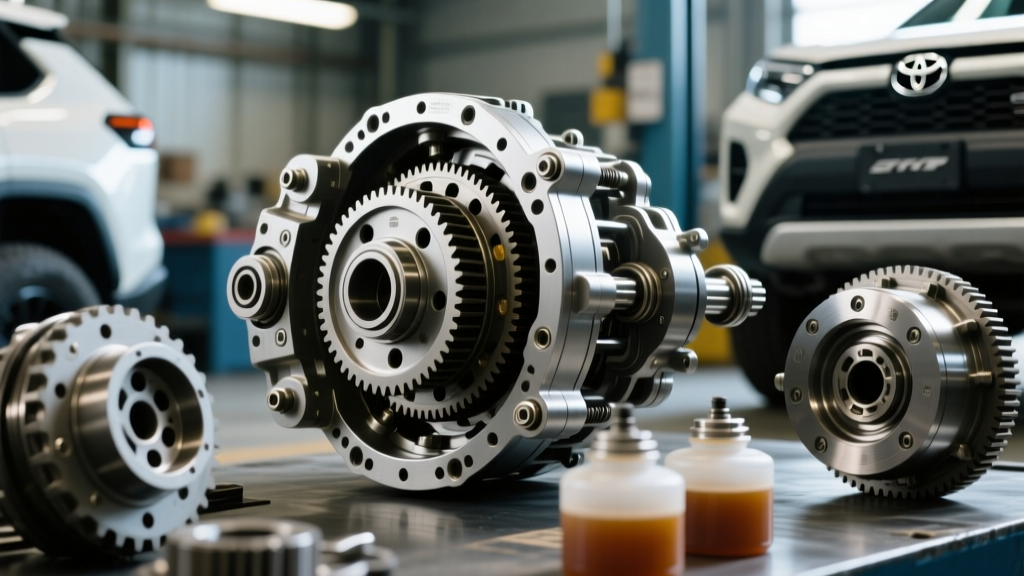
Unlike traditional limited-slip differentials (LSDs) that require generic friction modifiers, the Toyota DTV rear differential requires a specific hypoid gear oil formulated for the unique friction coefficients of Toyota's electromagnetic clutch materials. Using standard 75W-90 GL-5 with aftermarket LSD additives can cause the DTV clutches to chatter, engage erratically, or fail to lock up entirely.
- OEM Fluid: Toyota Genuine Hypoid Gear Oil SX GL-5 75W-85
- OEM Part Number: 08885-81016 (1 Liter Bottle)
- Alternative (If OEM is unavailable): High-quality synthetic 75W-85 GL-5 without aggressive limited-slip friction modifiers. Red Line Oil's Lightweight GearOil is a preferred choice among enthusiasts for its high thermal stability and lack of intrusive slip modifiers.
Service Intervals and Capacities
For severe off-road use—defined as frequent water crossings, deep mud, or sustained low-speed rock crawling where the DTV clutches are slipping—the rear differential fluid should be changed every 15,000 to 20,000 miles. For standard highway and light trail use, follow the manufacturer's 30,000-mile interval.
| Specification | Measurement / Value |
|---|---|
| Fluid Capacity | 0.45 Liters (15.2 oz / 0.95 Pints) |
| Viscosity Rating | 75W-85 (GL-5) |
| Fill Plug Torque | 29 lb-ft (39 Nm) |
| Drain Plug Torque | 29 lb-ft (39 Nm) |
| Crush Washer Part # | 90430-18008 (18mm Aluminum) |
Expert Technician Tip: Always remove the FILL plug before removing the DRAIN plug. If your fill plug is seized or stripped, you do not want to drain 0.45L of gear oil only to find yourself unable to refill the DTV rear end, leaving your vehicle stranded on the lift or the trail. Use a high-quality 10mm hex socket, as the soft metal of Japanese drain plugs is prone to rounding out if worn Allen keys are used.
Diagnosing DTV Clutch Slip and Differential Noise
How do you know if your DTV system is suffering from degraded fluid or clutch wear? If you are climbing a steep, loose incline and the vehicle's Multi-Terrain Select is set to "Mud & Sand" or "Rock & Dirt," the DTV system should aggressively lock the rear axle. If you hear a high-pitched whining or grinding noise from the rear, accompanied by a flashing AWD warning light on the dash, the clutch packs are likely slipping due to sheared fluid or thermal overload. Furthermore, a persistent "whirring" noise that changes pitch with vehicle speed (but not during coast vs. load) often points to pinion bearing wear, while a "clunk" on deceleration suggests excessive backlash in the ring and pinion gears. In the event of water contamination—which turns the gear oil into a milky, chocolate-milk emulsion—an immediate drain and fill is required to save the electromagnetic actuators from corrosion.
Final Verdict: Working With What You Have
While the Toyota RAV4 TRD Off-Road does not feature a traditional mechanical locking rear differential, its DTV AWD system is a marvel of modern traction control engineering. By understanding the limitations of clutch-pack-based vectoring, selecting the correct 75W-85 GL-5 hypoid fluid, and adhering to strict torque specs during maintenance, you can push the RAV4 far beyond the typical limits of a compact crossover. For those demanding absolute, unbreakable mechanical lockers, the path forward involves trading the unibody RAV4 for a body-on-frame Tacoma or 4Runner, where traditional differential types and selection remain the undisputed kings of the trail.