Bridging the Gap: From Search Query to Drivetrain Mastery
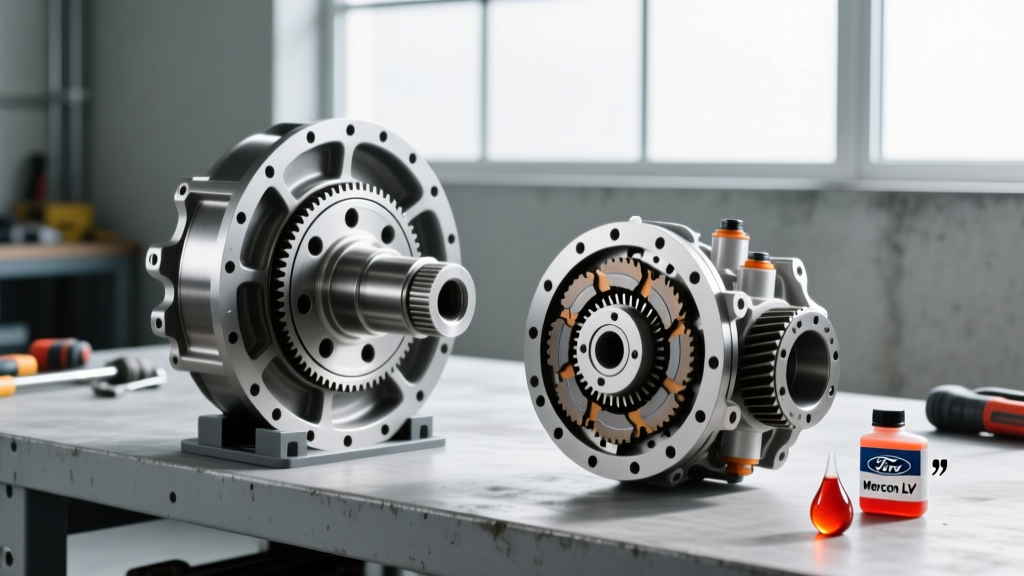
Many DIY mechanics and off-road enthusiasts begin their drivetrain journey by typing a very specific phrase into search engines: 'changing the rear differential on my 2023 d4 ranger'. Whether 'd4' refers to a regional 4x4 trim designation, a typo for 4WD, or a specific aftermarket locker model, the underlying mechanical reality remains the same. The 2023 Ford Ranger (built on the robust T6.2 and next-gen T7 global platforms) utilizes a highly capable rear axle—often a Dana M210/M220 or a heavy-duty Ford 10.5-inch ring gear assembly. When you are swapping out the entire rear differential or rebuilding the existing housing, the absolute crux of the job is the ring and pinion gear setup.
As we navigate the automotive landscape in 2026, the integration of advanced driver-assistance systems (ADAS) and complex torque-vectoring has made modern trucks more sophisticated than ever. However, the fundamental physics of hypoid gear meshing remain unchanged. This beginner-friendly explainer will demystify the ring and pinion setup process, providing the exact measurements, torque specifications, and fluid requirements you need to ensure your Ranger's rear axle operates quietly and reliably for thousands of miles.
Understanding the Hypoid Gear Architecture
Before turning a single wrench, you must understand what you are working with. The rear differential in your 2023 Ranger uses a hypoid gear set. Unlike standard spur gears, a hypoid pinion gear intersects the ring gear below its centerline. This design allows for a lower driveshaft tunnel (improving cabin space) and increases the surface area of tooth contact, resulting in massive torque-handling capabilities.
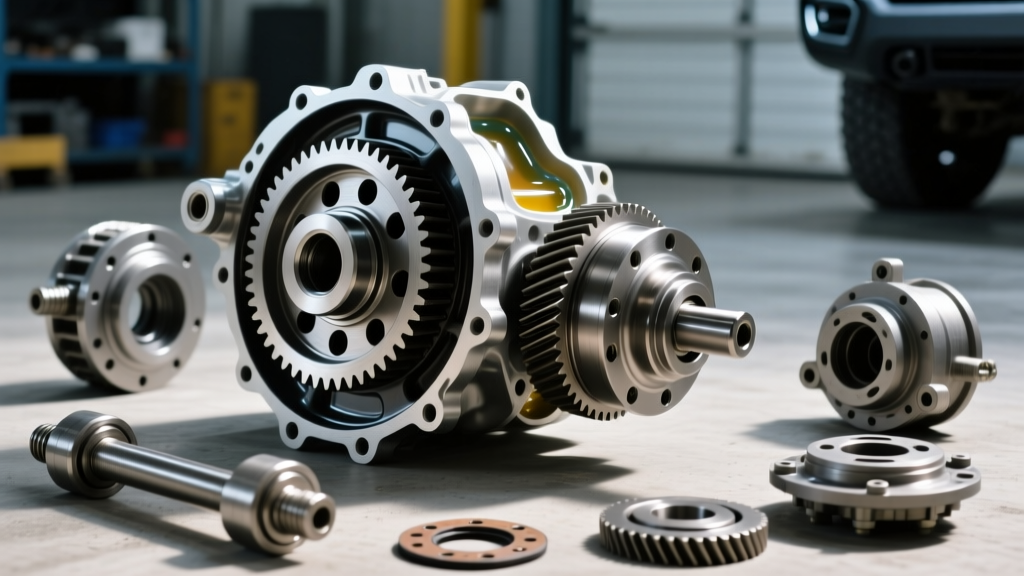
The Core Components
- Ring Gear: The large, crown-like gear bolted to the differential carrier. It receives rotational force and multiplies torque.
- Pinion Gear: The smaller, elongated gear connected to the driveshaft yoke. It drives the ring gear.
- Crush Sleeve vs. Solid Spacer: Located between the inner and outer pinion bearings, this component dictates pinion bearing preload. Modern factory axles typically use a one-time-use crush sleeve.
- Carrier Shims: Precision-machined steel shims that adjust the lateral position of the ring gear to achieve proper backlash.
The Essential Tool Arsenal
You cannot eyeball a ring and pinion setup. Attempting to guess measurements will result in catastrophic gear failure, often within the first ten miles. According to drivetrain experts at Summit Racing, having the right precision measuring tools is non-negotiable.
- Dial Indicator with Magnetic Base: Must read in 0.0001-inch (ten-thousandths) increments to measure backlash accurately.
- Inch-Pound Beam Torque Wrench: Crucial for measuring pinion bearing rotating preload. Click-style torque wrenches are not sensitive enough for this step.
- Gear Marking Compound: Yellow paste for checking used gears; white or specialized compound for new gear sets.
- Bearing Puller and Shop Press: Required to remove and install the inner pinion bearing without damaging the race.
- Heavy-Duty Torque Wrench: Capable of reading up to 300 lb-ft for the pinion nut and ring gear bolts.
Phase 1: Establishing Pinion Depth
Pinion depth refers to how far the pinion gear protrudes into the carrier bore relative to the ring gear's centerline. This is adjusted using shims placed behind the inner pinion bearing cup or on the pinion shaft itself.
Look closely at the face of your new pinion gear. You will see a series of numbers and symbols. You are looking for a number preceded by a plus (+) or minus (-) sign, such as +2 or -1. This indicates the variance in thousandths of an inch from the nominal factory block depth. If the nominal depth is 3.250 inches, and your gear is stamped +2, your target depth is 3.252 inches. Using a specialized pinion depth micrometer tool, measure and adjust your shims until this exact tolerance is met before pressing the bearing on permanently.
Phase 2: Setting Pinion Bearing Preload
Once the pinion depth is set and the pinion is installed into the housing, you must set the bearing preload. Preload is the amount of rolling resistance the bearings exhibit when the pinion is spun without the ring gear attached.
The Crush Sleeve Dilemma
Most factory 2023 Ranger axles use a crush sleeve. As you tighten the massive pinion nut, the sleeve compresses, squeezing the inner and outer bearings together. Warning: If you overtighten the nut and exceed the target preload, the sleeve is ruined. You cannot loosen the nut to fix it; you must install a brand-new crush sleeve and start over.
Using your inch-pound beam torque wrench wrapped around the pinion yoke, measure the force required to keep the pinion spinning. For new bearings, the target rotating torque is typically between 20 and 30 inch-pounds. If you are reusing original bearings, the spec drops to roughly 10 to 15 inch-pounds.
Phase 3: Ring Gear Mounting and Backlash
Backlash is the microscopic amount of rotational 'slop' or clearance between the mating teeth of the ring and pinion gears. Without backlash, the gears will bind, overheat, and shatter as the metal expands under load.
Mount the ring gear to the carrier using new, high-strength ring gear bolts. Apply a medium-strength threadlocker (like Loctite 243) to the threads. Once the carrier is back in the housing, mount your dial indicator so the plunger rests perpendicular to the face of a ring gear tooth. Hold the pinion yoke completely stationary and rock the ring gear back and forth. The total movement indicated on the dial is your backlash.
2023 Ford Ranger Rear Axle Specifications Chart
The following table outlines the baseline specifications for the heavy-duty rear axles commonly found in the 2023 Ranger 4x4 lineup. Always verify with your specific axle tag code.
| Parameter | Specification / Target |
|---|---|
| Ring Gear Bolt Torque | 85 - 110 lb-ft (with threadlocker) |
| Pinion Nut Torque | 250 - 320 lb-ft (to achieve preload) |
| Pinion Bearing Preload (New) | 20 - 30 inch-pounds (rotating torque) |
| Target Backlash | 0.006' - 0.010' (0.15mm - 0.25mm) |
| Differential Fluid Capacity | 2.8 - 3.2 Quarts (approx. 2.6 - 3.0 Liters) |
| Recommended Fluid Spec | 75W-140 Full Synthetic Gear Oil |
Decoding the Gear Pattern
Torque specs and backlash numbers only tell half the story. The ultimate judge of a successful ring and pinion setup is the gear contact pattern. By painting three or four teeth on the ring gear with marking compound and rotating the gears under moderate resistance, you can 'read' how the teeth are mating.
- Ideal Pattern: The pattern should be centered vertically on the tooth face and slightly biased toward the toe (the inner edge of the ring gear) under drive load. It should be uniform and well-defined.
- Too Deep (Pinion too close to ring): The pattern shifts heavily toward the heel (outer edge). Fix: Decrease pinion depth shim thickness.
- Too Shallow (Pinion too far from ring): The pattern shifts toward the toe and becomes thin or runs off the edge. Fix: Increase pinion depth shim thickness.
- Backlash Too Tight: The pattern runs high on the top land of the tooth. Fix: Move ring gear away from pinion via carrier shims.
For a comprehensive visual guide on hypoid gear patterns, refer to the engineering documentation provided by Dana Incorporated, the OEM manufacturer for many of Ford's heavy-duty axle assemblies.
The Crucial Role of Differential Fluid and Break-In
Because this setup process generates immense friction during the initial miles of operation, the selection of your differential fluid is a critical mechanical decision, not just a maintenance afterthought. The break-in period for new ring and pinion gears is the most vulnerable time in the axle's lifespan.
As the gears mate, microscopic high spots on the machined steel surfaces are worn away. This process generates significant heat—often pushing differential temperatures past 200°F (93°C) during the first 500 miles. If the fluid breaks down under this thermal load, the gears will score and pit.
Fluid Selection for the 2023 Ranger
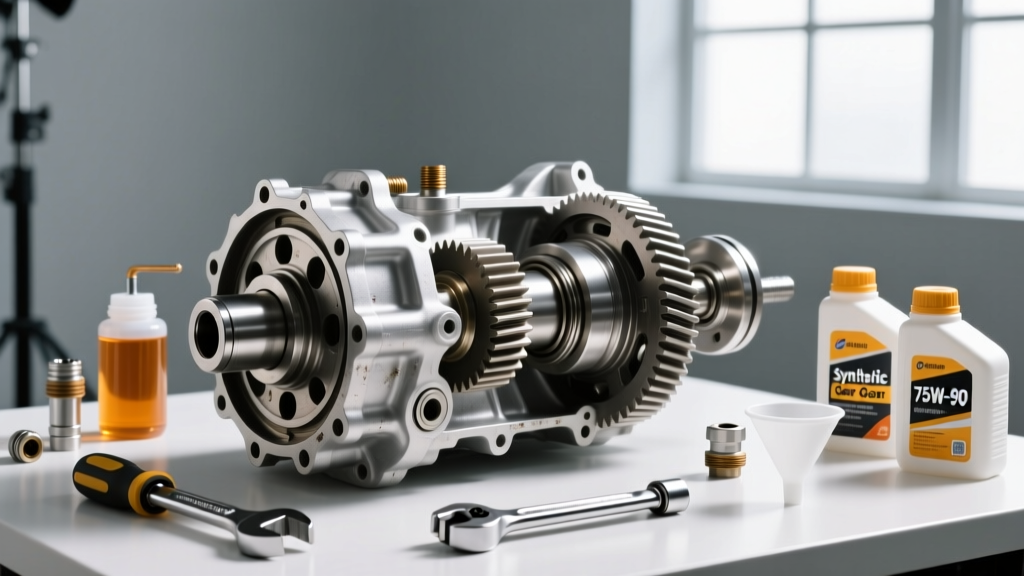
For a modern 4x4 Ranger subjected to towing or off-road use, a 75W-140 Full Synthetic Gear Oil is mandatory. Synths like Amsoil Severe Gear or Motorcraft Premium Synthetic maintain their viscosity index under extreme break-in heat. Furthermore, if your 2023 Ranger is equipped with an electronic locking rear differential (e-Locker) or a mechanical Limited Slip Differential (LSD), you must add the manufacturer-specified friction modifier (e.g., Motorcraft XL-3). Failing to do so will result in severe chattering, binding, and premature wear of the clutch packs during low-speed cornering.
The 500-Mile Break-In Protocol
Pro-Tip: Do not hook up a heavy trailer and head cross-country immediately after a gear swap. Drive the truck normally for the first 15 miles to allow the fluid to reach operating temperature, then let the axle cool completely. Repeat this heat-cycle process three times. Avoid sustained highway speeds over 65 MPH and avoid heavy towing for the first 500 miles. After 500 miles, drain the break-in fluid (which will be full of fine, metallic glitter from the gear mating process), clean the magnetic fill plug, and refill with fresh synthetic 75W-140.
Final Thoughts on Drivetrain Precision
Tackling the rear differential on a modern truck is a rite of passage for any serious DIY mechanic. While the phrase 'changing the rear differential on my 2023 d4 ranger' might start as a daunting search query, breaking the job down into measurable, logical steps transforms it into an achievable project. By respecting the tolerances of pinion depth, meticulously setting bearing preload, verifying backlash, and adhering to a strict fluid break-in protocol, you will build a rear axle that is whisper-quiet, incredibly durable, and ready for whatever terrain you throw at it.