The Thermal Bottleneck in the 2017 Ram 1500 Drivetrain
When evaluating the drivetrain longevity of the fourth-generation Ram 1500, equipped with the legendary ZF 8HP70 eight-speed automatic transmission, we see a masterclass in torque management. However, while the ZF 8HP70 efficiently routes up to 516 lb-ft of torque (in EcoDiesel applications) to the rear axle, the differential itself becomes a massive thermal bottleneck. Whether your truck is fitted with the Chrysler 8.25-inch or the heavy-duty AAM 9.25-inch rear axle, the hypoid ring and pinion gear set generates immense friction. Under heavy towing or off-road crawling, this friction rapidly elevates the temperature of your 2017 Ram 1500 rear differential fluid. Once gear oil surpasses 250°F (121°C), conventional and lower-tier synthetic lubricants begin to experience thermal shearing, leading to accelerated wear on the spider gears, bearings, and ring gear teeth.
OEM Axle Housing Limitations vs. Thermal Dynamics
The factory differential covers on the 2017 Ram 1500 are designed primarily for cost-efficiency and basic splash lubrication. The stamped steel covers found on the Chrysler 8.25-inch axles offer virtually zero passive cooling capabilities. Even the cast aluminum covers used on some AAM 9.25-inch configurations lack the external surface area required to dissipate heat effectively into the ambient airstream.
Furthermore, the internal geometry of the OEM cover creates dead zones where fluid can stagnate. When the fluid degrades, its film strength drops, allowing metal-on-metal contact between the pinion bearing and the race. Upgrading the differential cover is not merely an aesthetic modification; it is a critical thermodynamic intervention required to preserve the viscosity and extreme-pressure (EP) additive packages within your 2017 Ram 1500 rear differential fluid.
Aftermarket Cooling Cover Engineering
To combat thermal breakdown, aftermarket manufacturers have engineered differential covers that leverage advanced metallurgy and fluid dynamics. The two primary mechanisms for heat rejection are external cooling fins and internal baffle systems.
External Finned Aluminum
High-quality aftermarket covers are typically CNC-machined from 6061-T6 aircraft-grade aluminum. This alloy boasts a thermal conductivity rate approximately 1,500 times greater than the stamped steel of the OEM 8.25-inch cover. Deep external fins increase the surface area exposed to crosswinds and underbody airflow, acting as a passive heat sink.
Internal Baffles and Fluid Sumps
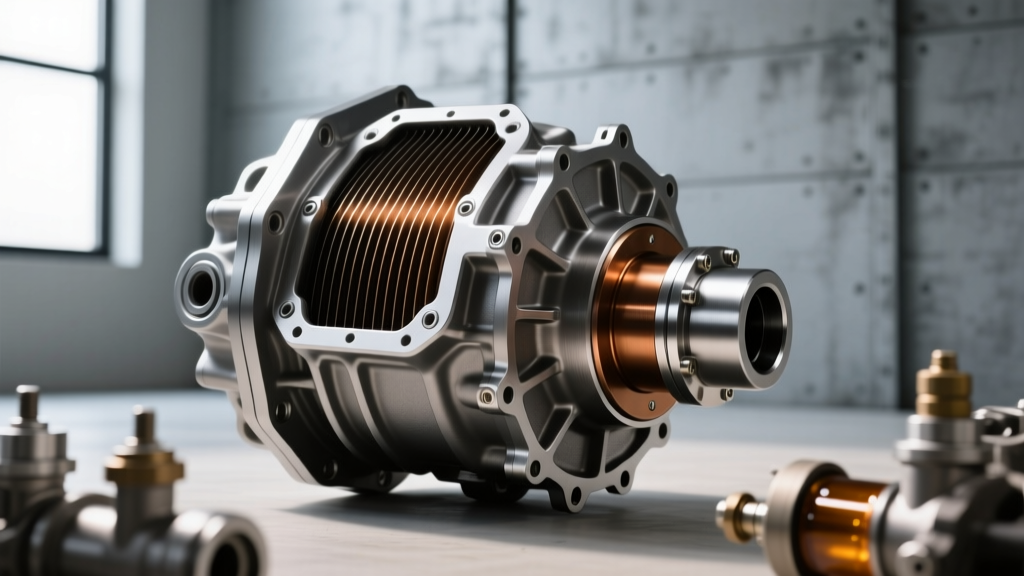
Premium covers, such as those from Mag-Hy-Tec, incorporate internal fins that extend directly into the fluid sump. As the ring gear rotates, it splashes gear oil against these internal baffles, transferring heat from the fluid directly into the aluminum housing. Additionally, these covers increase the total fluid capacity by 40% to 70%, which inherently increases the thermal mass of the system, allowing the axle to absorb more BTUs before reaching critical temperatures.
Hardware Specs: Torque, RTV, and Fasteners
Installing an upgraded cooling cover requires strict adherence to torque specifications to prevent warping the mating surface or stripping the axle housing threads. The AAM 9.25-inch axle utilizes M8x1.25 cover bolts, which must be torqued to exactly 25-30 lb-ft in a crisscross pattern. The Chrysler 8.25-inch uses smaller fasteners, typically torqued to 20-25 lb-ft.
For sealing, abandon cheap cork gaskets. The industry standard for heavy-duty axle sealing is a high-temperature RTV silicone, such as Permatex Ultra Black (PN 85188) or the OEM Mopar Axle Sealant. Apply a continuous 3mm bead, allow it to skin over for 10 minutes, and mate the surfaces.
Expert Note: Never use an impact wrench to install differential cover bolts. The cast aluminum and stamped steel housings are highly susceptible to thread stripping when subjected to pneumatic torque spikes. Always use a calibrated 1/4-inch drive torque wrench.
Comparative Data: Stock vs. Upgraded Differential Covers
| Feature | OEM Stamped Steel (8.25) | OEM Cast Aluminum (9.25) | Mag-Hy-Tec 9.25 AAM | AFE Power 46-60042 |
|---|---|---|---|---|
| Material | Stamped Steel | Cast Aluminum | 6061-T6 Aluminum | A356 Cast Aluminum |
| Fluid Capacity | ~1.7 Quarts | ~2.2 Quarts | ~3.5 Quarts | ~3.0 Quarts |
| Cooling Fins | None | Minimal External | External & Internal | External Deep Fins |
| Magnetic Drain Plug | No | No | Yes (Neodymium) | Yes |
| Estimated Cost (2026) | N/A (Stock) | N/A (Stock) | $280 - $320 | $180 - $220 |
The Impact of 3.92 Gear Ratios on Thermal Load
Owners who opted for the 3.92 rear axle ratio from the factory face an even steeper thermal challenge. A 3.92 ratio forces the pinion gear to rotate significantly more times per mile compared to a 3.21 highway ratio. This increased rotational speed multiplies the friction generated at the hypoid gear contact patch. When paired with the torque multiplication of the ZF 8HP70's lower gears during heavy hauling, the 3.92 axle acts as a furnace. Upgrading to an extended-capacity cooling cover is practically mandatory for 3.92-equipped trucks to prevent the 2017 Ram 1500 rear differential fluid from coking onto the bearing journals.
Selecting the Right 2017 Ram 1500 Rear Differential Fluid
An upgraded cover maximizes the potential of your gear oil, but only if you fill it with the correct chemistry. For the 2017 Ram 1500, especially those equipped with the 3.92 rear gear ratio and Max Tow package, a 75W-140 full synthetic gear oil is highly recommended over the factory 75W-90.
According to data from AMSOIL Drivetrain Fluids, 75W-140 synthetics utilize Polyalphaolefin (PAO) base stocks that resist thermal shearing far better than Group III hydrocracked oils. When paired with a finned aluminum cover, a true PAO-based 75W-140 fluid will maintain its protective film strength even when axle temperatures spike during 8,000-lb trailer towing in summer heat.
Limited-Slip Additive Requirements
If your 2017 Ram 1500 is equipped with a Trac-Lok or Auburn limited-slip differential (LSD), you must ensure your chosen fluid contains the necessary friction modifiers. Chrysler specifies the addition of Mopar Limited Slip Additive (PN 4318060AD) if the base fluid does not already contain a robust LSD modifier package. Failure to include this additive will result in clutch pack chatter, rapid wear, and eventual LSD failure, regardless of how efficiently your new cover is cooling the fluid.
Diagnostics: What Your Magnetic Drain Plug Tells You
One of the most valuable features of an aftermarket cooling cover is the inclusion of a neodymium magnetic drain plug. During your first 15,000-mile fluid change interval, inspect the magnet. A fine, silvery-gray paste is normal break-in material from the ring and pinion gears. However, if you find metallic flakes or chunks larger than a grain of rice, this indicates severe shear forces or bearing degradation. In such cases, the cooling cover has successfully captured debris that would have otherwise circulated through the pinion bearings, but a full differential teardown and inspection is immediately required.
Final Verdict on Axle Thermal Management
Managing the thermal load of your 2017 Ram 1500 rear differential fluid is not optional for owners who tow, haul, or off-road. By combining a high-capacity, internally baffled aluminum differential cover with a premium PAO-based 75W-140 synthetic gear oil, you effectively future-proof the AAM or Chrysler axle assembly. The upfront cost of $200 to $350 for the hardware, plus $60 to $90 for high-end synthetic fluid, pays for itself by preventing the $2,500+ expense of a premature ring and pinion replacement.