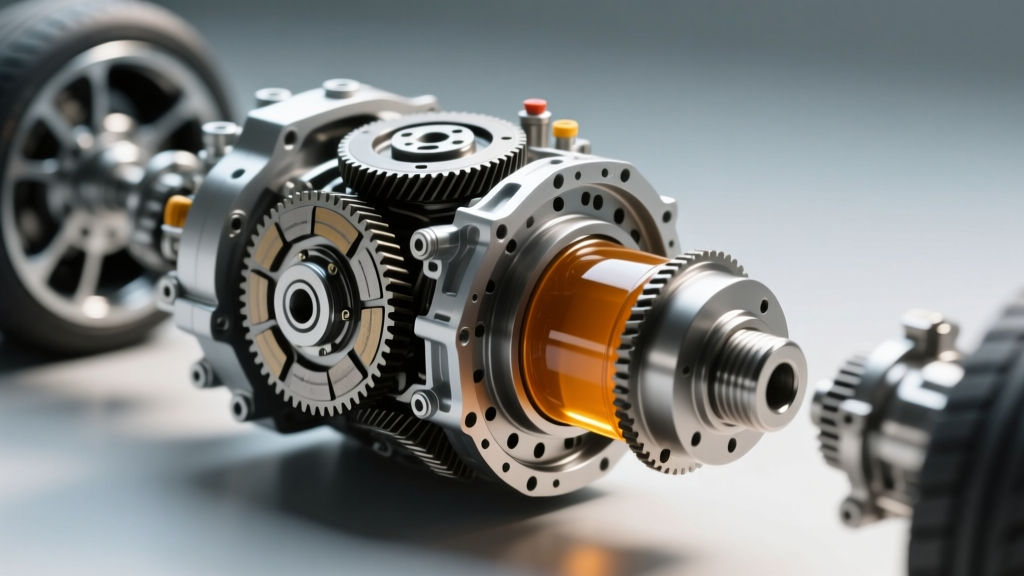
Modern All-Wheel-Drive (AWD) architectures rely heavily on computer-managed torque distribution to maintain traction and vehicle stability. At the heart of these systems is the automated center differential, a complex electromechanical assembly that balances power between the front and rear axles. When the Transfer Case Control Module (TCCM) or AWD Electronic Control Unit (ECU) detects a deviation in expected clutch pressure, slip ratios, or fluid temperatures, it triggers a fail-safe mode. In many global OEM service manuals and driver information clusters, this is explicitly flagged as an automated differential abnormal fault state. Diagnosing this warning requires moving beyond basic OBD-II code reading and diving deep into hydraulic pressures, electromagnetic clutch telemetry, and specialized gear oil tribology.
The Architecture of Automated Center Differentials
Unlike traditional open or mechanical limited-slip differentials, automated center diffs utilize wet clutch packs, planetary gearsets, and electronic actuators to vary torque split in real-time. Two dominant architectures define the current AWD landscape:
- Electromagnetic Planetary Systems: Exemplified by the Subaru Driver Controlled Center Differential (DCCD) and Mitsubishi Active Center Differential (ACD). These use an electromagnetic coil to apply pressure to a ball-ramp mechanism, which in turn compresses a multi-plate wet clutch pack.
- Electrohydraulic Couplings: Popularized by the BorgWarner Haldex Gen 5 and Gen 6 systems (found in VW, Audi, Volvo, and Land Rover vehicles). These rely on an electrically driven hydraulic pump to apply clamping force to friction discs, managed by a dedicated AWD control module.
Understanding which architecture your vehicle employs is the critical first step in troubleshooting an automated differential abnormal alert, as the failure modes and diagnostic pathways are entirely distinct.
Root Causes of Automated Differential Abnormal Alerts
When the ECU commands a specific torque transfer but the physical output does not match the expected parameters, the system defaults to an open-differential state (usually 100% front-wheel drive) to protect the driveline from catastrophic binding. Here are the primary mechanical and electrical culprits.
1. Haldex Gen 5/6 Centrifugal Filter Starvation
In electrohydraulic systems like the Haldex Gen 5, the hydraulic pump draws fluid through a small centrifugal strainer located inside the pump housing. Over time, friction material from the clutch packs sheds into the fluid. This debris accumulates on the strainer screen, starving the pump. The ECU detects a drop in hydraulic pressure despite maximum PWM (Pulse Width Modulation) duty cycle to the pump motor, triggering the abnormal fault. According to BorgWarner AWD Technologies, failure to service this specific strainer every 40,000 miles is the leading cause of premature pump failure and AWD fault codes.
2. DCCD Electromagnetic Clutch Glazing and Sensor Drift
In Subaru's DCCD system, the automated differential abnormal code (often accompanied by DCCD flashing lights and C-codes like C0054 or C0055) frequently stems from clutch plate glazing due to overheated or degraded differential fluid. Furthermore, the DCCD relies on a position sensor to monitor the ball-ramp mechanism. If the sensor's internal potentiometer track wears out, or if the electromagnetic coil develops an internal short, the ECU loses closed-loop feedback and disables the center diff entirely.
3. Thermal Fluid Degradation
Automated center differentials subject gear oil to extreme shear forces and thermal cycling. Standard 75W-90 GL-5 gear oil lacks the specific friction modifiers required for wet clutch packs. Using the wrong fluid causes the clutch plates to chatter, generate excessive heat, and rapidly degrade the fluid's viscosity. The internal temperature sensor will detect this thermal spike, triggering a protective fault code before physical damage occurs.
Diagnostic Protocol: Step-by-Step Troubleshooting
Resolving an automated center differential fault requires a systematic approach combining electronic telemetry with mechanical verification.
Phase 1: Telemetry and Electrical Verification
Connect a bi-directional OEM scan tool (e.g., Subaru Select Monitor, VCDS for VAG, or Ford IDS) to access the AWD/Transfer Case module. Generic OBD-II scanners will not display the proprietary manufacturer-specific C-codes or U-codes required for this diagnosis.
- Check Coil Resistance (Electromagnetic Systems): Disconnect the wiring harness to the center diff electromagnetic clutch. Using a digital multimeter, measure the resistance across the coil pins. For Subaru DCCD units, expect a reading between 2.0 and 3.5 Ohms at 68°F (20°C). A reading of infinite resistance indicates an open coil; near-zero indicates a short. Both require a clutch pack rebuild.
- Monitor Pump Amperage (Electrohydraulic Systems): Command the Haldex pump to 100% duty cycle via the scan tool while monitoring the amperage draw. A healthy Gen 5 pump should draw between 4.0 and 8.0 Amps. If the draw spikes above 12.0 Amps, the pump is binding due to a clogged internal strainer or contaminated fluid. If it draws under 2.0 Amps, the pump motor has failed or there is a wiring open.
Phase 2: Mechanical Bind and Fluid Inspection
Drain the center differential fluid into a clean, clear pan. Inspect the fluid for metallic glitter (indicating planetary gear or bearing failure) or a burnt smell and dark brown color (indicating clutch pack friction material degradation). If the fluid smells burnt and contains heavy black particulate, the clutch pack is compromised, and a teardown is mandatory. As noted in Subaru Symmetrical AWD Engineering documentation, the center diff operates independently of the rear diff in DCCD models and requires its own specific fluid formulation to maintain proper friction coefficients.
OEM Fluid Specifications and Service Matrix
Using the correct fluid is non-negotiable in automated center differentials. The friction modifiers dictate the clutch pack's engagement characteristics. Below is a reference matrix for 2026 service intervals and specifications.
| AWD System Architecture | OEM Fluid Specification | Capacity | Service Interval | Drain Plug Torque |
|---|---|---|---|---|
| BorgWarner Haldex Gen 5 | G 060 175 A2 (or equivalent OEM Haldex Fluid) | 0.85 Liters | Every 40,000 Miles (Filter Kit Mandatory) | 15 Nm (11 lb-ft) |
| Subaru DCCD (6-Speed) | Subaru DCCD Fluid (SOA635040 or K0537-YA000) | 0.8 Liters | Every 30,000 Miles or 36 Months | 44 Nm (32.5 lb-ft) |
| Toyota Dynamic Torque Vectoring | Toyota Genuine Transfer Gear Oil LF (08885-81080) | 1.2 Liters | Every 60,000 Miles | 39 Nm (29 lb-ft) |
| ZF / BorgWarner TOD (BW4406) | Auto-Trak II (GM) or Spec-Approved TOD Fluid | 2.0 Liters | Every 50,000 Miles | 25 Nm (18 lb-ft) |
Rebuild vs. Replace: Cost and Labor Matrix
When an automated differential abnormal code is traced to internal mechanical failure, technicians and owners must weigh the cost of a remanufactured unit against a targeted rebuild.
- Haldex Pump and Filter Service: If caught early, replacing the centrifugal strainer (Part # 0C6598555 for VAG applications) and performing a fluid flush costs between $250 and $400 at an independent specialist. If the pump motor has burned out due to starvation, a new OEM pump assembly costs $650 to $900, plus 1.5 hours of labor.
- DCCD Clutch Pack Rebuild: Rebuilding the electromagnetic clutch pack and ball-ramp assembly requires specialized press tools and clearance measurements. A complete OEM clutch pack kit costs roughly $450 to $600. With bench time and R&R labor, expect to pay $1,400 to $1,800. Replacing the entire center differential assembly with a new OEM unit can exceed $3,500, making the rebuild the economically superior choice for most out-of-warranty vehicles.
Preventative Maintenance for Longevity
The vast majority of automated center differential faults are entirely preventable. The 'sealed for life' myth perpetuated by some marketing departments has led to a surge in premature AWD module failures. For vehicles subjected to towing, track use, or frequent operation in inclement weather, halving the OEM fluid service interval is highly recommended. Additionally, ensuring that all four tires are matched in circumference (within 2/32 of an inch of tread depth variance) prevents the center differential from operating in a constant state of micro-slip, which generates excessive heat and accelerates clutch pack wear. By adhering to strict fluid tribology standards and performing proactive electrical diagnostics, the dreaded automated differential abnormal warning can be kept off your dashboard for the life of the vehicle.