The Architecture of the Ram 1500 Rear Axle Assembly
The modern Ram 1500 platform relies heavily on the robust engineering of American Axle & Manufacturing (AAM) to handle the immense torque output of the 5.7L HEMI V8 and the 3.0L EcoDiesel engines. While the ZF 8HP transmission manages gear reduction upstream, the rear differential is the final point of multiplication and torque vectoring before power reaches the pavement. For technicians and DIY enthusiasts in 2026, understanding the mechanical nuances of the limited slip differential (LSD) is no longer optional; it is critical for preventing catastrophic clutch pack failure and ensuring optimal traction.
Determining the exact Ram 1500 rear differential fluid capacity is only the first step in a proper service interval. The fluid must not only lubricate the hypoid ring and pinion gears but also act as a vital hydraulic and frictional medium for the internal LSD clutch packs. This technical deep-dive explores the mechanical operation of the Ram Trac-Lok system, precise fluid specifications, and the diagnostic protocols required to maintain axle longevity.
Decoding Ram 1500 Rear Differential Fluid Capacity
The Ram 1500 primarily utilizes two rear axle configurations depending on the model year, trim, and tow package. Misidentifying the axle can lead to under-filling, resulting in immediate gear whine and clutch pack burnout. Below is the definitive specification matrix for the most common 1500-series axles.
| Axle Model | Ring Gear Diameter | Fluid Capacity | OEM Viscosity Spec | Friction Modifier Required |
|---|---|---|---|---|
| AAM 9.25 (Standard Hemi/EcoDiesel) | 9.25 inches | 2.25 Quarts (2.13 L) | 75W-90 or 75W-140 Synthetic | Yes (4 oz / 118 ml) |
| AAM 10.5 (Heavy Duty Tow / Older Gen) | 10.5 inches | 3.0 Quarts (2.84 L) | 75W-140 Synthetic | Yes (4 oz / 118 ml) |
| Dana 60 (Specialty Off-Road Packages) | 9.75 inches | 3.25 Quarts (3.08 L) | 75W-140 Synthetic | Yes (if equipped with LSD) |
Note: Capacities listed are for dry fills. When performing a standard drain and fill via the cover or pump-out method, expect to extract roughly 10-15% less fluid due to residual oil clinging to the ring gear and bearing journals.
Trac-Lok LSD: Mechanical Operation and Wear Dynamics
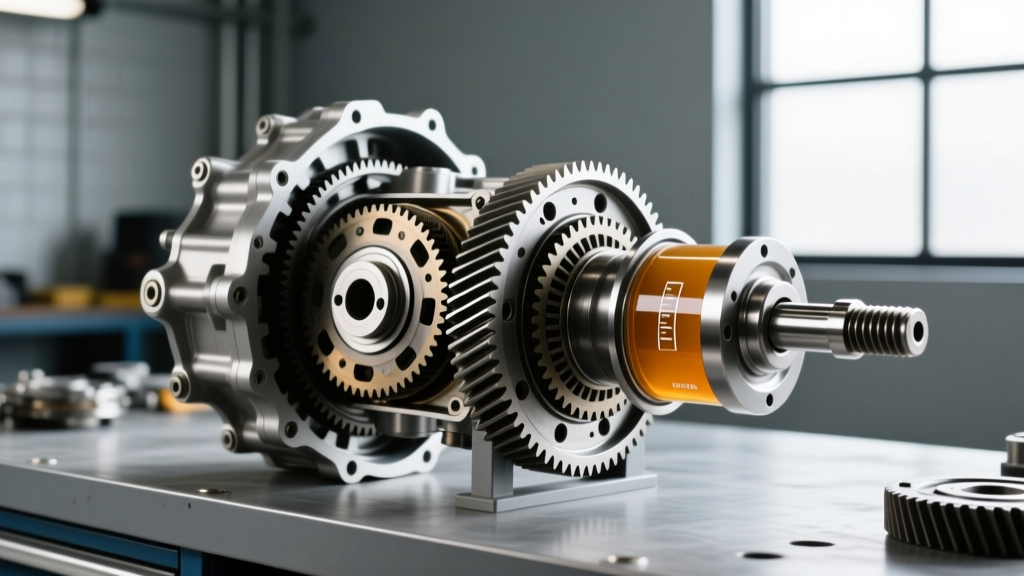
The Ram 1500's Trac-Lok is a clutch-type, torque-biasing limited slip differential. Unlike an open differential that routes 100% of available torque to the wheel with the least resistance, the Trac-Lok utilizes a series of alternating friction and steel clutch discs housed within the side gear cavities.
The Physics of Clutch Pack Engagement
At the core of the Trac-Lok is a preload mechanism—typically an S-spring or C-spring configuration—that pushes the side gears outward against the clutch packs. This provides a baseline locking torque (breakaway torque) even when no drive torque is applied, which is essential for maintaining traction on split-mu surfaces (e.g., one wheel on ice, one on dry asphalt).
When drive torque is applied from the ZF 8HP transmission through the driveshaft and pinion gear, the side gears attempt to rotate the axle shafts. The helical cut of the side gears generates an axial thrust force. This thrust force exponentially increases the clamping pressure on the friction discs, effectively locking the left and right axles together in proportion to the input torque. This elegant mechanical feedback loop requires zero electronic intervention, but it places immense shear stress on the differential fluid.
The Critical Role of the Friction Modifier
Standard hypoid gear oil lacks the polar friction modifiers required for clutch-type LSDs. Without the addition of Mopar Limited Slip Additive (Part # 05010320AA) or an equivalent ester-based modifier like Lubegard 70902, the clutch discs will experience 'stick-slip' friction rather than smooth kinetic engagement. This manifests audibly as a rhythmic chattering or groaning noise during low-speed, tight-radius turns. Over time, this chatter glazes the friction material, permanently destroying the clutch pack's ability to bias torque.
Precision Service Protocol: Draining, Sealing, and Filling
Servicing the Ram 1500 rear differential requires strict adherence to torque specifications and sealing protocols. The AAM 9.25 axle utilizes a 12-bolt stamped steel or cast aluminum cover, while the fill plug is located on the front-facing axle tube.
Step-by-Step Fluid Exchange
- Preparation: Safely support the truck on jack stands. Ensure the axle is level; an unlevel axle will result in an inaccurate fluid level reading.
- Extraction: Remove the 3/8-inch square drive fill plug on the differential housing first. Never remove the cover before verifying the fill plug can be extracted.
- Cover Removal: Loosen the twelve 13mm cover bolts in a crisscross pattern. Pry the cover gently from the bottom to allow the degraded 75W-90 or 75W-140 fluid to drain into a catch pan.
- Cleaning: Wipe the interior of the housing. Inspect the magnetic drain plug (if equipped) or the internal magnets for excessive metallic paste. Fine grey paste is normal wear; chunky ferrous shards indicate ring and pinion failure.
- Sealing: Scrape all old RTV from the mating surfaces using a plastic gasket scraper to avoid scoring the aluminum. Apply a 3mm continuous bead of Mopar Axle RTV (Part # 04883971) or install a reusable LubeLocker elastomer gasket.
- Filling: Reinstall the cover and torque the bolts. Pump the new synthetic gear oil mixed with the 4 oz friction modifier into the fill hole until it reaches the exact bottom of the fill plug threads.
Engineering Torque Specifications
Over-torquing differential cover bolts is a common error that warps the stamped steel cover or strips the aluminum housing threads, leading to chronic leaks.
- AAM 9.25 Cover Bolts (M8): 15 - 20 lb-ft (20 - 27 Nm)
- AAM 10.5 Cover Bolts (M10): 30 - 35 lb-ft (41 - 47 Nm)
- Fill Plug (3/8" Square or 15mm Hex): 25 - 30 lb-ft (34 - 41 Nm)
- RTV Cure Time: Allow 1 hour before filling with fluid to prevent the oil from washing out the uncured silicone sealant.
Diagnostic Matrix: LSD Chatter and Fluid Degradation
Even with meticulous adherence to the Ram 1500 rear differential fluid capacity specs, operational anomalies can arise. Use the following diagnostic framework to isolate LSD-related drivetrain NVH (Noise, Vibration, and Harshness).
Symptom: Low-Speed Cornering Chatter
Root Cause: Depleted friction modifier or oxidized gear oil. The shear stability of the 75W-140 base oil has broken down, causing the clutch packs to grab and release rapidly.
Resolution: Perform a complete fluid flush. Add an extra 2 oz of friction modifier if chatter persists after the initial 50-mile break-in drive cycle.
Symptom: Clunk on Load Reversal (Decel to Accel)
Root Cause: Excessive backlash between the ring and pinion gear, or worn side gear thrust washers inside the Trac-Lok carrier. This is not a fluid issue but a mechanical wear indicator.
Resolution: Check pinion nut torque and ring gear backlash using a dial indicator. Spec is typically 0.006 - 0.010 inches. If backlash is excessive, a carrier rebuild is required.
Symptom: Whining Noise Above 45 MPH
Root Cause: Pinion bearing preload loss or incorrect gear pattern (heel/toe contact mismatch). Often caused by running the differential low on fluid, leading to thermal expansion and bearing seat distortion.
Resolution: Inspect gear tooth contact pattern using yellow marking compound. Re-shim the pinion depth and crush sleeve if necessary.
2026 Expert Insight: While modern synthetic gear oils boast extended life claims, the thermal load placed on the Ram 1500 rear axle during heavy towing (exceeding 8,000 lbs) rapidly depletes the extreme pressure (EP) additives. For trucks regularly operating in Grade 3 mountain passes or towing fifth-wheel campers, we mandate a 30,000-mile severe-duty fluid interval, regardless of the OEM 'lifetime' fluid marketing.
Proper maintenance of the Ram 1500 rear differential requires more than just pouring in oil. It demands a holistic understanding of hypoid gear geometry, clutch-pack tribology, and precise torque application. By respecting the exact fluid capacities and utilizing the correct friction modifiers, you ensure that the Trac-Lok system continues to provide the mechanical grip necessary to put the HEMI's torque safely to the ground.
For further engineering schematics and torque yield data, technicians are encouraged to consult the American Axle & Manufacturing (AAM) technical service bulletins and the official FCA/Mopar service manuals.