The Reality of Aftermarket Converters: Pro King Torque Converter Reviews
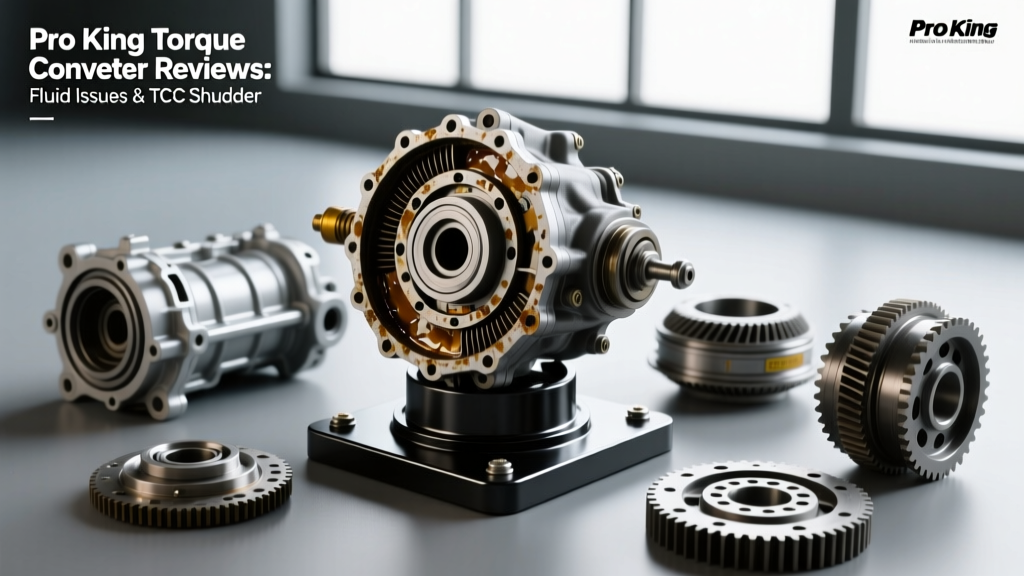
When browsing Pro King torque converter reviews across automotive forums and technician networks, a recurring theme among DIYers and independent shops is the prevalence of early-life TCC (Torque Converter Clutch) shudder. Pro King has established itself as a budget-friendly, mid-tier remanufacturer, offering units like the GM-88 for the ubiquitous 4L60E at a fraction of the cost of OEM GM or high-end billet alternatives. However, a significant percentage of negative reviews citing 'shudder out of the box' or 'failure within 500 miles' are rarely due to the converter's internal welding or stator assembly. Instead, they are almost exclusively rooted in unaddressed torque converter fluid issues and improper cooler flushing protocols.
As transmission specialists, we must separate component manufacturing defects from hydraulic and fluid-induced failures. A remanufactured torque converter is essentially a blank canvas; if the fluid environment it is dropped into is contaminated, degraded, or suffering from hydraulic valve bore wear, the new TCC friction material will glaze or delaminate rapidly. Understanding the intersection of ATF chemistry, hydraulic apply pressure, and aftermarket friction linings is critical for accurate diagnosis and long-term drivability.
How Fluid Degradation Triggers TCC Shudder in Rebuilt Units
Torque converter clutch shudder occurs when the TCC friction lining cannot maintain a static lock with the converter cover during the apply phase. Instead of locking up smoothly, the clutch slips and grabs hundreds of times per second, creating a harmonic vibration felt through the vehicle's floorpan and steering wheel.
The Friction Material and ATF Chemistry Factor
Modern automatic transmissions rely on highly specific friction modifiers suspended in the Automatic Transmission Fluid (ATF). For instance, General Motors' Dexron VI is engineered with a specific coefficient of friction that decreases slightly as clutch slip increases, promoting smooth TCC apply. When ATF is subjected to extreme thermal cycling—common in vehicles without auxiliary coolers—the long-chain hydrocarbon molecules shear, and the friction modifiers deplete.
When a technician installs a new Pro King converter into a 4L60E or 6L80 transmission filled with sheared, degraded fluid, the new organic or Kevlar-blend friction lining cannot achieve the correct friction coefficient. The transmission's Powertrain Control Module (PCM) detects the TCC slip and aggressively pulses the Pulse Width Modulation (PWM) solenoid to force lockup. This aggressive hydraulic cycling against degraded fluid results in immediate, violent shudder, leading consumers to blame the aftermarket unit rather than the neglected fluid.
Diagnostic Framework: Is it the Fluid or the Converter?
Before condemning a newly installed aftermarket converter or tearing down the transmission, technicians must execute a rigorous hydraulic and electronic diagnostic sequence. According to diagnostic frameworks published by Sonnax Industries, isolating the root cause of TCC shudder requires monitoring real-time hydraulic data and physical fluid condition.
Expert Diagnostic Tip: Never rely solely on a visual fluid inspection. A fluid that appears red may still be entirely depleted of its friction modifiers. Use a bi-directional scan tool to command TCC apply in 3rd and 4th gear at a steady 55 MPH. Monitor the 'TCC Slip RPM' PID. A healthy system will show slip drop to near 0-10 RPM. If slip fluctuates wildly between -40 and +60 RPM, you have a fluid friction issue, a restricted cooler circuit, or a worn TCC regulator valve bore.
Step-by-Step Fluid and Hydraulic Verification
- Thermal Stability Check: Monitor Transmission Fluid Temperature (TFT). Shudder that only occurs between 120°F and 160°F often points to degraded fluid viscosity, whereas shudder that worsens above 200°F indicates physical glazing of the TCC friction material.
- PWM Solenoid Duty Cycle Analysis: If the scan tool shows the PCM commanding 100% duty cycle (full apply pressure) but slip RPM remains high, the fluid is either aerated, the TCC apply circuit is leaking internally at the turbine hub seals, or the fluid lacks the necessary friction modifiers to hold the clutch.
- The 'Drain and Refill' Test: In cases of suspected fluid friction modifier depletion, performing a complete machine flush and adding a tube of a high-quality friction modifier (such as Dr. Tranny Instant Shudder Fixx or a Lubegard equivalent) can temporarily cure the shudder. If the shudder vanishes, the Pro King converter is mechanically sound, and the issue was strictly fluid-related.
Fluid Specifications and Capacity Data for Common Applications
Mismatching fluid types is a primary driver of negative Pro King torque converter reviews. Using older fluid formulations like Dexron III in a transmission requiring Dexron VI, or utilizing standard Mercon V in a Ford 10R80 requiring Mercon ULV, will destroy the TCC lining in a matter of weeks. Below is a reference matrix for common applications paired with Pro King's catalog offerings.
| Transmission Model | Required ATF Specification | Total System Capacity (Dry) | Pro King Part Number | Common Fluid / Hydraulic Issue |
|---|---|---|---|---|
| GM 4L60E | Dexron VI | 11.2 Quarts | GM-88 | TCC Regulator Valve Bore Wear / Cooler Debris |
| GM 6L80 / 6L90 | Dexron VI | 12.4 Quarts | GM-113 | TEHCM Adaptation Errors / Fluid Shear |
| Ford 4R70W / 4R75W | Mercon V | 13.5 Quarts | FD-31 | Lockup Relay Valve Wear / Fluid Aeration |
| Ford 10R80 | Mercon ULV | 13.1 Quarts | FD-118 | Ultra-Low Viscosity Shear / Overheating |
Best Practices for Flushing and Preventing Converter Contamination
The most critical step when replacing a failed torque converter is managing the fluid environment. The torque converter acts as a massive centrifuge, trapping heavy metallic debris, clutch material, and carbon scoring. If a transmission fails and sends debris through the cooler lines, that debris will be instantly pulled into the new Pro King converter upon startup if the cooling system is not properly serviced.
Inline Filter Bypass Risks and Cooler Flushing
Many GM applications, particularly the 4L60E and 6L80, utilize an inline transmission cooler filter located on the return line to the transmission. Independent shops frequently bypass or ignore this filter to save time. According to rebuilding guidelines from TransGo, failing to replace the inline filter or utilizing harsh chemical flushes that leave residue in the radiator cooler will contaminate the new converter's TCC apply circuit. The microscopic debris lodges between the TCC piston and the cover, preventing full hydraulic apply and causing immediate shudder.
Best Practice: Always replace the inline cooler filter. If the vehicle lacks an inline filter, use a dedicated, heated pulsating fluid exchange machine to backflush the radiator and auxiliary coolers. Verify flow rates; a restricted cooler will cause converter ballooning and subsequent fluid cavitation.
When to Replace: Cost Analysis and Torque Specs
If diagnostic data confirms that the TCC friction material has physically delaminated or the internal turbine hub splines are stripped, replacement is mandatory. A Pro King GM-88 converter typically retails between $160 and $220, while an OEM GM unit can exceed $450. However, the labor to remove the transmission (typically 6 to 8 hours at $120-$150 per hour) dwarfs the part cost, making the savings on a budget converter attractive but demanding flawless installation.
Flywheel and Converter Bolt Torque Specifications
Improper installation can lead to flexplate distortion, which alters the hydraulic clearance between the TCC piston and the converter cover, mimicking fluid-related shudder. Always adhere to OEM torque specifications and utilize a thread-locking compound to prevent catastrophic fastener failure.
- GM 4L60E (Pro King GM-88): M10 x 1.5 converter-to-flexplate bolts must be torqued to 46 lb-ft (62 Nm). Ensure the converter is fully seated against the flexplate without drawing it in with the bolts, which will destroy the transmission front pump.
- GM 6L80 (Pro King GM-113): M10 x 1.5 converter-to-flexplate bolts require a higher torque spec of 55 lb-ft (75 Nm).
- Bellhousing to Engine Block: M12 fasteners should be torqued to 37 lb-ft (50 Nm) to prevent case distortion and subsequent internal hydraulic leaks.
Conclusion
While Pro King torque converter reviews can sometimes highlight frustrating experiences with TCC shudder, the root cause is overwhelmingly tied to torque converter fluid issues, neglected cooler circuits, and depleted friction modifiers. By treating the transmission as a closed hydraulic ecosystem—verifying ATF chemistry, utilizing bi-directional scan tools to monitor TCC slip RPM, and严格执行 proper flushing protocols—technicians and DIYers can ensure that budget-friendly aftermarket converters perform reliably for tens of thousands of miles. Do not let a fluid-induced diagnostic oversight ruin an otherwise sound mechanical repair.