The Hidden Plumbing Tax of Heavy-Duty Transmission Cooling
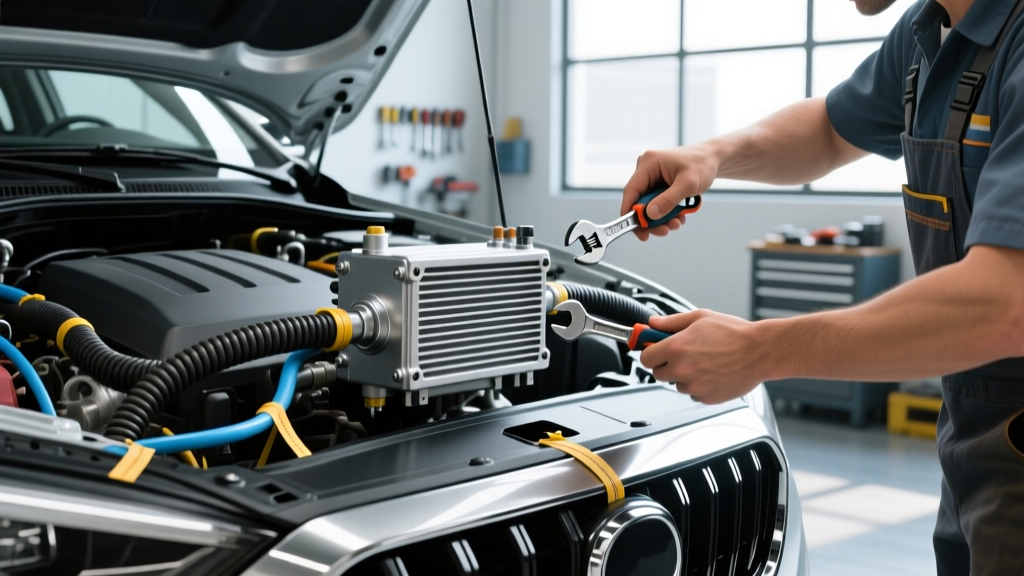
When enthusiasts and fleet operators look to upgrade their cooling capacity, the Pacific Performance Engineering (PPE) transmission cooler is frequently the gold standard, particularly for Duramax/Allison 1000 platforms and heavy-duty gas trucks. However, a massive oversight occurs during the budgeting phase: the plumbing. The cooler core itself is only half the battle. To achieve the advertised thermal drops and flow rates, you must upgrade the restrictive, failure-prone OEM quick-connect lines to high-flow AN (Army-Navy) flared systems.
In this 2026 cost analysis, we are bypassing the cooler core pricing to focus entirely on the transmission cooler line fittings and adapters required to properly plumb a PPE transmission cooler. Whether you are running an Allison 1000, a GM 6L80, or the newer 10L1000, the adapter ecosystem dictates your total build cost, system reliability, and ultimate flow dynamics.
2026 Price Breakdown: Fittings, Adapters, and Hose
The transition from OEM push-lock connections to a secure, high-flow AN system requires specific adapters. Below is a real-world pricing table based on premium manufacturers like Earl's Performance Plumbing and Fragola Performance Systems. Prices reflect average 2026 retail costs for black anodized or stainless steel components.
| Component Type | Brand / Example Part # | Thread / Sizing | Avg. Cost (USD) |
|---|---|---|---|
| Quick-Connect to AN Male | Earl's AT991906ERL | 5/8' QC to -8 AN | $24.50 |
| O-Ring Boss (ORB) to AN Male | Fragola 480108-BL | 1/2'-20 ORB to -8 AN | $14.25 |
| 45-Degree Hose End (Socketless) | Earl's AT920108ERL | -8 AN | $28.99 |
| Straight Hose End | Fragola 490108-BL | -8 AN | $21.50 |
| Stainless Braided PTFE Hose | Earl's RX2808 (Per Foot) | -8 AN (1/2' ID) | $19.95 / ft |
| Billet Aluminum Adapter Plate | PPE OEM Replacement | Allison 1000 Case | $89.00 |
| Viton O-Ring Kit (High Temp) | Assorted -8 / 1/2' ORB | Fluorocarbon | $12.00 |
Flow Dynamics: Why Sizing Dictates Your Budget
A common mistake when plumbing a PPE transmission cooler is attempting to save money by utilizing -6 AN (3/8-inch ID) fittings and hose. While -6 AN is sufficient for power steering or fuel systems, it is entirely inadequate for modern transmission cooler circuits.
The Allison 1000 and 10L1000 Flow Requirements
The Allison 1000 (found in GM HD trucks) and the newer 10-speed 10L1000 rely on high-volume cooler flow not just for thermal management, but for clutch apply pressure and torque converter charge. The OEM cooler circuit flows between 2.5 and 3.5 Gallons Per Minute (GPM) under heavy load.
Expert Insight: Forcing 3.0 GPM of high-viscosity synthetic ATF (like Mobil 1 or TES 295) through a restrictive -6 AN fitting creates a severe pressure drop. This pressure drop starves the torque converter of charge pressure, leading to converter clutch slip, glazing, and ultimately, catastrophic transmission failure. Always budget for -8 AN (1/2-inch ID) components minimum.
Upgrading from -6 AN to -8 AN increases your fitting and hose budget by approximately 35%, but it is a non-negotiable expense for heavy-duty towing and commercial applications.
Adapter Configurations by Transmission Model
The cost of your adapter kit depends heavily on the transmission case you are working with. OEM manufacturers use wildly different port styles, requiring specific, often expensive, adapter fittings.
1. Allison 1000 (GM Duramax Platforms)
The Allison 1000 transmission case utilizes 1/2'-20 UNF O-Ring Boss (ORB) ports for the cooler lines. To adapt this to an AN hose system, you must purchase 1/2'-20 ORB to -8 AN Male adapters.
- Required Adapters: 2x 1/2'-20 ORB to -8 AN Male (Approx. $28.50 total)
- Hidden Cost: The OEM aluminum case ports are known to strip if over-torqued. Many builders opt for a PPE billet aluminum adapter plate or threaded insert kit ($89.00) to ensure the soft aluminum case is not damaged during repeated cooler line servicing.
2. GM 6L80, 8L90, and 10L1000 (Gas & Light Duty Diesel)
Modern GM passenger and light-duty trucks utilize plastic quick-connect fittings (typically 1/2-inch or 5/8-inch diameter) that snap into the transmission case and radiator. These plastic collars become incredibly brittle when exposed to sustained 220°F+ transmission temperatures, leading to sudden fluid loss on the highway.
- Required Adapters: 2x Quick-Connect to -8 AN Male adapters (Approx. $49.00 total)
- Installation Note: These adapters feature an internal Viton O-ring and a stainless steel retaining clip. They push directly into the OEM transmission case port, eliminating the need for threading and completely removing the failure-prone plastic OEM collars from the equation.
Installation Torque Specs and Failure Modes
Budgeting for the parts is only the first step; understanding how to install them prevents costly fluid leaks and warranty disputes. The intersection of dissimilar metals and extreme thermal cycling is where cheap installations fail.
Precision Torque Specifications
When threading steel or stainless steel AN adapters into an aluminum transmission case (like the Allison 1000 or the cast aluminum pan on a 6L80), galvanic corrosion and thread galling are severe risks.
- Aluminum Case / Steel Adapter: 22 to 25 lb-ft. Always use a high-quality anti-seize compound on the threads, but never allow anti-seize to contaminate the O-ring sealing surface.
- Cast Iron Case / Steel Adapter: 35 to 40 lb-ft.
- AN Hose End to Adapter: 28 to 32 lb-ft. Use a dedicated aluminum AN wrench to prevent marring the anodized finish of the fittings.
Common Failure Modes to Avoid
1. Extruded O-Rings: If the inside edge of the transmission case port is not properly chamfered or has a sharp burr, it will slice the O-ring on the ORB adapter during installation. The leak won't appear until the fluid heats up and thins out. Always inspect and lightly deburr the port entrance with a brass chamfer tool before installing adapters.
2. Teflon Tape in Hydraulic Systems: Never use PTFE (Teflon) tape on ORB or AN flare fittings. ORB fittings seal via the O-ring, and AN fittings seal via the 37-degree metal-to-metal flare. Teflon tape will shred, enter the transmission valve body, and clog the delicate solenoid screens in the mechatronic unit or valve body.
Total Build Cost Scenario: 2024 Silverado 2500HD (Allison 1000)
Let us look at a complete plumbing budget for a real-world scenario: upgrading a 2024 Silverado 2500HD equipped with the Allison 1000 to a PPE Heavy Duty Transmission Cooler, utilizing premium -8 AN stainless braided PTFE lines.
- PPE Heavy Duty Cooler Core & Mounting Hardware: $429.00
- 2x ORB to -8 AN Adapters (Transmission Side): $28.50
- 2x 45-Degree -8 AN Hose Ends (Transmission Side): $57.98
- 2x Straight -8 AN Hose Ends (Cooler Side): $43.00
- 15 Feet of -8 AN Stainless PTFE Braided Hose: $299.25
- Viton O-Ring Spares & Assembly Lube: $22.00
- Total Plumbing & Adapter Cost: $450.73
- Grand Total (Cooler + Plumbing): $879.73
As the breakdown illustrates, the transmission cooler line fittings and adapters and associated hose account for slightly more than 50% of the total project cost. While budget-tier rubber hose and hose clamps might save $300 upfront, they cannot withstand the 250°F+ peak temperatures generated during heavy towing or diesel sled pulling, nor can they handle the 40+ PSI of cooler line pressure without ballooning or blowing off a barb.
Final Verdict on Cooler Line Investments
When installing a premium unit like a PPE transmission cooler, treating the plumbing as an afterthought is a critical error. The 2026 market offers highly engineered, vehicle-specific adapters that bridge the gap between OEM transmission cases and high-flow AN systems seamlessly. By budgeting appropriately for -8 AN sizing, Viton O-rings, and precision-machined adapters from reputable brands, you ensure that your transmission cooling system operates with maximum thermal efficiency and zero risk of catastrophic line failure.