The TH350 Under Load: Why Towing Causes Thermal Breakdown
The Turbo Hydra-Matic 350 (TH350) remains a legendary three-speed automatic, prized for its robust planetary gearsets and lightweight aluminum case. However, when pressed into heavy-duty towing service, the TH350 faces a severe thermal disadvantage. Unlike modern locked-up overdrive transmissions (such as the 4L80E or 6L80), the TH350 lacks a factory torque converter clutch (TCC). When hauling a trailer up a grade, the torque converter operates in a constant state of slip, shearing the automatic transmission fluid (ATF) and generating massive amounts of parasitic heat. If fluid temperatures exceed 220°F, the fluid begins to oxidize, varnish forms on the clutch plates, and lip seals harden, leading to catastrophic failure.
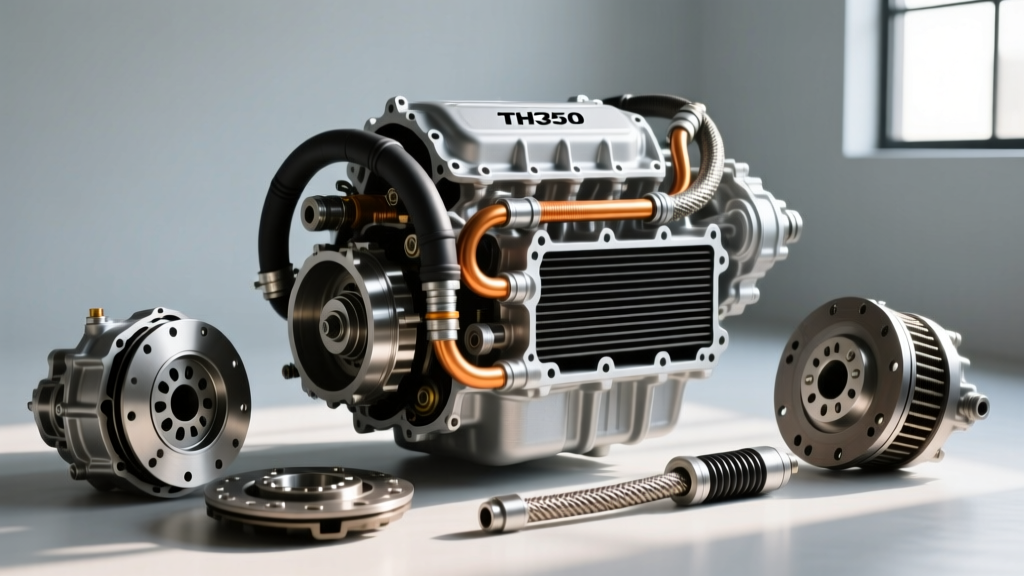
To survive towing, your cooling circuit must be optimized from the case fittings all the way to the auxiliary heat exchanger. Troubleshooting inadequate flow often comes down to the condition, routing, and diameter of the transmission cooler lines TH350 builders install during a swap or rebuild. This guide breaks down the symptom diagnosis of cooling system restrictions and details how to select the best transmission cooler for towing applications.
Symptom Diagnosis: Is Your Cooling Circuit Restricting Flow?
Before replacing components, you must verify whether the transmission is generating excessive heat due to internal mechanical issues (like a slipping forward clutch) or if the cooling system is simply bottlenecked. Use an infrared thermometer or install an inline digital temperature sender on the transmission's "out" (pressure) line to monitor real-time data.
Diagnostic Checklist for TH350 Cooling Failures
- Delayed Engagement After Highway Pulls: If the transmission hesitates to engage Drive or Reverse after a long towing stint, the fluid has likely thinned out from extreme heat, dropping internal line pressure below the required 150-175 PSI threshold.
- Burnt Fluid Odor with Dark Coloration: ATF should be bright red. A dark brown or black hue accompanied by a burnt smell indicates the fluid has exceeded 240°F and lost its friction modifiers and anti-wear additives.
- Erratic Line Pressure Gauge Readings: If you have a mechanical gauge installed, fluctuating pressure at steady RPMs often points to a collapsed inner lining inside a rubber transmission hose, acting as a makeshift check valve.
- Fluid Expulsion from the Breather: Overheating causes rapid fluid expansion. If the TH350 dipstick tube or breather cap is puking fluid after a tow, the cooling circuit is entirely overwhelmed.
The Hidden Culprit: Troubleshooting Transmission Cooler Lines
The OEM TH350 was designed for passenger cars and light half-ton trucks, utilizing 5/16-inch outer diameter (OD) steel hard lines. When modern builders adapt a TH350 for heavy towing, retaining the stock 5/16-inch lines creates a severe flow restriction, especially when paired with high-flow aftermarket auxiliary coolers.
Furthermore, the use of incorrect flexible hose material is a frequent point of failure. Standard SAE J30R7 fuel hose is not compatible with modern synthetic ATFs. The detergents and friction modifiers in fluids like Dexron VI or Amsoil Signature Series will cause standard fuel hoses to swell, degrade, and eventually delaminate internally. This internal delamination creates a flap that blocks fluid return, rapidly destroying the transmission.
| Line Specification | Inner Diameter (ID) | Flow Rate @ 150 PSI | Towing Suitability |
|---|---|---|---|
| OEM 5/16" Steel Hard Line | 0.250 inches | ~1.2 GPM | Poor (Restrictive for heavy loads) |
| Upgraded 3/8" Steel/NiCopp | 0.312 inches | ~2.1 GPM | Good (Standard towing upgrade) |
| -6 AN Braided Stainless | 0.348 inches | ~2.8 GPM | Excellent (Maximum flow, high heat) |
Always use hose rated specifically for transmission cooling systems, such as SAE J1532 specification hose, which is engineered to resist the high operating pressures and chemical composition of synthetic ATFs.
Selecting the Best Transmission Cooler for Towing Applications
If you are hauling heavy loads, selecting the best transmission cooler for towing requires looking past basic tube-and-fin designs. Tube-and-fin coolers rely on ambient airflow passing over a serpentine tube, which is highly inefficient at low speeds or when climbing steep grades where engine RPMs and towing loads are highest.
For a towing TH350, a stacked-plate or plate-and-fin cooler is mandatory. These designs force the fluid through a series of flat plates surrounded by dense turbulator fins, maximizing surface area and promoting turbulent fluid flow, which scrubs heat away from the fluid boundary layer.
Top Tier Cooler Recommendations for TH350 Towing
- Derale Series 8000 Stacked-Plate (Part #15850): Rated for 20,000 GVWR, this 1/2-inch thick stacked-plate cooler is a benchmark for mid-size towing rigs. Its furnace-brazed aluminum construction withstands the high line pressures generated by a TH350 equipped with a heavy-duty boost valve.
- Hayden Automotive Rapid-Cool (Part #678): Rated for 24,000 GVWR, this plate-and-fin cooler offers exceptional heat rejection for heavier trailers. It features an internal turbulator design that increases heat transfer efficiency by up to 30% compared to standard tube-and-fin models.
- TCI Automotive Max-Cool (Part #823800): A premium stacked-plate option designed specifically for high-horsepower and heavy-towing applications, featuring -6 AN O-ring boss (ORB) fittings to eliminate the risk of threaded leaks.
For deeper technical specifications on fluid dynamics and heat rejection curves, consult the Derale Performance Tech Center or TCI Automotive's installation guides.
Proper Routing: Radiator vs. Bypass Configurations
A common mistake in the TH350 towing community is completely bypassing the radiator's internal transmission cooler. While this makes sense for a dedicated drag car, it is detrimental to a tow rig. The radiator acts as a thermal regulator; in cold weather or during light highway cruising, the radiator's 180°F coolant loop helps bring the ATF up to optimal operating temperature, preventing torque converter shudder and sluggish valve body shifts.
The Optimal Towing Routing Sequence:
- Transmission OUT (Pressure Side): Fluid exits the TH350 case at high pressure and peak temperature.
- Radiator Internal Cooler: Fluid passes through the bottom tank of the radiator for primary heat exchange and temperature stabilization.
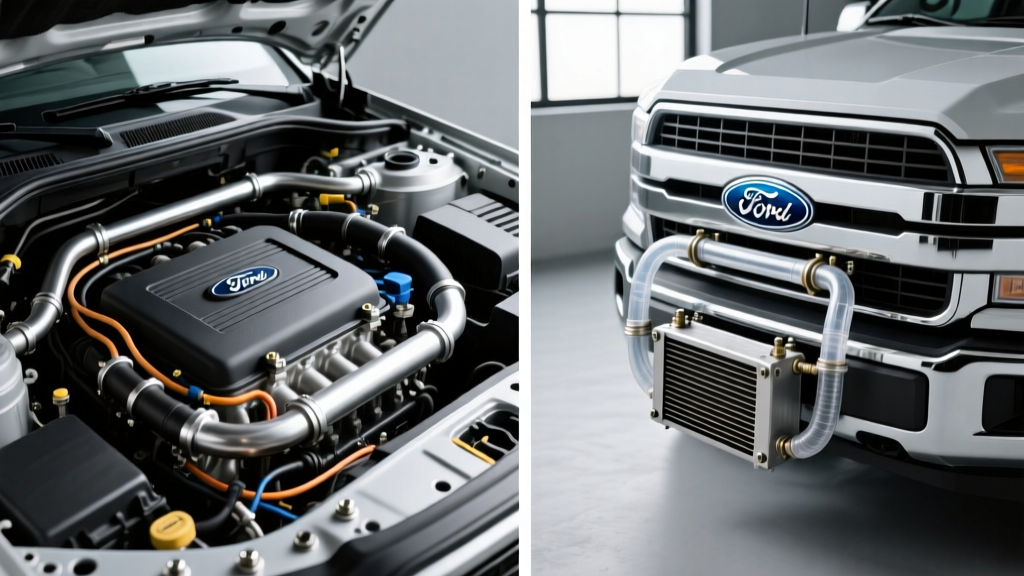
- Auxiliary Stacked-Plate Cooler: Fluid enters the front-mounted auxiliary cooler to drop the temperature further before returning.
- Transmission RETURN: Cooled, dense fluid re-enters the transmission case to lubricate the direct clutches and planetary gears.
According to Summit Racing Tech Advice, routing the auxiliary cooler after the radiator ensures that the fluid returning to the transmission is as cool and dense as possible, maximizing hydraulic pressure and clutch apply times.
Installation Specs: Fittings, Torque, and Case Integrity
The physical connection between the TH350 case and the cooler lines is a notorious failure point if mishandled. The OEM GM TH350 case utilizes a 1/4-inch NPS (National Pipe Straight) thread for the cooler fittings, sealed with an O-ring.
Critical Warning: Never force a 1/4-inch NPT (National Pipe Tapered) fitting into the OEM TH350 case. The tapered threads act as a wedge and will crack the aluminum casting, ruining the transmission case. If your rebuild utilizes an aftermarket case or a specialty deep pan with relocated fittings, verify whether the manufacturer has machined the ports for NPT or -6 AN ORB (O-Ring Boss) threads.
Torque Specifications & Hardware
- 1/4" NPS / NPT Fittings (Aluminum Case): 12 to 15 ft-lbs. Use a high-quality thread sealant (like Loctite 565) on NPT threads, but never use Teflon tape, which can shred and block the tiny lubrication orifices inside the valve body.
- Line Pressure Check Port: The TH350 features a 1/8-inch NPT port on the driver's side of the case, just above the oil pan rail. Use this to install a mechanical gauge or a digital sending unit to monitor line pressure while towing. Base pressure should be 150-175 PSI in Drive.
- Hard Line Flaring: If bending your own 3/8-inch NiCopp lines, ensure you are using a double-flare or bubble-flare tool, and secure the lines with rubber-cushioned Adel clamps every 12 inches to prevent high-frequency vibration fatigue.
Final Thoughts on TH350 Towing Longevity
Towing with a classic TH350 is entirely viable in the modern era, provided you respect the thermal limits of the transmission. By diagnosing flow restrictions early, upgrading to 3/8-inch or -6 AN SAE J1532 rated lines, and installing a high-capacity stacked-plate cooler, you can safely pull heavy loads while keeping fluid temperatures safely in the 160°F to 180°F sweet spot. Protect your investment by verifying fitting thread types and maintaining a strict maintenance schedule on your synthetic ATF.