The Hidden Cost of Emergency Push-Starts
When a battery dies on a manual transmission vehicle, the immediate instinct for many drivers is to search for how to pop clutch start a car. While push-starting (or bump-starting) can get you out of a stranded situation, it is an inherently violent mechanical procedure. For modern vehicles equipped with hydraulic clutch actuation systems, the torsional shockwave generated by abruptly engaging the clutch at 10–15 mph does not just stress the friction disc and flywheel; it sends a severe hydraulic pressure spike backward through the release bearing, slave cylinder, and master cylinder.
As a preventive maintenance imperative, understanding the collateral damage caused by pop-starting is critical. If you have recently bump-started your vehicle, or if you are diagnosing a spongy pedal following an emergency start, this guide will walk you through a precise hydraulic clutch system diagnosis to prevent catastrophic failure on the road.
The Physics of a Pop-Start: Hydraulic Shockwaves
In a standard hydraulic clutch circuit (found in everything from a Honda K-Series to a Tremec T56 Magnum-equipped muscle car), the slave cylinder pushes the release fork to disengage the clutch. When you 'pop' the clutch pedal, the engine and transmission suddenly lock together. The resulting drivetrain shudder forces the transmission input shaft to momentarily jerk the release bearing backward against the slave cylinder piston.
This reverse-impact forces hydraulic fluid back up the hard line toward the master cylinder at a pressure far exceeding normal operating parameters (which typically peak around 400–600 PSI during standard pedal depression). If the hydraulic fluid is degraded, or if the internal cup seals of the master cylinder are aged, this spike will cause internal seal bypassing or blow out the slave cylinder piston wiper seal.
Diagnostic Matrix: Post-Pop-Start Hydraulic Symptoms
Use the following diagnostic table to isolate the exact hydraulic fault after a harsh clutch engagement. These symptoms often mimic standard wear but have distinct failure modes related to sudden over-pressurization.
| Symptom | Probable Hydraulic Fault | Primary Component | Diagnostic Verification Method |
|---|---|---|---|
| Pedal drops to floor, no external fluid leak | Internal Cup Seal Bypass | Master Cylinder | Block off hard line at master outlet; if pedal still drops, internal bypass is confirmed. |
| Fluid weeping at bellhousing inspection cover | Piston Over-Travel / Wiper Blowout | Concentric Slave Cylinder (CSC) | Remove inspection cover; look for DOT fluid on the release fork and input shaft seal. |
| Delayed engagement, gear crunch on 1st/Reverse | Clutch Delay Valve (CDV) Restrictor Rupture | Hydraulic Line / CDV | Measure pedal return speed; abnormally fast return indicates missing or blown CDV restrictor. |
| Spongy pedal that pumps up temporarily | Micro-cavitation / Aerated Fluid | Hydraulic Line / Reservoir | Check reservoir for foam; perform gravity bleed to clear suspended air micro-bubbles. |
Step-by-Step Hydraulic Diagnosis & Preventive Checks
According to AA1Car's clutch diagnostic protocols, a systematic approach is required to differentiate between mechanical drag and hydraulic failure. Follow these steps post-pop-start to ensure system integrity.
1. Pushrod Free-Play and Master Cylinder Bypass
The most common failure after a shock-load is the master cylinder pushrod losing its clearance. If the pushrod is adjusted too tightly (zero free-play), the master cylinder piston cannot fully retract, covering the compensation port. This traps fluid, causing the clutch to slip under load as the fluid expands with heat.
- Specification: Measure pushrod free-play at the pedal pad. You should have 0.5mm to 1.5mm of dead travel before feeling hydraulic resistance.
- Correction: Loosen the pushrod locknut (typically 10mm or 12mm) and adjust the rod length to restore the compensation port clearance.
2. Slave Cylinder Piston Over-Travel & Weep Hole Inspection
External slave cylinders (common on GM LS platforms and older Fords) feature a weep hole to indicate seal failure. Concentric Slave Cylinders (CSCs), which ride on the transmission input shaft, will leak directly into the bellhousing.
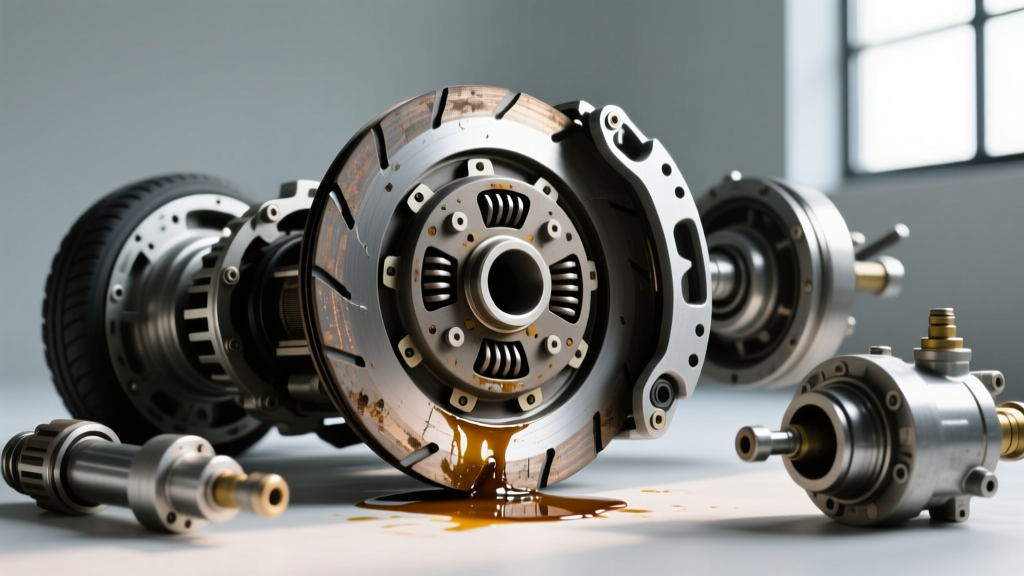
- Inspection: Use a borescope through the bellhousing inspection window. If you see amber or brown fluid coating the release bearing, the CSC has suffered a blowout from the pop-start shockwave.
- Preventive Action: If the CSC has over 60,000 miles and survived a pop-start, replace it preventively. Use OEM or premium aftermarket units like LuK or Sachs to ensure the internal heat-treated piston can handle future pressure spikes.
3. The Clutch Delay Valve (CDV) Factor
Expert Warning: Many modern European and Japanese manuals (e.g., BMW E90/F30, VW MQB, Honda S2000) utilize a Clutch Delay Valve in the hard line. The CDV restricts fluid flow to prevent drivetrain shock during normal shifts. However, during a pop-start, the reverse pressure spike can dislodge the internal O-ring or fracture the restrictor plate, leading to erratic pedal feel and premature synchro wear.
If your vehicle suffers from gear crunching specifically after a bump-start, the CDV may be compromised. Many performance enthusiasts opt for a CDV delete (e.g., BMW part 21526773670 replacement with a standard fitting) to improve pedal linearity and eliminate this failure point, as detailed in FCP Euro's technical guides.
Fluid Specifications, Bleeding Protocols, and Torque Data
Preventive maintenance of the hydraulic system relies heavily on using the correct fluid and adhering to precise torque specifications. Mixing fluids or over-torquing brass fittings will guarantee system failure.
| Component / Fastener | Torque Specification | Fluid / Material Notes |
|---|---|---|
| Master Cylinder to Firewall Nuts | 10 Nm (7.4 lb-ft) | Use threadlocker on older, stretched firewall studs. |
| Slave Cylinder to Bellhousing Bolts | 22 Nm (16 lb-ft) | Apply medium-strength threadlocker (Loctite 243). |
| Hydraulic Line Banjo Bolt | 18 Nm (13 lb-ft) | Always replace copper crush washers to prevent micro-leaks. |
| Slave Cylinder Bleeder Screw | 6 Nm (4.4 lb-ft) | CRITICAL: Brass bleeders snap easily. Use a 6-point box wrench, never an open-end. |
| Standard DOT Systems | N/A | Castrol SRF or Motul RBF 600 (DOT 4). Flush every 2 years due to hygroscopy. |
| VW/Audi Mineral Oil Systems | N/A | Pentosin CHF 11S. Never mix with DOT fluid; it will instantly destroy EPDM seals. |
Preventive Maintenance: Avoiding the Pop-Start Altogether
The ultimate preventive maintenance strategy for your hydraulic clutch is to eliminate the need to ever search for how to pop clutch start a car in the first place. Pop-starting should be reserved for absolute wilderness emergencies, not routine dead batteries.
- Parasitic Draw Testing: Modern vehicles with complex CAN-bus systems can suffer from parasitic draws that drain the battery overnight. If your car frequently requires push-starting, perform a parasitic draw test (acceptable draw is typically under 50mA).
- Hydraulic Fluid Flushing: DOT 3 and DOT 4 fluids are hygroscopic, meaning they absorb moisture from the atmosphere through the reservoir cap vent. This lowers the boiling point and promotes internal corrosion in the master cylinder bore. Flush the clutch hydraulic circuit every 24 months using a pressure bleeder set to 15-20 PSI to avoid damaging the master cylinder seals.
- Battery Tender Integration: For weekend manual cars, install a quick-disconnect battery tender pigtail. Maintaining the AGM or Lithium battery at 12.8V ensures the starter motor has the cold-cranking amps (CCA) required to fire the engine without resorting to drivetrain shock-loading.
Conclusion
Knowing how to pop clutch start a car is a valuable survival skill, but it is a mechanical brute-force method that compromises the delicate tolerances of hydraulic clutch actuation systems. By understanding the hydraulic shockwaves involved, monitoring for internal master cylinder bypassing, and adhering to strict fluid and torque specifications, you can diagnose post-pop-start damage before it leaves you stranded. Treat your hydraulic circuit with the same preventive rigor as your brake system, and your manual transmission will deliver crisp, reliable engagement for hundreds of thousands of miles.