Decoding the 'Carmella Clutch POV' Trend
If you spend any time on automotive social media, you have likely encountered the 'Carmella Clutch POV' trend—a humorous but painfully accurate depiction of a beginner driver’s panic when a manual car refuses to go into gear at a stoplight, or the pedal suddenly drops to the floorboard. While the meme is funny, the underlying mechanical failure is a serious safety hazard. For beginners and DIY enthusiasts alike, understanding what happens behind that viral POV is the first step toward mastering clutch system diagnostics.
In this guide, we strip away the internet slang and dive deep into the real-world hydraulics, mechanical linkages, and friction materials that dictate clutch engagement and disengagement. Whether you are driving a classic Mazda Miata, a Ford Mustang, or a daily-driver Honda Civic, the physics of the clutch pedal remain the same. Let us break down exactly why your car is creeping forward or grinding its gears, and how to fix it with precision.
The Anatomy of the Disengagement Circuit
When you press the clutch pedal, you are not just pushing a heavy spring; you are actuating a closed hydraulic loop designed to multiply your foot's force. The journey begins at the clutch master cylinder (a common replacement part is the Dorman CM640123). Pressing the pedal pushes a piston that forces DOT 3 or DOT 4 brake fluid through a hard line and into the slave cylinder (such as the Sachs SH5005).
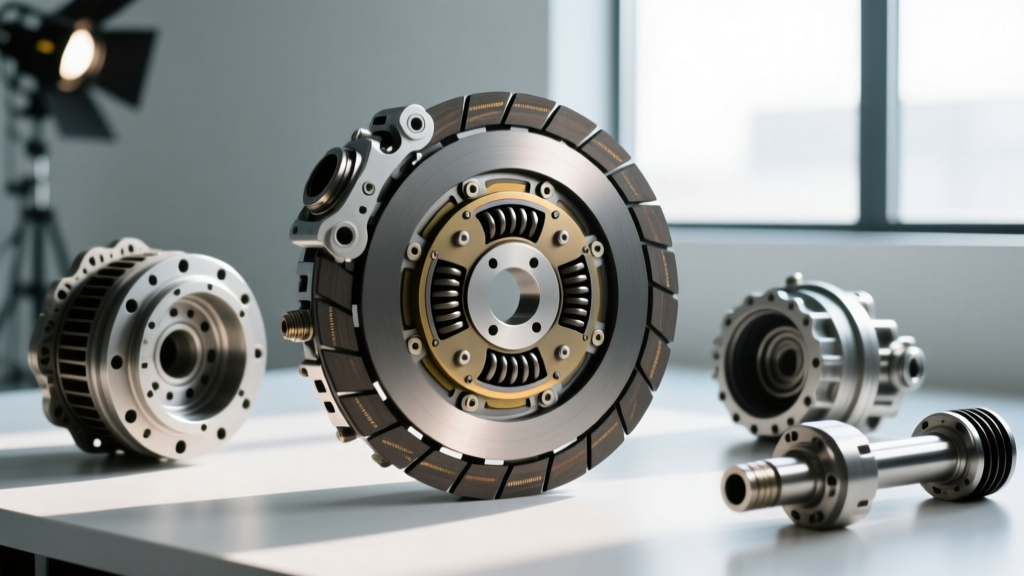
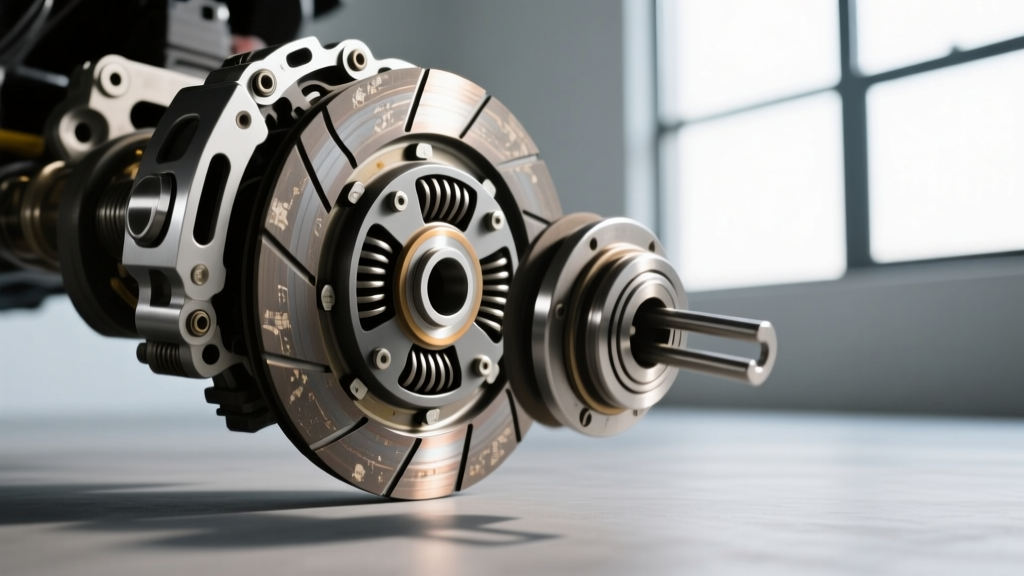
The slave cylinder's pushrod then actuates the release fork, which pivots on a ball stud. This fork forces the throwout bearing (TOB) against the fingers of the pressure plate's diaphragm spring. This action pulls the pressure plate away from the friction disc, breaking the connection between the engine's flywheel and the transmission's input shaft. If any single component in this chain fails, you experience the dreaded 'stuck in gear' scenario.
Disengagement Failures: Why You Are Stuck in Gear
If your car creeps forward when the pedal is depressed, or if the transmission violently grinds when you attempt to shift into reverse, your clutch is not fully disengaging. Here are the primary culprits:
1. Hydraulic Bypass and Leaks
The most common cause of a pedal sinking to the floor is an internal seal failure in the master cylinder. Even if you see no external fluid leaks on your firewall, the internal rubber cups can harden and allow fluid to bypass the piston. Similarly, the external slave cylinder can develop leaks at the pushrod boot. DOT fluid is highly hygroscopic (absorbs moisture); if the fluid hasn't been bled in two years, boiling moisture can create compressible gas bubbles in the line, resulting in a spongy pedal that fails to move the fork far enough.
2. The Pilot Bearing Seizure
A frequently overlooked culprit in the grinding scenario is the pilot bearing (or bushing). This small bearing sits in the center of the flywheel and supports the tip of the transmission input shaft. If the pilot bearing seizes due to lack of lubrication or heat, it will literally grab the input shaft and keep it spinning even when the clutch disc is disengaged from the flywheel. Diagnostic Trick: Start the car in neutral, press the clutch pedal to the floor, and listen closely. A high-pitched whining or squealing noise that changes pitch when the pedal is pressed almost always indicates a failing pilot bearing or throwout bearing.
3. Mechanical Bind and Fork Wear
The release fork pivots on a steel ball stud. Over 80,000+ miles, the soft metal of the fork can wear a deep groove into the pivot ball. This alters the geometry of the fork, meaning the slave cylinder runs out of travel before the TOB can fully depress the pressure plate. For a deeper dive into mechanical bind and hydraulic diagnostics, refer to the technical library at AA1Car's Clutch Diagnosis Guide.
Diagnostic Matrix: Engagement vs. Disengagement
Use this table to quickly isolate your specific 'Carmella Clutch POV' symptom and understand the associated 2026 repair costs.
| Symptom (The POV) | Probable Root Cause | Key Component | 2026 Est. Repair Cost |
|---|---|---|---|
| Pedal drops to floor, no resistance | Internal master cylinder seal bypass | Master Cylinder (e.g., Dorman CM640123) | $80 - $160 (Parts + DIY Bleed) |
| Grinding into Reverse / 1st Gear | Air in hydraulic line or worn pivot ball | Slave Cylinder / Pivot Stud | $150 - $350 (Labor Intensive) |
| Car creeps forward, pedal fully depressed | Seized pilot bearing dragging input shaft | Pilot Bearing / Bushing | $400 - $900 (Requires Trans Removal) |
| RPMs rise but vehicle speed does not (Slipping) | Glazed friction disc or oil contamination | Clutch Disc / Rear Main Seal | $800 - $1,500 (Full Kit + Seal) |
| Violent shuddering upon pedal release (Chatter) | Warped flywheel or broken damper springs | Flywheel / Friction Disc | $1,200 - $2,200 (Includes DMF Resurface) |
Engagement Failures: Slipping, Chatter, and the 'Grabby' Pedal
Once the clutch is disengaged and you select a gear, releasing the pedal should smoothly marry the engine to the transmission. When this engagement goes wrong, it manifests in three distinct ways:
Clutch Slipping
If you are in 4th gear at 40 MPH, floor the throttle, and watch the tachometer spike to 5,000 RPM while the speedometer barely moves, your clutch is slipping. This means the pressure plate is no longer generating enough clamping force to hold the friction disc against the flywheel. Causes include a worn friction material (down to the rivets), a weakened diaphragm spring, or oil contamination from a leaking engine rear main seal or transmission input shaft seal. Never use compressed air to clean a slipping clutch; the asbestos and heavy metals in older friction materials are hazardous, and air will not remove embedded oil.
Clutch Chatter
Chatter feels like the entire car is violently shaking or hopping as you release the pedal in first gear. This is often caused by hot spots on the flywheel (which create uneven friction coefficients), a warped flywheel, or broken torsional damper springs inside the hub of the friction disc. If you drive a modern vehicle equipped with a Dual-Mass Flywheel (DMF), such as a VW Golf TDI or a Ford Powerstroke, internal DMF spring failure will mimic severe clutch chatter. Replacement DMFs from manufacturers like LUK (a Schaeffler brand) can cost between $450 and $900 just for the part. Learn more about DMF engineering at the Schaeffler Automotive Technologies portal.
Measuring and Adjusting Pedal Freeplay
Before tearing into the transmission, every beginner must learn to measure clutch pedal freeplay. Freeplay is the distance the pedal travels before you feel the distinct resistance of the diaphragm spring engaging.
- Too Little Freeplay (Under 10mm): The throwout bearing is constantly riding against the spinning pressure plate fingers. This generates immense heat, melts the bearing's internal grease, and leads to catastrophic TOB failure and a burned-up pressure plate.
- Too Much Freeplay (Over 25mm): The slave cylinder runs out of travel before the TOB can fully disengage the clutch, leading to gear grinding and difficult shifts.
How to Adjust: Locate the master cylinder pushrod where it meets the pedal arm (or the slave cylinder pushrod on external setups). Loosen the 10mm or 12mm locknut on the clevis. Thread the pushrod in or out until you achieve the manufacturer's specified freeplay (typically 0.4 to 0.8 inches, or 10-20mm). Tighten the locknut and re-test. For more beginner-friendly wrenching tutorials, the Hagerty Maintenance & Tech section offers excellent visual guides.
The Tear-Down: Torque Specs and Resurfacing Rules
If your diagnostics confirm a worn friction disc or a failed hydraulic component that requires transmission removal, you must follow strict reassembly protocols. When installing a new clutch kit (like an Exedy OEM replacement or an ACT Heavy Duty kit), the flywheel surface must be pristine.
Flywheel Runout: Use a dial indicator to measure flywheel runout. If it exceeds 0.004 inches (0.10mm), the flywheel must be resurfaced on a lathe or replaced. A warped flywheel guarantees immediate clutch chatter upon reassembly.
Torque Specifications: Never use an impact wrench to install the pressure plate. The bolts must be tightened gradually in a crisscross (star) pattern to ensure the diaphragm spring is seated evenly without warping.
- Mazda Miata (1.8L): Pressure plate to flywheel bolts: 14 - 19 lb-ft.
- Ford Mustang GT (5.0L): Pressure plate bolts: 25 - 32 lb-ft.
- Chevrolet Camaro (LS V8): Pressure plate bolts: 33 lb-ft.
- Flywheel to Crankshaft: Usually between 60 and 95 lb-ft, often requiring a new stretch bolt or heavy threadlocker (Loctite 272).
Conclusion: Taking Control of the Pedal
The 'Carmella Clutch POV' doesn't have to be a permanent state of automotive anxiety. By understanding the hydraulic circuit, measuring your pedal freeplay, and recognizing the distinct sounds of a failing pilot bearing or the smell of a slipping friction disc, you transition from a panicked passenger to a capable diagnostician. Keep your DOT fluid flushed every two years, avoid resting your foot on the clutch pedal while driving, and always respect the torque specs when it is time for a replacement. The manual transmission is a beautifully mechanical symphony; once you know how to tune it, you will never fear the stoplight again.