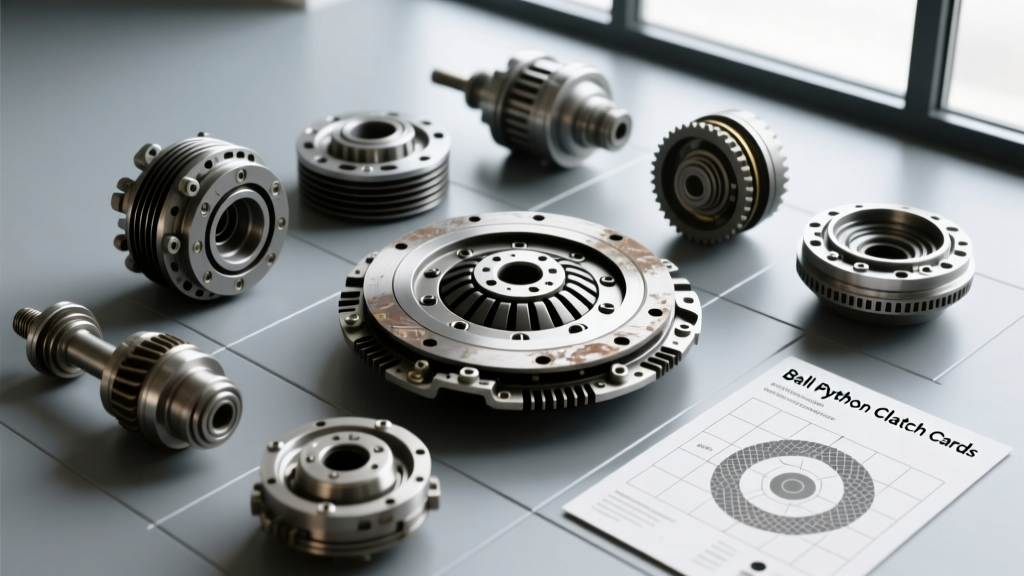
The 'Automatic' Illusion: AMTs, DCTs, and the Mechanical Clutch Fork
When frustrated drivers search online to understand how does an automatic clutch work, they are rarely asking about the fluid dynamics of a traditional torque converter. Instead, they are usually experiencing the violent shuddering, hesitation, or limp-mode failures of an Automated Manual Transmission (AMT) or a dry Dual-Clutch Transmission (DCT). Systems like the Ford/Getrag DPS6 PowerShift, the Fiat C635 DDCT, and heavy-duty commercial AMTs (like the Volvo I-Shift) rely on a sophisticated mechatronic brain. However, beneath the electronic sensors and brushless DC motors lies a fundamentally conventional mechanical linkage: the clutch fork and pivot ball.
As of 2026, the automotive aftermarket has finally caught up to the unique failure modes of these electromechanical actuation systems. Diagnosing clutch engagement issues in an AMT requires a paradigm shift. You are no longer dealing with hydraulic master/slave cylinder fluid dynamics; you are diagnosing physical mechanical wear interacting with hyper-sensitive Hall-effect position sensors. If the clutch fork pad wears down or the pivot ball galls, the transmission control module (TCM) cannot accurately calculate the clutch 'touch point,' resulting in catastrophic shifting anomalies.
Bridging the Keyword: How Does an Automatic Clutch Work Mechanically?
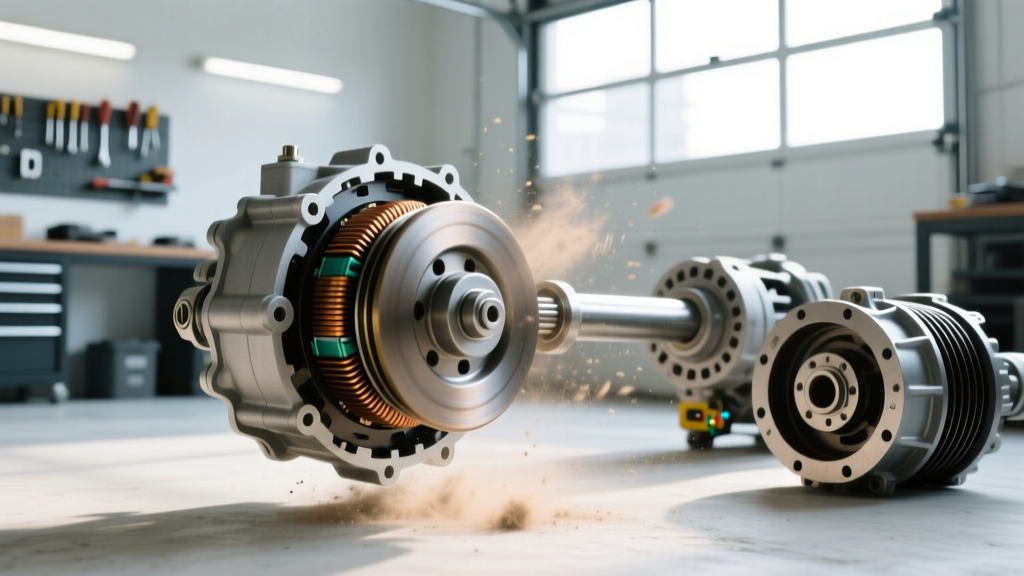
To answer the question of how does an automatic clutch work in the context of an AMT or dry DCT, we must look at the electromechanical actuator. Instead of a driver's left foot pressing a hydraulic piston, a high-torque electric motor turns a worm gear or ball-screw mechanism. This linear actuator pushes directly against the tang of a stamped steel or cast aluminum clutch fork. The fork pivots on a hardened steel ball stud bolted to the bell housing, multiplying the force to press the release bearing against the diaphragm spring fingers.
The TCM monitors the exact rotational position of the actuator motor (or the linear travel of the fork via a Clutch Position Sensor) to determine the clutch's engagement state. When the mechanical geometry changes due to fork or pivot wear, the software's adaptation tables run out of compensation range, triggering diagnostic trouble codes (DTCs).
Diagnostic Matrix: Fork Wear vs. Mechatronic Failure
One of the most costly mistakes a technician can make is replacing an expensive AMT mechatronic actuator assembly when the root cause is a $15 pivot ball or a worn clutch fork pad. Below is a diagnostic correlation chart mapping common AMT/DCT trouble codes to their mechanical root causes.
| DTC | Generic Description | Mechanical Root Cause (Fork/Pivot) | Diagnostic Verification Step |
|---|---|---|---|
| P0902 | Clutch Actuator Circuit Range/Performance | Fork pad worn beyond 2.0mm; actuator motor over-traveling to achieve clutch disengagement. | Measure fork pad thickness; check actuator worm gear for binding. |
| P0805 | Clutch Position Sensor Circuit Malfunction | Pivot ball galling causing erratic, non-linear fork movement, confusing the Hall-effect sensor. | Graph CPS voltage via OBD2 scanner while manually actuating the fork; look for voltage dropouts. |
| P2805 | Clutch Position Sensor 'B' Circuit Range | Clutch fork bending or pivot stud backing out, altering the fulcrum geometry. | Inspect pivot stud torque (should be 25 Nm); check fork for visible torsion twist. |
| P0868 | Transmission Fluid Pressure Low (Wet DCT) | Not applicable to dry AMT forks; indicates electrohydraulic pump failure in wet systems. | Check mechatronic hydraulic accumulator pressure via manufacturer-specific scan tool. |
Expert Measurement Protocols for AMT Pivots and Forks
Diagnosing clutch fork and pivot issues requires precision measurement tools. Visual inspection is entirely insufficient for modern AMTs, as the TCM's adaptation algorithms will mask early-stage wear by altering the actuator motor's starting position. According to technical bulletins from Schaeffler REPXPERT, technicians must measure the physical wear limits during any dry DCT or AMT clutch replacement.
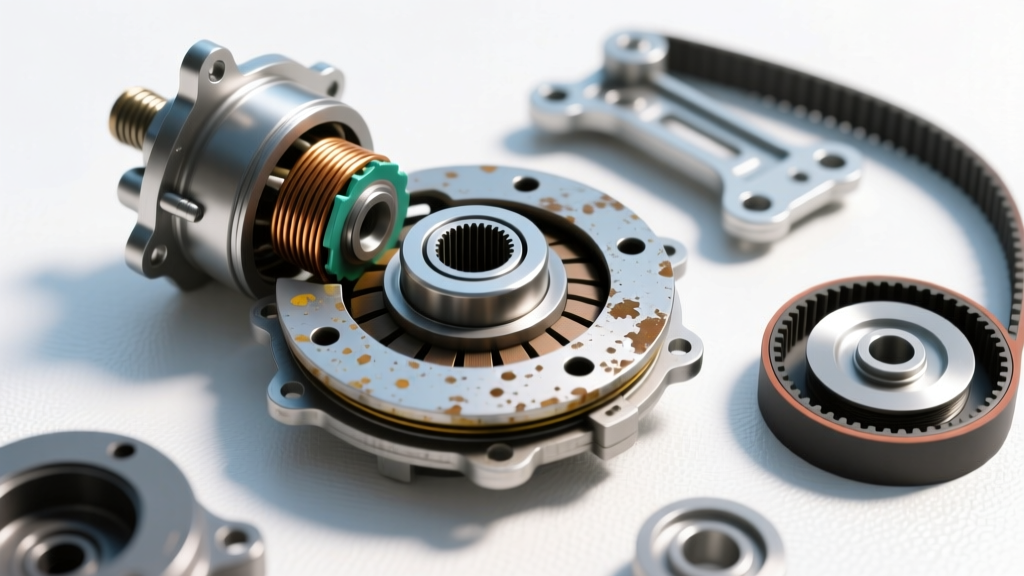
- Fork Pad Thickness: Use a digital micrometer to measure the thickness of the wear pad where the actuator motor or release bearing contacts the fork. A new Getrag DPS6 fork pad measures approximately 4.5mm. If wear exceeds 2.5mm (leaving less than 2.0mm of material), the fork must be replaced. Continuing to use a worn fork will cause the actuator motor to 'bottom out' on its internal mechanical stop, burning out the DC motor.
- Pivot Ball Radial Play: Attach a magnetic dial indicator to the bell housing and pry gently against the installed pivot ball. Maximum allowable radial play is 0.15mm. Any detectable 'click' or movement indicates the pivot stud has stretched or the bell housing bore has elongated.
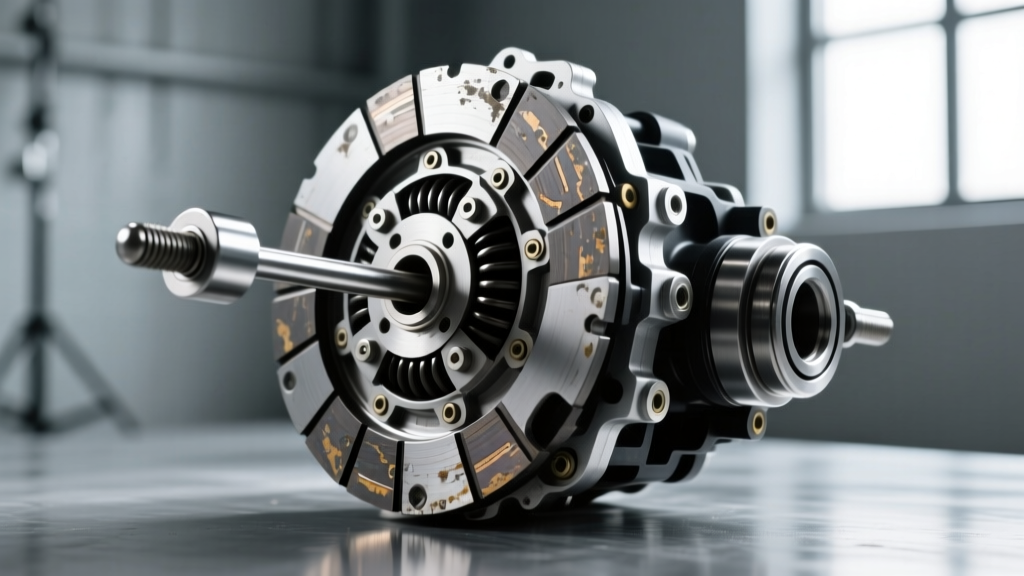
- Release Bearing Collar Wear: The fork fingers that cradle the release bearing often develop deep grooves. If the groove depth exceeds 0.5mm, the fork will bind laterally during clutch engagement, causing the infamous 'clutch chatter' felt at 1,500 RPM in 2nd gear.
The Getrag DPS6 & Fiat C635 Teardown: Best Practices
When addressing clutch fork and pivot issues on the highly prevalent Ford DPS6 or Fiat C635 transmissions, specific assembly protocols must be followed to prevent immediate comebacks. The integration of the mechanical fork with the electronic mechatronic unit leaves zero margin for assembly error.
Torque Specs and Assembly Realities
The pivot ball stud is subjected to immense lateral shear forces every time the electromechanical actuator pushes the clutch release bearing. For the Getrag DPS6, the pivot ball stud must be torqued to exactly 25 Nm (18.4 lb-ft). It is highly recommended to apply a medium-strength threadlocker (such as Loctite 243) to the pivot stud threads, as vibration from the dry clutch assembly frequently causes these studs to back out, leading to catastrophic fork ejection inside the bell housing.
When reinstalling the clutch actuator motors (which push directly on the forks), the mounting bolts must be torqued to 10 Nm (89 lb-in). Over-torquing these small M6 bolts will strip the aluminum bell housing threads or warp the actuator housing, causing the internal worm gear to bind and throw a P0902 code.
Expert Warning on Lubrication: Never use standard lithium-based or synthetic wheel bearing grease on an AMT clutch fork pivot ball. The high RPM environment and dry clutch dust will cause lithium grease to liquefy, sling onto the clutch friction surfaces, and destroy the clutch pack. You must use a high-temperature Molybdenum Disulfide (MoS2) paste, such as Fuchs Renolit or the specific lubricant included in premium LuK RepSet PRO kits. Apply only a pea-sized amount to the pivot ball and the fork contact pads.
The 'Touch Point' Adaptation Protocol
Replacing the clutch fork and pivot ball alters the mechanical geometry of the entire actuation system. You cannot simply bolt the transmission back together and drive away. The TCM's non-volatile memory contains a 'Clutch Touch Point' map that dictates exactly how many degrees the actuator motor must turn to achieve 10% clutch clamp load.
Using a bi-directional scan tool (such as FORScan for Ford applications or wiTECH for Fiat/Chrysler), you must initiate the Clutch Adaptation / Bite Point Learning Routine. This routine commands the actuator motors to slowly engage the clutches while monitoring engine RPM drop and input shaft speed sensors. If the new fork and pivot geometry falls outside the TCM's acceptable adaptation window (usually a variance of +/- 2.5mm of linear actuator travel), the adaptation will fail, and the vehicle will remain in limp mode.
2026 Pricing and Part Sourcing Strategy
Sourcing high-quality replacement forks and pivot hardware is critical. The OEM dealer networks often force technicians to buy entire bell housing or mechatronic assemblies, but the 2026 aftermarket landscape offers targeted repair solutions.
- Schaeffler LuK RepSet PRO (e.g., Part #602 0008 00 for Ford DPS6): Priced between $450 and $650. This is the gold standard. It includes the dual-clutch assembly, both release bearings, the clutch forks, pivot hardware, and the exact volume of MoS2 grease required. Buying the fork separately from the dealer often yields poor results due to metallurgical updates only found in complete aftermarket kits.
- OEM Ford/Fiat Pivot Ball Studs: Priced around $25 to $40 each. Always replace the pivot ball when replacing the fork. Reusing a grooved pivot ball with a new fork pad will cause the new pad to wear through in less than 10,000 miles.
- Aftermarket Actuator Motors: If the worn fork caused the actuator motor to burn out, replacement aftermarket brushless motors (from brands like Dorman or Cardone) run $200 to $300 each. However, verify the internal worm gear for metal shavings before installation.
Final Diagnostic Takeaways
Understanding how does an automatic clutch work requires looking past the marketing terminology of 'automatic' and recognizing the mechanical realities of automated manuals and dual-clutch systems. The clutch fork and pivot ball remain the critical mechanical bridge between digital commands and physical torque transfer. By utilizing precise micrometer measurements, adhering to strict MoS2 lubrication protocols, and performing mandatory TCM touch-point adaptations, technicians can permanently resolve AMT shudder and engagement faults, restoring these complex transmissions to factory-shift quality.