The True Cost of Polaris General Front Differential Fluid Service
When maintaining a Polaris General 1000 or General XP 1000, the front gearcase is arguably the most complex and misunderstood drivetrain component on the machine. Unlike a traditional solid-axle 4x4 truck or a standard open differential, the Polaris General utilizes an on-demand locking front differential known as the Demand Drive system. Because of its specialized internal architecture, the Polaris General front differential fluid requirements are incredibly strict, and the cost of servicing it—whether at a dealership or in your own garage—reflects that engineering complexity.
As we navigate the 2026 off-road season, synthetic lubricant prices and dealership labor rates have shifted. Understanding the exact pricing, fluid capacities, and preventive maintenance intervals for your front differential is critical to avoiding catastrophic sprag clutch failures and electromagnetic coil burnouts. This guide breaks down the real-world costs, OEM part numbers, and the mechanical science behind why cutting corners on front diff fluid will cost you thousands in replacement parts.
2026 Pricing Breakdown: DIY vs. Dealership Service
The cost to service the front differential on a Polaris General varies wildly depending on whether you turn the wrenches yourself or hand the keys to a Polaris-certified technician. Below is a comprehensive cost analysis based on current 2026 market rates for OEM fluids and standard UTV service center labor.
| Service Component | DIY Cost (Estimated) | Dealership Cost (Estimated) | Technical Notes |
|---|---|---|---|
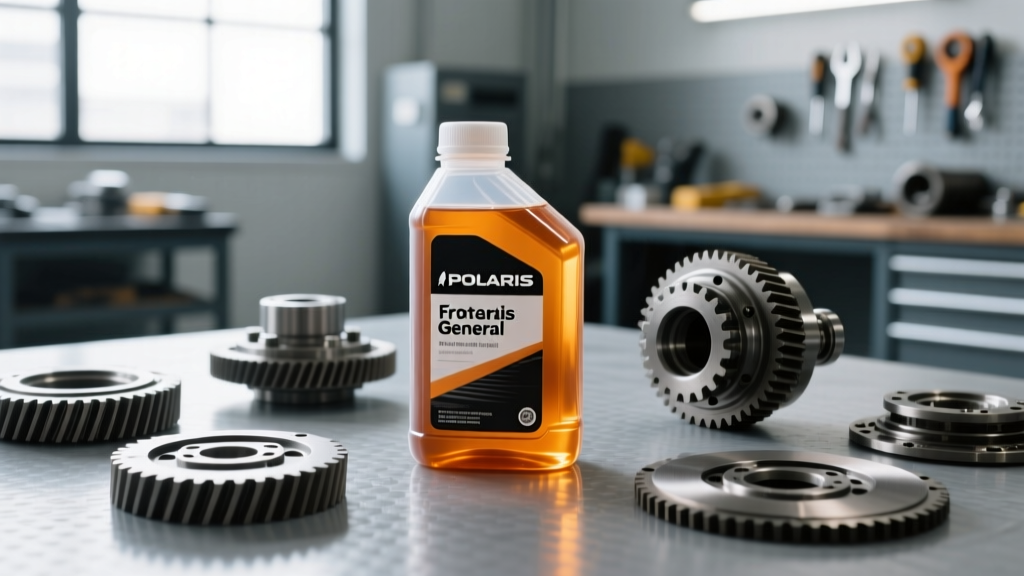
| OEM Demand Drive Fluid (1 Qt) | $32.00 - $38.00 | $35.00 - $45.00 (Markup) | Part # 2877922. Only 8.5 oz is needed; save the rest. |
| Shop Supplies & Disposal Fees | $0.00 | $10.00 - $15.00 | Standard environmental and hazmat disposal fees. |
| Labor (0.5 Hour Minimum) | $0.00 | $65.00 - $95.00 | Varies by region; some shops charge a 1-hour minimum. |
| Crush Washers / O-Rings | $2.00 - $4.00 | $5.00 - $8.00 | Highly recommended to replace fill/drain plug seals. |
| Total Estimated Cost | $34.00 - $42.00 | $115.00 - $163.00 | DIY saves up to 75% per service interval. |
Why the Demand Drive System Demands Specific Fluids
To understand the fluid cost, you must understand the hardware. The Polaris Demand Drive system is a derivative of Eaton’s automatic locking differential technology. It relies on an internal electromagnetic coil, an armature, and a precision sprag clutch to lock the front axles together the millisecond the ECU detects rear wheel slip.
The Danger of Standard 75W-90 Gear Oil
A common and costly mistake made by novice owners is substituting Polaris Demand Drive fluid with standard 75W-90 or 80W-90 automotive gear oil. Standard gear oils contain high levels of sulfur-phosphorus extreme pressure (EP) additives and lack the specific dielectric properties required for the Demand Drive’s internal electronics. Using standard gear oil can lead to:
- Dielectric Breakdown: The fluid conducts electricity, shorting out the electromagnetic coil and rendering the locking mechanism useless.
- Sprag Clutch Slippage: Standard gear oils lack the precise friction modifiers required for the sprag clutch to bite and hold under high-torque loads, leading to rapid metal-on-metal wear.
- Armature Corrosion: Incompatible additive packages can cause galvanic corrosion on the internal copper windings and steel armature plates.
According to Polaris Lubricants Engineering, the Demand Drive fluid is specifically formulated to act as both a high-pressure gear lubricant and a dielectric insulator. At roughly $35 a quart, it is an absolute necessity, not a dealership upsell.
Preventive Maintenance: Capacities, Tools, and Torque Specs
Executing a preventive fluid change requires precision. The front gearcase on the Polaris General 1000 and XP 1000 has a remarkably small fluid capacity, meaning there is zero margin for error regarding overfilling or underfilling.
Required Tools and Specifications
- Fluid: Polaris Demand Drive Fluid (OEM Part # 2877922)
- Capacity: 8.5 oz (250 mL)
- Drain/Fill Plug Socket: 3/8-inch Allen (Hex) or specific Polaris Demand Drive tool
- Torque Spec: 14 ft-lbs (19 Nm) for both drain and fill plugs
- Fluid Pump: A standard quart-sized hand pump is required due to the tight clearance around the fill hole.
The Service Procedure
Before draining, ensure the UTV is parked on a perfectly level surface. The Demand Drive system is highly sensitive to hydrostatic pressure. If you overfill the front gearcase beyond the 8.5 oz specification, the internal pressure generated by the spinning gears will blow out the output shaft seals, forcing expensive gear oil into your front wheel hubs and destroying the wheel bearings.
- Remove the magnetic drain plug and allow the fluid to drain completely. This may take up to 15 minutes due to the fluid's high viscosity.
- Inspect the magnetic plug. (See diagnostic section below).
- Install the drain plug with a new crush washer and torque to exactly 14 ft-lbs.
- Remove the fill plug. Using a hand pump, inject exactly 8.5 oz of Demand Drive fluid.
- Reinstall the fill plug with a new O-ring and torque to 14 ft-lbs.
Magnetic Plug Diagnostics: Reading the Wear Metals
The front differential drain plug on the Polaris General is magnetic, serving as your primary diagnostic window into the health of the gearcase. When performing your 100-hour or 4,000-mile preventive service, evaluating the debris on the magnet is crucial.
Master Tech Tip: 'Fine, glitter-like metallic paste on the magnetic plug is a normal byproduct of ring and pinion gear break-in and standard wear. However, if you find distinct metal chips, jagged shards, or pieces that resemble coarse sand, your sprag clutch or pinion bearings are actively failing. Do not just refill and ride; the gearcase requires immediate teardown and inspection.'
If you discover large metal chunks, the cost of a simple $35 fluid change will quickly escalate. A complete replacement front gearcase assembly (such as P/N 1334168 for select General 1000 models) currently retails between $950 and $1,350 in 2026, not including the $200+ in dealership labor to swap the unit and bleed the front axle hubs.
Service Intervals and Environmental Factors
The official Polaris maintenance schedule dictates a front gearcase fluid change every 4,000 miles, 6 months, or 100 hours, whichever comes first. However, as documented in the Polaris Owner's Resource Center, severe duty cycles demand aggressive preventive maintenance.
You must cut the service interval in half (every 50 hours or 2,000 miles) if your General is frequently subjected to:
- Deep mud or water submersion (which can compromise the breather tube and introduce moisture into the gearcase, turning the fluid into a milky emulsion).
- High-load rock crawling, which generates extreme thermal degradation in the 8.5 oz fluid volume.
- Competitive trail riding or desert racing where sustained front-end engagement is common.
The Hidden Costs of Neglecting the Breather Tube
While discussing fluid costs, we must address the breather tube. The front differential expands and contracts as it heats up and cools down. If the breather tube—routed up into the chassis—is kinked, clogged with mud, or submerged during a water crossing, the gearcase will create a vacuum as it cools. This vacuum will suck water past the output shaft seals, contaminating the Demand Drive fluid. Water contamination destroys the dielectric insulation properties of the fluid, leading to an immediate short circuit in the electromagnetic locking coil. Replacing the internal wiring harness and coil requires splitting the gearcase, a job that often totals the unit in favor of a direct replacement.
Conclusion: Protecting Your Drivetrain Investment
The Polaris General front differential fluid cost is a minor line item in your annual UTV maintenance budget, but it guards one of the most expensive and vital components on your machine. By spending the $35 on genuine OEM Demand Drive fluid, adhering strictly to the 8.5 oz capacity, and torquing the plugs to 14 ft-lbs, you ensure that your front end locks instantly and reliably when the trail gets technical. For further reading on drivetrain architectures and Eaton-based locking differentials, consult the engineering resources available via Eaton Vehicle Differentials.